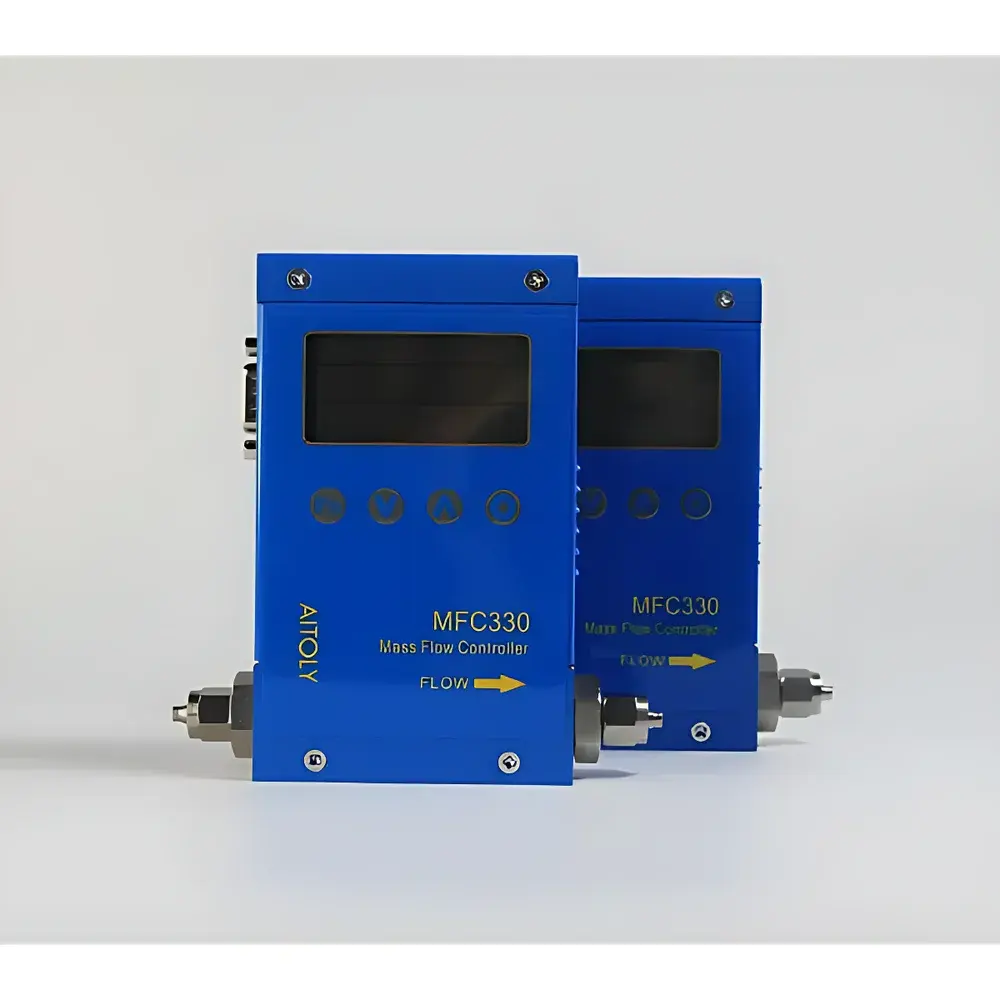
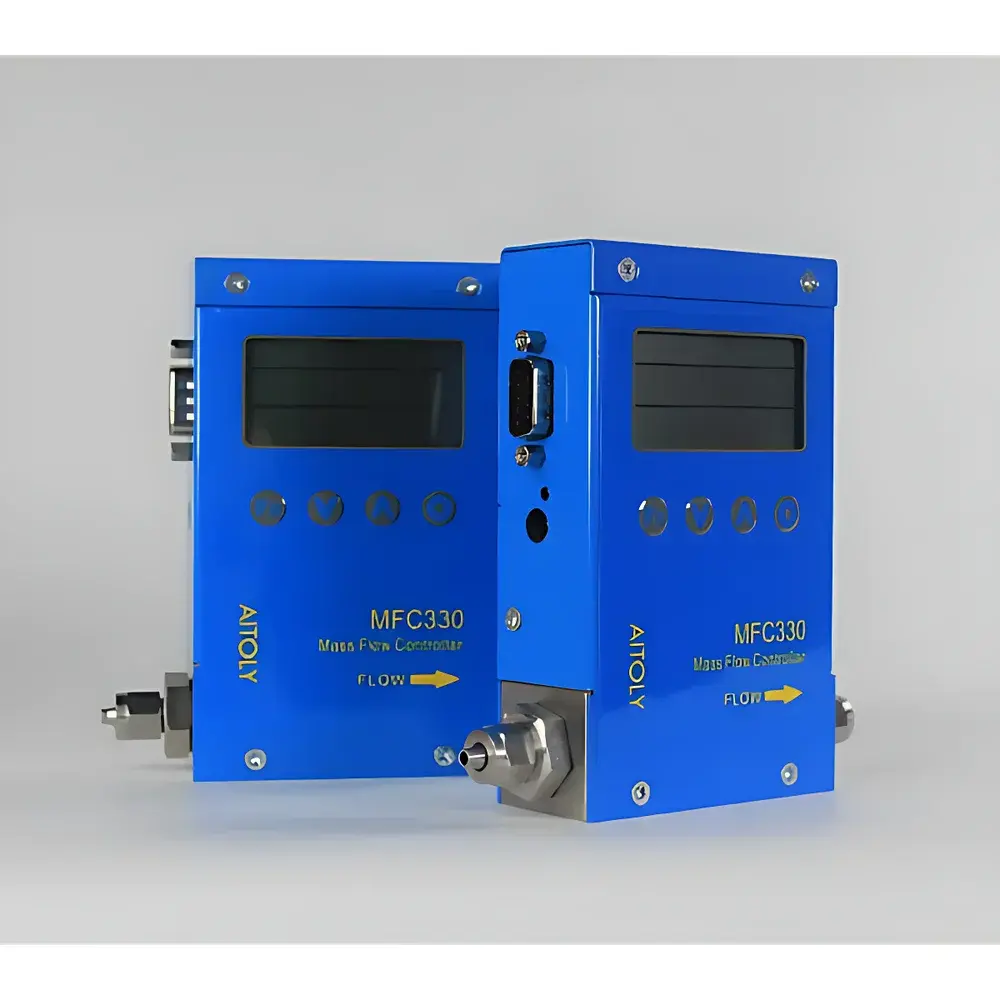
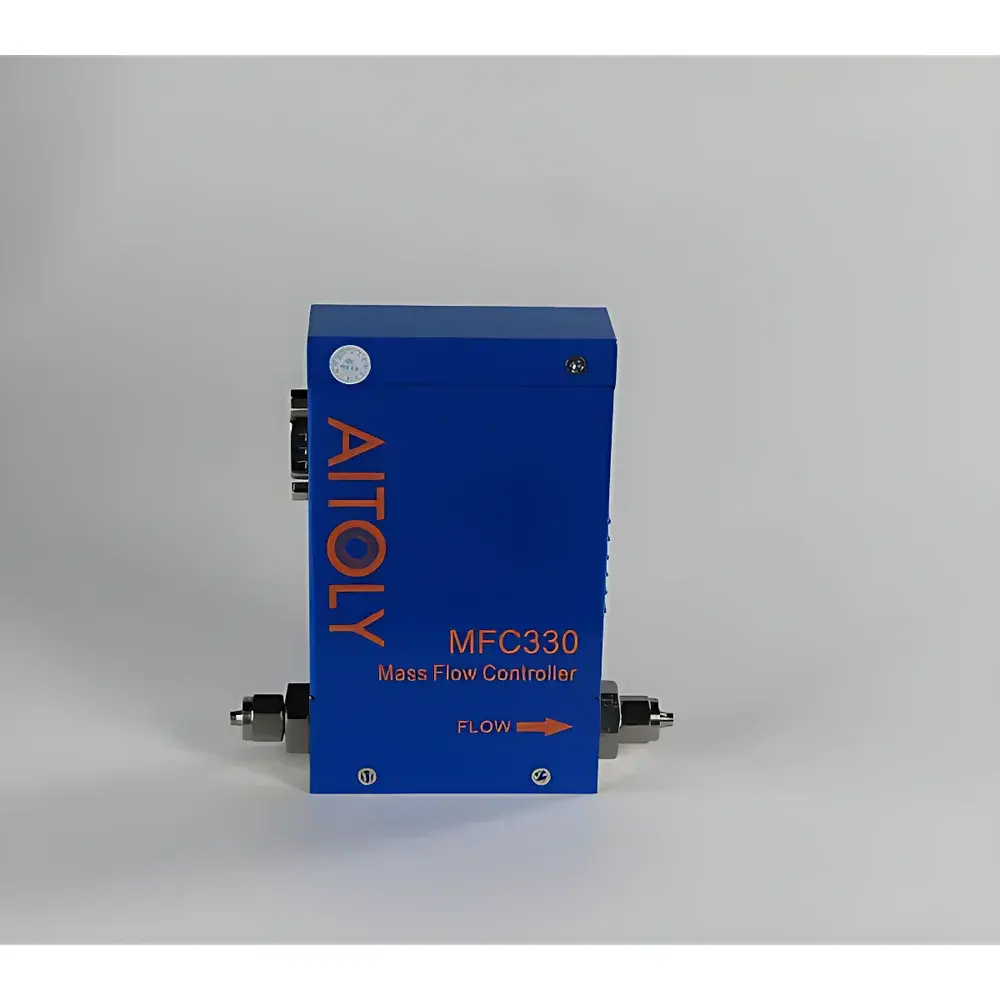
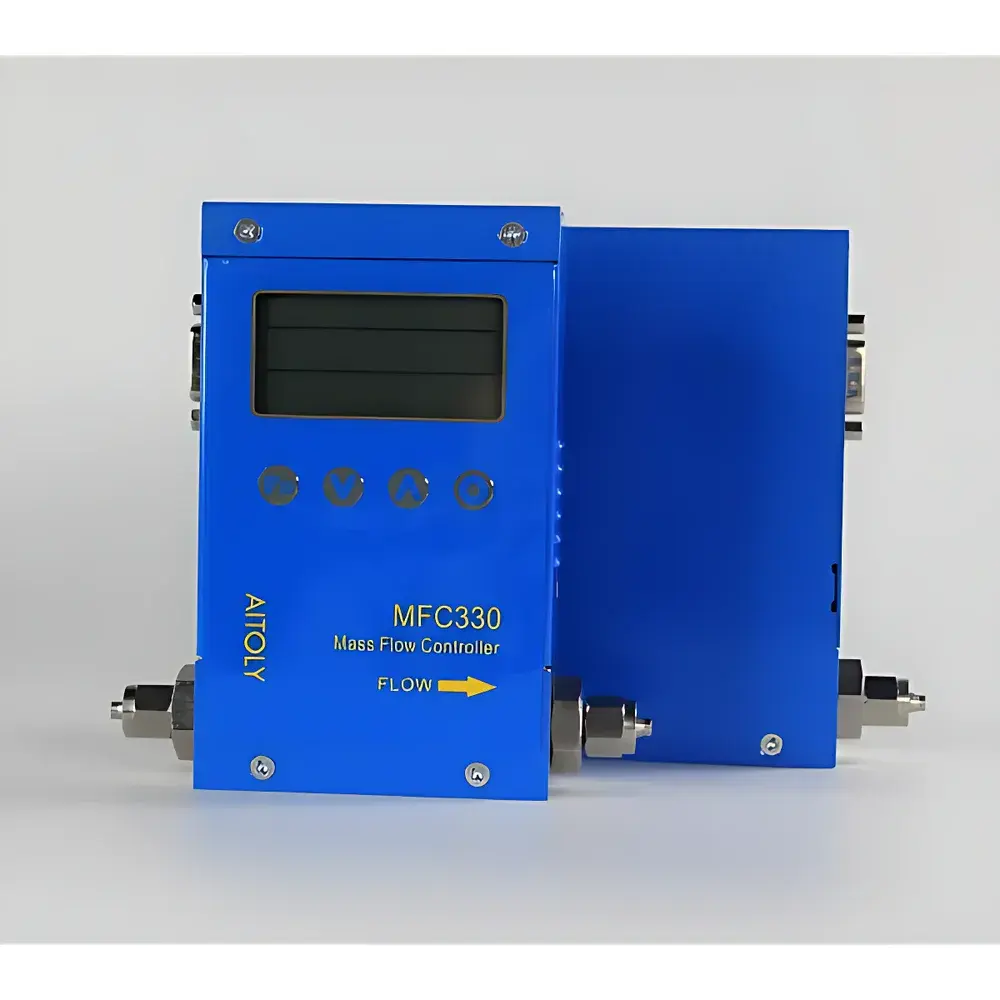
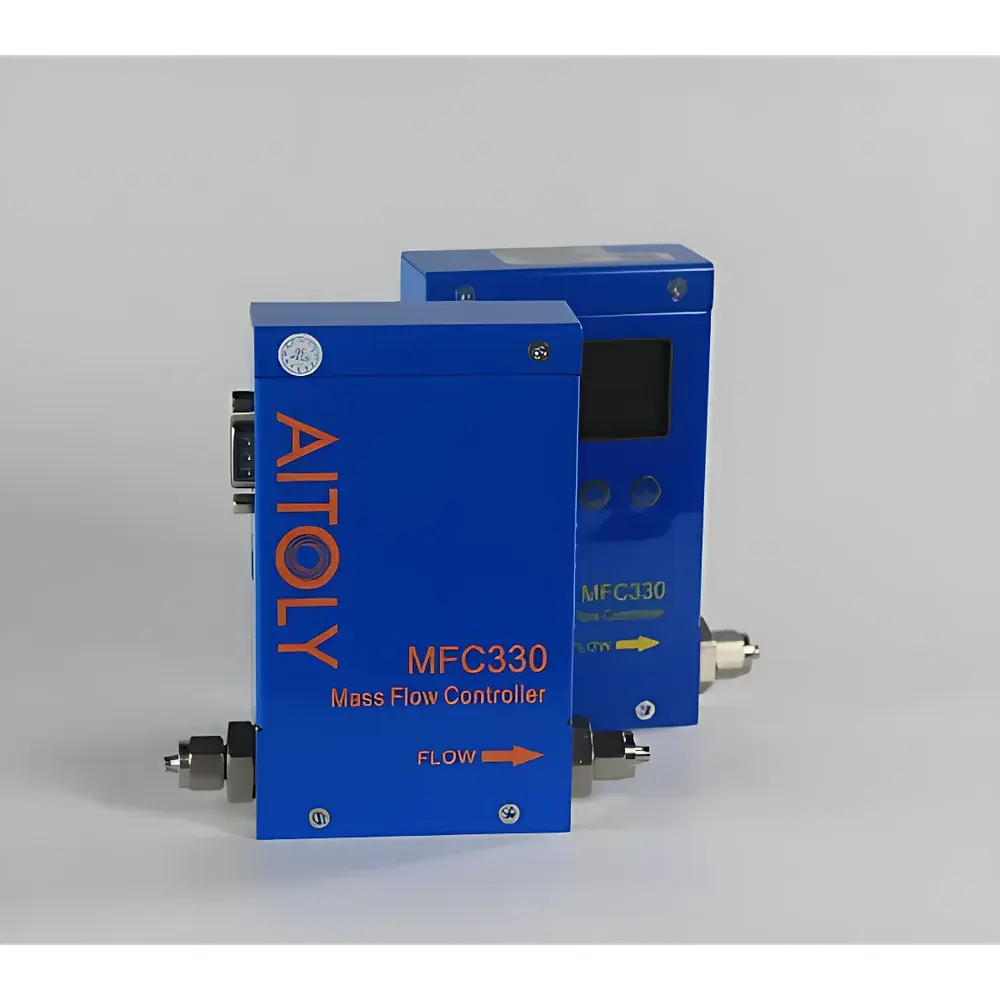
Atotech MFC330 Thermal Mass Flow Controller
| Brand | Atotech |
|---|---|
| Origin | Jiangsu, China |
| Model | MFC330 |
| Flow Principle | Thermal Mass Flow Measurement |
| Flow Ranges | 0–5/10/20/50/100/200/300/500 SCCM |
| Accuracy | ±0.5% FS |
| Repeatability | ±0.2% FS |
| Flow Rangeability | 2–100% FS |
| Operating Temperature | −20 to +65 °C |
| Humidity | 0–98% RH (non-condensing) |
| Max Working Pressure | 3 MPa |
| Response Time | <1 s |
| Supply Voltage | 15–40 VDC |
| Power Consumption | <5 W |
| Communication Interfaces | RS232, RS485, CAN, 0–5 VDC analog output, 4–20 mA analog output |
| Gas Path Materials | SUS304 / SUS316L |
| Seals | FKM (Viton®) |
| Connection Types | Push-to-connect, Quick-fit, Swagelok®-style ferrule, VCR |
| Electrical Interface | DB9 male |
| Display & Control | Integrated LCD with membrane keypad |
| Built-in Sensors | Temperature and pressure compensation sensors |
| Gas Compatibility | Multi-gas (N₂, O₂, Ar, He, CO₂, H₂, Air, N₂O, CH₄, etc., with gas-specific calibration) |
Overview
The Atotech MFC330 is a high-performance thermal mass flow controller engineered for precision gas flow regulation in demanding industrial, analytical, and research environments. Based on constant-temperature anemometry (CTA), the MFC330 measures mass flow rate by detecting heat transfer between a heated sensor element and the flowing gas—eliminating dependence on pressure and temperature fluctuations. Its all-solid-state architecture features no moving parts, ensuring long-term stability, minimal maintenance, and immunity to mechanical wear. Designed for integration into vacuum systems, semiconductor processing tools, analytical instrumentation, and cleanroom-compatible automation platforms, the MFC330 delivers repeatable control across a wide dynamic range (2–100% of full scale) with sub-second response time (<1 s) and built-in real-time temperature and absolute pressure compensation. The device complies with fundamental requirements for traceable flow measurement under ISO 17025-accredited calibration practices and supports configuration for GLP/GMP-relevant workflows through audit-ready digital communication logs.
Key Features
- No moving parts — eliminates mechanical hysteresis, drift, and wear-related calibration degradation
- Integrated high-resolution LCD display with intuitive membrane keypad for local setup, monitoring, and diagnostics
- Simultaneous real-time display of instantaneous mass flow rate and totalized flow volume
- Multi-protocol digital communication: RS232, RS485, and CAN bus for seamless PLC and SCADA integration
- Analog I/O support: isolated 0–5 VDC and 4–20 mA outputs for legacy system compatibility and redundant signal routing
- Gas-flexible operation via user-selectable or factory-applied gas correction factors (N₂, O₂, Ar, He, CO₂, H₂, air, CH₄, N₂O, etc.)
- Robust wetted-path construction using electropolished SUS316L and SUS304 stainless steel, rated for up to 3 MPa maximum working pressure
- FKM (Viton®) elastomer seals ensure chemical resistance and low outgassing performance suitable for UHV-adjacent applications
- Wide operating ambient range (−20 to +65 °C) and high humidity tolerance (0–98% RH, non-condensing)
Sample Compatibility & Compliance
The MFC330 is validated for use with non-corrosive, non-particulate, and non-condensable gases commonly employed in process and analytical systems—including nitrogen, oxygen, argon, helium, carbon dioxide, hydrogen, synthetic air, nitrous oxide, and methane. Gas-specific calibration coefficients are stored internally and selectable via digital interface or DIP switch configuration. While not certified to ATEX or IECEx for hazardous area use, the unit meets CE marking requirements for electromagnetic compatibility (EMC Directive 2014/30/EU) and low-voltage safety (LVD Directive 2014/35/EU). Its analog and digital outputs support traceability frameworks aligned with FDA 21 CFR Part 11 when integrated with compliant data acquisition software featuring electronic signatures and audit trails. Device firmware allows for configurable alarm thresholds, flow ramping profiles, and fail-safe setpoint hold modes per ISO 13849-1 functional safety principles.
Software & Data Management
The MFC330 operates autonomously without host software but is fully programmable via ASCII command protocol over RS232/RS485/CAN. Atotech provides a Windows-based configuration utility (MFCConfig Tool) supporting batch parameter upload/download, gas table editing, firmware updates, and real-time data logging with CSV export. All communication events—including setpoint changes, alarm triggers, and sensor diagnostics—are timestamped and logged internally (buffered memory) or streamed externally for integration with LabVIEW™, MATLAB®, or custom Python-based control suites. Optional Modbus RTU mapping enables direct read/write access to flow values, valve position, temperature, pressure, and status flags—facilitating centralized supervision in multi-MFC arrays used in cluster tool architectures.
Applications
- Semiconductor manufacturing: Precise gas dosing in reactive ion etching (RIE), deep reactive ion etching (DRIE), and plasma-enhanced chemical vapor deposition (PECVD) tools
- Analytical instrumentation: Carrier and make-up gas control in gas chromatography (GC), mass spectrometry (MS), and Fourier-transform infrared (FTIR) systems
- Fuel cell test stations: Stoichiometric air and hydrogen flow regulation during polarization curve and impedance spectroscopy testing
- Vacuum coating systems: Metered introduction of process gases (Ar, O₂, N₂) in sputtering, evaporation, and ALD reactors
- Laser welding and cutting: Shielding gas flow stabilization for weld pool integrity and spatter suppression
- Bio-process monitoring: In-line sterilizing-grade gas flow verification in bioreactor sparging and vent filtration loops
- Research laboratories: Multi-gas blending, reactor feed control, and environmental simulation chambers requiring stable, reproducible mass flow delivery
FAQ
Does the MFC330 require external temperature or pressure transmitters for accurate flow measurement?
No. The device incorporates calibrated internal temperature and absolute pressure sensors, enabling real-time compensation without external hardware.
Can the MFC330 be used with corrosive gases such as Cl₂ or NH₃?
Not without custom wetted-material upgrades. Standard SUS316L/FKM construction is incompatible with halogens, strong acids, or amines; consult Atotech Engineering for Hastelloy® C-276 or PTFE-lined variants.
Is firmware update capability available in-field?
Yes—via RS232 or CAN using the official MFCConfig Tool and signed firmware binaries distributed under NDA.
What is the recommended calibration interval under continuous operation?
Annual recalibration is advised per ISO/IEC 17025 guidelines; however, in stable lab environments with low particulate exposure, 18-month intervals may be justified with documented performance verification.
Does the MFC330 support fail-closed or fail-open valve behavior upon power loss?
Valve default position is configurable during ordering—normally closed (NC) or normally open (NO) options are available based on safety system requirements.