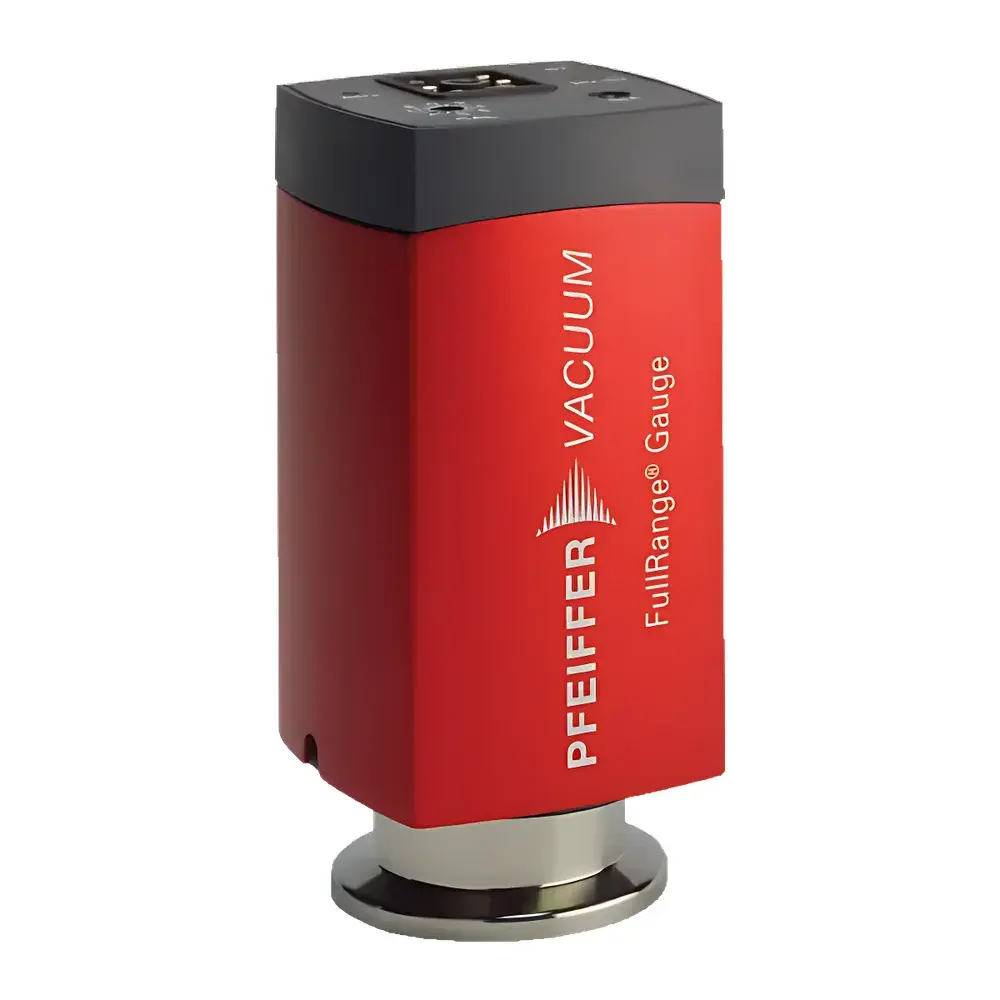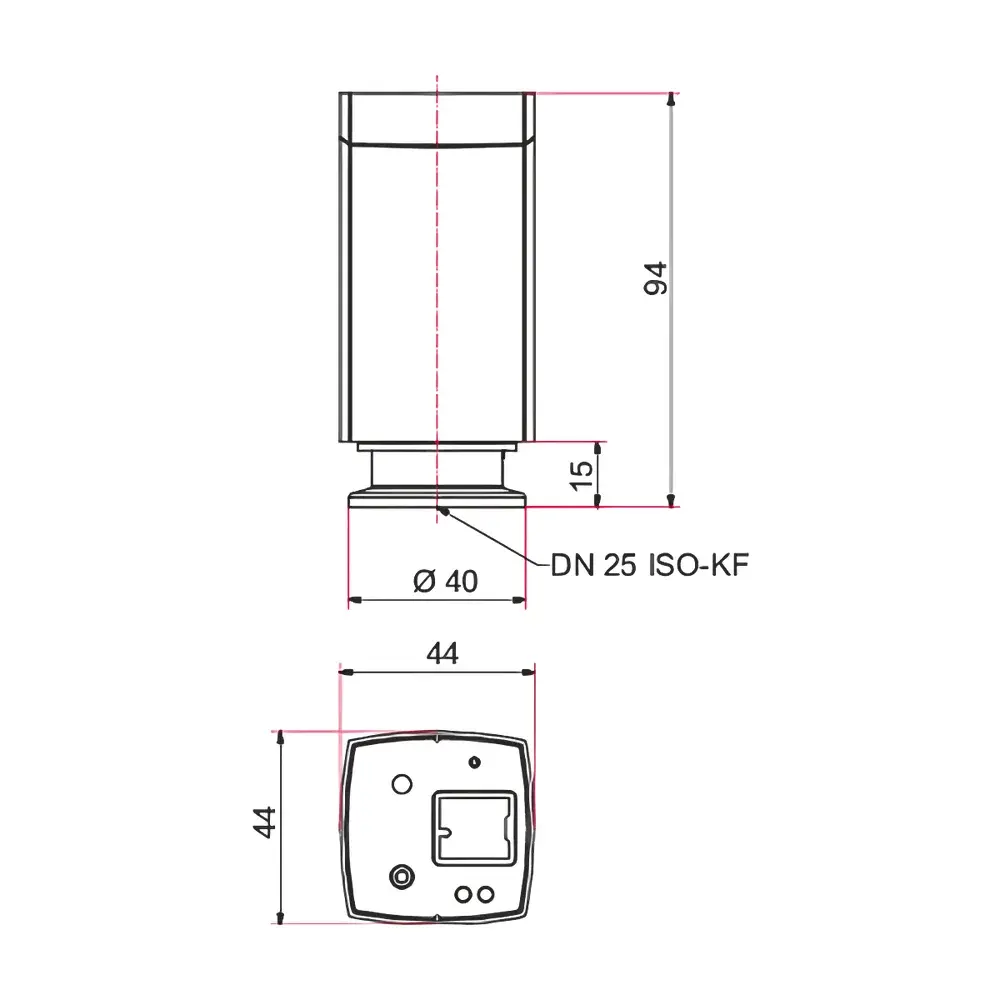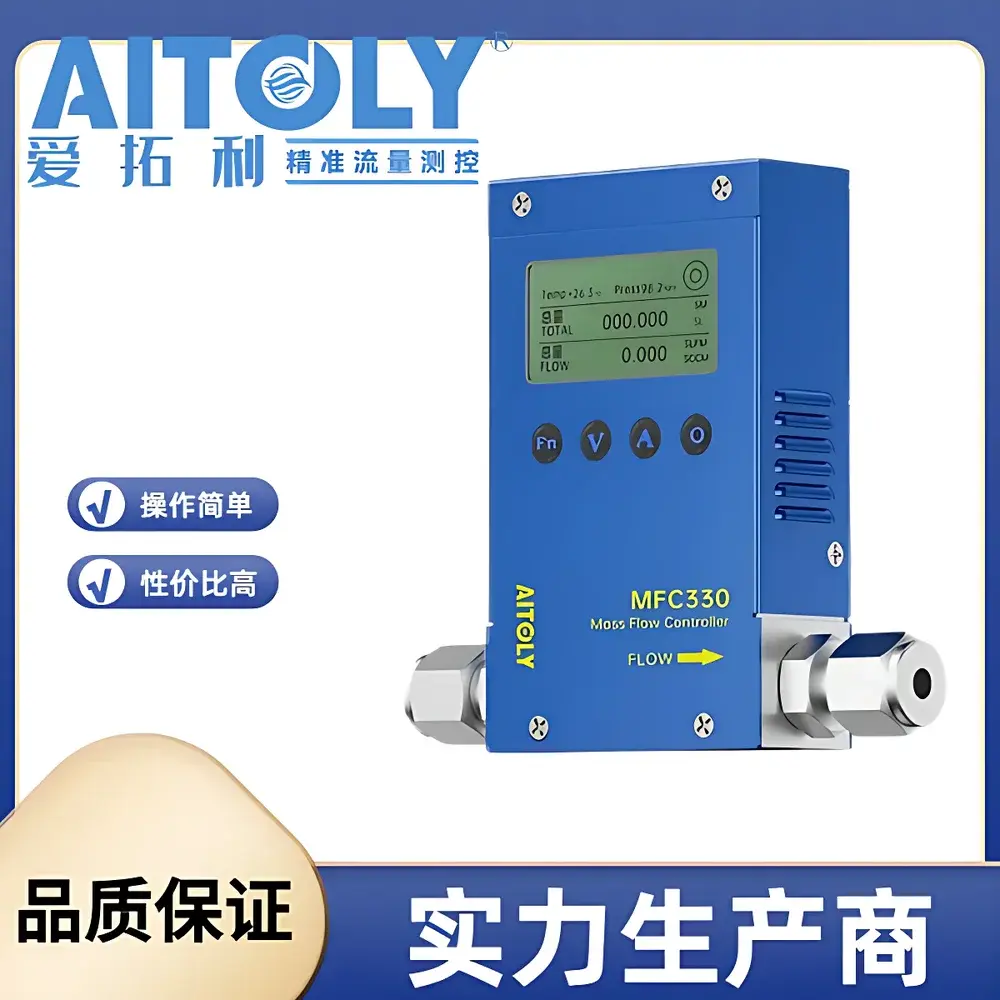
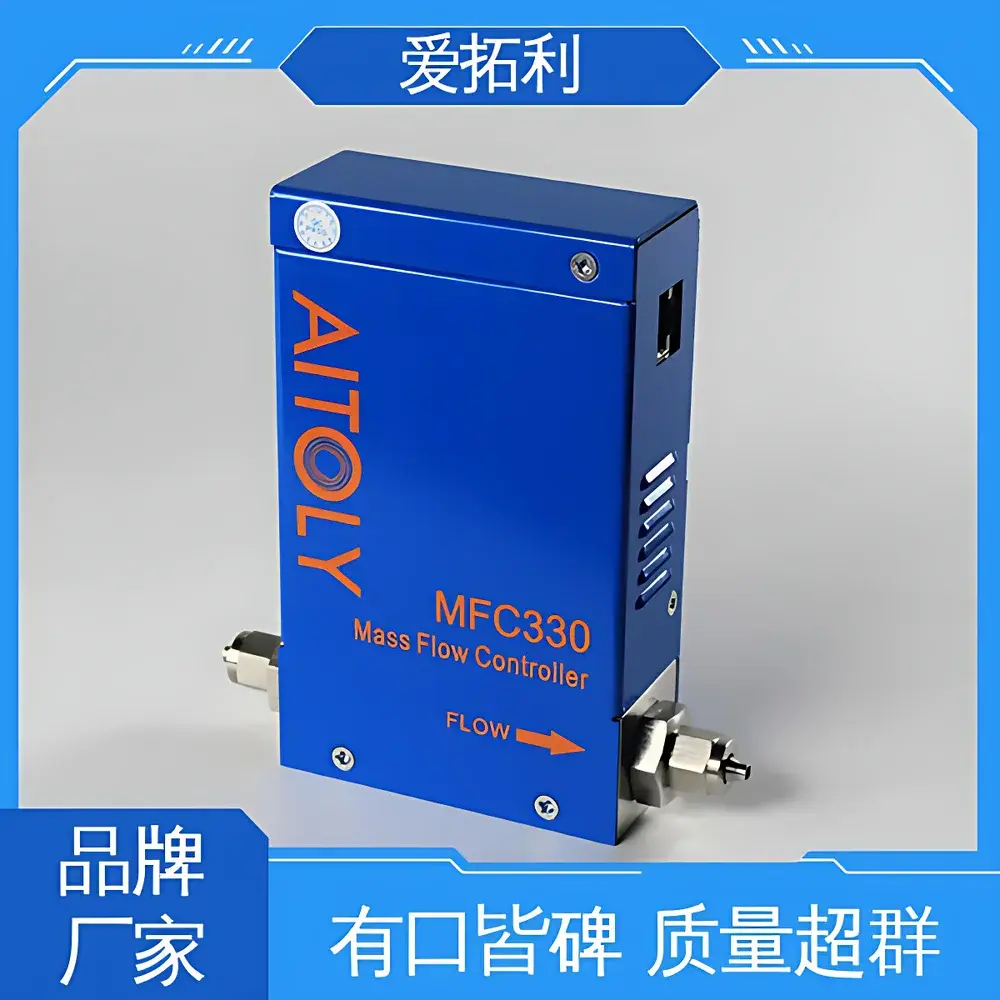
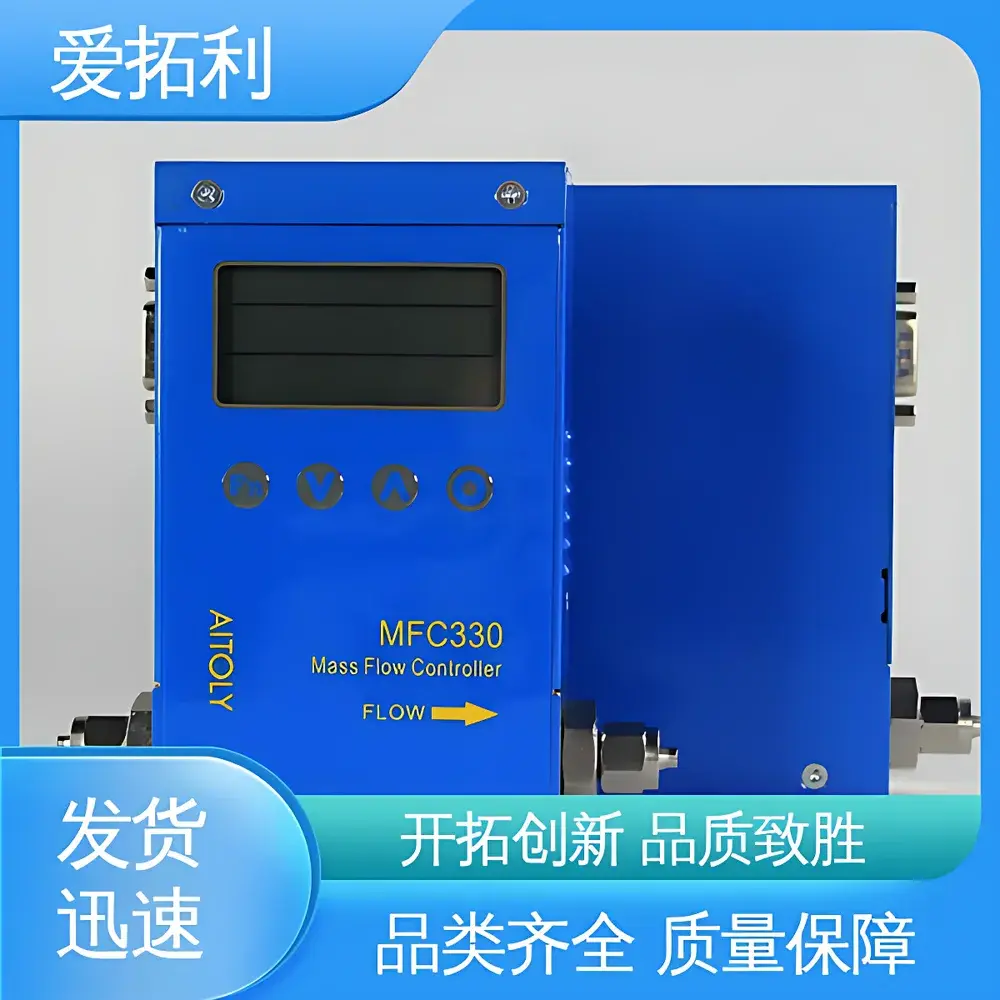
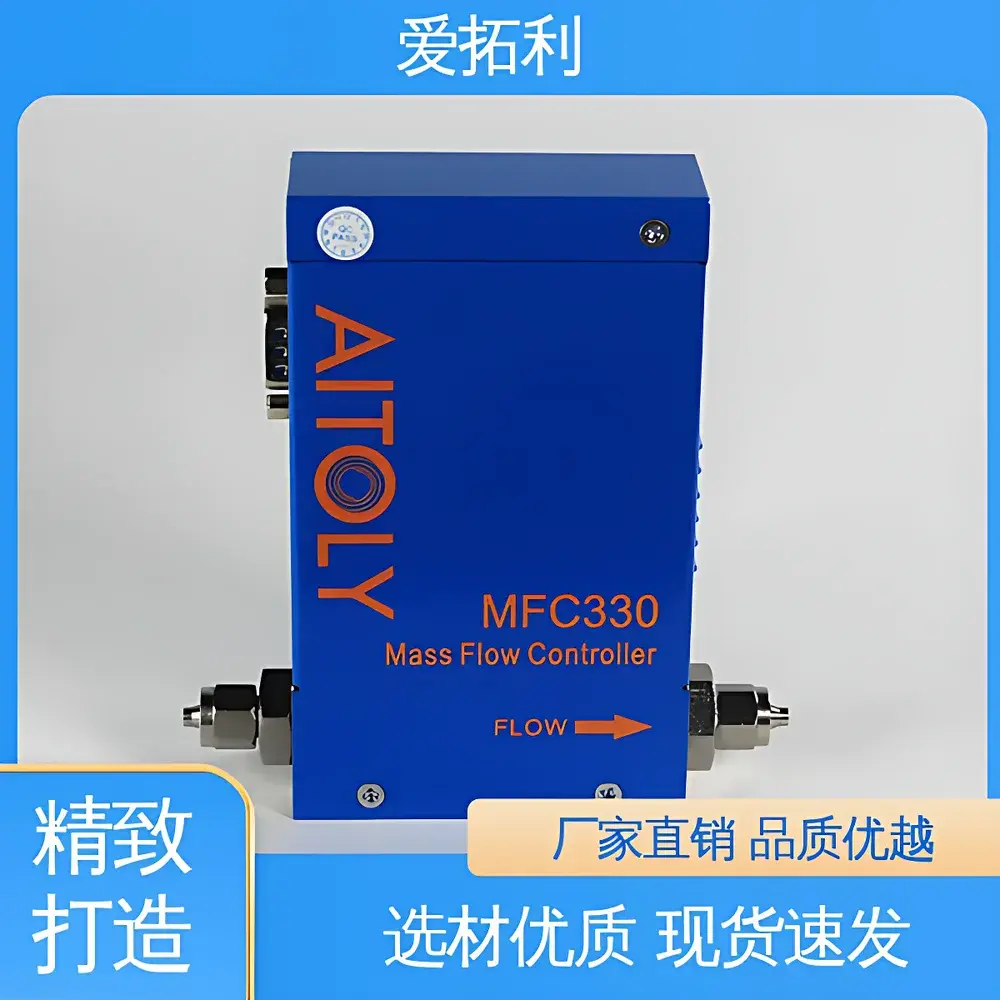
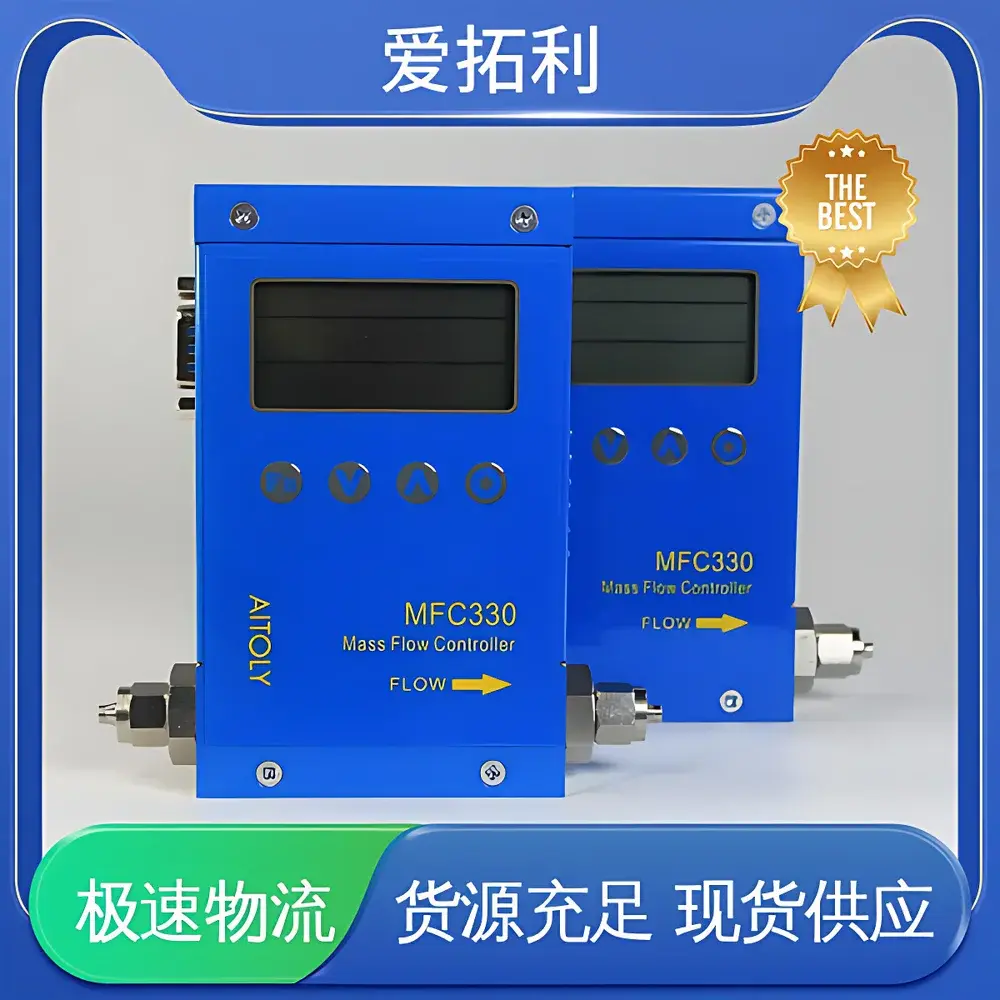
Atotech MFC330 Thermal Mass Flow Controller
| Brand | Atotech |
|---|---|
| Origin | Jiangsu, China |
| Manufacturer Type | Authorized Distributor |
| Product Origin | Domestic (China) |
| Model | MFC330 |
| Product Category | Thermal Mass Flow Controller |
| Full Scale Ranges (N₂ equivalent) | 0–2, 10, 20, 50, 100, 300, 500 sccm |
| Measurement Range | 0.5% FS (1:200) |
| Control Range | 1–100% FS (1:100) |
| Accuracy (Standard) | ±1% FS |
| Accuracy (High Performance) | ±0.5% FS |
| Repeatability | ±0.2% FS |
| Linearity | ±0.2% FS |
| Settling Time (Control Mode) | <3 s |
| Warm-up Time (T95) | 5 min |
| Optimal Stability | 30 min |
| Valve Function | Normally Closed |
| Leak Integrity | ≤1×10⁻⁸ Pa·m³/s (He) |
| Max Operating Pressure | 3 MPa (30 bar) |
| Operating Differential Pressure | 0–1 MPa |
| Operating Temperature Range | −20 to +65 °C (ambient & gas) |
| Relative Humidity | 0–98% RH (non-condensing) |
| Process Connections | Push-in, Push-on, Compression, VCR (optional) |
| Wetted Materials | FKM elastomers, 304/316 stainless steel |
| Housing IP Rating | IP40 |
| Mounting Orientation | Horizontal only (factory calibrated) |
| Mounting Holes | M4 × 5 mm |
| Weight | 0.96 kg |
| Electrical Interface | DB9 male |
| Analog I/O | 0–5 VDC, 4–20 mA (configurable) |
| Input Impedance | >10 MΩ |
| Output Impedance | <1 kΩ |
| Analog Data Update Rate | 200 Hz |
| Digital Interface | Modbus RTU (RS232/RS485), CAN |
| Baud Rates | 9600–115200 bps (user-selectable) |
| Power Supply | 15–40 VDC, <200 mA |
| Display Update Rate | 50 Hz |
| Analog Signal Accuracy | ±0.05% FS |
| STP Reference | 20 °C, 1 atm |
| Gas Selection | Software-configurable for >98 gas types |
| Software | Aitoly Stepwise Flow Control Suite |
Overview
The Atotech MFC330 is a high-stability thermal mass flow controller engineered for precise, real-time measurement and closed-loop control of clean, dry process gases in laboratory, pilot-scale, and light industrial applications. Based on constant-temperature anemometry (CTA), the device measures mass flow rate by detecting heat transfer between a heated sensor element and the flowing gas stream—eliminating dependence on pressure and temperature fluctuations when referenced to standardized conditions (STP: 20 °C, 1 atm). Its dual-sensor architecture—comprising a temperature-compensated platinum RTD and a micro-machined heater—enables robust thermal response across a dynamic range of 1:200 (0.5% FS minimum measurable flow) and fast settling time (<3 s) under proportional-integral (PI) control. Designed for integration into gas delivery subsystems for semiconductor tooling, analytical instrumentation, environmental simulation chambers, and catalytic reaction studies, the MFC330 delivers traceable performance compliant with ISO 9001 manufacturing controls and supports audit-ready operation in GLP and GMP-aligned environments.
Key Features
- Thermal mass flow sensing with built-in temperature and pressure compensation for N₂-equivalent calibration across >98 preloaded gas types—including Ar, O₂, He, CO₂, NH₃, H₂, CH₄, and specialty etch/gas mixtures
- High-resolution analog output (0–5 VDC or 4–20 mA) with ±0.05% FS linearity and 200 Hz update rate for synchronized data acquisition with DAQ systems or PLCs
- Digital communication via Modbus RTU over RS232/RS485 or CAN bus, supporting multi-drop network configuration and remote parameterization (gas selection, setpoint ramping, alarm thresholds)
- Normally-closed solenoid valve with helium-leak integrity ≤1×10⁻⁸ Pa·m³/s—validated per ASTM E499 and suitable for ultra-high-purity (UHP) gas handling
- Stainless steel (304/316) wetted path and FKM seals compatible with aggressive gases including Cl₂, NF₃, and WF₆ (subject to chemical compatibility verification)
- Factory-calibrated in horizontal mounting orientation; mechanical design includes M4 mounting holes and IP40-rated housing for benchtop or panel-mount deployment
Sample Compatibility & Compliance
The MFC330 is validated for use with clean, dry gases meeting ISO 8573-1 Class 2:2:2 particulate/moisture/oil specifications. It is not rated for corrosive condensates, aerosols, or particulate-laden streams. Gas-specific correction factors are embedded in firmware and selectable via Aitoly Stepwise Flow Control software—enabling accurate mass flow reporting without manual recalibration. The instrument conforms to CE marking requirements (EMC Directive 2014/30/EU, LVD Directive 2014/35/EU) and meets RoHS 2011/65/EU material restrictions. While not intrinsically safe, it may be deployed in Zone 2 classified areas when installed per IEC 60079-14 guidelines. Traceable calibration certificates (NIST-traceable reference standards) are available upon request for ISO/IEC 17025-compliant laboratories.
Software & Data Management
Aitoly Stepwise Flow Control Suite provides intuitive PC-based configuration, real-time monitoring, and batch logging. The software supports multi-channel synchronization, customizable alarm triggers (e.g., flow deviation >±2% FS for >5 s), and export of time-stamped CSV files compliant with 21 CFR Part 11 requirements—including electronic signatures, audit trails, and user-access-level management (Admin / Operator / View-only). Firmware updates preserve historical calibration coefficients and retain user-defined gas tables. All digital communications include CRC error checking; Modbus register mapping follows standard function code conventions (0x03 Read Holding Registers, 0x06 Write Single Register) for seamless SCADA integration.
Applications
- Precise gas dosing in plasma-enhanced chemical vapor deposition (PECVD) and atomic layer deposition (ALD) tools
- Calibration transfer standards for secondary flow meters in metrology labs
- Mass flow feedback control in fuel cell test stations and hydrogen safety cabinets
- Gas blending systems for environmental chamber humidity and composition control
- In-line monitoring of carrier gas flows in GC-MS and FTIR sampling manifolds
- Research-grade gas delivery in catalysis, photochemistry, and microreactor studies
FAQ
Is the MFC330 certified for use with flammable or toxic gases?
It is approved for use with common industrial gases including H₂ and NH₃, provided system-level safety interlocks, ventilation, and leak detection are implemented per local occupational health regulations (e.g., OSHA 1910.120, EN 61511). Certification for specific hazardous gas service requires third-party validation against IEC 60079-26.
Can the device be re-calibrated in-field?
No. Calibration is performed at the factory using gravimetric master meters traceable to NIST. Field verification is possible using a certified reference flowmeter; however, adjustment requires return to an Atotech-authorized service center.
What is the impact of non-horizontal mounting?
Mounting outside the specified horizontal orientation introduces buoyancy-induced convection errors exceeding ±0.5% FS. Recalibration is not supported for alternate orientations.
Does the MFC330 support pulse-width modulation (PWM) input for external setpoint control?
No. Setpoint input is limited to analog voltage/current or Modbus register writes. PWM signals must be converted externally using a dedicated signal conditioner.
How often is firmware updated, and how are updates applied?
Firmware revisions are issued biannually to address interoperability enhancements and minor bug fixes. Updates are delivered via USB-to-serial adapter and applied through the Aitoly software interface with automatic backup of current configuration.