ATP Optosky ATM5100 Ultra-High-Speed USB Near-Infrared Optical Power Meter
| Brand | ATP Optosky |
|---|---|
| Origin | Fujian, China |
| Manufacturer Type | Authorized Distributor |
| Country of Origin | China |
| Model | ATM5100 |
| Price | Upon Request |
| Sampling Rate | 2 MHz |
| Spectral Range | 800–1650 nm |
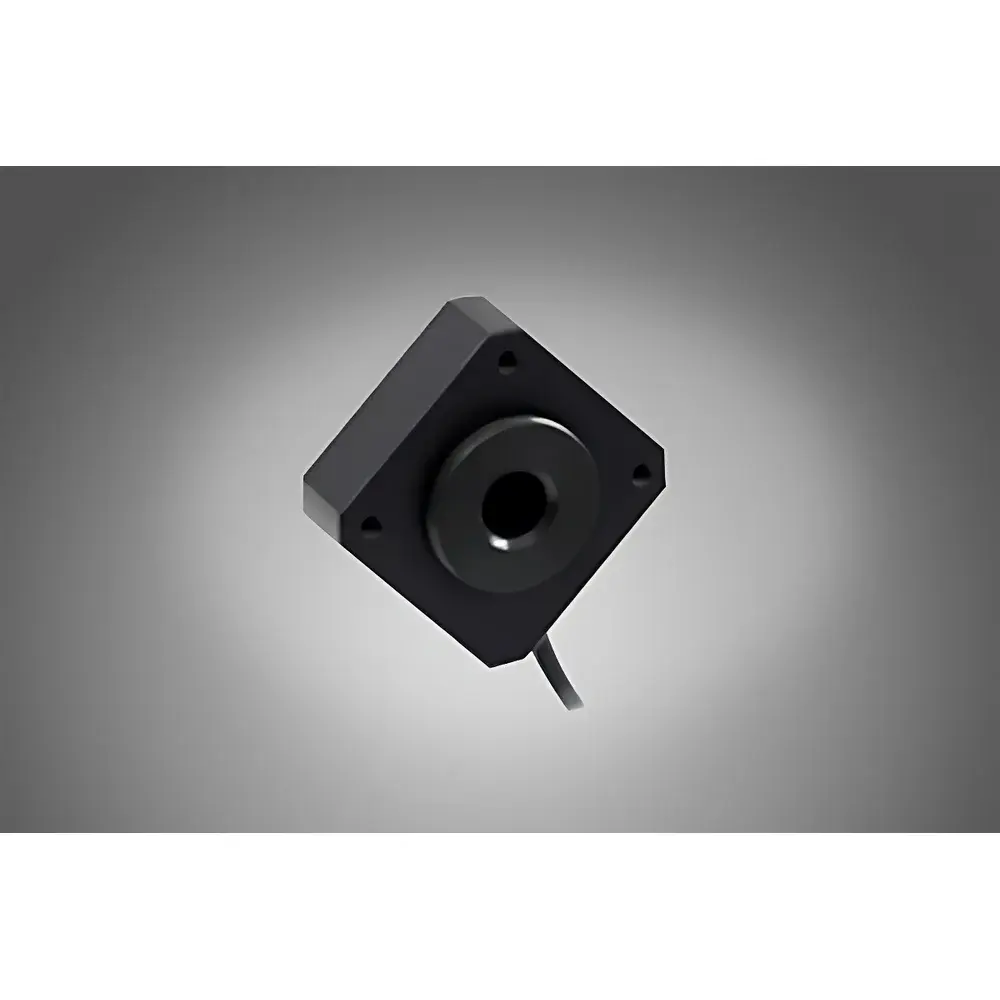
| Photosensitive Area | Ø3 mm (customizable) |
| Max. Measurable Power | +3 dBm |
| Min. Measurable Power | −70 dBm |
| Nonlinearity | <0.5% |
| Measurement Uncertainty | ±2% |
| Calibration | Built-in traceable calibration |
| Output Interface | USB 2.0 High-Speed |
| Optical Input | FC/PC connector and free-space coupling |
| Optional Accessory | OD3 calibrated neutral-density attenuator |
Overview
The ATP Optosky ATM5100 is an ultra-high-speed, USB-powered near-infrared (NIR) optical power meter engineered for precision real-time photonic power monitoring in R&D, manufacturing, and field-deployable test environments. Operating on the principle of calibrated photodiode-based detection with integrated transimpedance amplification, the ATM5100 delivers high-fidelity analog-to-digital conversion at a sustained sampling rate of 2 MHz—enabling capture of transient optical events such as laser pulses, modulated communication signals (e.g., 10G/25G PON), and fast-switching VCSEL bursts. Its spectral response spans 800–1650 nm, covering key telecom bands (O-, E-, S-, C-, L-, and U-bands), fiber-optic sensor interrogation windows, and common NIR spectroscopy sources. The Ø3 mm active area provides optimal balance between responsivity and spatial uniformity; optional customization supports larger apertures or fiber-coupled variants for system integration. All units undergo factory calibration traceable to NIM (National Institute of Metrology, China) standards, with built-in compensation for temperature drift and wavelength-dependent responsivity.
Key Features
- Real-time 2 MHz sampling rate—supports waveform reconstruction of optical transients down to 500 ns pulse width
- Wide dynamic range: −70 dBm to +3 dBm (100 pW to 2 mW), enabling characterization of low-power sensors and high-power pump diodes without manual range switching
- Low nonlinearity (<0.5%) ensures accurate linearity across full scale—critical for optical link budget validation and amplifier gain measurement
- Built-in traceable calibration eliminates need for external recalibration under standard lab conditions (23 ±2 °C, 40–60% RH)
- USB 2.0 interface enables plug-and-play operation with no external power supply required—compatible with Windows, Linux, and macOS via vendor-provided SDK and SCPI-compatible command set
- Dual optical input options: standardized FC/PC physical contact connector and collimated free-space port—facilitates rapid transition between fiber-based and free-beam setups
- OD3 calibrated neutral-density attenuator available as accessory for extending upper measurement limit to +33 dBm when used with appropriate beam conditioning
Sample Compatibility & Compliance
The ATM5100 is compatible with single-mode and multimode fibers (including SMF-28, OM1–OM5), pigtailed laser diodes, FP/DFB/VCSEL sources, and NIR LEDs. It meets IEC 61315:2020 requirements for optical power meter performance verification and conforms to general safety principles outlined in IEC 61010-1 for electrical equipment used in measurement. While not certified for medical or aerospace-grade qualification, its design supports GLP-compliant documentation workflows: measurement logs include timestamp (UTC), instrument ID, calibration expiration date, and user-defined metadata fields. Firmware supports audit-trail-enabling mode per internal QA protocols, and raw data export is provided in CSV and HDF5 formats for traceability.
Software & Data Management
The ATM5100 ships with ATP PowerView™—a cross-platform application offering real-time waveform display, statistical analysis (min/max/avg/rms), histogram generation, and trigger-based acquisition. The included SDK provides C/C++, Python (PyATM), and LabVIEW VIs for OEM integration into automated test systems (ATE). All measurements are time-stamped with microsecond resolution and support configurable averaging (1–10,000 samples) to optimize SNR vs. bandwidth trade-offs. Data files embed EXIF-like headers containing instrument configuration, environmental conditions (if external sensor connected), and calibration certificate reference numbers—ensuring full metrological traceability per ISO/IEC 17025 clause 7.7.
Applications
- Characterization of pulsed NIR lasers in LiDAR development and time-of-flight sensing
- Verification of optical output stability in 10G–100G coherent transceivers and silicon photonics test benches
- In-line power monitoring during fiber Bragg grating (FBG) interrogator calibration and distributed acoustic sensing (DAS) system commissioning
- Education and training labs requiring cost-effective, portable NIR instrumentation with industrial-grade specifications
- Field service diagnostics for passive optical networks (PON), including GPON/XG-PON upstream power validation
FAQ
Is the ATM5100 compliant with FDA 21 CFR Part 11 for electronic records?
No—the ATM5100 is not validated for regulated pharmaceutical or clinical use; however, its data export architecture supports third-party 21 CFR Part 11 compliance when deployed within validated laboratory information management systems (LIMS).
Can the Ø3 mm photosensitive area be replaced with a larger aperture for free-space beam profiling?
Yes—custom apertures up to Ø10 mm are available upon request; optical uniformity and linearity are re-validated for each configuration.
Does the built-in calibration remain valid after firmware updates?
Yes—calibration coefficients are stored in write-protected memory and unaffected by firmware upgrades; only physical damage or exposure beyond specified environmental limits requires recalibration.
What is the typical rise time of the photodiode front-end?
The analog signal path has a measured 10–90% rise time of ≤180 ns, consistent with the 2 MHz sampling capability and anti-aliasing filter design.
Is SCPI command support available over USB?
Yes—full SCPI-1999 subset implementation is provided, including *IDN?, MEAS:POW?, CALC:LIM:UPP?, and TRIG:SOUR IMM.