
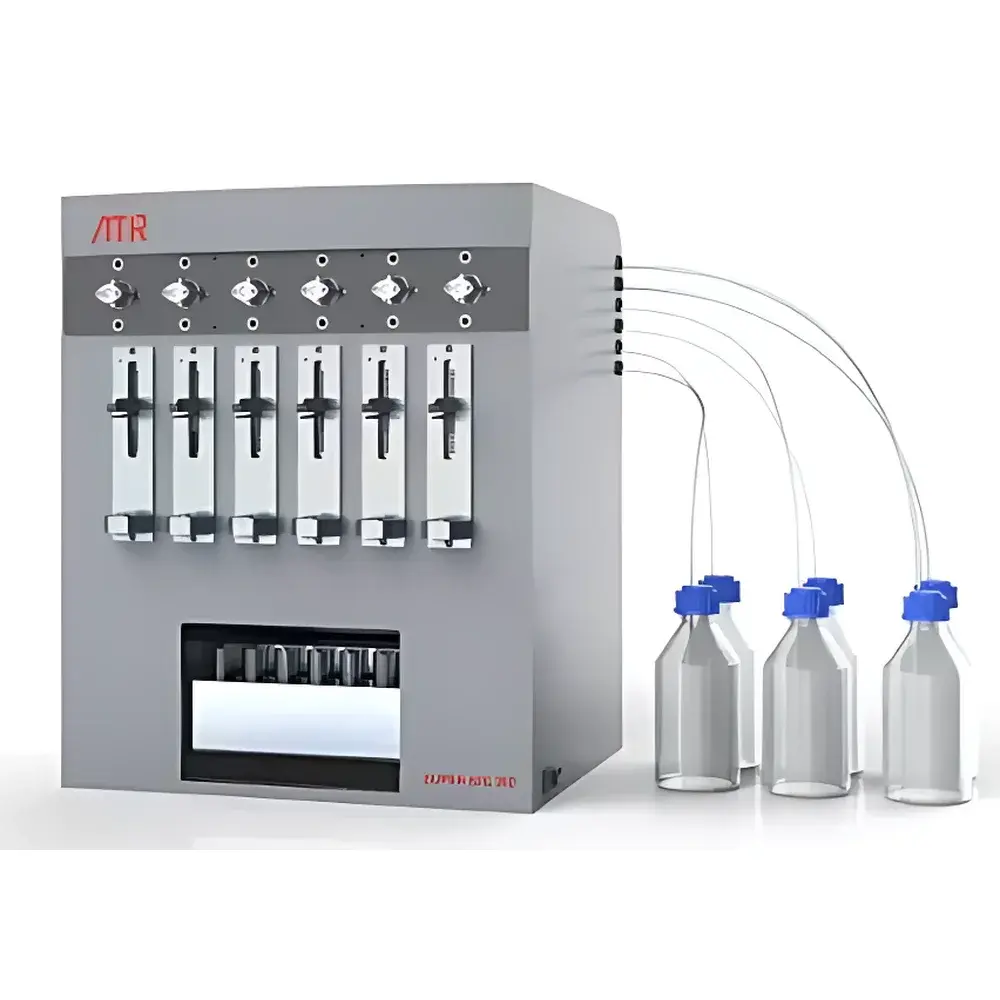
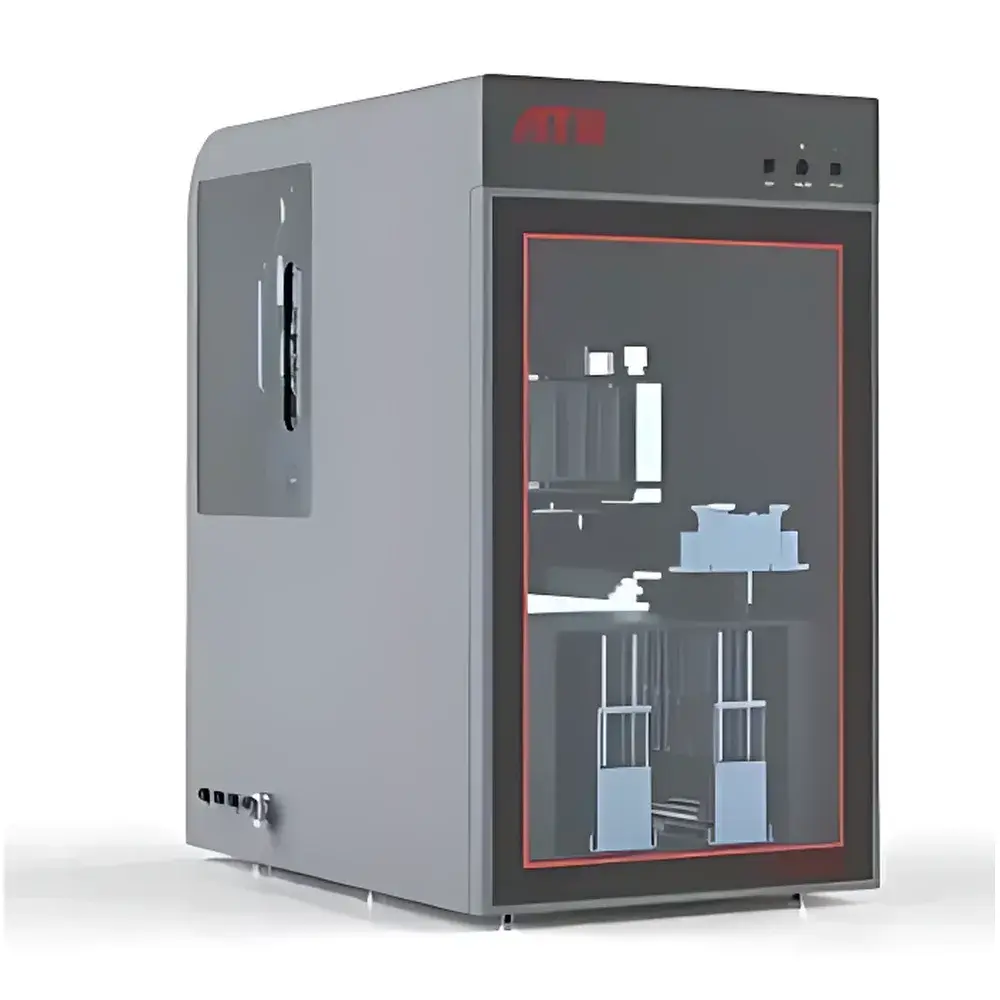
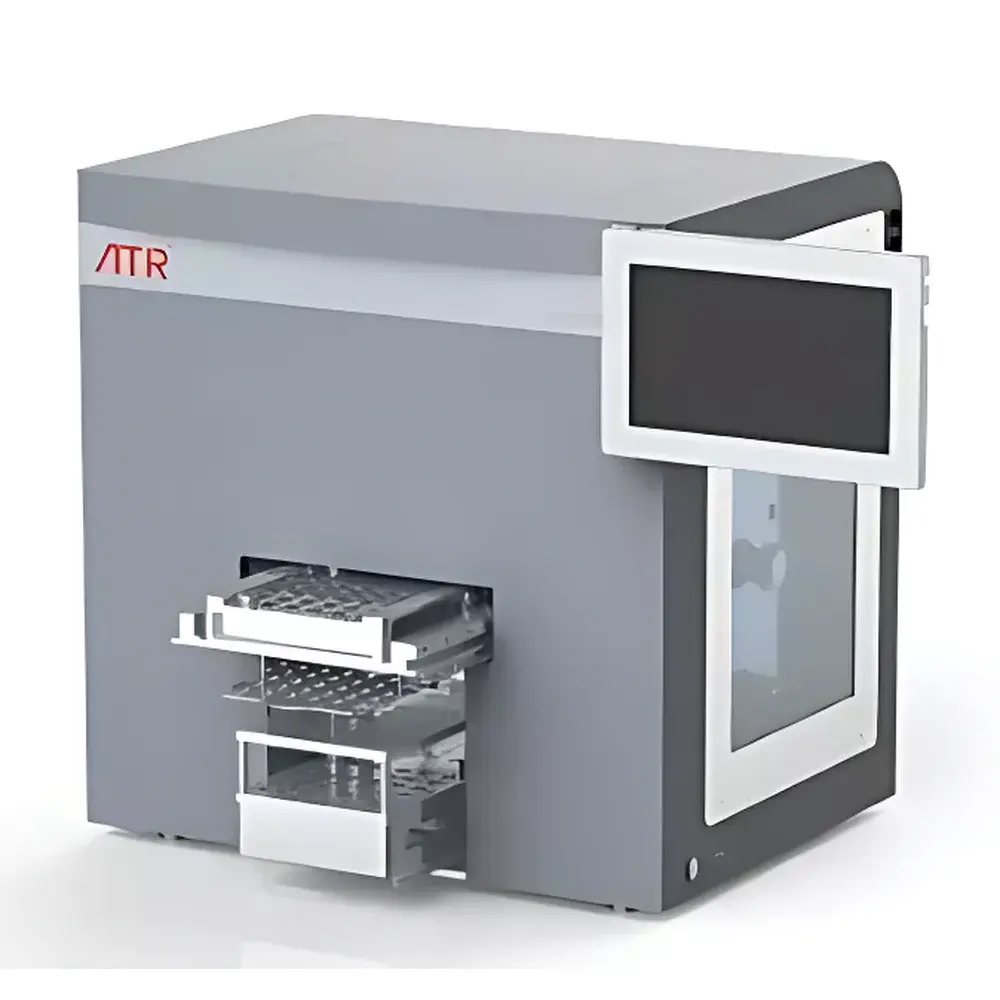
ATR SPE360/330/200 Series Fully Automated Solid Phase Extraction System
| Brand | ATR |
|---|---|
| Origin | USA |
| Model | SPE360/SPE330/SPE200 |
| Automation Level | Fully Automatic |
| Channel Count | 6 (SPE360), Multi-Channel (SPE330), Dual-Channel (SPE200) |
| Extraction Type | Cartridge-Based SPE |
| Flow Rate Control | 0.1–60 mL/min |
| Solvent Types Supported | 6 (SPE360), 8 (SPE330 & SPE200) |
| Sample Capacity | 36 samples (SPE360), 6 samples (SPE330), 2 samples (SPE200) |
| Sample Load Volume | 10–20,000 mL (SPE360/SPE330), 1–1,000 mL (SPE200) |
| Solvent-Wetted Materials | PTFE |
| Volumetric Accuracy | ±1.0% (system), ±1.5% (peristaltic pump) |
Overview
The ATR SPE360/330/200 Series represents a family of fully automated solid phase extraction (SPE) systems engineered for high-throughput, reproducible sample preparation in regulated and research laboratories. These instruments implement positive-pressure, cartridge-based SPE methodology—applying precisely controlled nitrogen or inert gas pressure to drive sample and solvent through bonded-phase sorbent cartridges—ensuring consistent flow dynamics, minimal channel-to-channel variability, and reduced risk of channel clogging compared to vacuum manifold systems. Designed for compliance-critical environments, the platform supports method standardization across water analysis, food safety testing, pharmaceutical impurity profiling, environmental monitoring (EPA Methods 500, 525, 8081, 8270), and clinical toxicology workflows. Each model shares core fluidic architecture and PTFE-wetted pathways to ensure chemical compatibility with aggressive solvents (e.g., acetonitrile, dichloromethane, methanol, ethyl acetate) and prevent analyte adsorption or leaching.
Key Features
- Fully automated operation with intuitive 12-inch capacitive touchscreen interface supporting multi-language UI and method library management
- PTFE-only solvent-contacting components—including tubing, valves, manifolds, and cartridge holders—ensuring inertness, low background, and resistance to halogenated and acidic solvents
- Precision flow control from 0.1 to 60 mL/min via calibrated peristaltic pumps with real-time feedback and programmable ramp profiles
- Integrated evaporation and quantitative concentration capability down to 0.5 mL or 1.0 mL (SPE330 & SPE200 models), eliminating manual transfer steps and reducing analyte loss
- Modular channel design: SPE360 offers six parallel processing channels for batched 36-sample runs; SPE330 provides scalable multi-channel flexibility; SPE200 delivers dual-channel precision ideal for method development and low-volume validation studies
- Programmable solvent selection from up to eight independent reservoirs (SPE330/SPE200) or six (SPE360), enabling complex multi-step protocols including conditioning, loading, washing, and elution without manual intervention
Sample Compatibility & Compliance
The ATR SPE platform accommodates standard 1 mL, 3 mL, 6 mL, and 12 mL SPE cartridges from major suppliers (e.g., Waters, Agilent, Thermo Fisher, Phenomenex). It supports both reversed-phase (C18, C8), ion-exchange (SCX, SAX), and mixed-mode sorbents. All models comply with fundamental requirements of ISO/IEC 17025 for method validation and are routinely deployed in laboratories operating under EPA, FDA, and CDC regulatory frameworks. The system’s deterministic timing, traceable flow calibration, and audit-ready event logging support GLP and GMP documentation needs. While not inherently 21 CFR Part 11 compliant out-of-the-box, the software architecture permits integration with validated electronic lab notebook (ELN) or LIMS platforms that provide electronic signatures, audit trails, and user access controls.
Software & Data Management
The embedded firmware enables creation, storage, and execution of SOP-driven methods with full parameter logging—including actual flow rates, elapsed times per step, solvent usage, and cartridge position status. Method files include metadata fields for analyst ID, instrument serial number, and date/time stamps. Raw log data exports in CSV format for external QA review or statistical process control (SPC) analysis. Optional PC-based software extends functionality with remote monitoring, fleet-wide method synchronization, and customizable report generation aligned with internal QA templates or external submission formats (e.g., EPA Form 4200-1).
Applications
- Environmental analysis: Trace-level quantification of pesticides, PAHs, pharmaceuticals, and endocrine disruptors in surface water, wastewater, and drinking water per EPA Method 525.3 and ISO 19979
- Food and beverage testing: Multi-residue screening of mycotoxins, veterinary drugs, and plasticizers in milk, juice, honey, and infant formula
- Pharmaceutical QC/QA: Cleanup of biological matrices (plasma, urine) prior to LC-MS/MS analysis of drug metabolites and impurities per ICH M10 guidance
- Clinical toxicology: High-recovery isolation of opioids, stimulants, and benzodiazepines from whole blood and oral fluid specimens
- Academic and contract research: Reproducible method development across diverse sorbent chemistries and matrix types, with built-in optimization tools for flow rate and solvent strength gradients
FAQ
What is the maximum sample volume supported by each model?
The SPE360 and SPE330 accept sample volumes from 10 mL to 20,000 mL; the SPE200 supports 1–1,000 mL (extendable to 1,000 mL with optional hardware configuration).
Can the system handle viscous or particulate-laden samples?
Yes—integrated inline filtration (optional) and programmable low-flow priming steps mitigate clogging; PTFE filter frits and large-bore manifolds enhance robustness with turbid or high-fat extracts.
Is method transfer between SPE360 and SPE200 straightforward?
Method parameters (flow rates, solvent sequences, dwell times) are exportable and manually adaptable; however, channel count and concentration capabilities require protocol revalidation per ICH Q2(R2).
Does the system support custom cartridge configurations or third-party consumables?
It accepts all industry-standard SPE cartridges with 1/4″-28 threaded ports; custom fixture plates are available upon request for non-standard formats.
What maintenance intervals are recommended for routine operation?
Peristaltic pump tubing should be replaced every 3–6 months depending on solvent aggressiveness and daily run volume; PTFE manifolds require only periodic visual inspection and solvent flush—no scheduled replacement.



