
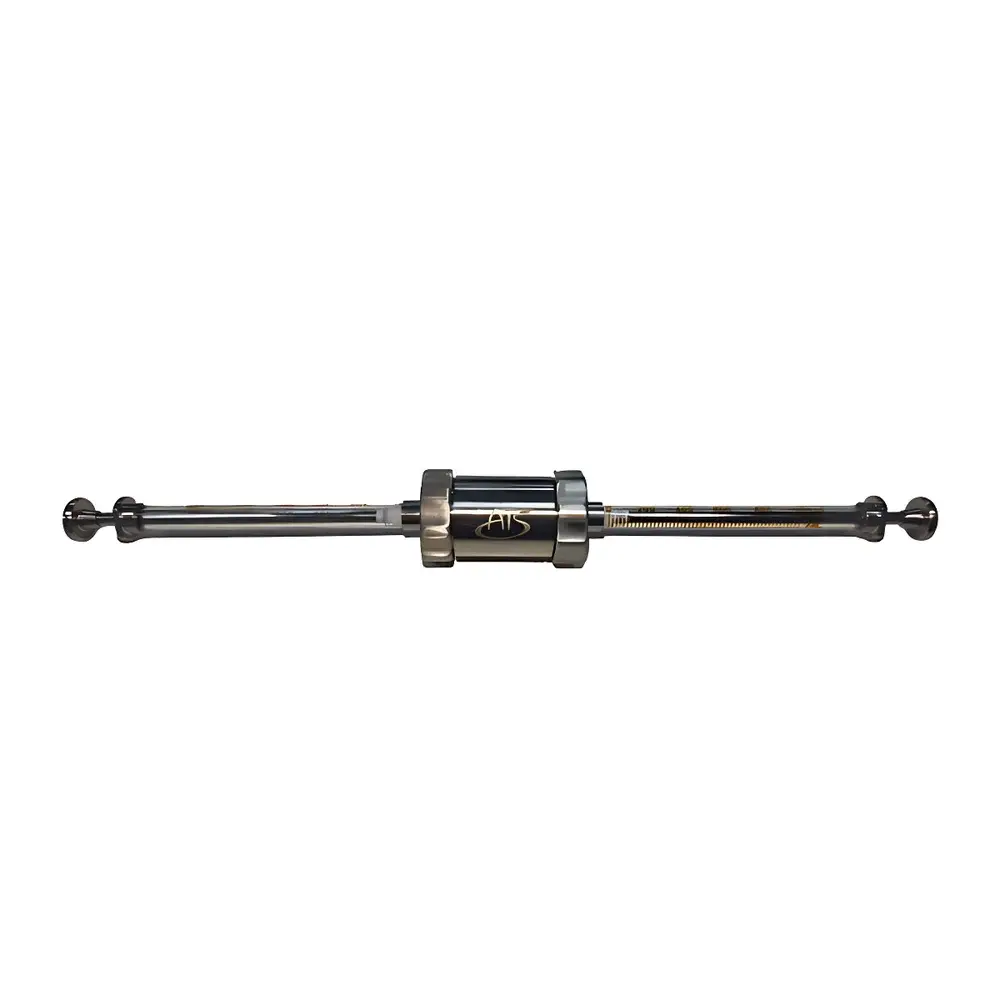
ATS ATS NF-1 Liposome Extruder
| Brand | ATS |
|---|---|
| Origin | Canada |
| Manufacturer | ATS (Producer) |
| Product Type | Imported |
| Model | NF-1 |
| Sample Volume | 0.1–1 mL |
| Membrane Pore Sizes Available | 50, 100, 200, 400, 800, 1000 nm |
| Included Components | 2 × 1000 µL glass syringes, 1 extrusion module, 20 membranes (200 nm & 400 nm standard) |
| Temperature Compatibility | Water-bath compatible (ambient to 60 °C) |
| Residual Volume | ≤1 µL per cycle |
| Weight | <2 kg |
| Optional Upgrades | Mechanical stabilization base, nitrogen-driven pressure control system with adjustable pressure (0.1–6 bar), programmable cycle count and dwell time |
Overview
The ATS NF-1 Liposome Extruder is a precision-engineered, manually operated extrusion device designed for the reproducible size reduction and homogenization of lipid-based nanocarriers—primarily liposomes—in laboratory-scale nanomedicine development. It operates on the principle of membrane extrusion: a defined volume of pre-formed liposome suspension is loaded into dual calibrated glass syringes and forced under controlled manual pressure through stacked polycarbonate or track-etched membranes with precisely certified pore diameters. This mechanical shear process enables deterministic particle sizing by physical sieving, eliminating reliance on sonication-induced thermal stress or detergent-mediated reconstitution. The NF-1 is optimized for low-volume processing (0.1–1 mL per cycle), minimal residual loss (<1 µL), and full compatibility with temperature-sensitive formulations—including thermolabile phospholipids (e.g., DPPC, DSPC), encapsulated proteins, mRNA, or heat-labile small molecules—via external water-bath integration.
Key Features
- High-precision dual-syringe architecture with borosilicate glass barrels (1000 µL each) and PTFE-tipped plungers ensuring chemical inertness and leak-free operation.
- Modular extrusion head with standardized Luer-Lok interfaces, enabling rapid membrane exchange and cross-contamination prevention between batches.
- Comprehensive membrane portfolio: certified track-etched polycarbonate membranes available in six nominal pore sizes (50, 100, 200, 400, 800, and 1000 nm), each supplied with individual lot-specific certification of pore size distribution (±5% tolerance per ISO 16889).
- Thermal management support: integrated O-ring sealed housing compatible with circulating water baths (operating range: 4–60 °C), maintaining formulation integrity during extrusion.
- Full disassembly capability: all wetted components—including syringes, pistons, spacers, and membrane holders—are autoclavable (121 °C, 20 min) or suitable for ultrasonic cleaning in aqueous or ethanol-based solutions.
- Lightweight portable design (<2 kg total mass) with ergonomic handle geometry, facilitating benchtop use in BSL-2 labs, cleanrooms, or mobile GMP pilot facilities.
Sample Compatibility & Compliance
The NF-1 supports a broad range of lipid formulations, including multilamellar vesicles (MLVs), large unilamellar vesicles (LUVs), and polymer-stabilized hybrid nanoparticles. It is routinely validated for use with phosphatidylcholine (PC), cholesterol, DSPE-PEG conjugates, and cationic lipids (e.g., DOTAP). Residual volume minimization (<1 µL) ensures high recovery yield—critical for precious biologics such as siRNA or CRISPR ribonucleoprotein complexes. The device conforms to ISO 13485-aligned manufacturing practices at ATS’s Canadian facility and supports documentation required for GLP-compliant preclinical studies. While not an automated GMP system, its mechanical consistency, traceable membrane lot data, and compatibility with audit-ready nitrogen-driven upgrade kits enable seamless transition from discovery to Phase I clinical material production under FDA 21 CFR Part 11–compliant software environments.
Software & Data Management
The base NF-1 model is hardware-only and requires manual operation; however, the optional nitrogen-driven actuation kit integrates with ATS’s proprietary ExtrusionLog™ software (v3.2+). This platform records real-time pressure profiles, cycle counts, dwell times, and temperature logs synchronized with membrane lot IDs. All data are stored in encrypted SQLite databases compliant with ALCOA+ principles (Attributable, Legible, Contemporaneous, Original, Accurate, Complete, Consistent, Enduring, Available). Export formats include CSV, PDF audit reports, and XML-compatible metadata for LIMS integration. Software validation packages (IQ/OQ/PQ) are available upon request for regulated environments.
Applications
- Preparation of uniform liposomal drug carriers for oncology (e.g., doxorubicin, cisplatin), vaccine adjuvants (e.g., AS01B analogues), and nucleic acid delivery (siRNA, mRNA, pDNA).
- Size calibration and monodispersity optimization prior to dynamic light scattering (DLS), cryo-TEM, or nanoparticle tracking analysis (NTA).
- Process development for scalable extrusion protocols—validated correlation between NF-1 parameters and industrial-grade systems (e.g., Avanti Mini-Extruder series, Lipex Extruder) enables direct linear scale-up.
- Stability assessment of lipid nanoparticles under thermal or mechanical stress conditions via repeated extrusion cycles.
- Quality-by-Design (QbD) studies supporting ICH Q5A(R2) and Q5C guidelines for biological product characterization.
FAQ
What is the minimum recommended sample volume for reliable extrusion?
0.1 mL is the validated lower limit; volumes below this may result in incomplete membrane wetting and inconsistent sizing.
Can the NF-1 be used with organic solvents such as chloroform or methanol?
No—only aqueous buffers, saline, and ethanol/water mixtures (<30% v/v ethanol) are compatible with the PTFE seals and glass syringes.
How often should membranes be replaced?
Each membrane is intended for single-use per formulation batch to prevent carryover; reuse is not recommended even for identical compositions due to irreversible pore deformation after pressurization.
Is the nitrogen-driven upgrade compatible with existing NF-1 units?
Yes—the pneumatic actuation module mounts directly onto the original extrusion head without modification and retains all legacy accessories.
Does ATS provide membrane certification documentation?
Yes—each membrane lot includes a Certificate of Conformance with pore size distribution histograms, bubble point test results, and traceable NIST-traceable calibration data.
Related Products




