
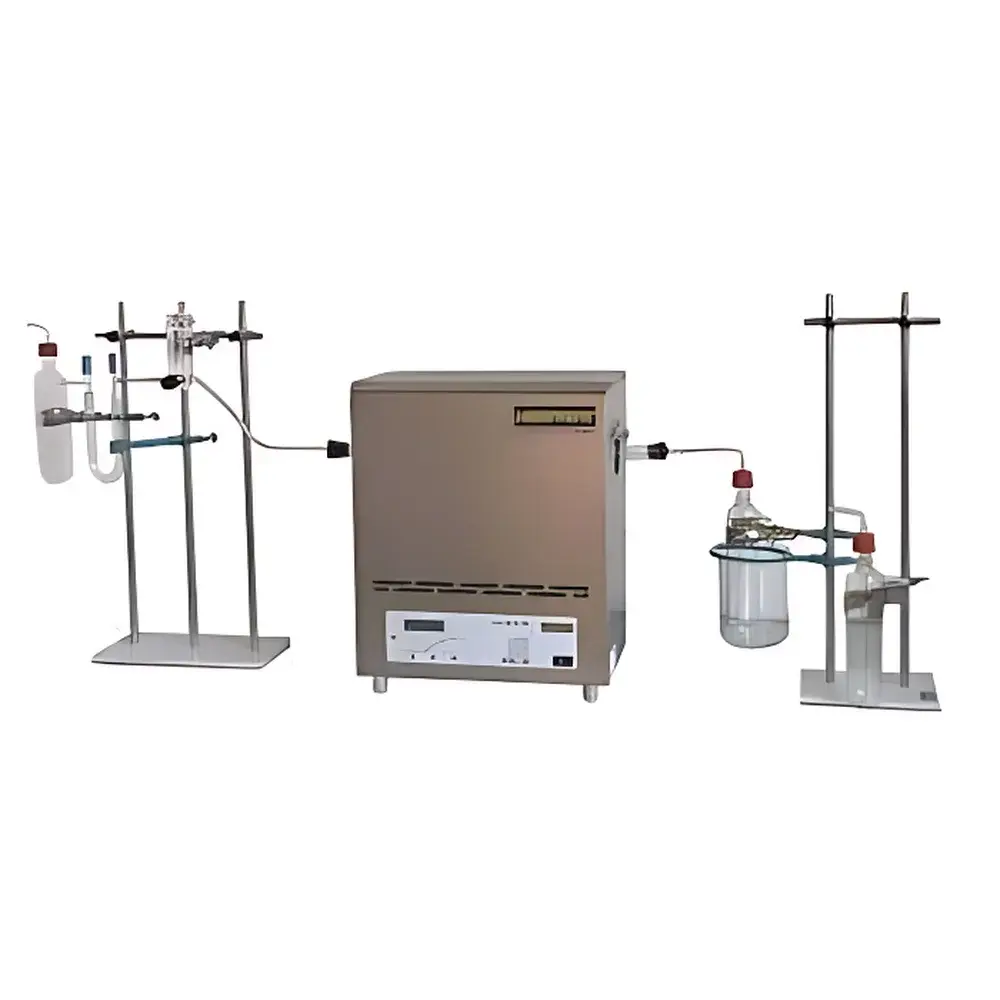
ATSFAAR CB-1200 Carbon Black Content Analyzer for Rubber & Plastics
| Brand | ATSFAAR |
|---|---|
| Origin | Italy |
| Manufacturer Type | Authorized Distributor |
| Origin Category | Imported |
| Model | CB-1200 |
| Pricing | Upon Request |
| Compliance | ASTM D1603, ISO 6964, DIN 53582 |
| Max Temperature | 1200 °C |
| Furnace Chamber | Ø30 mm × 250 mm (tubular quartz-lined) |
| Control System | Microprocessor-based digital temperature controller |
| Sample Vessel | High-purity ceramic crucible (combustion boat) |
| Accessories | Quartz tube assembly, metal support stand, gas inlet fittings, exhaust adapter |
Overview
The ATSFAAR CB-1200 Carbon Black Content Analyzer is a dedicated thermal gravimetric system engineered for the precise quantification of carbon black loading in rubber compounds, thermoplastic elastomers, and filled polymeric materials. It operates on the principle of controlled pyrolytic combustion under inert or oxidative atmospheres—enabling selective volatilization of organic polymer matrices while retaining inorganic fillers and carbon black residue. The instrument implements the standardized methodology defined in ASTM D1603 (“Standard Test Method for Carbon Black Content in Polyethylene and Polypropylene Compounds”), with full technical alignment to ISO 6964 (“Rubber—Determination of carbon black content—Thermogravimetric method”) and DIN 53582 (“Plastics—Determination of carbon black content”). Its tubular furnace architecture—featuring a 30 mm internal diameter and 250 mm active heating zone—is lined with high-purity fused quartz to ensure thermal stability, chemical inertness, and resistance to soot deposition during repeated high-temperature cycles up to 1200 °C.
Key Features
- Microprocessor-controlled furnace with PID-regulated temperature profile, programmable ramp rates (0.1–20 °C/min), and ±1 °C thermal accuracy across 100–1200 °C range
- Quartz-tube reaction chamber enabling rapid atmospheric exchange (N₂, air, or synthetic air) and minimizing cross-contamination between runs
- Dedicated ceramic combustion boats rated for continuous use at ≥1100 °C, optimized for uniform sample distribution and complete char oxidation
- Integrated mechanical support frame with height-adjustable clamping system for reproducible quartz tube positioning and thermal gradient management
- Gas flow control interface compatible with standard laboratory gas manifolds (0–5 L/min range), including pressure relief and leak-tested fittings
- CE-marked electrical architecture compliant with IEC 61010-1 for laboratory equipment safety
Sample Compatibility & Compliance
The CB-1200 accommodates solid, granular, or pelletized samples up to 2.0 g per analysis—covering vulcanized rubber sheets (e.g., SBR, EPDM, NBR), masterbatch pellets, extruded TPE profiles, and injection-molded polyolefin components. Sample geometry is constrained only by the 25 mm maximum width and 10 mm maximum thickness compatible with standard ceramic boats. All operational protocols adhere to Good Laboratory Practice (GLP) documentation requirements, supporting audit-ready traceability when paired with optional external balance integration (0.0001 g resolution). The system meets regulatory expectations for QC laboratories operating under ISO/IEC 17025 accreditation frameworks and supports data integrity compliance per FDA 21 CFR Part 11 when used with validated third-party LIMS interfaces.
Software & Data Management
While the CB-1200 operates as a standalone hardware platform with front-panel digital display and manual data recording, it is fully compatible with industry-standard laboratory informatics systems. Raw mass loss curves (initial mass → residual mass) are exportable via RS-232 or USB-to-serial interface for post-processing in Excel, MATLAB, or dedicated thermal analysis suites (e.g., TA Instruments Universal Analysis, Netzsch Proteus). Optional firmware upgrade enables time-stamped event logging—including furnace ignition, setpoint attainment, gas switching, and cool-down initiation—supporting full analytical traceability. Calibration verification reports (using certified reference materials such as NIST SRM 1921b) can be archived alongside batch records for internal quality audits.
Applications
- Quality assurance of carbon black–filled rubber compounds in tire manufacturing (tread, sidewall, carcass compounds)
- Verification of pigment loading consistency in automotive interior trim and under-hood elastomeric seals
- Batch release testing for conductive polyethylene cables and EMI-shielding polymer composites
- R&D screening of novel filler dispersion technologies (e.g., surface-modified carbon black, hybrid nanofillers)
- Failure analysis of premature cracking or UV degradation linked to suboptimal carbon black concentration
- Regulatory submission support for REACH SVHC screening and RoHS-compliant material declarations
FAQ
What standards does the CB-1200 directly support?
ASTM D1603, ISO 6964, DIN 53582, and JIS K 6232 are natively implemented through its thermal program structure and hardware configuration.
Can the system operate under both inert and oxidative atmospheres?
Yes—gas selection (N₂, compressed air, or synthetic air) is manually configured via external manifold; no internal gas mixing module is required.
Is calibration traceable to national metrology institutes?
Instrument temperature calibration is performed using ITS-90 traceable reference thermocouples; mass loss validation requires external analytical balance certified to ISO/IEC 17025.
What maintenance intervals are recommended for routine operation?
Quartz tube inspection every 100 cycles; ceramic boat replacement after 500 high-temperature runs; furnace insulation integrity check annually.
Does the CB-1200 include software for automated report generation?
No native reporting software is bundled; however, CSV-exported mass/time datasets integrate seamlessly with validated lab informatics platforms.





