
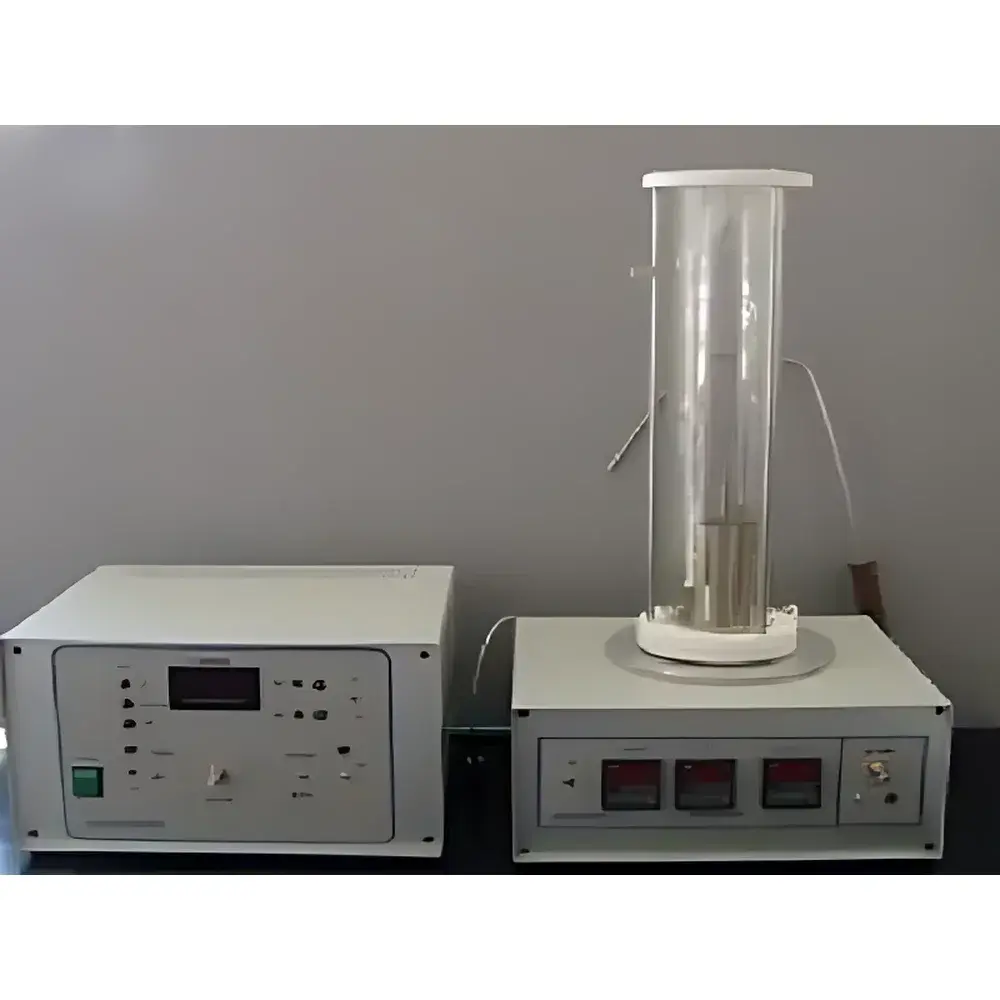
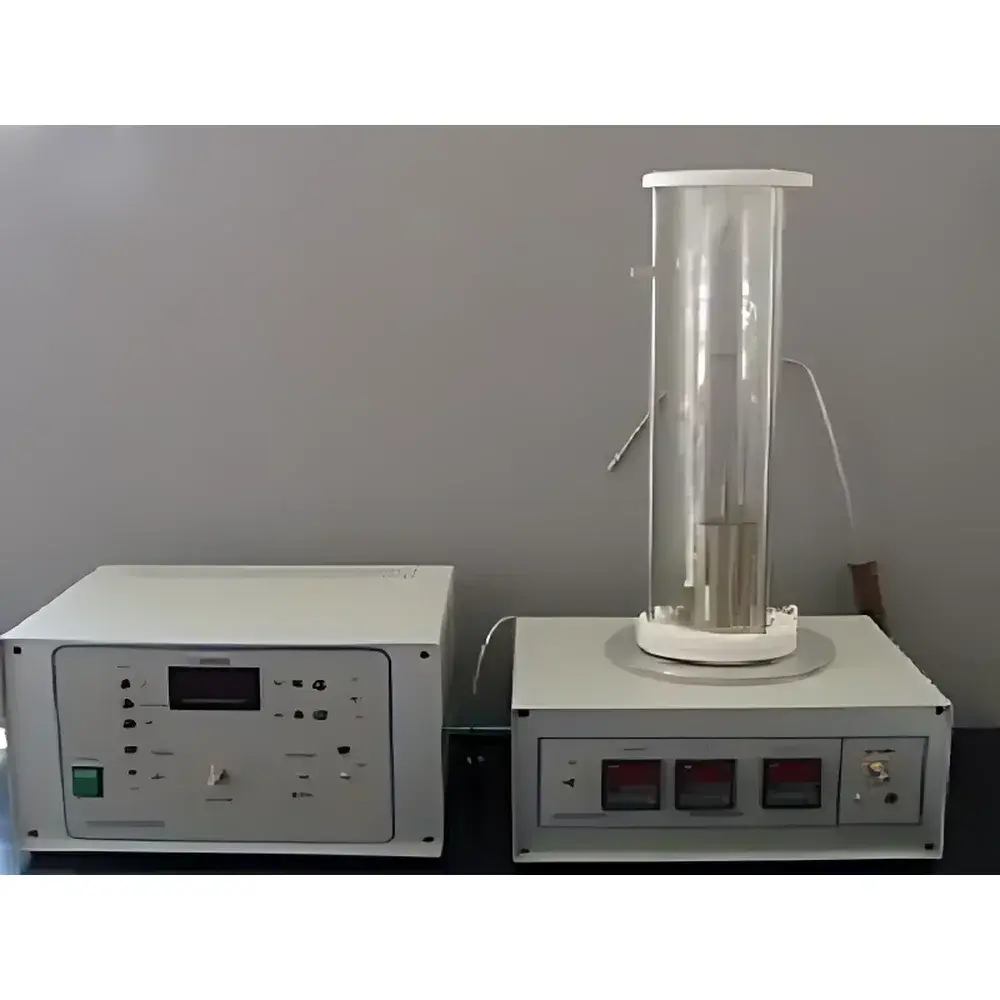
ATSFAAR Code 10004050 Automatic Oxygen Index Tester
| Brand | ATSFAAR |
|---|---|
| Origin | Italy |
| Manufacturer Type | Authorized Distributor |
| Origin Category | Imported |
| Model | Code 10004050 |
| Pricing | Upon Request |
Overview
The ATSFAAR Code 10004050 Automatic Oxygen Index Tester is a precision-engineered instrument designed to determine the Limiting Oxygen Index (LOI) of solid polymeric materials in accordance with international standards including ISO 4589-2, ASTM D2863, and GB/T 2406. LOI is defined as the minimum volume percentage of oxygen in an oxygen–nitrogen mixture required to support candle-like combustion of a vertically oriented specimen under specified test conditions. This system employs paramagnetic oxygen sensing technology for real-time, high-stability monitoring of O₂ concentration at the gas inlet manifold. Unlike conventional manual three-valve systems, the Code 10004050 integrates a single, digitally actuated mixing control valve that dynamically balances O₂ and N₂ mass flows to maintain both target oxygen concentration (±0.1% vol) and total gas flow rate (fixed per standard requirements) simultaneously—eliminating iterative manual recalibration and ensuring metrological consistency across operator experience levels.
Key Features
- Paramagnetic oxygen sensor with continuous real-time monitoring at the gas inlet, ensuring traceable and drift-compensated O₂ measurement
- Integrated automatic gas mixing module featuring a single servo-controlled proportional valve—replaces legacy triple independent flow regulators
- Precision mass flow control achieving ±0.1% volumetric accuracy for O₂/N₂ blends across the full 0–100% O₂ range
- Digital O₂ concentration display (0–100% vol, resolution 0.01%) with configurable alarm thresholds and data logging capability
- Universal sample holder accommodating rigid plastics, foams, textiles, and elastomers (ASTM D2863-compliant dimensions)
- Propane-based ignition system with adjustable flame height and dwell time per ISO 4589-2 clause 7.3
- Stainless-steel mixing chamber, particulate filtration, exhaust control valve, and calibrated back-pressure regulation
Sample Compatibility & Compliance
The tester supports standardized specimens measuring 150 mm × 10 mm × 4 mm (or thickness ≤10.5 mm), conforming to ISO 4589-2 Annex A and ASTM D2863 Section 6. It accommodates both thermoplastic and thermoset polymers, composites, laminates, and fiber-reinforced materials. The system meets CE marking requirements and complies with essential safety provisions of the EU Machinery Directive 2006/42/EC. All gas-handling components are certified for use with compressed industrial gases (O₂ and N₂) up to 1 MPa working pressure. Documentation includes full traceable calibration certificates for the paramagnetic sensor and flow meters, aligned with ISO/IEC 17025 principles. Optional high-temperature LOI extension (up to 400 °C) maintains 21% O₂ setpoint via feedback-controlled thermal mixing—designed for evaluating thermal degradation onset under oxidative atmospheres.
Software & Data Management
The instrument operates via embedded firmware with local touchscreen interface; optional PC connectivity (RS-232 or USB-C) enables integration into laboratory information management systems (LIMS). Raw sensor outputs—including O₂ %, total flow rate, ignition timestamp, burn duration, and char length—are timestamped and exportable in CSV format. Audit trails record all parameter changes, user logins, and calibration events, supporting GLP/GMP environments. Data integrity conforms to FDA 21 CFR Part 11 requirements when used with validated third-party software platforms. No cloud dependency or proprietary binary formats are employed—ensuring long-term archival compatibility and regulatory transparency.
Applications
This instrument is routinely deployed in polymer R&D laboratories, fire safety testing centers, quality assurance departments of cable manufacturers, aerospace material suppliers, and building product certification bodies. Typical use cases include comparative LOI screening of flame-retardant additives (e.g., phosphinates, metal hydroxides), validation of halogen-free formulations, assessment of char-forming behavior in intumescent systems, and prequalification of materials for UL 94 V-0/V-2 classification. Its automated mixing architecture significantly reduces inter-operator variability—making it especially valuable for multi-site conformity testing programs requiring harmonized results across global facilities.
FAQ
What standards does the ATSFAAR Code 10004050 comply with?
It fully implements ISO 4589-2:2017, ASTM D2863-22, and GB/T 2406.2–2009 for LOI determination.
Is calibration traceable to national standards?
Yes—oxygen sensor and mass flow controllers are supplied with UKAS-accredited (or equivalent) calibration certificates valid for 12 months.
Can the system be integrated into an existing lab network?
Yes, via serial or USB interface; ASCII-based command protocol allows scripting in Python, LabVIEW, or MATLAB.
Does the high-temperature option require external cooling or special gas lines?
No—the 400 °C extension uses internal ceramic insulation and standard stainless-steel gas tubing rated to 450 °C.
What maintenance intervals are recommended?
Paramagnetic sensor zero-check every 30 days; full calibration annually; filter replacement every 6 months under typical usage.
Related Products



