
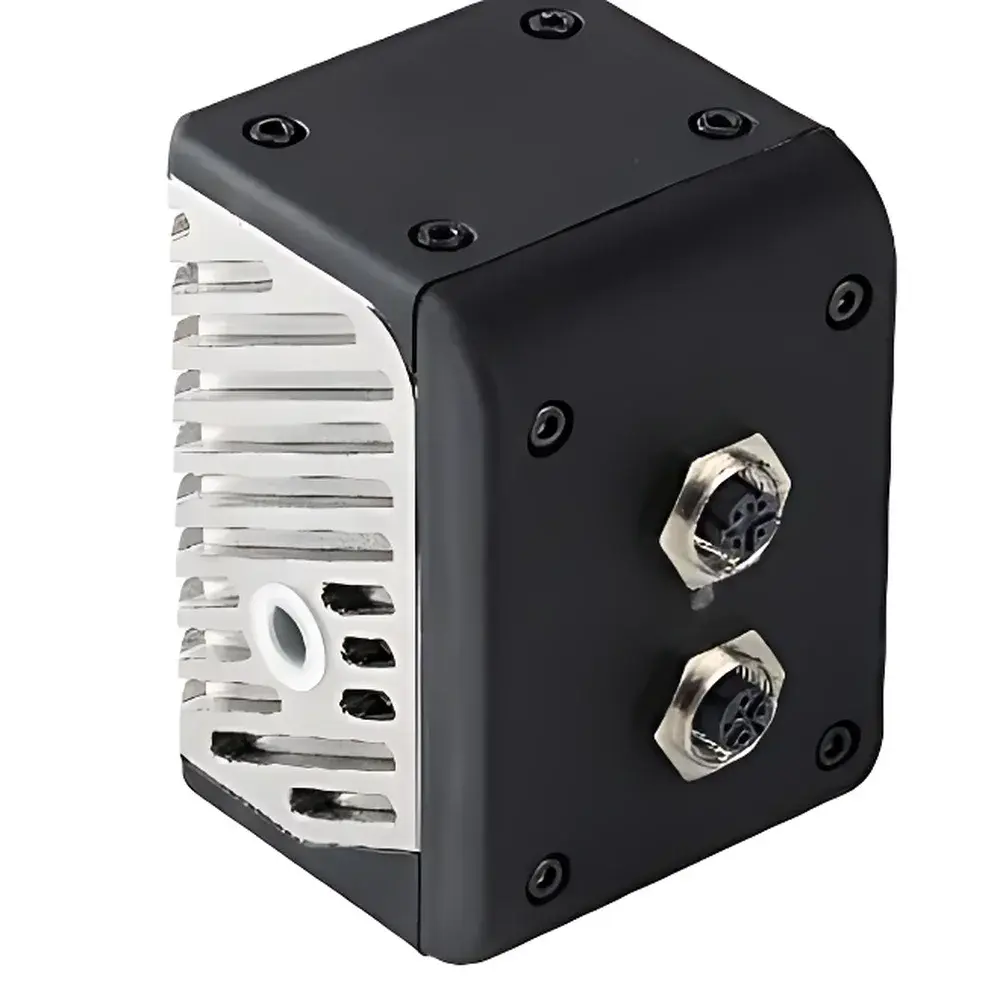
Atten2 EXS120 Explosion-Proof Online Oil Wear Particle Analyzer
| Brand | Atten2 |
|---|---|
| Origin | Spain |
| Model | EXS120 |
| Product Type | Online Instrument |
| Detection Target | Mechanical Contaminants (Particulate Wear Debris) |
| Particle Detection Threshold | ≥4 µm |
| Compliance | ATEX/IECEx Zone 1/21 Certified |
| Measurement Principle | AI-Enhanced Digital Image Analysis of In-Stream Oil Flow |
| Data Output | ISO 4406, NAS 1638, Wear Mode Classification (Fatigue, Cutting, Pitting, etc.) |
| Fluid Compatibility | Mineral Oils, Synthetic Lubricants, Hydraulic Fluids, Fuels, Coolants, Cleaning Solutions, and Aqueous Cutting Fluids |
Overview
The Atten2 EXS120 Explosion-Proof Online Oil Wear Particle Analyzer is an intrinsically safe, real-time condition monitoring system engineered for hazardous environments in oil-lubricated industrial assets. It employs high-resolution digital imaging coupled with proprietary artificial intelligence algorithms to continuously analyze particulate wear debris suspended in flowing lubricants—without interrupting system operation or requiring oil sampling. Unlike conventional offline particle counters or ferrographic analysis, the EXS120 operates on the principle of dynamic image capture within a calibrated flow cell, where particles are illuminated under controlled backlighting and imaged at frame rates sufficient to resolve morphology, size distribution, and spatial orientation. The system classifies wear mechanisms—including fatigue spalling, abrasive cutting, adhesive scuffing, and pitting—by comparing real-time particle shape signatures against a validated reference database comprising over 500 commercial lubricant-specific models and >10 years of laboratory-annotated ferrography data. Its explosion-proof enclosure meets ATEX Directive 2014/34/EU and IECEx standards for Zone 1 (gas) and Zone 21 (dust), enabling deployment directly on gearboxes, turbines, hydraulic power units, and compressors in petrochemical plants, coal mines, offshore platforms, and other Class I/II hazardous locations.
Key Features
- ATEX/IECEx-certified housing rated for Zone 1 (II 2G Ex db IIB T4 Gb) and Zone 21 (II 2D Ex tb IIIC T135°C Db)
- Real-time in-line imaging with ≥4 µm detection threshold and sub-pixel edge resolution for morphological fidelity
- AI-driven wear mode classification engine trained on >120,000 manually verified ferrograph images across 500+ lubricant formulations
- Simultaneous output of ISO 4406:2017 and NAS 1638 cleanliness codes, plus particle count per ISO 11171-compliant size bins (4–6 µm, 6–14 µm, ≥14 µm)
- Integrated bubble discrimination logic to suppress false positives from entrained air or microcavitation artifacts
- Modular mounting design supporting flanged, threaded, or clamp-on installation on pipelines with nominal diameters from DN15 to DN50
- Industrial-grade Ethernet (TCP/IP) and optional LoRaWAN/Wi-Fi 6 connectivity for secure data transmission to SCADA, CMMS, or cloud-based analytics platforms
Sample Compatibility & Compliance
The EXS120 is validated for continuous operation with mineral-based, PAO, ester, and polyglycol synthetic lubricants; hydraulic fluids (HL, HM, HVLP); turbine oils (ISO-L-TGA); diesel and jet fuels (ASTM D975, D1655); water-glycol and semi-synthetic coolants; and alkaline cleaning solutions. It complies with ISO 4406:2017 for particle contamination reporting and supports traceability per ISO/IEC 17025 requirements when integrated into laboratory-validated maintenance workflows. For regulated industries, the system’s audit trail functionality—including timestamped image archives, user-access logs, and firmware revision history—aligns with FDA 21 CFR Part 11 and EU Annex 11 expectations for electronic records in GMP-relevant asset health monitoring.
Software & Data Management
The Atten2 OilWear Intelligence Suite provides browser-based configuration, real-time dashboard visualization, and automated report generation. Each captured particle image is time-stamped, geotagged (if GPS-enabled gateway deployed), and stored with full metadata: flow rate, temperature, pressure differential, and optical gain settings. The software implements role-based access control (RBAC), encrypted TLS 1.3 communication, and configurable alert thresholds for particle concentration spikes, wear mode shifts, or cleanliness code degradation. Historical trend analysis supports Weibull-based remaining useful life (RUL) estimation for critical components. All raw image datasets and AI inference logs are exportable in HDF5 format for third-party ML model validation or integration with predictive maintenance platforms compliant with ISO 13374-2 and ISO 13379-2.
Applications
The EXS120 serves as a foundational sensor in reliability-centered maintenance (RCM) programs across energy, transportation, and heavy industry. In wind turbine gearboxes, it detects early-stage micropitting before vibration signatures emerge. In coal mine draglines and conveyor drives, it identifies cutting wear from abrasive ingress prior to catastrophic bearing failure. Power generation facilities deploy it on steam turbine lube oil systems to preempt varnish formation and filter bypass events. Marine propulsion engines benefit from its ability to distinguish fuel dilution-induced soot agglomerates from metallic wear debris. Additional validated use cases include rail traction motors, shield tunnel boring machine (TBM) gearboxes, aerospace ground support equipment hydraulics, and refinery centrifugal compressor sumps—all operating under continuous exposure to explosive atmospheres.
FAQ
What certification standards does the EXS120 meet for hazardous area installation?
The device carries full ATEX and IECEx certification for Zone 1 (gas) and Zone 21 (combustible dust), including independent verification of flameproof enclosure integrity, surface temperature limits, and ingress protection (IP66).
Can the system differentiate between wear debris and non-metallic contaminants such as seal fragments or paint chips?
Yes—the AI classifier incorporates refractive index estimation and edge texture analysis to distinguish polymer, ceramic, and carbon-based particles from ferrous/non-ferrous metals, with documented accuracy exceeding 92% in cross-validated field trials.
Is calibration required after installation, and how often must it be repeated?
The EXS120 performs self-calibration using NIST-traceable polystyrene latex microsphere standards during startup and at user-defined intervals; no field recalibration is needed unless the optical path is physically compromised.
Does the analyzer support integration with existing enterprise maintenance systems?
It natively exports OPC UA, MQTT, and Modbus TCP protocols, enabling direct ingestion into IBM Maximo, SAP PM, GE Digital Predix, and Siemens MindSphere without middleware.
How is data security ensured during wireless transmission?
All wireless communication uses AES-256 encryption, certificate-based mutual authentication, and ephemeral key exchange; local edge storage retains 30 days of full-resolution imagery even during network outages.
Related Products






