
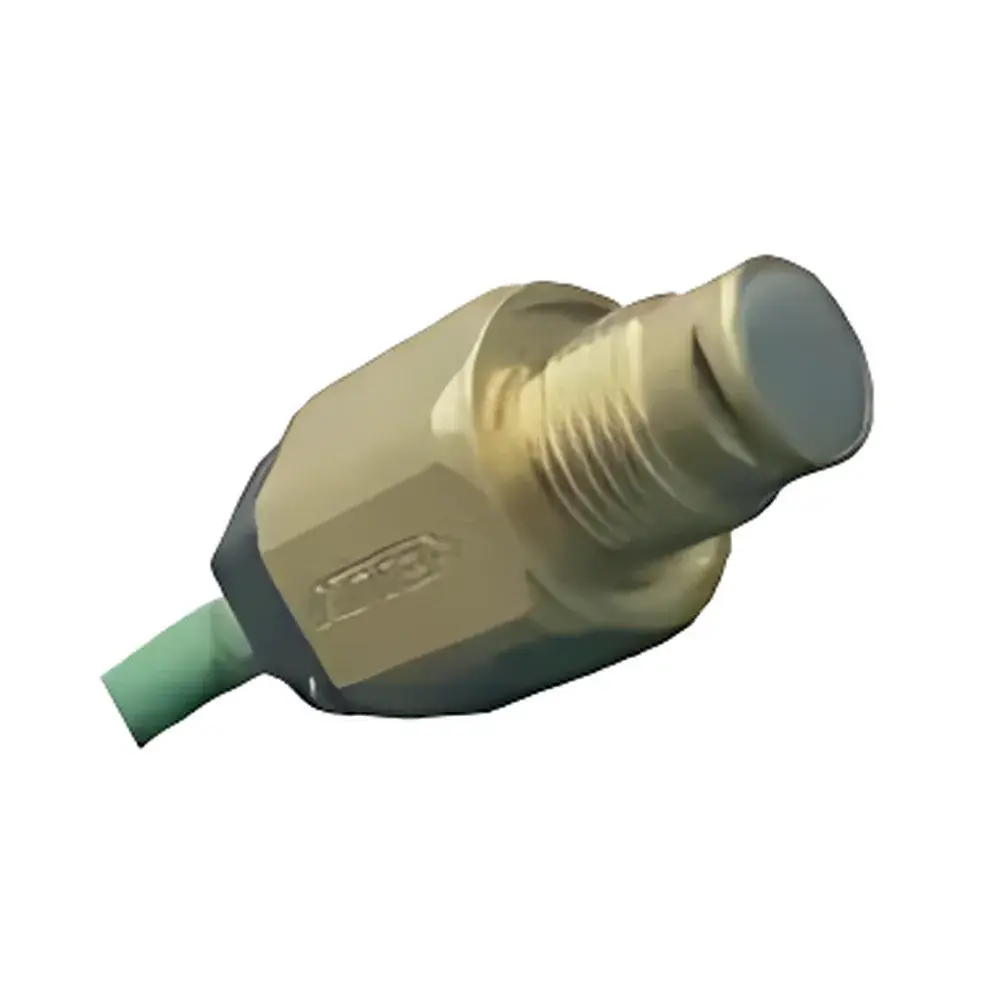
Atten2 OiHealth PROBE Online Oil Health Sensor
| Brand | Atten2 |
|---|---|
| Origin | Spain |
| Model | OiHealth PROBE |
| Product Type | Online Instrument |
| Voltage | 24 V DC |
| Current Consumption | <200 mA |
| Digital Outputs | RS485 (Modbus RTU), Ethernet RJ45 (Modbus TCP/IP, FTP, Telnet) |
| Maximum Operating Pressure | 5 bar |
| Viscosity Range | 0–460 cSt |
| Operating Temperature | −20 °C to +80 °C |
| Ingress Protection | IP65 |
| Hydraulic Connection | 1/2″ BSP |
| Certifications | CE, GL Class pending |
| Detection Principle | Optical Absorption & Scattering Spectroscopy |
Overview
The Atten2 OiHealth PROBE is an industrial-grade online oil health sensor engineered for continuous, real-time assessment of lubricant degradation in stationary or low-flow hydraulic and lubrication systems. Unlike conventional offline lab-based oil analysis methods—which require periodic sampling, transport delays, and analytical turnaround—this sensor employs a dual-wavelength optical absorption and scattering spectroscopy architecture to quantify key indicators of fluid aging, including oxidation byproducts, soot accumulation, and particulate contamination. Its non-invasive, direct-mount design enables installation directly into reservoirs, gearboxes, or static sumps without requiring system bypass loops, flow conditioning, or external pumping—significantly reducing mechanical integration complexity and eliminating sampling-related errors. The device operates autonomously under harsh industrial conditions, delivering stable, repeatable measurements across the full viscosity range of mineral, synthetic, and bio-based lubricants (0–460 cSt), while maintaining calibration integrity over extended deployment cycles.
Key Features
- Optical sensing platform with integrated temperature-compensated photodiodes and narrow-band LED sources for high signal-to-noise ratio detection
- Direct immersion mounting via standardized 1/2″ BSP thread—no external housing, flow cell, or auxiliary plumbing required
- Dual communication interfaces: isolated RS485 (Modbus RTU) for PLC integration and industrial Ethernet (RJ45) supporting Modbus TCP/IP, FTP file transfer, and Telnet-based configuration
- Robust stainless-steel probe body with IP65-rated electronics enclosure, rated for continuous operation from −20 °C to +80 °C ambient
- Low-power consumption (<200 mA at 24 V DC), compatible with standard industrial power supplies and uninterruptible backup systems
- Pressure-tolerant design validated up to 5 bar static hydraulic load—suitable for both open-sump and pressurized reservoir applications
Sample Compatibility & Compliance
The OiHealth PROBE is validated for use with ISO VG 10–680 mineral oils, PAO- and PAG-based synthetics, biodegradable ester fluids, and fire-resistant HFD-U/HFC hydraulic media. It does not require fluid homogenization or filtration prior to measurement, and exhibits minimal sensitivity to air entrainment or transient foaming due to its optical path geometry and signal processing algorithms. Regulatory compliance includes CE marking per Directive 2014/30/EU (EMC) and 2014/35/EU (LVD). Marine classification society approval (GL Class) is pending final sea-trial validation under DNV-OS-E401 and IEC 60092-502. The device supports audit-ready data logging and time-stamped event reporting, aligning with ISO 55001 asset management frameworks and facilitating alignment with preventive maintenance protocols referenced in ISO 28191 and ASTM D7887.
Software & Data Management
Data output is structured as ASCII-encoded Modbus registers containing calibrated parameters—including normalized optical density ratios, temperature-corrected spectral slope indices, and derived health metrics such as Oxidation Index (OI) and Contamination Index (CI). These values are accessible via SCADA systems, MES platforms, or cloud-based CMMS integrations. Firmware supports remote OTA updates and configurable alarm thresholds (e.g., deviation >15% from baseline OI over 72 h triggers SNMP trap). All communication sessions include TLS 1.2 encryption on Ethernet channels, and local storage retains 30 days of 1-minute interval historical records with write-cycle redundancy. Audit logs record user access, configuration changes, and calibration events—supporting GLP/GMP traceability requirements where applicable.
Applications
- Condition-based monitoring of wind turbine gearboxes and pitch/yaw hydraulics
- Real-time health tracking in marine main engine lubrication systems and auxiliary diesel generator sets
- Preventive maintenance optimization for mining equipment hydraulic circuits and rolling mill lubrication stations
- Validation of oil life extension programs in power generation turbines operating under variable load profiles
- Integration into digital twin models for predictive maintenance analytics in Industry 4.0 manufacturing cells
FAQ
Does the OiHealth PROBE require periodic recalibration?
No—factory calibration is retained for ≥24 months under typical operating conditions; optional annual verification using Atten2’s NIST-traceable reference fluids is recommended for ISO 17025-accredited facilities.
Can it be installed in a sealed, non-vented oil tank?
Yes—the probe operates independently of headspace gas composition and does not rely on vapor-phase analysis; only direct optical contact with bulk oil is required.
Is there a minimum oil level requirement for reliable measurement?
A minimum immersion depth of 50 mm above the sensor window is required to ensure stable optical coupling and thermal equilibrium; no minimum volume threshold applies.
How does the sensor handle water contamination?
While not a dedicated water-in-oil detector, elevated water content (>500 ppm) induces measurable shifts in near-IR absorption bands; these deviations contribute to the overall Contamination Index but require complementary Karl Fischer titration for quantitative verification.
What cybersecurity standards does the Ethernet interface meet?
The embedded TCP/IP stack complies with IEC 62443-4-2 SL2 requirements, including secure boot, role-based access control, and disabled default credentials upon first commissioning.





