
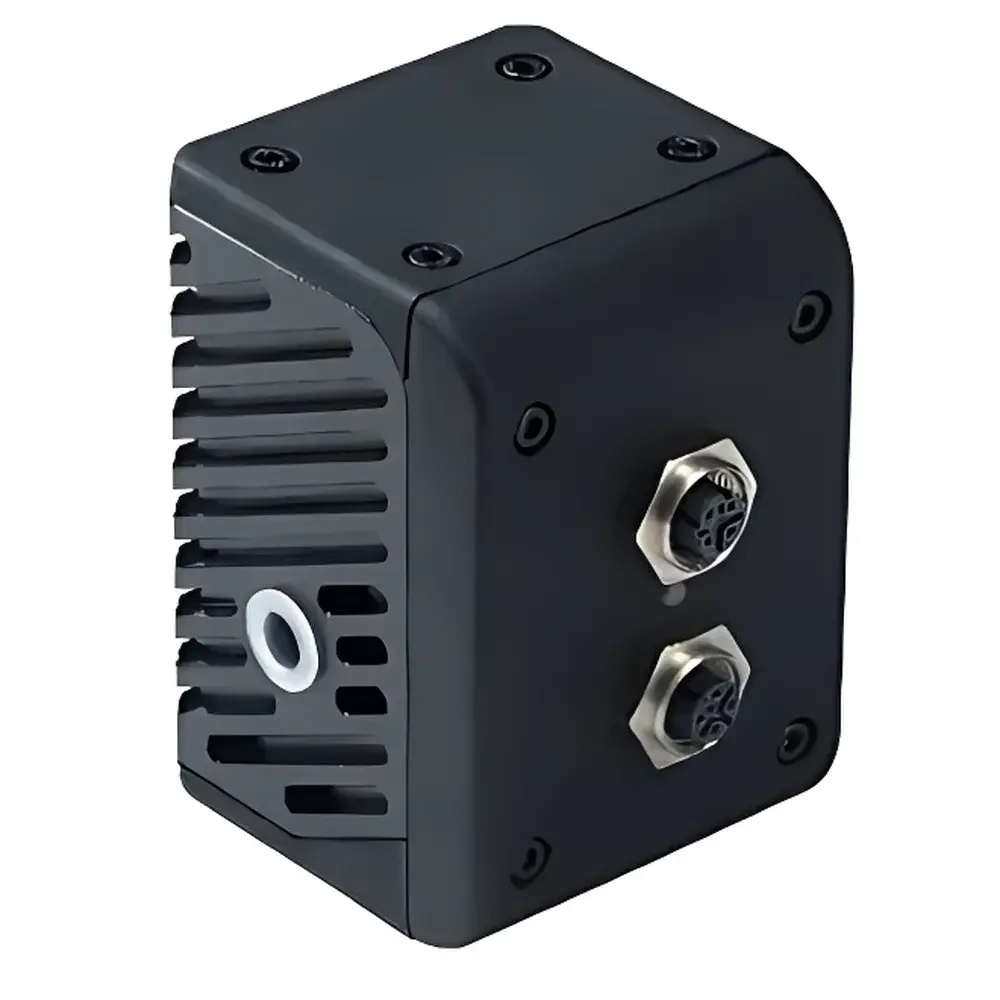
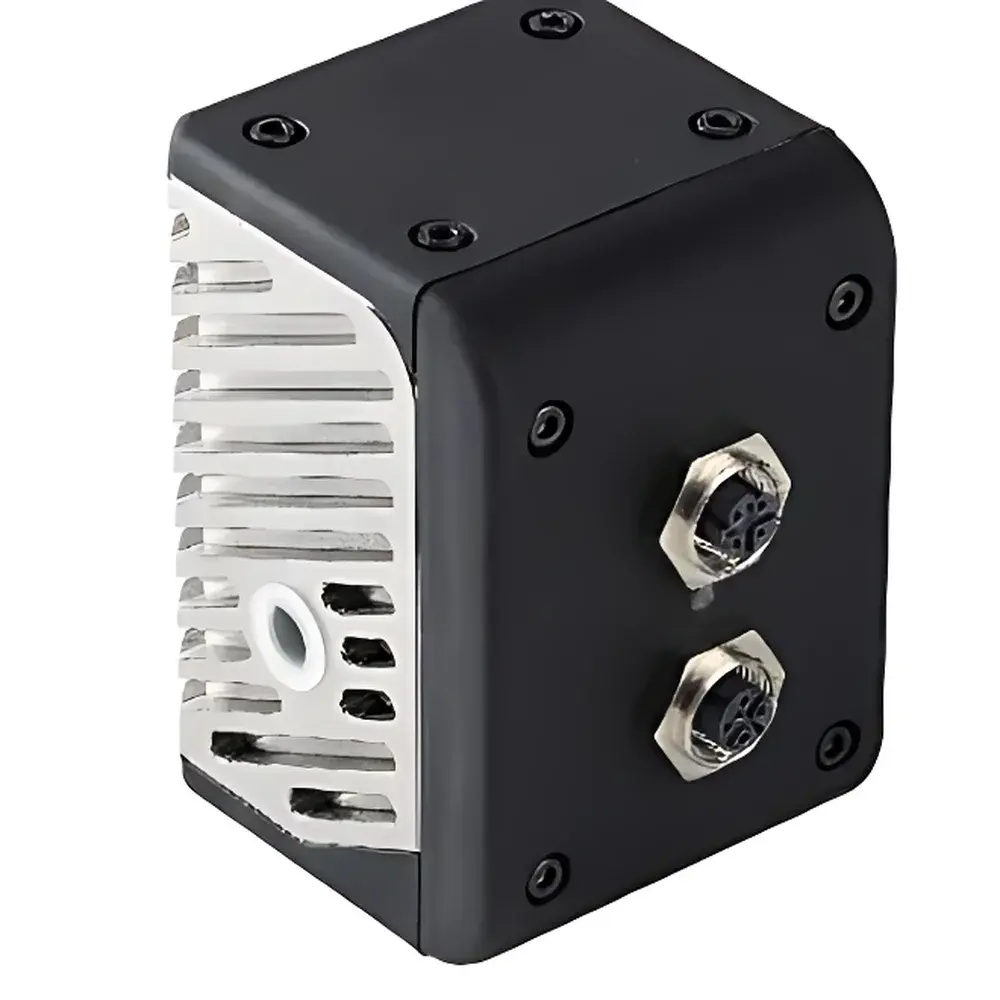
Atten2 OilWear S100 Online Oil Cleanliness Sensor
| Brand | Atten2 |
|---|---|
| Origin | Spain |
| Manufacturer Type | Authorized Distributor |
| Origin Category | Imported |
| Model | S100 |
| Price Range | USD 7,000 – 14,000 (FOB) |
| Instrument Type | Online Monitoring Sensor |
| Detection Parameter | Mechanical Contaminants (Particulate Matter) |
| Particle Detection Threshold | ≥4 µm |
| Compliance Standards | ISO 4406:2017, NAS 1638 Class Code Calculation, ASTM D7647 (Image-Based Particle Analysis), GLP-Traceable Data Logging |
Overview
The Atten2 OilWear S100 is an AI-powered online oil cleanliness sensor engineered for real-time, in-situ particulate contamination monitoring in circulating lubrication and hydraulic systems. Unlike conventional particle counters relying solely on light obscuration or pore-blockage principles, the S100 employs high-resolution digital microscopy combined with proprietary computer vision algorithms to capture, classify, and morphologically analyze suspended particles directly within the fluid stream. Its core measurement principle integrates multi-spectral image acquisition (visible-light + enhanced contrast illumination), dynamic flow-cell imaging, and deep learning–trained morphology classification—enabling not only quantitative cleanliness grading per ISO 4406 and NAS 1638, but also root-cause attribution of wear mechanisms including fatigue spalling, abrasive cutting, adhesive scuffing, and pitting corrosion. Designed for permanent installation in pressurized lube-oil return lines or bypass loops, the S100 operates continuously without interrupting system integrity or requiring offline sampling.
Key Features
- Real-time particulate imaging at ≥4 µm resolution under laminar flow conditions, with automatic bubble discrimination via temporal intensity profiling and edge convexity analysis
- Onboard AI inference engine trained on a validated database of >500 commercial lubricant formulations—including mineral, synthetic, bio-based, and water-glycol fluids—each modeled across oxidation, hydrolysis, additive depletion, and thermal degradation stages
- Automated wear mode classification using 12 morphological descriptors (aspect ratio, convexity, roundness, Feret diameter, texture entropy, etc.) aligned with ASTM E2882-21 guidelines for ferrographic pattern recognition
- Integrated colorimetric analysis correlating chromatic shift (CIE L*a*b* space) with oxidation index and nitration byproduct accumulation
- Modular communication interface supporting Modbus TCP, OPC UA, and MQTT protocols; compatible with industrial Ethernet gateways and cloud-based SCADA platforms
- IP66-rated stainless-steel housing with DIN-rail mounting option and -20°C to +70°C operational temperature range
Sample Compatibility & Compliance
The S100 is validated for continuous monitoring of mineral oils, PAO- and PAG-based synthetics, turbine oils, hydraulic fluids (HL, HM, HVLP), diesel and jet fuels, coolant emulsions, and aqueous metalworking fluids. It complies with ISO 4406:2017 for code assignment, NAS 1638 for aerospace-grade classification, and supports audit-ready data export meeting FDA 21 CFR Part 11 requirements for electronic records and signatures when deployed with optional secure logging firmware. All particle morphology classifications are traceable to reference ferrogram libraries developed in accordance with ASTM D7647 Annex A2 (Digital Image Analysis of Wear Debris). The system meets CE marking requirements for electromagnetic compatibility (EN 61000-6-2/6-4) and functional safety per IEC 61508 SIL1.
Software & Data Management
The OilWear Intelligence Suite provides web-based configuration, real-time dashboard visualization, historical trend analytics, and automated report generation. Each captured image is timestamped, geotagged (if GPS-enabled gateway used), and stored with full metadata—including flow rate, temperature, pressure, and ambient humidity—ensuring full GLP/GMP compliance. The software implements role-based access control, encrypted AES-256 data-at-rest protection, and configurable alarm thresholds per particle size bin (e.g., >10 µm, >25 µm, >50 µm) and wear mode severity index. Audit trails record all user actions, parameter changes, and firmware updates in immutable log files compliant with ISO/IEC 17025 Clause 7.9.
Applications
The S100 is deployed across mission-critical rotating equipment where unplanned downtime incurs high operational risk: wind turbine gearboxes (reducing mean time to repair by up to 62% per field studies), coal-mining dragline hoist systems, gas turbine lube circuits in power generation, marine main engine sumps, rail traction motor gearboxes, tunnel-boring machine (TBM) hydraulic systems, and aerospace ground support equipment. In predictive maintenance programs, it serves as the primary input for remaining useful life (RUL) models integrated into CMMS platforms such as IBM Maximo and SAP PM. Case studies from European utility operators demonstrate 98% uptime improvement in steam turbine lubrication circuits following S100 deployment, eliminating reliance on weekly lab-based ferrography.
FAQ
Does the S100 require periodic calibration with certified reference particles?
No—its morphology-based classification relies on invariant geometric features rather than optical calibration curves; however, annual verification against NIST-traceable particle standards (ISO MTD) is recommended for metrological assurance.
Can the S100 distinguish between wear debris and external contaminants like dust or rust?
Yes—its AI model differentiates intrinsic wear particles (crystallographic structure, fractal dimension, surface oxidation signature) from extrinsic contaminants using multi-feature ensemble voting.
Is the sensor compatible with high-viscosity oils (>320 cSt at 40°C)?
It requires a minimum flow velocity of 0.3 m/s and is rated for viscosities up to 680 cSt; for higher viscosities, a heated bypass loop with thermostatic control is advised.
How is data security ensured during wireless transmission?
All MQTT/OPC UA communications use TLS 1.2+ encryption with X.509 certificate authentication; local edge storage employs FIPS 140-2 validated cryptographic modules.
What is the typical installation footprint and integration lead time?
The sensor body measures 125 × 90 × 65 mm; integration with existing PLCs or DCS typically completes within one engineering day using pre-certified driver libraries.





