
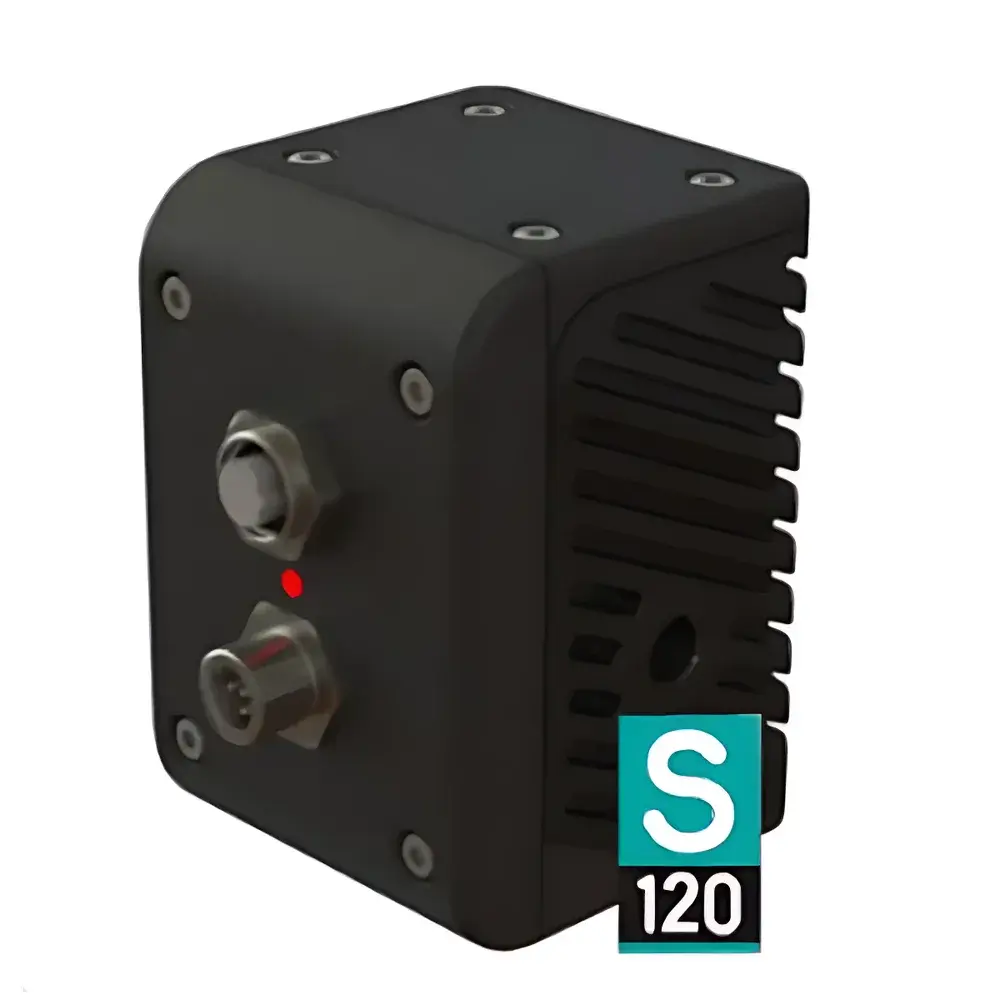
Atten2 OilWear S120 Online Wear Particle Analyzer
| Brand | Atten2 |
|---|---|
| Origin | Spain |
| Model | OilWear S120 |
| Product Type | Online Instrument |
| Detection Target | Solid Contaminants & Degradation Indicators |
| Particle Size Range | ≥4 µm |
| Source Discrimination Capability | ≥20 µm (size + shape-based classification) |
| Compliance Standards | ISO 4406, SAE AS4059, NAS 1638 |
| Communication Interfaces | Analog (4–20 mA), Digital (RS-485, Modbus RTU), PLC/SCADA/PC Compatible |
| Self-Calibration & Diagnostics | Yes |
| Configurable Alarm Thresholds | Yes |
| Integrated Oil Health Monitoring | Compatible with Atten2 OilHealth Platform |
Overview
The Atten2 OilWear S120 is an industrial-grade online wear particle analyzer engineered for continuous, real-time monitoring of lubricating oil condition in critical rotating and hydraulic equipment. It employs dual-mode optical detection—combining high-resolution imaging and light extinction principles—to quantify and classify solid particulate contamination in situ, without requiring oil extraction or offline laboratory analysis. The instrument operates on the fundamental principle that particle concentration, size distribution (≥4 µm), and morphological features (e.g., aspect ratio, convexity, edge sharpness) correlate directly with mechanical wear mechanisms and fluid degradation pathways. Designed for integration into predictive maintenance architectures, the S120 delivers deterministic data aligned with internationally recognized cleanliness standards—including ISO 4406 (code-based particle count per volume), NAS 1638 (contamination level classes), and SAE AS4059 (revised aerospace standard for particle size bands)—enabling traceable, auditable condition assessment across asset-intensive industries such as power generation, marine propulsion, wind turbine gearboxes, and heavy-duty hydraulics.
Key Features
- Real-time particle counting and sizing for particles ≥4 µm in flowing oil streams, with automated classification into standardized cleanliness codes (ISO 4406, NAS 1638, SAE AS4059)
- Advanced image-based morphology analysis for particles ≥20 µm to differentiate wear origins: fatigue spalls (rounded, laminar), sliding wear debris (flattened, plate-like), and cutting wear fragments (angular, high-aspect-ratio)
- Simultaneous assessment of oil degradation indicators—including oxidation byproducts and insoluble sludge precursors—via spectral absorption and scattering signature analysis
- Embedded self-calibration routine using certified reference particles and internal optical path verification, ensuring long-term measurement stability without manual intervention
- Comprehensive onboard diagnostics: flow rate validation, sensor fouling detection, LED intensity drift compensation, and communication integrity monitoring
- Configurable alarm logic with user-defined thresholds per particle size band (e.g., >100 µm counts/min) and degradation index deviation limits
- Native support for industrial control protocols: 4–20 mA analog output, RS-485 serial interface with Modbus RTU, and direct integration with Siemens, Rockwell, and Schneider PLCs
Sample Compatibility & Compliance
The OilWear S120 is validated for use with mineral, synthetic, and semi-synthetic lubricants across viscosity grades ISO VG 32 to VG 680, including turbine oils, hydraulic fluids, gear oils, and engine oils. It maintains accuracy under operating pressures up to 10 bar and temperatures from −20 °C to +80 °C. All reported cleanliness classifications are traceable to NIST-traceable calibration procedures and conform to the metrological requirements of ISO 11171 (calibration of liquid-borne particle counters) and ISO 4402 (obsolete but referenced for legacy correlation). Data outputs satisfy documentation requirements for ISO 55001 asset management systems and support GLP-compliant audit trails when deployed with Atten2’s OilHealth software platform.
Software & Data Management
The S120 interfaces seamlessly with Atten2 OilHealth—a secure, web-accessible condition monitoring platform supporting role-based access control, multi-sensor fleet visualization, and trend analytics. Raw particle images, size histograms, morphology descriptors, and degradation indices are timestamped and stored with SHA-256 hash integrity verification. The system supports FDA 21 CFR Part 11-compliant electronic signatures, audit logging of all configuration changes, and automated report generation compliant with ISO 17025 documentation frameworks. Historical datasets can be exported in CSV, XML, or OPC UA format for integration with CMMS (e.g., IBM Maximo, SAP PM) and IIoT platforms (e.g., PTC ThingWorx, Siemens MindSphere).
Applications
- Early detection of bearing fatigue in wind turbine main shafts and gearbox stages
- Monitoring gear mesh wear progression in marine reduction drives and industrial extruders
- Tracking hydraulic valve wear in aircraft actuation systems and mobile machinery
- Validating filtration efficiency and identifying bypass events in offline kidney-loop systems
- Extending oil drain intervals based on actual contamination kinetics rather than fixed time-based schedules
- Correlating particle morphology trends with vibration spectra to isolate root causes during failure investigations
FAQ
Does the OilWear S120 require oil sampling or offline analysis?
No. It performs fully automated, in-line analysis of oil flowing through the sensor body at nominal system pressure and temperature.
Can it distinguish between wear debris and external contaminants like dirt or rust?
Yes—through combined size distribution profiling and shape factor analysis (e.g., circularity, convexity), enabling differentiation between mechanically generated wear particles and environmental ingress.
Is calibration required by the end user?
No scheduled recalibration is needed; the unit executes automatic optical path validation and reference particle verification during startup and at configurable intervals.
How does it integrate with existing plant automation infrastructure?
Via native 4–20 mA analog outputs for basic alarms and RS-485/Modbus RTU for full parameter readout, including individual size-band counts, morphology class ratios, and degradation indices.
What data security measures are implemented in the OilHealth platform?
End-to-end TLS 1.2 encryption, RBAC (role-based access control), immutable audit logs, and optional on-premise deployment to meet ITAR, NIST SP 800-53, or IEC 62443-3-3 compliance requirements.




