
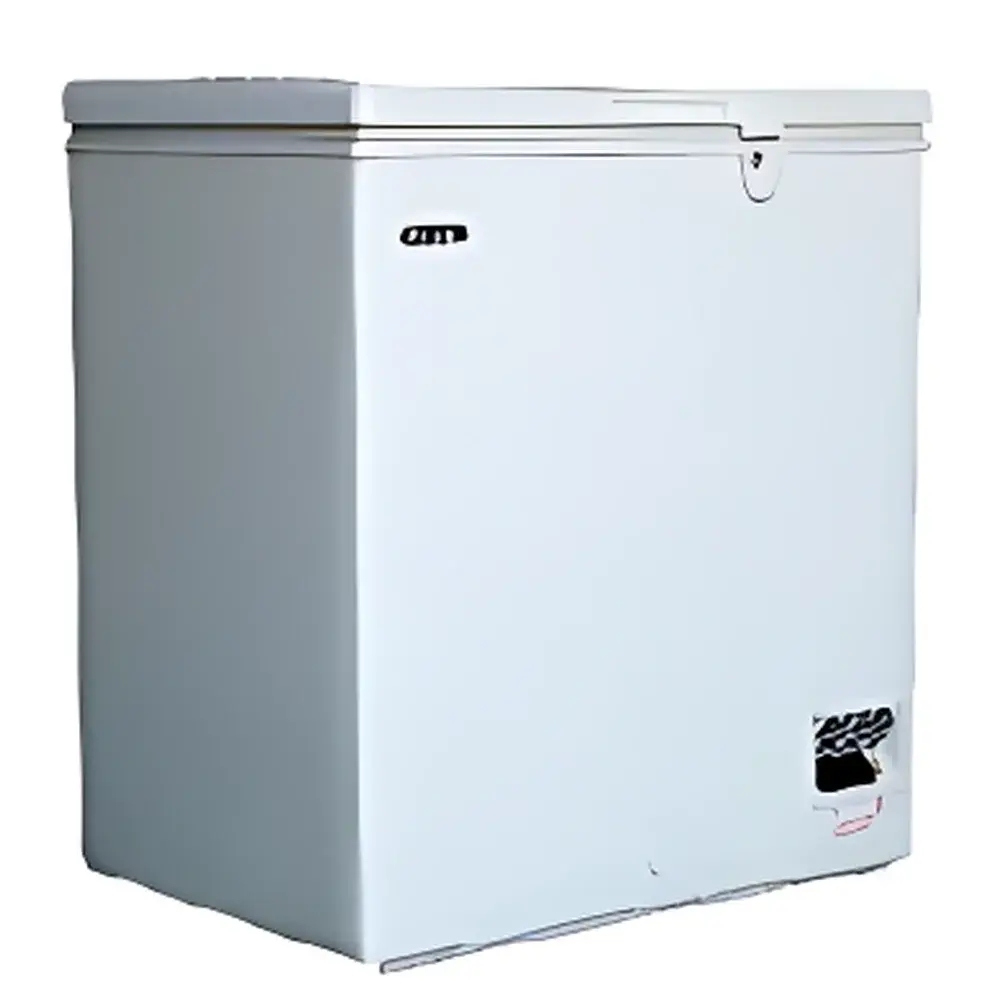
AUCMA DW-25W147 -25°C Upright-Style Laboratory Low-Temperature Storage Cabinet
| Brand | AUCMA |
|---|---|
| Origin | Shanghai, China |
| Model | DW-25W147 |
| Capacity | 147 L |
| Interior Dimensions (mm) | 599 × 389 × 677 |
| Exterior Dimensions (mm) | 739 × 564 × 837 |
| Temperature Range | –10 °C to –25 °C |
| Power Supply | 220 V / 50 Hz |
| Rated Power | 87 W |
| Cabinet Type | Horizontal (Top-Opening) |
| Insulation | CFC-free polyurethane foam with microcellular structure |
| Refrigerant | R134a (non-ozone-depleting) |
| Compressor | High-efficiency sealed rotary compressor |
| Control System | Microprocessor-based digital temperature controller with dual-stage alarm logic |
| Safety Features | Audible/visual high-low temperature alarm, sensor fault detection, keypad lock, compressor delay protection, pressure equalization valve |
| Compliance | Designed per IEC 61000-6-3 (EMC), GB/T 20154–2014 (Chinese standard for low-temperature cabinets), and aligned with general requirements of ISO 13485 for medical device storage environments |
Overview
The AUCMA DW-25W147 is a horizontally configured, top-opening laboratory low-temperature storage cabinet engineered for stable, energy-efficient preservation of temperature-sensitive biological specimens at –10 °C to –25 °C. Unlike ultra-low temperature (ULT) freezers operating below –60 °C, this unit occupies the critical mid-range cold storage tier—optimized for long-term integrity of plasma units, diagnostic reagents, attenuated vaccines, cryopreserved cell suspensions, and veterinary biologics. Its thermodynamic architecture employs a single-stage vapor-compression cycle with an R134a refrigerant circuit, integrated with a high-torque rotary compressor and optimized evaporator-condenser geometry to ensure rapid pull-down (<120 min from 25 °C to –25 °C under load) and minimal temperature fluctuation (±1.5 °C uniformity across all zones per IEC 60068-3-5). The cabinet meets functional safety expectations for routine use in clinical laboratories, blood banks, public health reference labs, and GLP-compliant preclinical research facilities where consistent thermal performance—not extreme cryogenic capability—is the operational priority.
Key Features
- Precision Digital Temperature Management: Microprocessor-controlled system with 0.1 °C resolution display; user-adjustable setpoint within –10 °C to –25 °C range; factory-calibrated NTC sensor with ±0.5 °C accuracy over full operating span.
- Dual-Mode Alarm Architecture: Independent monitoring of chamber temperature and sensor integrity; configurable alarm thresholds; simultaneous audible (85 dB piezoelectric buzzer) and visual (LED flash) alerts; automatic silence after 2 minutes with persistent log flag.
- Thermal Efficiency Engineering: 85 mm thick rigid polyurethane insulation with <50 µm average cell diameter (microcellular foaming); zero ODP / low GWP formulation; vacuum-degassed cavity filling process ensures long-term R-value retention (>R-25 m²·K/W).
- Operational Reliability Enhancements: Compressor start-delay (3 min) and stop-interval (5 min) logic prevents mechanical stress; voltage tolerance range 198–242 V AC enables stable operation across variable grid conditions common in regional healthcare infrastructure.
- Ergonomic & Security Design: Integrated pressure-equalization valve reduces door-opening force by ~40%; three-point cam-lock mechanism with key override; four swivel casters with locking brakes; removable, labeled stainless-steel drawer system (1 unit included) supporting ISO/IEC 17025 traceable sample organization.
Sample Compatibility & Compliance
The DW-25W147 supports storage of primary and secondary containers compliant with ISO 8573-1 (compressed air purity), ASTM F2476 (cryovial compatibility), and USP <797> environmental classification for non-sterile compounding areas. Its interior chamber—constructed from electropolished 304 stainless steel—resists corrosion from repeated ethanol wipe-downs and incidental contact with buffered saline or glycerol solutions. While not certified to UL 471 or NSF/ANSI 456 for food-grade applications, its design adheres to core elements of FDA 21 CFR Part 11 data integrity principles via non-volatile memory logging of alarm events and temperature excursions (accessible via front-panel history review). The unit is routinely deployed in settings requiring alignment with WHO Technical Report Series No. 961 Annex 9 (Good Distribution Practice for Vaccines) and China’s YY/T 0466.1–2016 labeling standards for medical device storage equipment.
Software & Data Management
This model operates as a standalone hardware platform without embedded Ethernet/Wi-Fi connectivity or proprietary cloud software. All operational parameters—including real-time temperature, setpoint, alarm status, and event timestamps—are retained in non-volatile EEPROM with 10,000-cycle write endurance. Users may manually record deviation logs for internal quality audits or external regulatory reviews (e.g., CAP inspections, CNAS accreditation assessments). Optional external validation kits—including Class A PT100 probes and calibrated dry-well calibrators—are compatible for IQ/OQ documentation per ISO/IEC 17025:2017 Clause 6.4.2. No firmware updates are field-installable; revision control is maintained through factory-level calibration certificates shipped with each unit.
Applications
- Hospital blood bank storage of fresh frozen plasma (FFP) and cryoprecipitate per AABB Standards (2023 Edition), Section 5.11.2.
- Regional disease control centers maintaining reference strains of *Mycobacterium tuberculosis*, *Brucella spp.*, and arboviruses at biosafety level 2 (BSL-2) containment.
- Veterinary vaccine distribution hubs complying with OIE Terrestrial Manual Chapter 1.1.2 on cold chain integrity for modified-live canine distemper virus (CDV) formulations.
- Academic life science labs preserving RNA extraction kits, restriction enzyme stocks, and lyophilized PCR master mixes subject to manufacturer-specified –20 °C storage limits.
- Industrial QC laboratories storing polymerase chain reaction (PCR) controls, ELISA calibrators, and HPLC mobile phase solvents requiring thermal stabilization against ester hydrolysis kinetics.
FAQ
What is the validated temperature uniformity across the chamber volume?
Temperature uniformity is ±1.5 °C (maximum deviation) at steady state (–25 °C setpoint), measured per ISO 16730-2:2021 Annex B using nine-point mapping (center + eight corners) at 100% load with empty drawers.
Does this unit support remote monitoring integration?
No native network interface is provided; third-party analog voltage output modules (0–5 V DC proportional to chamber temperature) may be retrofitted using the test port located behind the rear access panel—subject to local electrical safety certification.
Is the cabinet suitable for storing flammable solvents?
Not recommended. The DW-25W147 lacks explosion-proof construction, intrinsically safe components, or spark-resistant interior finishes required for Class I, Division 1 hazardous locations per NEC Article 500.
What maintenance intervals are specified for compressor oil and refrigerant charge?
The sealed rotary compressor is lubricated for life under normal operating conditions (ambient ≤32 °C, relative humidity ≤80%). Refrigerant recharge is not serviceable in the field and requires OEM-certified technicians using recovery/recycling equipment compliant with EPA Section 608.
Can the unit operate continuously at ambient temperatures above 32 °C?
Performance degrades beyond the rated climate class (N, per IEC 60068-1: 10–32 °C). At 35 °C ambient, sustained operation at –25 °C is not guaranteed; pull-down time increases >40%, and compressor duty cycle exceeds 85%, risking thermal shutdown.




