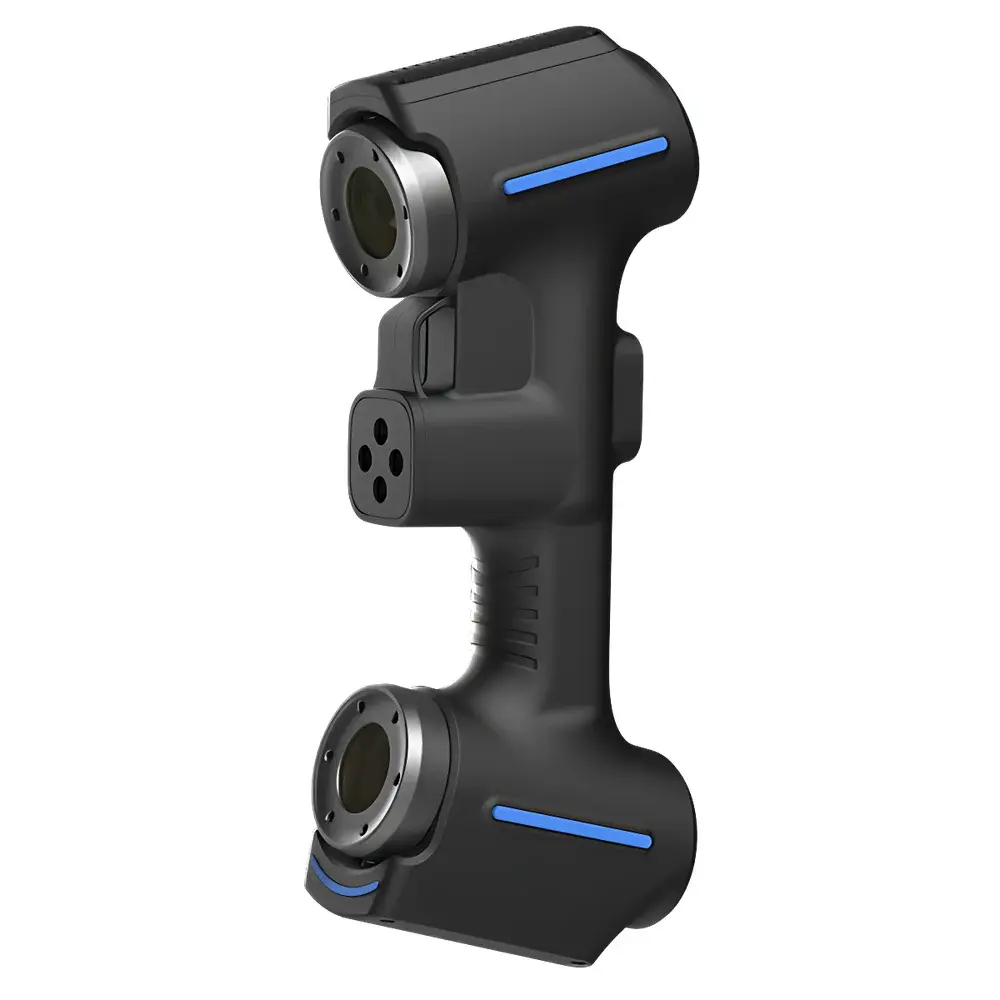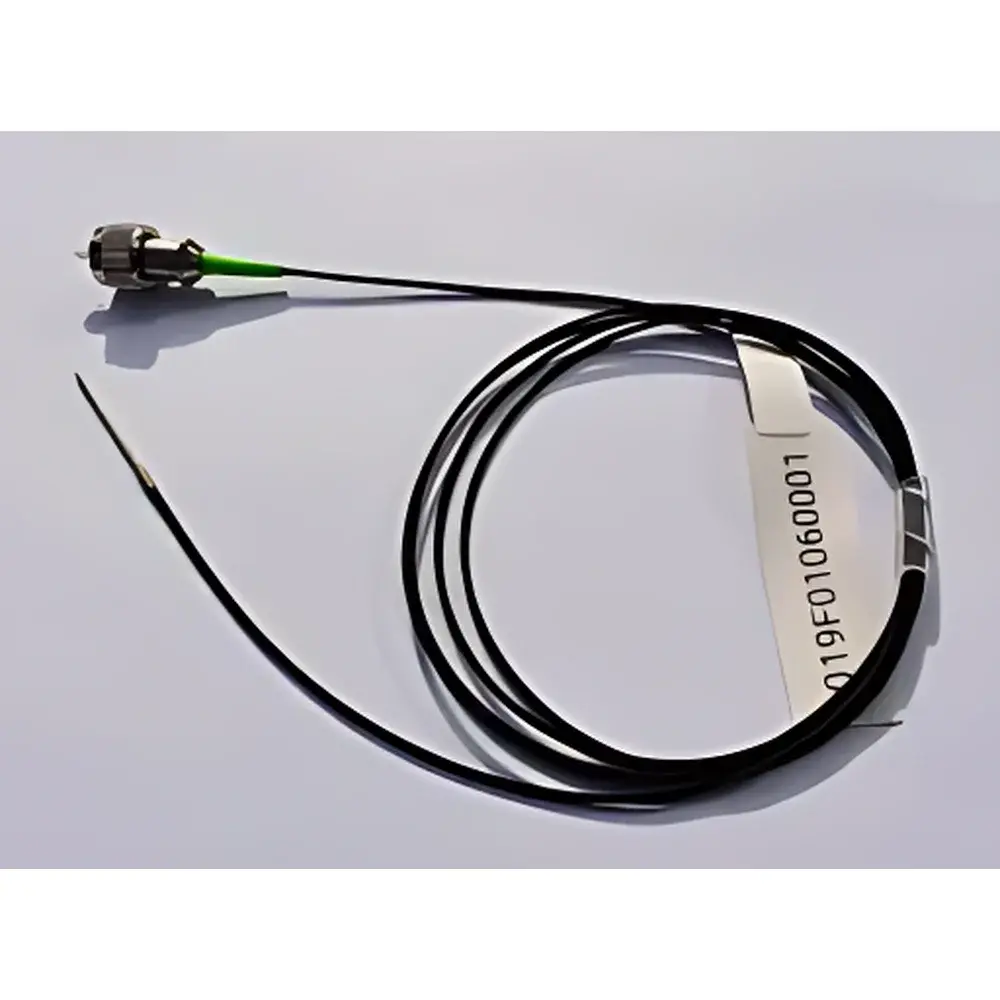
Auniontech Aut-S500 Fiber Bragg Grating High-Sensitivity Temperature Sensor
| Brand | Auniontech |
|---|---|
| Model | Aut-S500 |
| Operating Temperature Range | -40 to 1000 °C |
| Accuracy | ±0.1 °C (when used with compatible interrogator) |
| Resolution | 0.02 °C |
| Wavelength Range | 1528–1568 nm (±0.1 nm center wavelength tolerance) |
| Thermal Sensitivity | 30–50 pm/°C |
| FWHM | <0.3 nm |
| Side Mode Suppression Ratio (SMSR) | >12 dB |
| Peak Reflectivity | >70% |
| Dimensions | 35 mm × 10 mm × 5.5 mm |
| Connector Type | FC/APC |
| Packaging | Ceramic Hermetic Encapsulation |
Overview
The Auniontech Aut-S500 Fiber Bragg Grating (FBG) High-Sensitivity Temperature Sensor is an engineered point-sensing solution designed for precision, long-term stability, and immunity to electromagnetic interference in demanding industrial and infrastructure monitoring environments. Based on the fundamental principle of wavelength-encoded thermal response—where temperature-induced strain and thermo-optic effects shift the Bragg wavelength of a photosensitive fiber core—the Aut-S500 delivers calibrated spectral displacement proportional to ambient temperature. Its tunable thermal sensitivity (30–50 pm/°C) is achieved through strategic selection and bonding of dissimilar packaging materials, enabling customization for specific application requirements such as ultra-low-drift monitoring in nuclear containment structures or high-dynamic-range detection in turbine exhaust ducts. Unlike conventional thermocouples or RTDs, the Aut-S500 operates passively without electrical excitation, eliminating ground-loop risks and intrinsic spark hazards—making it inherently suitable for intrinsically safe (IS) and explosion-proof (ATEX/IECEx Zone 0–2) deployments.
Key Features
- High thermal sensitivity (30–50 pm/°C), configurable via material stack design to match application-specific resolution and range trade-offs
- Complete immunity to electromagnetic interference (EMI), radio-frequency interference (RFI), and lightning-induced transients—validated per IEC 61000-4-3 and IEC 61000-4-4
- Ceramic hermetic encapsulation ensures long-term stability under thermal cycling (−40 °C to +1000 °C), humidity (up to 95% RH non-condensing), and corrosive atmospheres (e.g., H₂S, SO₂, salt fog per ISO 9223 C5-M)
- Zero residual stress architecture eliminates hysteresis and creep-induced drift; validated over ≥10⁴ thermal cycles with repeatability better than ±0.05 °C
- FC/APC connector interface ensures low back-reflection (<−60 dB) and compatibility with standard FBG interrogation systems (e.g., Micron Optics sm125, HBM FiberSensing FS22, or Luna ODiSI platforms)
- Compact form factor (35 mm × 10 mm × 5.5 mm) enables embedding into composite laminates, concrete embedment sleeves, or direct surface mounting using conductive epoxy or mechanical clamps
Sample Compatibility & Compliance
The Aut-S500 is compatible with all standard single-mode telecom-grade optical fibers (G.652.D, G.657.A1) and supports quasi-distributed multiplexing configurations—up to 30 sensors per channel when deployed with a 1 nm channel spacing interrogator. It complies with ISO/IEC 17025 calibration traceability requirements when paired with NIST-traceable reference sources. For safety-critical applications, the sensor meets IEC 60079-11 (intrinsic safety) and IEC 60079-26 (equipment for use in explosive atmospheres) when integrated into certified fiber-optic sensing systems. In power utility deployments, it satisfies IEEE 1159-2019 guidelines for temperature monitoring of high-voltage assets and aligns with EN 50121-3-2 for railway rolling stock EMC compliance.
Software & Data Management
Data acquisition is performed via industry-standard FBG interrogators supporting ASCII or binary streaming protocols (e.g., TCP/IP, RS-232, or USB-CDC). The Aut-S500’s spectral signature supports polynomial fitting (2nd–5th order) to correct for nonlinearity across its full operating range, with coefficients stored in instrument-readable metadata headers. When integrated into SCADA or IIoT platforms (e.g., Siemens Desigo CC, Honeywell Experion PKS, or custom MQTT-based architectures), the sensor enables audit-ready data logging with timestamped waveform capture, automatic baseline correction, and configurable alarm thresholds. All measurement records comply with FDA 21 CFR Part 11 requirements when deployed with electronic signature-enabled software and secure user access controls.
Applications
- Continuous temperature profiling in oil & gas infrastructure: subsea pipeline weld monitoring, LNG tank wall integrity verification, and flare stack thermal mapping
- Fire detection and thermal runaway prevention in battery energy storage systems (BESS) and electric vehicle charging stations
- Real-time hot-spot tracking in high-voltage switchgear, transformer windings, and underground cable joints
- Structural health monitoring (SHM) of civil infrastructure: concrete curing temperature in bridge decks, fire-resistance validation in tunnel linings, and thermal expansion compensation in suspension bridge cables
- Aerospace propulsion testing: turbine blade tip clearance monitoring, afterburner liner temperature gradients, and composite wing box thermal strain mapping
FAQ
What is the maximum allowable tensile load during installation?
The sensor is rated for ≤5 N axial tension during handling and mounting; exceeding this may induce permanent wavelength drift due to micro-bending or bond-line shear.
Can the Aut-S500 be embedded in concrete without signal degradation?
Yes—its ceramic package and acrylate-coated fiber are chemically inert to Portland cement hydration products; embedment depth should exceed 25 mm to avoid surface thermal lag effects.
Is calibration required before field deployment?
Factory calibration is provided with NIST-traceable uncertainty budgets; however, in-situ recalibration against a reference PT100 is recommended for applications requiring <±0.05 °C absolute accuracy.
Does the sensor support real-time distributed temperature profiling?
No—the Aut-S500 is a discrete point sensor; for continuous spatial profiling, consider Raman or Brillouin-based DTS systems instead.
What interrogator specifications are necessary to achieve ±0.1 °C accuracy?
An interrogator with wavelength resolution ≤1 pm, thermal stability 50 dB is required; spectral sampling rate must exceed 10 Hz for transient thermal event capture.