
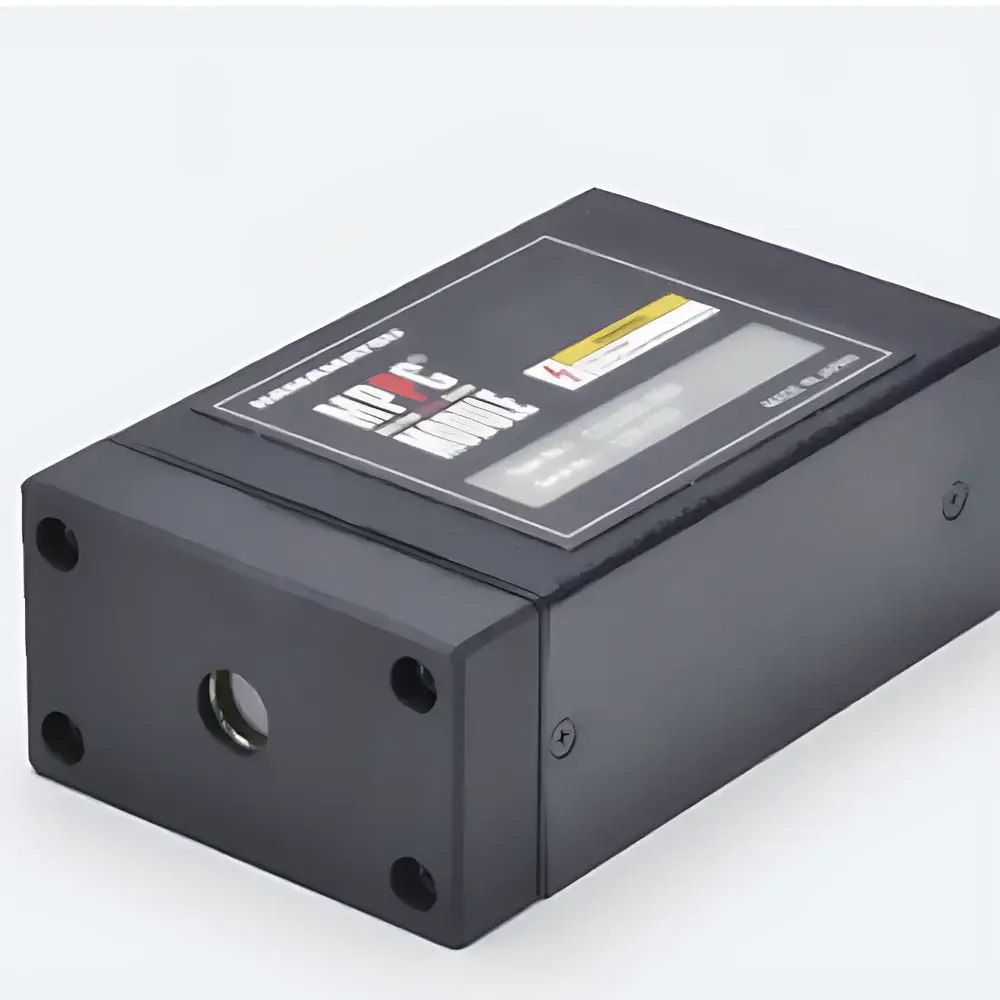
Auniontech C16531 Series Cryogenically Cooled SPAD Photon Counting Module
| Brand | Auniontech |
|---|---|
| Origin | Shanghai, China |
| Model | C16531-050GD / C16531-100GD |
| Spectral Range | 400–1000 nm |
| Peak Wavelength | 630 nm |
| Chip Temperature | −20 °C |
| Photon Detection Efficiency (PDE) | 55–65 % |
| Dark Count Rate | 20–450 cps |
| Afterpulsing Probability (100–500 ns) | ≤0.1 % |
| Comparator Output | TTL-compatible |
| Max Count Rate | 20 MHz (C16531-050GD), 7 MHz (C16531-100GD) |
| Active Area | 50 µm or φ100 µm |
| Supply Voltage | ±5 V DC |
Overview
The Auniontech C16531 Series Cryogenically Cooled SPAD Photon Counting Module is a high-performance, compact photodetector system engineered for ultra-low-light measurement in radiation monitoring, nuclear medicine physics, and environmental radionuclide assay applications. Built around a thermoelectrically cooled single-photon avalanche diode (SPAD), the module operates on the principle of Geiger-mode photon detection—where incident photons trigger self-sustaining, discrete avalanche events that are quenched and counted with nanosecond timing resolution. Its spectral response spans 400–1000 nm, with peak quantum efficiency at 630 nm—making it particularly suitable for scintillation light detection from NaI(Tl), CsI(Tl), LaBr3(Ce), and other common inorganic scintillators used in whole-body counters (WBCs) and low-background gamma spectrometry systems. The integrated temperature controller maintains the SPAD junction at a stable −20 °C, significantly suppressing thermal generation of dark carriers and enabling sub-100 cps dark count rates—critical for long-integration spectroscopy and low-activity environmental sample screening.
Key Features
- Cryogenic thermoelectric cooling (−20 °C) for dark count suppression and PDE stability
- Two active area options: 50 µm diameter (high timing resolution, low capacitance) and φ100 µm (enhanced collection efficiency for diffuse scintillation light)
- Integrated bias circuit, fast quenching amplifier, and TTL-compatible digital comparator output
- No external cryogen or vacuum housing required—fully self-contained module powered by ±5 V DC
- Low afterpulsing probability (≤0.1 % within 100–500 ns gate window), minimizing false event accumulation in time-gated acquisition
- High photon detection efficiency (55–65 % at 630 nm) optimized for common scintillator emission spectra
- Robust mechanical packaging with electromagnetic shielding compliant with IEC 61000-4 immunity standards
Sample Compatibility & Compliance
The C16531 series is designed for integration into radiation measurement platforms requiring high-fidelity photon counting under low-dose-rate conditions—including whole-body counters for internal contamination assessment, environmental air particulate monitors with scintillation-based alpha/beta discrimination, and portable gamma survey instruments. Its compact form factor and TTL-level output interface enable direct coupling to FPGA-based time-to-digital converters (TDCs), multichannel analyzers (MCAs), or custom DAQ systems compliant with IEC 62327 (hand-held radioisotope identifiers) and ISO 28218 (performance criteria for environmental radiation monitoring equipment). The module’s electrical design adheres to EN 61326-1 for electromagnetic compatibility in laboratory and field-deployable instrumentation. While not certified as a medical device per se, its performance characteristics meet the sensitivity and stability requirements outlined in IEC 61675-1 for photon-counting detectors used in nuclear medicine quality assurance protocols.
Software & Data Management
The C16531 operates as a hardware-level photon counter; no proprietary driver or firmware is embedded. Its TTL pulse output is compatible with industry-standard data acquisition frameworks including National Instruments LabVIEW, MATLAB Data Acquisition Toolbox, and open-source libraries such as PyDAQmx or libnidaqmx. For traceable radiation measurements, users may integrate the module into GLP/GMP-compliant workflows using timestamped pulse logging with audit-trail-capable software (e.g., WinDaq, ORTEC Maestro, or custom Python-based acquisition tools supporting HDF5 or ROOT file formats). When deployed in regulated environments—such as EPA Method 901.1-compliant environmental radioactivity labs—the module’s stable dark count baseline and calibrated PDE curve support uncertainty budgeting per ISO/IEC 17025:2017 Annex A.3 for photon-counting detector characterization.
Applications
- Whole-body counter (WBC) systems for in vivo gamma-emitting radionuclide quantification (e.g., 137Cs, 40K)
- Low-background liquid scintillation counting (LSC) auxiliary detectors for coincidence rejection
- Time-resolved fluorescence lifetime measurements in radioluminescence dosimetry
- Alpha/beta particle discrimination via pulse shape analysis in dual-scintillator configurations
- Environmental aerosol monitor calibration using calibrated 241Am or 90Sr/90Y sources
- Research-grade single-photon timing in Cherenkov light detection for neutrino or dark matter experiments
FAQ
Is the C16531 module suitable for use in Class 100 cleanroom environments?
Yes—the module’s hermetically sealed ceramic package and absence of outgassing materials comply with ISO 14644-1 Class 5 (Class 100) particulate limits when mounted with appropriate ESD-safe fixtures.
Does the module support gated operation for time-correlated single-photon counting (TCSPC)?
Yes—its TTL-compatible output and sub-10 ns rise time allow synchronization with external laser or pulsed source triggers; users must implement gate control externally via the DAQ system.
What is the recommended optical coupling method for scintillator readout?
Fiber-optic coupling using UV-grade silica fiber (200–600 µm core) with index-matching gel is preferred; direct butt-coupling requires precision alignment stages with ±1 µm repeatability.
Can the dark count rate be further reduced below 20 cps?
Operating below −20 °C is not supported; further reduction requires cryostat integration (e.g., liquid nitrogen dewar), which voids the standard warranty and exceeds the module’s mechanical design envelope.
Is NIST-traceable calibration available for PDE and DCR specifications?
Auniontech provides factory-measured PDE vs. wavelength curves and DCR vs. temperature reports; full NIST-traceable calibration requires third-party metrology lab services (e.g., PTB, NPL, or NIST SRM-based intercomparison).
Related Products







