
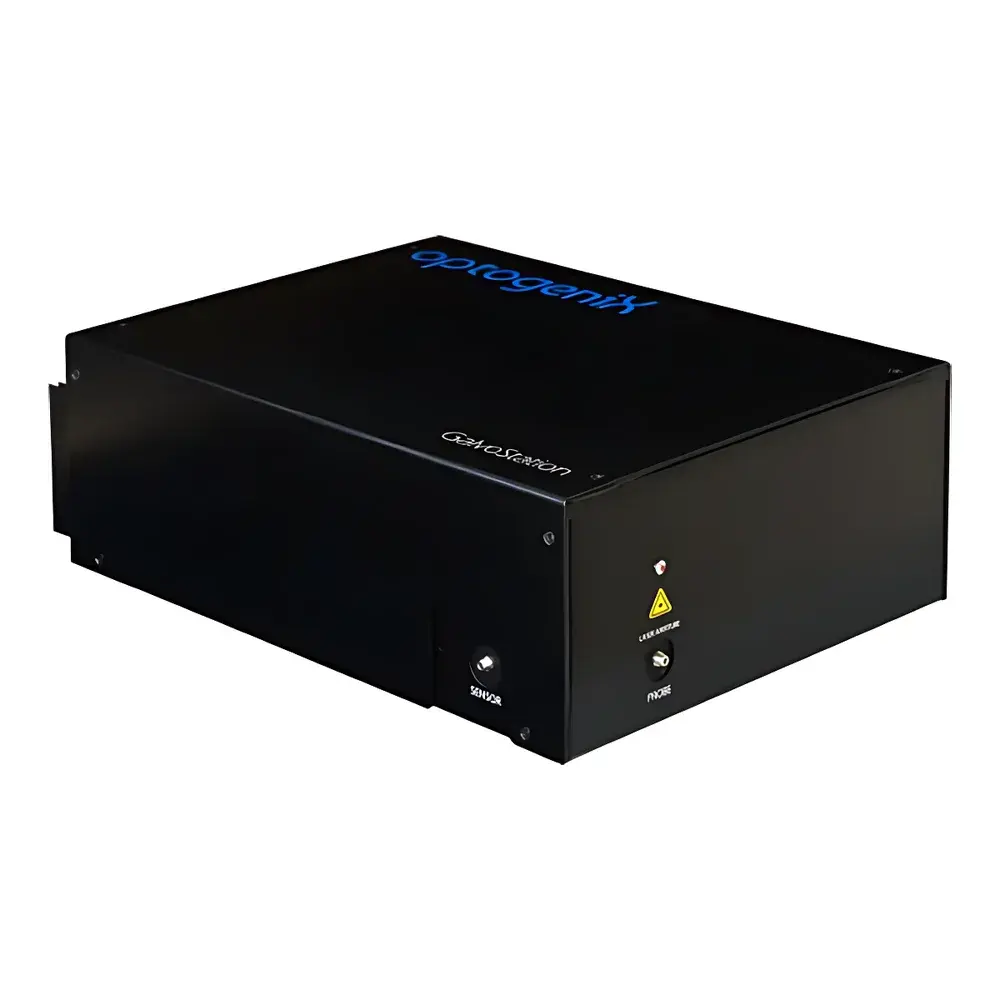
Auniontech GalvoStation Tapered Fiber Probe Scanning System
| Brand | Auniontech |
|---|---|
| Origin | Shanghai, China |
| Manufacturer Type | Authorized Distributor |
| Product Category | Optical Instrument Component / Fiber Optic Coupler |
| Model | GalvoStation (Microscopy & Imaging Accessory) |
| Pricing | Available Upon Request |
| Component Type | Tapered Fiber Probe with Galvanometric Scanning Assembly |
Overview
The Auniontech GalvoStation Tapered Fiber Probe Scanning System is a precision optomechanical platform engineered for spatially resolved optical interfacing with biological tissue—particularly in neuroscience applications requiring axial selectivity along implanted optical waveguides. At its core, the system leverages tapered optical fibers (Lambda-plus Fibers) whose conical geometry enables localized light emission and collection at defined sub-regions along the fiber’s effective length. This axial confinement is achieved via galvanometer-driven beam steering that dynamically redirects collimated laser light onto specific taper segments, thereby activating discrete “sub-sites” without mechanical translation of the probe itself. The system operates on the principle of controlled evanescent coupling and mode-matching between free-space optics and the graded-index taper transition region—enabling high-fidelity, depth-resolved photostimulation and fluorescence detection in vivo. Designed for integration into established electrophysiology and fiber photometry workflows, GalvoStation supports both single- and dual-wavelength configurations to accommodate optogenetic excitation (e.g., ChR2 activation at 473 nm) and ratiometric calcium imaging (e.g., GCaMP or RCaMP with isosbestic control), all while maintaining strict temporal synchronization and positional reproducibility.
Key Features
- Galvanometer-based axial scanning of tapered fiber sub-sites with sub-100 µm positional resolution along the fiber axis
- Modular laser source support: configurable for one or two independent laser channels (e.g., 405 nm + 473 nm or 405 nm + 561 nm)
- Integrated optical path design enabling simultaneous or time-multiplexed transmission and collection through a single Lambda-plus fiber probe
- High-numerical-aperture (NA > 0.39) sensor jumpers optimized for low-noise photodetection in fiber photometry
- Full hardware synchronization via TTL-triggered DAQ interface (optional National Instruments USB-6363 or equivalent)
- Robust mechanical architecture with vibration-damped baseplate and kinematic mounting for long-term stability during chronic recordings
Sample Compatibility & Compliance
The GalvoStation is compatible with standard 200–400 µm core diameter Lambda-plus tapered fibers, fabricated under tight tolerances on taper length (±50 µm) and profile symmetry to ensure consistent sub-site length across batches. It interfaces seamlessly with commercially available linear microelectrode arrays (e.g., Neuronexus A1x32-Poly3-5mm-50-177 or Cambridge Neurotech V-Probe), enabling concurrent depth-resolved optogenetic perturbation and multi-site electrophysiological readout. All optical components comply with ISO 10110 surface quality standards; laser drivers meet IEC 60825-1 Class 3B safety requirements when operated within specified power limits. The system supports GLP/GMP-aligned experimental documentation when used with TaperScan software’s audit-trail-enabled protocol logging—a feature compliant with FDA 21 CFR Part 11 requirements for electronic records in preclinical research environments.
Software & Data Management
TaperScan is the native control application for GalvoStation, built on a deterministic real-time framework to guarantee sub-millisecond latency between galvo position commands and optical output. It provides two operational modes: Manual Mode for rapid exploratory mapping of fiber sub-site response profiles, and Protocol Mode for scripting complex stimulus sequences—including interleaved excitation-collection windows, duty-cycle modulation, and inter-channel synchronization triggers. All protocols are timestamped with microsecond precision using the onboard DAQ clock and exported in HDF5 format for downstream analysis in MATLAB, Python (via h5py), or commercial electrophysiology platforms (e.g., Spike2, Plexon Offline Sorter). Raw galvo position data, laser power logs, and TTL sync pulses are stored alongside behavioral metadata, ensuring full traceability for publication-grade reproducibility.
Applications
- Depth-selective optogenetic stimulation in rodent cortex or hippocampus using ChR2/Halo variants
- Ratiometric fiber photometry of calcium dynamics (GCaMP/RCaMP) with isosbestic control to correct for motion artifacts
- Combined opto-electrophysiology experiments integrating tapered fiber illumination with linear silicon probes
- Calibration and characterization of tapered fiber optical transfer functions across axial positions
- Development of closed-loop neuromodulation paradigms requiring real-time feedback from depth-resolved optical signals
FAQ
What is the minimum achievable sub-site length for Lambda-plus fibers used with GalvoStation?
Sub-site length is determined by fiber taper geometry and galvo spot size; typical values range from 80–200 µm depending on fiber batch and laser wavelength—calibration slides included in the starter kit enable empirical determination per probe.
Can GalvoStation be synchronized with third-party DAQ systems beyond National Instruments?
Yes—TTL-compatible trigger inputs/outputs allow integration with any DAQ supporting 5 V CMOS logic; custom LabVIEW or Python drivers are available upon request.
Is the TaperScan software compatible with macOS or Linux?
TaperScan runs natively on Windows 10/11 (64-bit); virtualized execution on macOS/Linux is possible but not officially supported due to real-time timing constraints.
Does the system include calibration documentation traceable to NIST standards?
While fiber taper geometry is verified against internal metrology standards, NIST-traceable calibration certificates are available as an optional add-on service for regulatory submissions.
What is the maximum recommended laser power density at the fiber tip to avoid thermal damage in neural tissue?
For chronic in vivo use, peak irradiance should remain below 10 mW/µm² at the fiber tip—system configuration files in TaperScan enforce user-defined power ceilings per wavelength channel.




