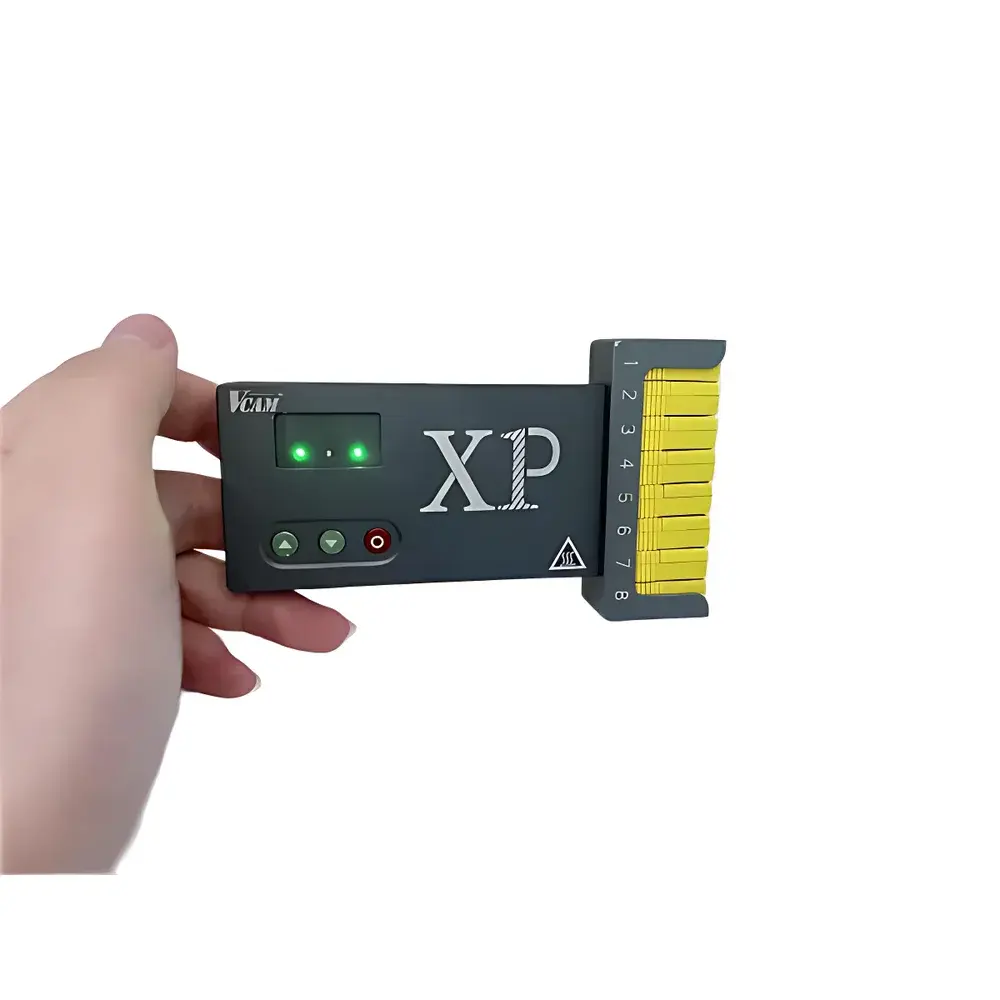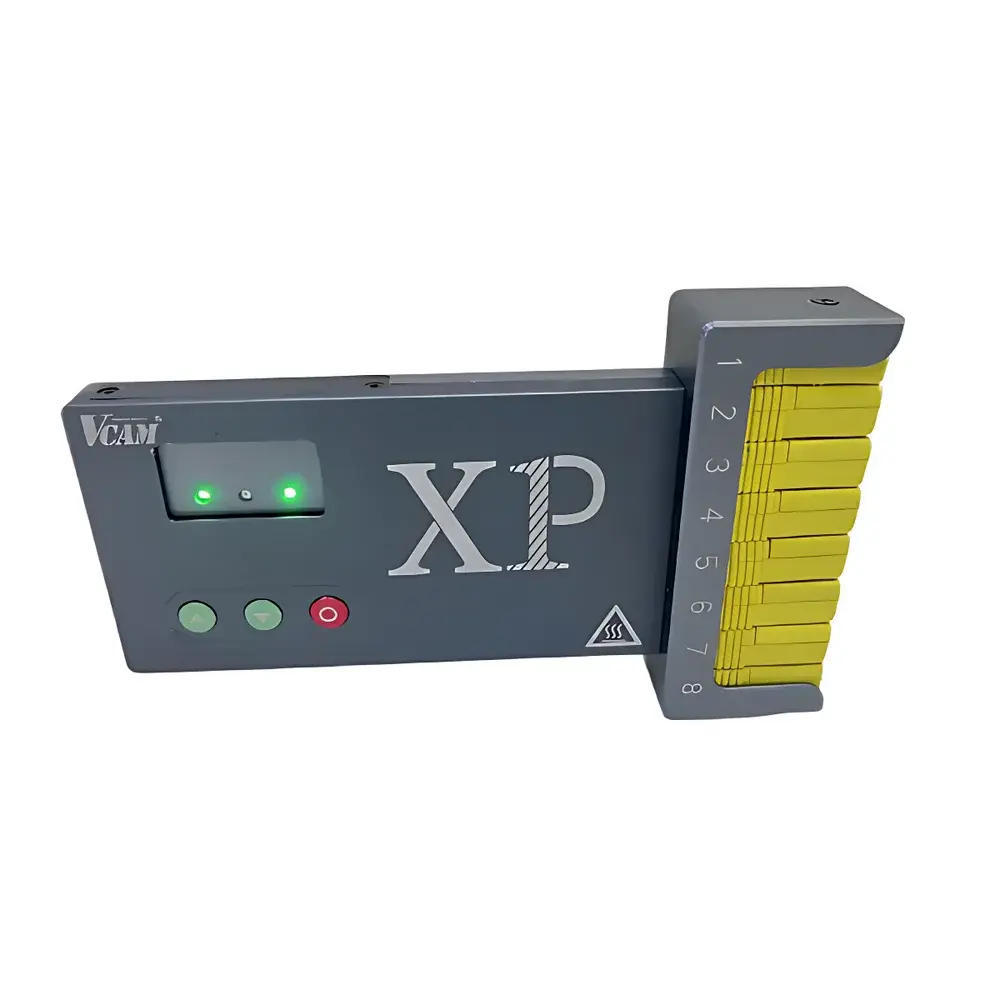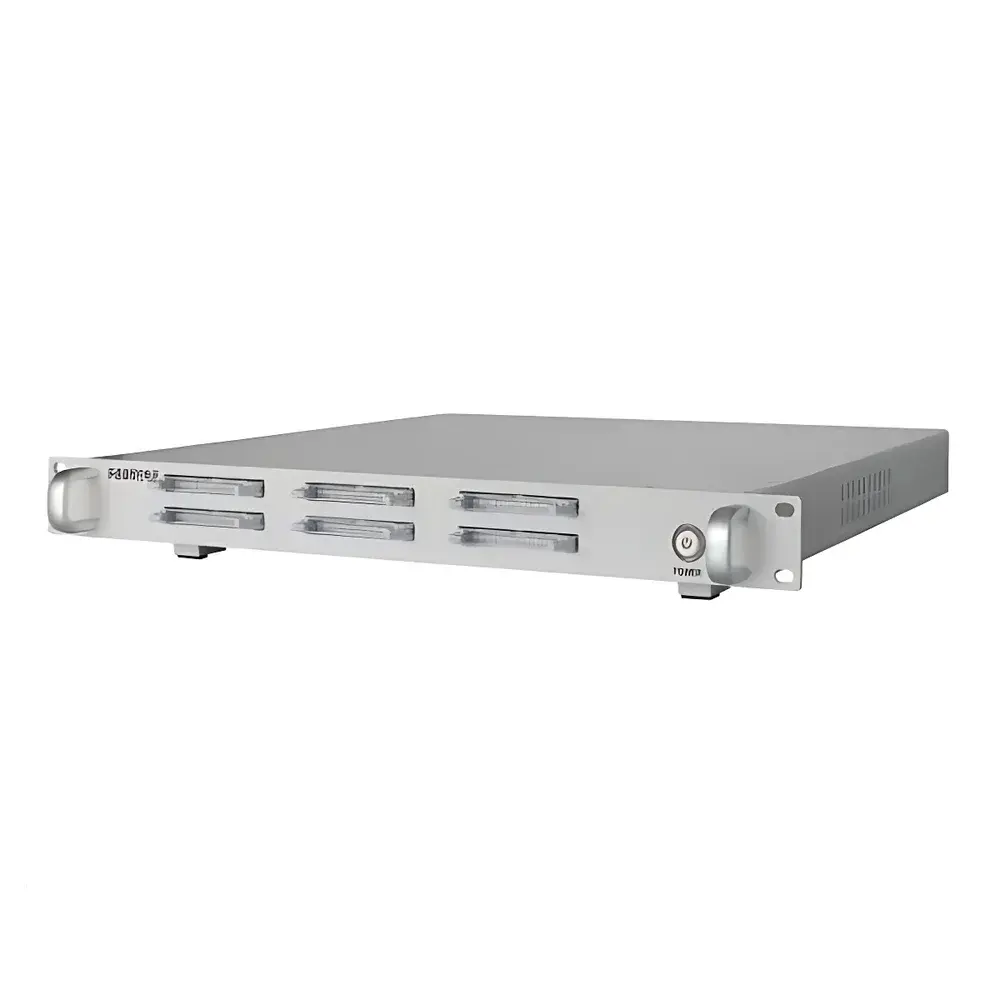
Auniontech TP1-MS64-12CCR 64-Channel Programmable Voltage Source Module
| Brand | Auniontech |
|---|---|
| Origin | Shanghai, China |
| Model | TP1-MS64-12CCR |
| Output Channels | 64 |
| Output Voltage Range | 0–12 V |
| Max. Output Current per Channel | 20 mA |
| Resolution | 14-bit |
| Full-Scale Accuracy | < ±50 mV |
| Voltage Rise Time | ≤30 µs |
| Output Ripple (20 MHz BW) | ≤50 mVₚ₋ₚ |
| Polling Rate | 10 kS/s |
| Interface | Dual 40-pin IDC headers, USB 2.0, 10/100BASE-T Ethernet |
| Dimensions (W×L×D) | 267 × 220 × 115 mm |
| Input Power | AC 220 V |
| Operating Temperature | 0–45 °C |
| Storage Temperature | −25–75 °C |
| Relative Humidity | 5–90 % RH (non-condensing) |
| Touchscreen | Integrated Windows-based capacitive touchscreen |
Overview
The Auniontech TP1-MS64-12CCR is a high-density, precision programmable voltage source module engineered for laboratory automation, test system integration, and multi-electrode stimulus applications in physics, materials science, and electro-optic device characterization. Unlike conventional benchtop power supplies, this 64-channel module implements synchronized, independently controllable DC voltage outputs based on high-stability DAC architecture with 14-bit resolution and calibrated analog output stages. Each channel delivers regulated 0–12 V output with ≤20 mA sourcing capability, enabling direct biasing of MEMS actuators, liquid crystal cells, photodetector arrays, or sensor calibration fixtures without external amplification. Its low-voltage ripple (≤50 mVₚ₋ₚ, 20 MHz bandwidth), fast transient response (≤30 µs rise time), and sub-millivolt-level absolute accuracy (<±50 mV full-scale) ensure stable, repeatable excitation under dynamic load conditions—critical for time-resolved measurements and closed-loop control systems.
Key Features
- 64 fully independent, galvanically isolated voltage output channels in a single 2U rack-mountable chassis
- 14-bit DAC resolution with factory-calibrated linearity and monotonicity across full 0–12 V range
- Integrated Windows 10 IoT-capable capacitive touchscreen interface for local configuration, real-time monitoring, and CSV-based batch programming
- Simultaneous multi-channel voltage setting with hardware-synchronized update (≤100 ns inter-channel skew)
- Onboard polling engine supporting up to 10,000 status reads per second across all channels with timestamped readback data
- Dual 40-pin IDC connectors (standardized pinout per IEC 60603-2) for direct ribbon-cable interfacing to custom PCBs or breakout boards
- Native USB 2.0 and 10/100BASE-T Ethernet interfaces for remote control via SCPI-compliant command set
- Support for deterministic timing triggers (TTL input/output) for synchronization with oscilloscopes, DAQ systems, or laser pulse generators
Sample Compatibility & Compliance
The TP1-MS64-12CCR is designed for use with low-power electronic devices requiring precise, low-noise DC biasing—including electro-optic modulators, microfluidic electrode arrays, thermoelectric coolers (TECs), and thin-film transistor (TFT) backplanes. Its output compliance and thermal management meet IEC 61010-1 safety requirements for measurement and laboratory equipment. While not certified for medical or industrial safety-critical applications, the module adheres to CE EMC Directive 2014/30/EU (EN 61326-1:2013) for conducted/radiated emissions and immunity. All firmware and touchscreen software are developed under ISO/IEC 12207-compliant lifecycle practices; audit logs and configuration history support GLP-aligned documentation workflows.
Software & Data Management
Auniontech provides a comprehensive SDK including Python 3.8+ bindings (PyPI package aunion_tp1), C/C++ dynamic libraries (Windows/Linux x64), and MATLAB instrument driver packages. The native Windows touchscreen UI supports drag-and-drop CSV import/export of voltage configurations (with column mapping for channel ID, target voltage, ramp rate, dwell time). All communication layers implement CRC-16 checksums and command acknowledgment handshaking. For regulated environments, optional firmware features include user-access-level authentication, configuration change logging with UTC timestamps, and exportable audit trails compliant with FDA 21 CFR Part 11 Annex 11 principles (electronic signatures, record retention, system validation support).
Applications
- Automated characterization of spatial light modulators (SLMs) and deformable mirrors requiring pixel-wise voltage addressing
- Multi-point calibration of high-impedance voltage sensors and reference standards
- Stimulus generation for neural probe testing and bioelectronic interface development
- Parallel biasing of photovoltaic cell arrays during IV curve tracing
- Dynamic tuning of tunable filters, etalons, and Fabry–Pérot cavities in optical metrology setups
- Integration into automated wafer-level test stations for semiconductor optoelectronics
FAQ
Does the TP1-MS64-12CCR support arbitrary waveform generation (AWG) mode?
No—it operates exclusively in static or stepped DC voltage mode. For time-varying waveforms, external triggering and software-controlled sequential updates (via Python or SCPI) are required.
Can multiple TP1-MS64-12CCR modules be synchronized over Ethernet?
Yes—using the IEEE 1588 Precision Time Protocol (PTP) extension available in firmware v2.3+, up to 8 modules can achieve sub-microsecond inter-unit timing alignment.
Is the touchscreen UI customizable for OEM integration?
Yes—Auniontech provides a white-label UI framework with XML-based layout definitions and embedded Lua scripting for custom logic and branding.
What is the maximum allowable capacitive load per channel?
The output stage is stable up to 1 nF; loads exceeding this require external RC damping networks as specified in the Hardware Integration Guide.
Are calibration certificates traceable to NIST or equivalent national standards?
Factory calibration reports include uncertainty budgets traceable to CNAS-accredited standards (certificate included with shipment; optional NIST-traceable upgrade available).