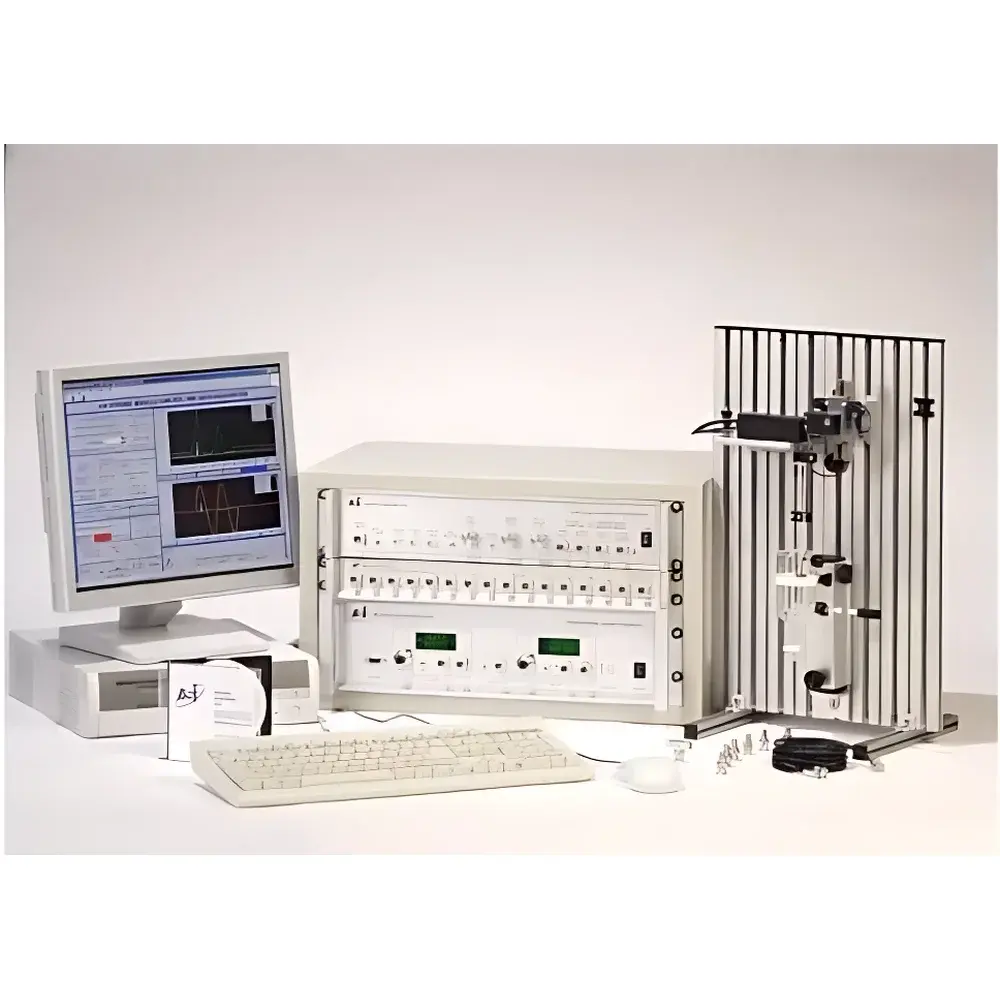
Aurora 1300A In Situ / In Vivo / Ex Vivo Small Animal Skeletal Muscle Testing System
| Brand | Aurora |
|---|---|
| Origin | USA |
| Model | 1300A |
| Force Range | Up to 10 N |
| Temperature Control | Precision-regulated platform |
| Stimulation | Biphasic current/voltage neuromuscular stimulator (701C) |
| Software | Dynamic Muscle Control & Analysis (DMC/DMA) |
| Compliance | Designed for ISO/IEC 17025-aligned laboratory workflows, supports GLP-compliant audit trails and FDA 21 CFR Part 11–ready data export |
Overview
The Aurora 1300A is a high-fidelity, tri-modal small animal skeletal muscle testing platform engineered for quantitative biomechanical characterization across in situ, in vivo, and ex vivo experimental paradigms. It operates on the principle of real-time, dual-parameter servo-controlled measurement—simultaneously acquiring and regulating both force output (via high-resolution load cell) and sarcomere-length-adjusted muscle length (via precision linear actuator). This closed-loop architecture enables rigorous physiological interrogation under physiologically relevant loading conditions, including isotonic, isometric, and work-loop protocols. The system is calibrated to meet traceable metrological standards for force (N) and displacement (µm), supporting reproducible quantification of contractile kinetics, fatigue resistance, passive stiffness, and dynamic power output. Its modular mechanical interface allows rapid reconfiguration between treadmill-based in vivo locomotion assays, surgically stabilized in situ preparations, and temperature- and oxygen-controlled ex vivo bath configurations—without hardware replacement or recalibration.
Key Features
- Tri-modal experimental flexibility: seamless transition between in vivo (treadmill-integrated platform), in situ (surgically anchored limb preparation), and ex vivo (25 mL temperature-regulated tissue bath) setups in under 5 minutes
- Dual-mode force-length control: integrated lever-arm transducer with ±0.1% full-scale linearity and sub-millisecond response time, enabling precise execution of length-tension, force-velocity, and work-loop protocols
- Biphasic neuromuscular stimulation: 701C stimulator delivering programmable voltage (±100 V) and current (±1 A) waveforms with adjustable pulse width (10 µs–2 s), inter-pulse interval, and train duration
- Precision thermal regulation: active cooling/heating platform maintaining ±0.1°C stability across 20–40°C range, validated for sustained physiological viability of murine and rat skeletal muscle
- Modular bath compatibility: optional 25 mL ex vivo chamber with integrated platinum electrodes, perfusion ports, and gas-permeable membrane support for long-duration assays
- Real-time synchronization: hardware-triggered acquisition across force, length, EMG (optional), and environmental sensors at up to 10 kHz sampling rate
Sample Compatibility & Compliance
The 1300A accommodates a broad spectrum of intact skeletal muscle preparations—from isolated whole muscles (e.g., EDL, soleus, diaphragm, FDB) to functionally integrated limb units in anesthetized rodents. It supports species including Mus musculus (C57BL/6, DBA/2), Rattus norvegicus (Sprague-Dawley, Wistar), and larger models (e.g., porcine gracilis for translational validation). All mechanical and electrical components comply with IEC 61000-4 electromagnetic immunity standards. Data acquisition workflows are structured to align with Good Laboratory Practice (GLP) requirements, including electronic signature support, immutable audit logs, and metadata-enriched HDF5 file export—facilitating regulatory submissions per FDA 21 CFR Part 11 and EMA Annex 11 guidelines. The system is routinely deployed in studies referenced against ASTM F2961 (Standard Guide for Skeletal Muscle Tissue Engineering Characterization) and ISO 10993-5 (biocompatibility of test apparatus materials).
Software & Data Management
Dynamic Muscle Control & Analysis (DMC/DMA) v5.x provides a unified interface for protocol design, real-time monitoring, and post-hoc biophysical modeling. Preconfigured templates include twitch, tetanus, fatigue index (1–100 Hz), stretch-shortening cycle, and work-loop analysis with automated calculation of peak force, time-to-peak tension, half-relaxation time, maximum shortening velocity (Vmax), and net mechanical work. Raw data streams are stored in vendor-neutral HDF5 format with embedded MIAME-compliant metadata (species, age, sex, muscle type, stimulation parameters, thermal setpoint). Batch processing supports custom Python/MATLAB scripting via documented API. Export modules generate publication-ready figures (SVG/PDF) and tabular outputs compatible with Prism, SPSS, and R statistical environments. Optional add-ons include sarcomere length tracking (HVSL/VSL integration) and high-speed video synchronization (up to 1000 fps).
Applications
The 1300A serves as a core instrumentation platform in preclinical muscle physiology, pharmacology, and regenerative medicine research. Validated use cases include: assessment of dystrophinopathy progression in mdx mice; evaluation of myostatin inhibition efficacy on contractile reserve; mechanistic profiling of mitochondrial uncouplers on fatigue resistance; structure-function correlation in genetically modified sarcomeric protein models; and functional validation of bioengineered muscle grafts prior to implantation. Its capacity for longitudinal in vivo testing enables within-subject repeated-measures designs critical for detecting subtle therapeutic effects—reducing cohort size requirements and improving statistical power per NIH ARRIVE 2.0 guidelines. The system is cited in over 180 peer-reviewed publications indexed in PubMed, including studies in Journal of Physiology, Acta Physiologica, and Science Translational Medicine.
FAQ
What is the maximum force resolution supported by the 1300A system?
The integrated load cell provides 0.01 mN resolution at full scale (10 N), with factory calibration traceable to NIST standards.
Can the 1300A be integrated with third-party electrophysiology or imaging systems?
Yes—TTL and analog I/O ports enable hardware synchronization with patch-clamp amplifiers, high-speed cameras, and fluorescence microscopy platforms via standard BNC or SMA interfaces.
Is training and application support included with purchase?
All systems ship with on-site installation, operator certification (2-day workshop), and lifetime access to Aurora’s Application Scientist team for protocol optimization and troubleshooting.
Does the DMC/DMA software support automated compliance with 21 CFR Part 11?
Yes—electronic signatures, role-based user permissions, audit trail generation, and encrypted data storage are enabled by default and configurable per institutional SOPs.