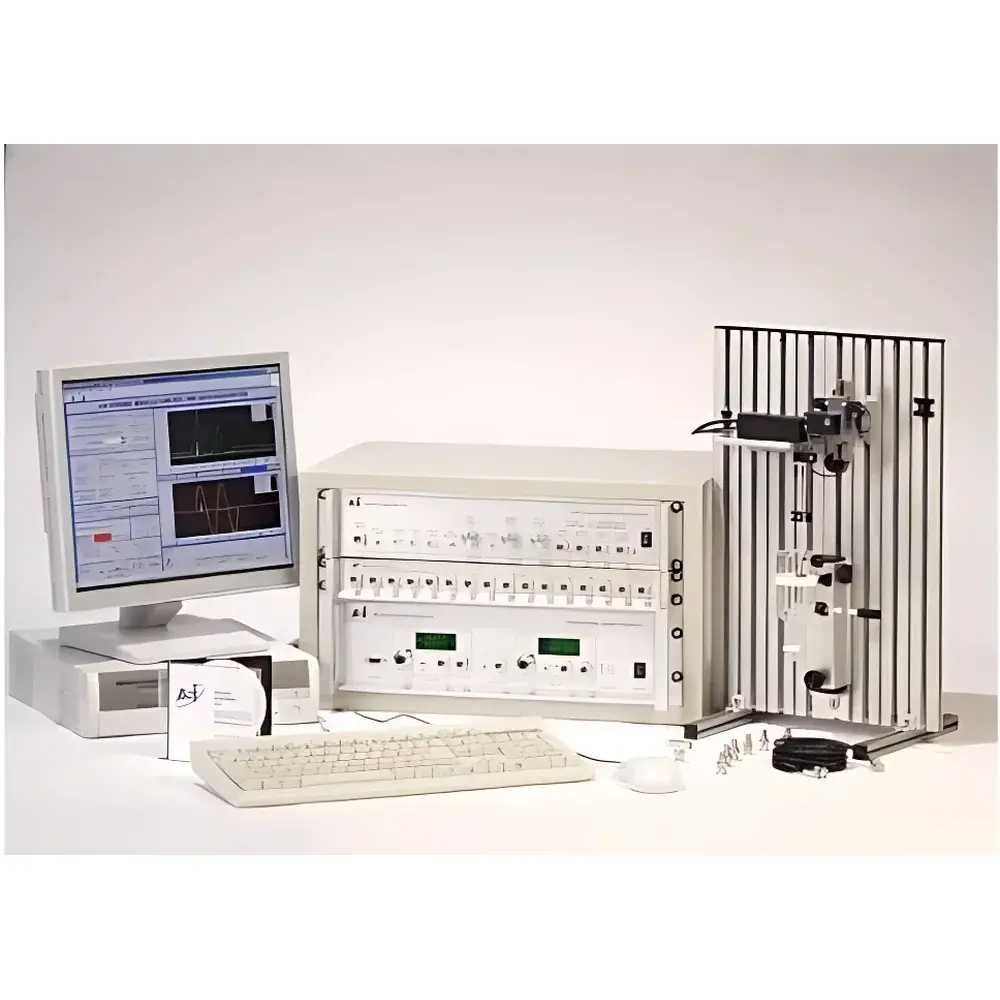
Aurora Scientific A1300 In Vivo, In Situ & Ex Vivo Muscle Mechanics Testing System
| Brand | Aurora Scientific |
|---|---|
| Origin | USA |
| Model | A1300 |
| Application Scope | Rodent (mouse/rat) skeletal muscle functional assessment |
| Core Sensor | Dual-Mode Muscle Lever (force + length transduction & actuation) |
| Temperature Control | Integrated thermostatic platform (±0.1 °C stability) |
| Stimulator | High-energy biphasic stimulator (0–200 V, 0.01–100 ms pulse width) |
| Data Acquisition | Up to 100 kHz sampling rate |
| Software Platform | DMC/DMA v6.x (Windows/Linux compatible) |
| Compliance | Designed for GLP-compliant workflows |
Overview
The Aurora Scientific A1300 In Vivo, In Situ & Ex Vivo Muscle Mechanics Testing System is an integrated biomechanical platform engineered for quantitative assessment of skeletal muscle contractile function across physiological contexts. Built upon the foundational principle of dual-mode lever technology—where a single transducer simultaneously measures and controls both force and length—the A1300 enables precise, real-time interrogation of muscle mechanical behavior under physiologically relevant loading conditions. Unlike conventional single-function force transducers or length controllers, the dual-mode lever operates on a closed-loop servo architecture that maintains user-defined length or force trajectories with sub-millisecond response latency. This capability is essential for capturing dynamic phenomena such as isotonic shortening velocity, isometric tetanic tension, work loops, and fatigue-induced shifts in force-frequency relationships. The system supports three experimental paradigms within one unified hardware framework: in vivo (anesthetized, surgically prepared rodents), in situ (intact neuromuscular preparation with preserved circulation and innervation), and ex vivo (isolated muscle-tendon complexes in oxygenated physiological bath). Each configuration shares identical sensor calibration, stimulus timing synchronization, and data acquisition architecture—ensuring cross-paradigm comparability critical for translational physiology studies.
Key Features
- Dual-Mode Muscle Lever (Model 305B/300B): Simultaneous high-fidelity measurement and active control of force (range: ±100 mN to ±250 mN, resolution: 50 nN) and length (range: ±5 mm, resolution: 0.1 µm)
- Modular Experimental Platforms: Interchangeable mounting systems for in vivo/in situ rodent fixation (mouse/rat-specific cradles with thermal regulation) and ex vivo bath integration (25 mL horizontal tissue bath with gas-permeable membrane and temperature feedback loop)
- Biphasic High-Energy Stimulator (Model 701B): Programmable voltage output (0–200 V), adjustable pulse duration (0.01–100 ms), inter-pulse interval precision <10 µs, and built-in safety current limiting
- Real-Time Data Acquisition Engine: 100 kHz analog input sampling with hardware-triggered synchronization between stimulus onset, lever position, and force output
- Thermostatic Environmental Control: Integrated Peltier-based platform with PID-regulated temperature maintenance (15–45 °C, ±0.1 °C stability) and optional bath perfusion compatibility
Sample Compatibility & Compliance
The A1300 accommodates biological specimens ranging from single myofibers (via micromanipulator attachment) to whole muscles (e.g., EDL, soleus, diaphragm) and multi-muscle groups (e.g., gastrocnemius-plantaris complex). Tissue integrity is preserved through standardized dissection protocols aligned with NIH and FELASA guidelines. All mechanical testing procedures adhere to established standards including ISO 1099 (fatigue testing of metallic materials, adapted for biological tissue protocol validation) and ASTM F2622 (standard practice for evaluating skeletal muscle contractility in vitro). The system’s software architecture supports configurable electronic signatures, time-stamped audit trails, and user-access-level permissions—enabling compliance with FDA 21 CFR Part 11 requirements when deployed in regulated preclinical research environments. Calibration certificates traceable to NIST standards are provided with each dual-mode lever and stimulator module.
Software & Data Management
The DMC (Data Measurement & Control) and DMA (Data Management & Analysis) software suite is pre-installed on a dedicated Windows or Linux workstation and configured for immediate use. DMC provides real-time experiment orchestration—including automated ramp-and-hold protocols, custom waveform generation (sinusoidal, triangular, step), and closed-loop feedback control modes (length-clamp, force-clamp, work-loop). DMA delivers post-acquisition analysis tools for deriving key physiological metrics: peak twitch/tetanic force (mN), time-to-peak tension (ms), half-relaxation time (ms), maximum shortening velocity (fiber-length/s), power output (µW), and fatigue index (% initial force retention after repeated stimulation). All datasets are stored in HDF5 format with embedded metadata (subject ID, temperature, bath composition, stimulation parameters), ensuring FAIR (Findable, Accessible, Interoperable, Reusable) data principles. Batch processing scripts and Python API access enable integration with institutional data lakes and statistical pipelines (e.g., R, MATLAB, Python SciPy).
Applications
- Translational muscle physiology: Comparative analysis of wild-type vs. genetically modified murine models (e.g., mdx, SOD1-G93A, ApoE−/−)
- Pharmacological screening: Dose-response characterization of contractile modulators (e.g., myosin activators, SERCA inhibitors, β-adrenergic agonists)
- Aging and sarcopenia research: Longitudinal tracking of specific force decline, slowing of contraction kinetics, and altered calcium sensitivity
- Metabolic disease modeling: Functional phenotyping of insulin-resistant or lipid-overloaded muscle preparations
- Rehabilitation science: Quantification of adaptive remodeling following chronic electrical stimulation or exercise-mimetic interventions
- Biomechanical modeling: Parameterization of Hill-type and Huxley cross-bridge models using empirically derived force-velocity and length-tension relationships
FAQ
What species and muscle types are supported by the A1300 system?
The A1300 is optimized for murine models (C57BL/6, BALB/c, DBA/2 mice; Sprague-Dawley, Wistar rats) and supports extensor digitorum longus (EDL), soleus, tibialis anterior, diaphragm, and cardiac papillary muscle preparations.
Can the system be upgraded to support larger animal models?
While the standard A1300 platform is designed for rodents, Aurora Scientific offers scalable lever modules (e.g., Model 300C for higher-force applications) and custom mounting solutions for rabbit or porcine preparations upon consultation.
Is the DMC/DMA software validated for regulatory submissions?
DMC/DMA v6.x includes optional 21 CFR Part 11 compliance packages with electronic signature workflows, audit trail export, and system validation documentation—available under separate GxP support agreement.
How is temperature controlled during in vivo experiments?
A thermoregulated surgical platform maintains core body temperature via feedback-controlled heating elements and rectal probe monitoring, while the lever head and bath compartments operate independently at user-specified temperatures.
What calibration standards accompany the system?
Each dual-mode lever ships with NIST-traceable calibration certificates covering both force and displacement axes, updated annually per ISO/IEC 17025 laboratory accreditation requirements.
Related Products