
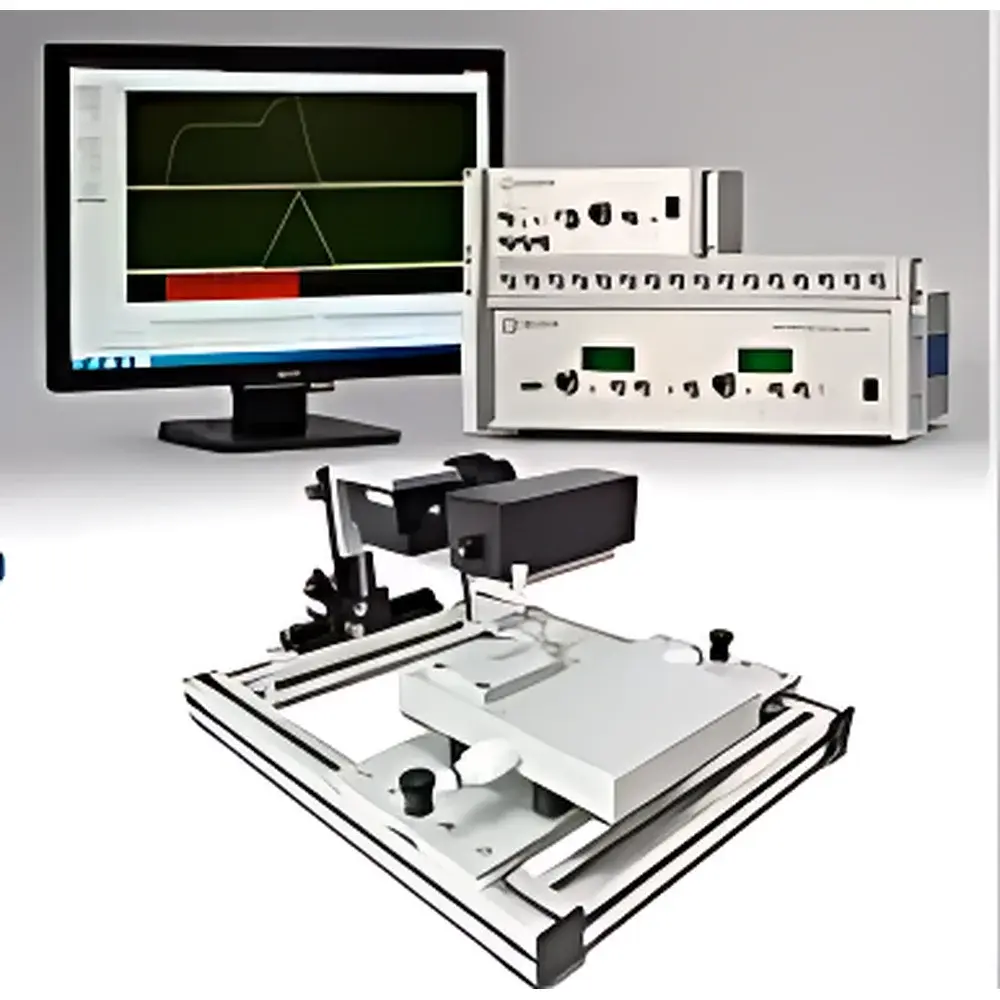
Aurora Scientific WAD111 Tri-Mode In Vivo, In Situ & Ex Vivo Muscle Testing System
| Origin | USA |
|---|---|
| Manufacturer Type | Authorized Distributor |
| Origin Category | Imported |
| Model | WAD111 |
| Price Range | USD $14,000 – $72,000 |
Overview
The Aurora Scientific WAD111 Tri-Mode Muscle Testing System is an integrated biomechanical platform engineered for quantitative assessment of skeletal muscle function across three physiological contexts: in vivo, in situ, and ex vivo. Based on the established principles of isometric and isotonic force transduction—coupled with high-fidelity length control and programmable electrical stimulation—the system enables rigorous, reproducible measurement of contractile parameters in murine models (mouse and rat). Its modular architecture supports seamless transition between experimental configurations without recalibration, maintaining traceable force resolution (0.5–10 N full-scale) and sub-millisecond temporal synchronization between stimulation, length perturbation, and force acquisition. Designed for translational muscle physiology research, the WAD111 meets the structural and operational demands of longitudinal studies, pharmacological intervention assays, and disease-model phenotyping under controlled thermal conditions.
Key Features
- Tri-mode experimental flexibility: native support for in vivo (anesthetized whole-animal), in situ (intact hindlimb with preserved neural and vascular supply), and ex vivo (isolated muscle-tendon preparation in 25 mL thermostatically regulated organ bath)
- Dual-mode muscle lever system with integrated footplate actuator for precise length control and dynamic work-loop analysis
- High-energy biphasic stimulator capable of both field stimulation (via parallel plate electrodes) and direct nerve stimulation (with insulated hook electrodes), delivering adjustable pulse amplitude (0–100 V), duration (10 µs–2 ms), and frequency (0.1–500 Hz)
- Thermally regulated testing platform (compatible with external temperature controllers) enabling stable physiological temperature maintenance (25–42 °C) during in vivo and in situ protocols
- Real-time, low-latency data acquisition (up to 10 kHz sampling rate) synchronized across force, length, stimulation trigger, and analog physiological inputs
- Modular mechanical fixtures—including rodent-specific body clamps, femoral fixation brackets, and tendon anchoring systems—designed for minimal tissue displacement and maximal mechanical coupling
Sample Compatibility & Compliance
The WAD111 accommodates C57BL/6, BALB/c, and Sprague-Dawley mice (18–35 g) and rats (200–500 g) without hardware modification. All contact surfaces are autoclavable or chemically sterilizable; chamber components comply with USP Class VI biocompatibility standards. The system adheres to ISO 13485-aligned manufacturing practices for research-grade instrumentation and supports audit-ready documentation workflows required under GLP-compliant preclinical study protocols. While not a medical device, its architecture aligns with FDA-recommended design controls for non-clinical laboratory equipment used in IND-enabling studies.
Software & Data Management
Control and analysis are performed via Digital Muscle Controller (DMC) software—a Windows-based application developed specifically for muscle physiology. DMC provides experiment sequencing, real-time visualization, and post-hoc parameter extraction including resting length (Lo), passive tension, twitch force, tetanic force, fatigue index (% decline over 3-min stimulation train), force-frequency relationships, force-velocity curves, stiffness (dF/dL), and net mechanical work per cycle. Built-in modules conform to standardized assay definitions from the American Physiological Society’s Muscle Section guidelines. Raw data exports to HDF5 and MATLAB-compatible .mat formats; metadata tagging supports FAIR data principles. Audit trail logging, user access levels, and electronic signature capability satisfy 21 CFR Part 11 requirements for regulated environments.
Applications
- Characterization of neuromuscular dysfunction in genetically modified mouse models (e.g., mdx, SOD1-G93A)
- Evaluation of therapeutic efficacy in muscular dystrophy, sarcopenia, and critical illness myopathy
- Investigation of excitation-contraction coupling defects using pharmacological uncouplers (e.g., ryanodine, caffeine)
- Biomechanical profiling of regenerating muscle post-injury or following cell therapy
- Validation of computational muscle models through empirical force-length-velocity surface mapping
- Training and standardization of muscle function assessment across multi-site preclinical consortia
FAQ
Can the WAD111 be used for both mouse and rat preparations without hardware replacement?
Yes—the platform includes interchangeable mounting rails, scalable clamping mechanisms, and adjustable lever arm geometry to accommodate both species within a single setup.
Is temperature control integrated into the system or externally managed?
The WAD111 features a thermally isolated baseplate with embedded sensor ports; users connect third-party circulators (e.g., Neslab, Thermo Fisher) via standard fittings for precise bath or tissue surface temperature regulation.
Does the DMC software support custom protocol development beyond the included modules?
Yes—DMC provides a scripting interface (Lua-based) allowing advanced users to define novel stimulus patterns, feedback-controlled length trajectories, and conditional branching logic for complex experimental paradigms.
What calibration standards are provided with the system?
Each unit ships with NIST-traceable force calibration weights (0.1 N, 1 N, 5 N), certified lever arm moment arm verification jig, and step-response validation waveform files for time-domain alignment verification.
Is technical support available for method development and troubleshooting?
Aurora Scientific offers application engineering support—including remote protocol optimization, data interpretation consultation, and on-site training—through authorized distribution partners under annual service agreements.




