Autobio Autolas B-1 Series Fully Automated Clinical Chemistry and Immunoassay Integrated Testing Line
| Brand | Autobio |
|---|---|
| Origin | Henan, China |
| Manufacturer Type | Authorized Distributor |
| Country of Origin | China |
| Model | Autolas B-1 Series |
| Quotation | Upon Request |
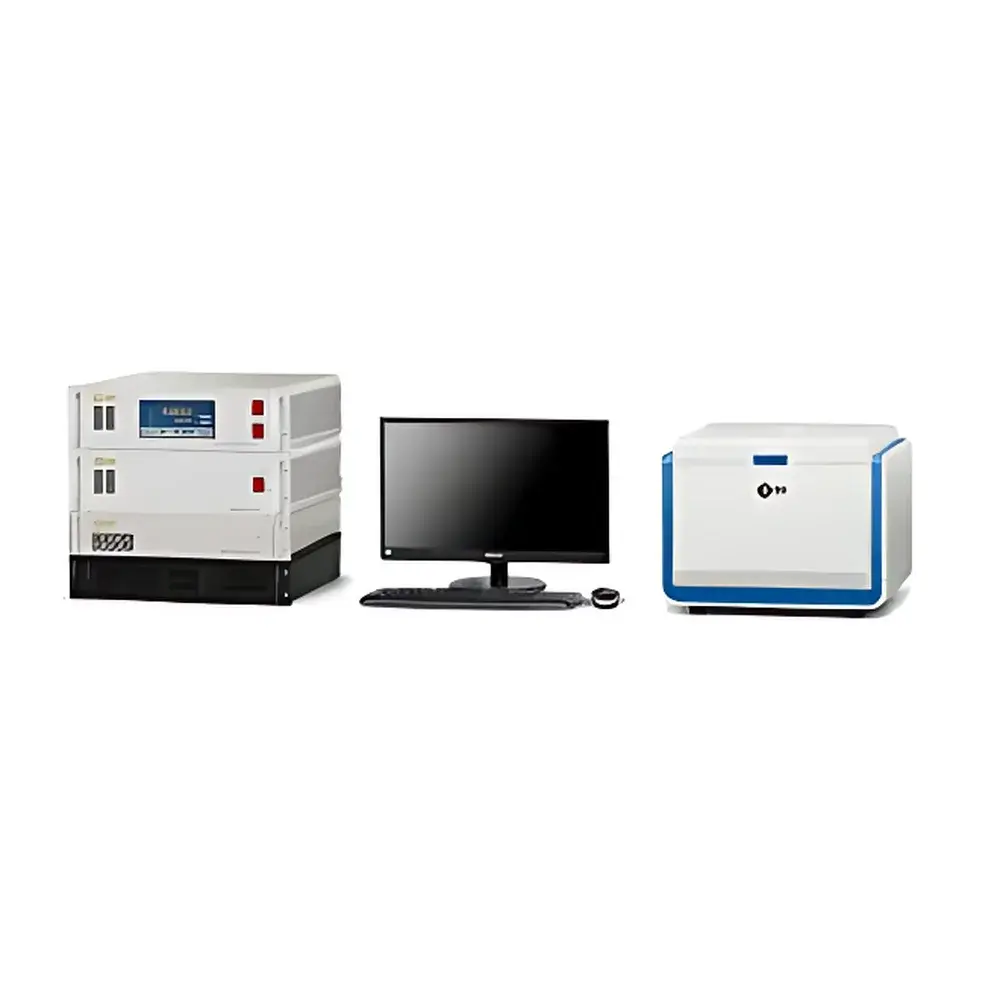
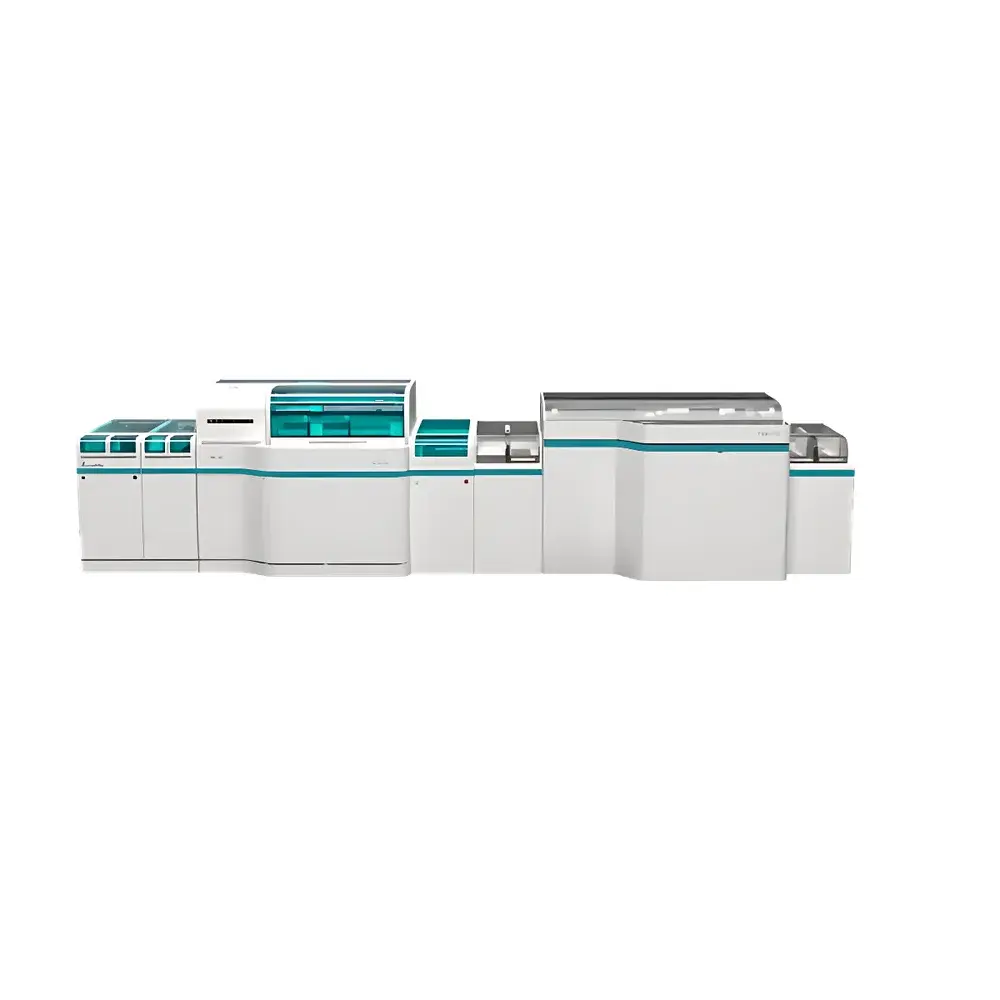
| Typical Configuration | Four Analyzers (Flexible Combination of Clinical Chemistry and Immunoassay Modules) |
| Throughput | Clinical Chemistry — 2000 tests/hour (excluding electrolytes) |
| Assay Menu | 160 magnetic microparticle-based chemiluminescent immunoassays across 12 disease categories |
| Sample Positions | ≥150 |
| Reagent Positions | >20 for immunoassay |
Overview
The Autobio Autolas B-1 Series is a modular, fully integrated clinical laboratory automation system engineered to unify clinical chemistry and immunoassay testing on a single platform. It operates on a centralized track-based specimen transport architecture, utilizing bidirectional conveyance, intelligent sample routing, and dynamic priority scheduling to support true “one-tube-to-result” workflows. Unlike legacy linear流水线 (LIS-integrated but physically segmented) systems, the B-1 Series employs a compact, space-optimized layout with patented corner-navigation and pillar-circumvention modules—enabling installation in constrained laboratory footprints without compromising throughput or operational flexibility. Its core measurement technologies include photometric and ion-selective electrode (ISE) detection for clinical chemistry, and magnetic microparticle chemiluminescent immunoassay (CLIA) for serological, hormonal, tumor marker, infectious disease, and autoimmune testing. Designed for high-reproducibility routine diagnostics, the system supports full traceability from sample receipt to result release in accordance with ISO 15189 and CLIA regulatory expectations.
Key Features
- Space-Efficient Architecture: Reduces floor footprint by 60–80% versus conventional integrated lines of comparable configuration—achieved through vertical stacking, rotary transfer modules, and adaptive path routing around fixed infrastructure (e.g., columns, HVAC ducts).
- Modular Scalability: Supports independent deployment of 1–4 clinical chemistry analyzers and 1–4 immunoassay analyzers, all interoperable via unified middleware and shared sample/reagent logistics.
- Bio-Safe Sample Handling: Integrated auto-decapping module with UV-C disinfection zone and barcode position correction ensures consistent tube orientation and minimizes aerosol generation during uncapping.
- Intelligent Workflow Prioritization: Emergency specimens are dynamically elevated in queue order—even mid-run—without interrupting ongoing assays; no manual intervention required.
- Reagent Logistics Optimization: Dual-tier reagent storage with >90 positions for chemistry reagents and >20 chilled positions for immunoassay reagents; includes onboard reagent stability monitoring and expiry alerting.
- One-Tube Testing Protocol: Eliminates manual aliquoting or secondary tube transfers—samples undergo sequential chemistry and immunoassay analysis using the same primary tube, reducing preanalytical error and consumables usage.
Sample Compatibility & Compliance
The Autolas B-1 Series accepts standard 13 × 75 mm, 13 × 100 mm, and 16 × 100 mm evacuated tubes (including serum, plasma EDTA/K2EDTA/LiHep, and urine), as well as cup-loaded microtubes for pediatric or low-volume samples. All fluidic pathways comply with IEC 61010-1 safety standards for medical electrical equipment. The system meets ISO 15189:2022 requirements for analytical process control, including calibration verification, carryover assessment, and inter-module result correlation. Audit trails—including user actions, reagent lot changes, calibration events, and instrument status logs—are retained for ≥18 months and support FDA 21 CFR Part 11-compliant electronic signature implementation when paired with validated LIMS integration.
Software & Data Management
The Autolas B-1 Series runs on Autobio’s proprietary LabLink™ middleware—a web-accessible, role-based platform supporting real-time TAT dashboards, auto-interpretive rule-based result review (with configurable reflex testing logic), critical value alerting via SMS/email/SNMP, and remote diagnostic telemetry. Quality management functions include automated internal QC charting (Levey-Jennings, Westgard rules), external EQA participation tracking, and cross-module sigma metrics calculation. Data export conforms to HL7 v2.5.1 and ASTM E1384 standards. All software updates, firmware patches, and predictive maintenance notifications are delivered via secure TLS 1.2-encrypted channels under Autobio’s Remote Support Service (RSS) framework—enabling proactive issue resolution without onsite engineer dispatch.
Applications
This system is deployed across tier-2 and tier-3 hospitals, regional reference laboratories, and centralized diagnostic service providers requiring consolidated chemistry/immunoassay capacity with minimal spatial overhead. Key use cases include emergency department rapid turnaround testing (e.g., troponin I + CK-MB + electrolytes + glucose within 18 minutes), oncology panel workflows (PSA, AFP, CEA, CA125, CA19-9), endocrine profiling (TSH, FT4, cortisol, insulin), infectious disease screening (HBV/HCV/HIV/TP), and chronic disease monitoring (HbA1c, eGFR, lipid panels, liver/kidney function). Its modular design also supports phased capital investment—starting with a dual-module configuration and scaling to full 4+4 deployment as test volume grows.
FAQ
Does the Autolas B-1 Series support LIS/HIS integration?
Yes—it provides native HL7 v2.5.1 and ASTM E1384 interfaces with configurable message mapping, ACK/NACK handling, and bidirectional patient/result synchronization.
Can the system perform STAT testing without disrupting routine runs?
Yes—its dynamic priority scheduler automatically inserts urgent specimens ahead of current queue positions while preserving assay integrity and calibration validity.
Is remote software update capability available?
Yes—updates are delivered over encrypted channels via Autobio’s Remote Support Service (RSS), with rollback functionality and version-controlled audit logging.
What quality assurance protocols are embedded in the software?
LabLink™ includes automated QC data plotting, Westgard multirule violation detection, inter-laboratory comparison reporting, and sigma-metric trending across all connected analyzers.
How is reagent stability managed across modules?
Each reagent position monitors temperature, open time, and remaining volume; expiration warnings trigger automatic disabling of affected assays and notification to designated supervisors.