
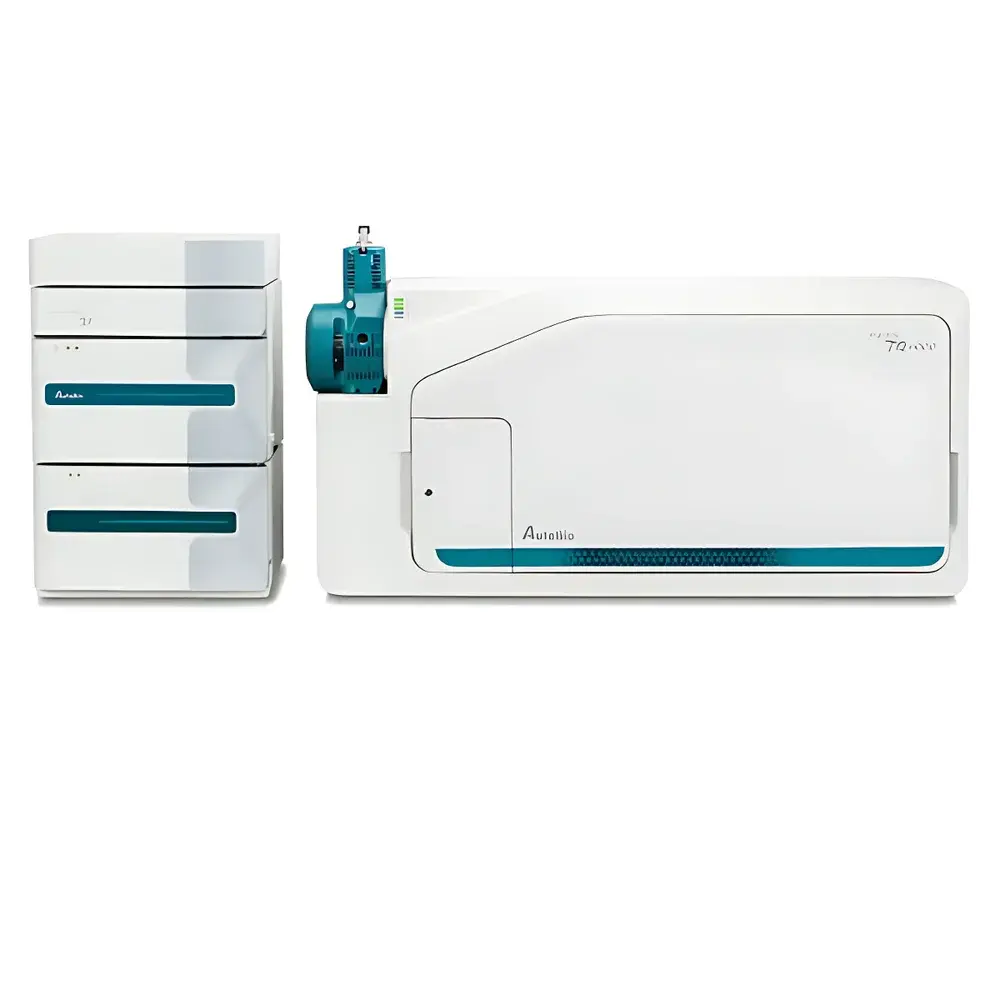
Autobio Automs TQ6000 Triple Quadrupole Liquid Chromatography Tandem Mass Spectrometry System
| Brand | Autobio |
|---|---|
| Origin | Henan, China |
| Manufacturer Type | Authorized Distributor |
| Origin Category | Domestic |
| Model | Automs TQ6000 |
| Price Range | USD 300,000–320,000 (FOB) |
| Instrument Type | Triple Quadrupole (QqQ) |
| Application Scope | General-Purpose LC-MS/MS |
| Maximum System Pressure | >12,000 psi |
| Ionization Modes | Dual ESI/APCI with Tool-Free Switching |
| Software Interface | Fully Localized Chinese GUI with Intelligent Quantitation & Method Development Engine |
| Regulatory Compliance | Designed to support GLP/GMP workflows, audit trail-enabled data handling, and 21 CFR Part 11–compliant user access control (optional configuration) |
Overview
The Autobio Automs TQ6000 is a high-performance triple quadrupole liquid chromatography tandem mass spectrometry (LC-MS/MS) system engineered for robust, reproducible quantitative analysis across clinical diagnostics, environmental monitoring, food safety, and pharmaceutical research. It integrates an ultra-high-pressure liquid chromatograph (UHPLC) capable of sustained operation at pressures exceeding 12,000 psi with a vacuum-optimized tandem mass spectrometer featuring dual orthogonal electrospray ionization (ESI) and atmospheric pressure chemical ionization (APCI) sources. The system operates on the principle of selected reaction monitoring (SRM) and multiple reaction monitoring (MRM), enabling sub-picomolar detection sensitivity, exceptional specificity through precursor-to-product ion transition filtering, and linear dynamic range spanning four orders of magnitude. Its architecture supports routine deployment in regulated laboratories where trace-level quantification—such as therapeutic drug monitoring (TDM), steroid hormone profiling, mycotoxin screening, or pesticide residue analysis—is subject to stringent method validation requirements per ISO/IEC 17025, CLIA, or CAP guidelines.
Key Features
- UHPLC platform with gradient delay volume <10 µL and dwell time stability ±0.1%, ensuring retention time reproducibility <0.02 min over 100 injections
- Dual-mode ion source with fully independent ESI and APCI probes; tool-free switching in <30 seconds without venting the source chamber
- Triple quadrupole mass analyzer with RF voltage compensation circuitry (FastRF) and low-latency amplification, delivering consistent mass accuracy (<0.2 Da) and resolution across m/z 50–2,000
- V-Grad low-pressure linear acceleration field technology minimizes ion transmission loss and improves duty cycle efficiency during rapid polarity switching
- Modular detector options include DAD, UV-Vis, fluorescence, refractive index, and evaporative light scattering detectors—each validated for seamless integration and synchronized data acquisition
- Thermally stabilized column compartment (4–85 °C) and autosampler (4–40 °C) with <0.3% RSD injection precision at 1 µL volume
Sample Compatibility & Compliance
The Automs TQ6000 accommodates a broad spectrum of sample matrices—including plasma, serum, urine, tissue homogenates, soil extracts, water filtrates, and food digests—without requiring hardware modification. Sample introduction supports standard 96-well and 384-well microplate formats, with optional robotic autosampler integration for unattended 24/7 operation. All hardware and firmware components comply with IEC 61000-6-3 (EMC) and IEC 61010-1 (safety) standards. When configured with audit trail logging, electronic signatures, and role-based access control, the system meets foundational requirements for FDA 21 CFR Part 11 compliance and supports laboratory adherence to GLP and GMP documentation practices. Method transfer validation packages are available for alignment with USP , EP 2.2.46, and ASTM D7622 protocols.
Software & Data Management
The system runs on Autobio’s proprietary MassLab Suite—a fully localized Chinese-language software platform built on a modular, database-driven architecture. Core modules include QuantStudio (automated MRM optimization and calibration curve fitting), MethodWizard (rule-based method development completing in ≤3 minutes), and AutoQC (real-time performance verification against predefined acceptance criteria). Raw data files adhere to open mzML format for third-party interoperability. Audit trails record all user actions—including parameter edits, sequence modifications, and report generation—with immutable timestamps and operator IDs. Data archiving supports encrypted network storage, automated backup scheduling, and hierarchical retention policies aligned with ISO 15189 clause 5.9.2.
Applications
- Clinical chemistry: Quantitative measurement of vitamin D metabolites, immunosuppressants (tacrolimus, cyclosporine), endogenous steroids, and cardiac biomarkers (NT-proBNP, troponin I)
- Environmental analysis: Detection of perfluoroalkyl substances (PFAS), polycyclic aromatic hydrocarbons (PAHs), organophosphate flame retardants, and microplastic degradation markers at ng/L levels in wastewater
- Food safety: Multi-residue screening of veterinary drugs (β-agonists, sulfonamides), mycotoxins (aflatoxins, ochratoxin A), and illegal dyes (rhodamine B, sudan red) in meat, dairy, and grain commodities
- Pharmaceutical R&D: Bioavailability studies, metabolite identification support (via precursor ion scanning), and stability-indicating assay development for small-molecule APIs
- Metabolomics: Targeted profiling of central carbon metabolism intermediates (e.g., TCA cycle acids, amino acids) in cell lysates and biofluids using isotopically labeled internal standards
FAQ
What regulatory standards does the Automs TQ6000 support for data integrity?
The system supports configurable 21 CFR Part 11 compliance—including electronic signatures, audit trail activation, and secure user authentication—when deployed with validated IT infrastructure and documented SOPs.
Can the instrument perform both positive- and negative-ion mode analyses within a single run?
Yes. The dual-source design and FastRF power supply enable polarity switching in under 20 ms, allowing co-eluting analytes with divergent ionization efficiencies to be monitored simultaneously in SRM mode.
Is method transfer from other commercial QqQ platforms feasible?
Method parameters (retention times, collision energies, dwell times) can be imported via CSV or direct vendor file conversion; Autobio provides cross-platform translation templates for Agilent, Sciex, and Waters methods.
What maintenance intervals are recommended for the ion source and quadrupole rods?
Source cleaning is advised every 200–300 sample injections; quadrupole rod cleaning is typically required every 6–12 months depending on matrix complexity and daily throughput.
Does the system support remote monitoring and troubleshooting?
Yes. MassLab Suite includes secure TLS-encrypted remote desktop capability and diagnostic telemetry reporting, enabling qualified service engineers to assess instrument health and initiate corrective actions without physical presence.
Related Products





