
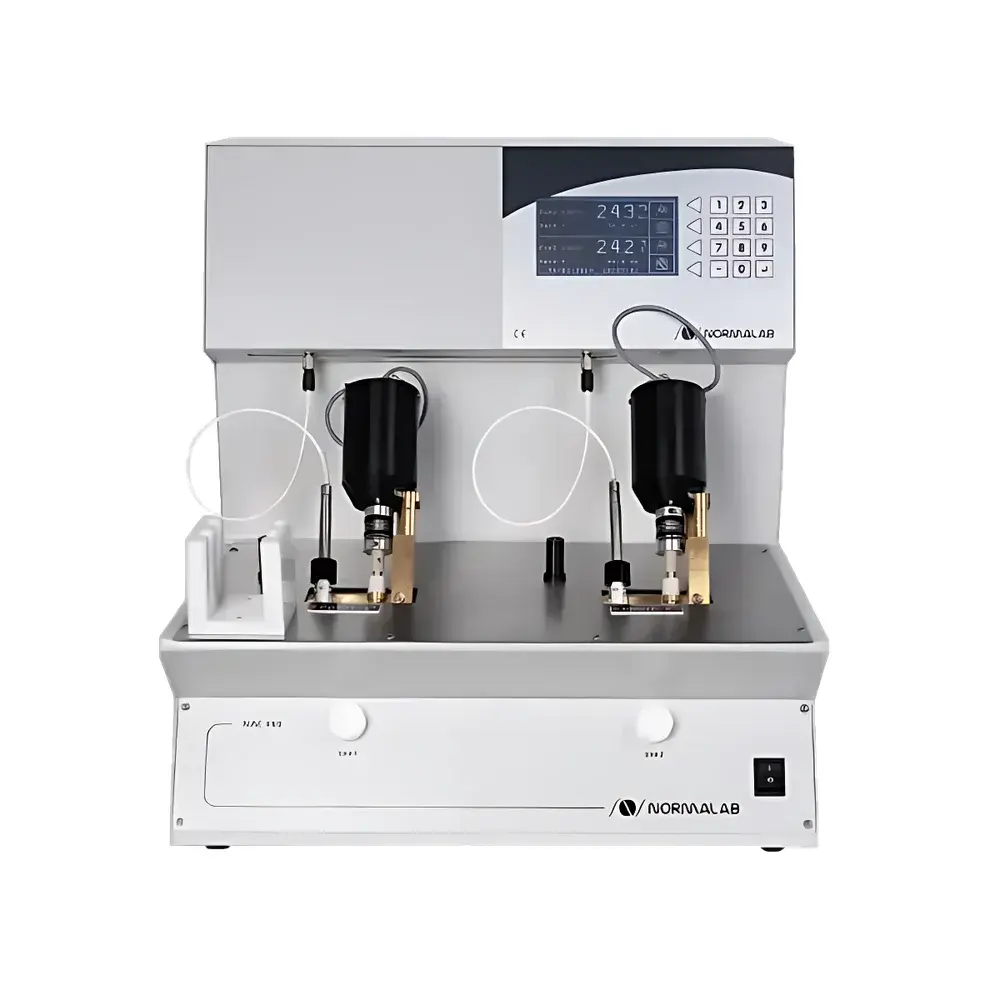
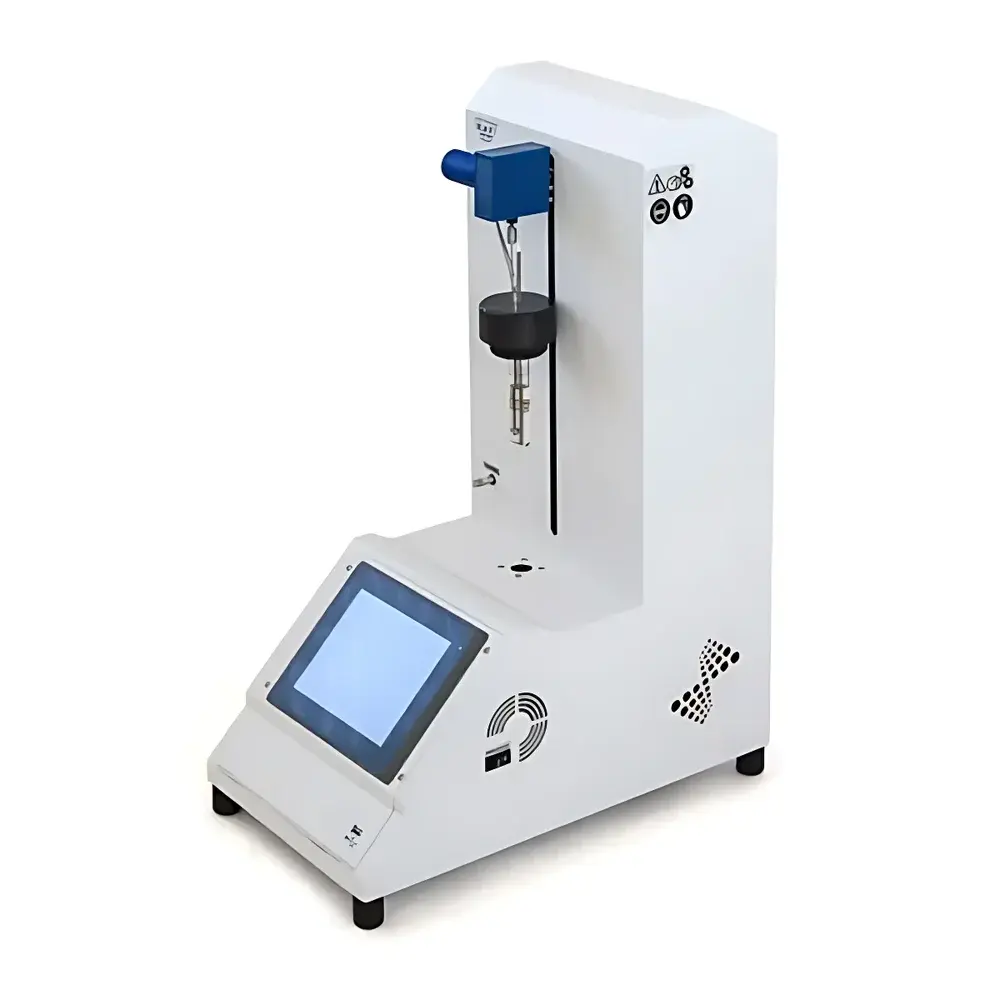
Automatic Aniline Point Tester NORMALAB NAE 440
| Brand | NORMALAB |
|---|---|
| Origin | France |
| Model | NAE 440 |
| Temperature Range | –10 to 150 °C |
| Standard Compliance | ASTM D611, IP 2, NF M 07-021, ISO 2977, GB/T 262 |
| Heating Method | Metal Bath |
| Safety Features | Integrated Thermal and Overheat Protection |
| Configuration | Dual-Sample Position |
| Connectivity | RS-232/USB Interface for PC Integration |
| Software | Dedicated Aniline Point Management Suite with Audit Trail & Data Export (CSV, PDF) |
Overview
The NORMALAB NAE 440 Automatic Aniline Point Tester is a precision-engineered instrument designed for the standardized determination of aniline point in petroleum products—including naphthas, kerosenes, diesel fuels, lubricating oils, and related hydrocarbon mixtures. Based on the thermodynamic principle of partial miscibility between aniline and hydrocarbons, the instrument precisely identifies the minimum temperature at which equal volumes of sample and aniline form a homogeneous solution upon cooling. This critical parameter correlates directly with aromatic content, solvent power, and hydrocarbon type distribution—making it indispensable for refinery quality control, fuel formulation, and regulatory compliance testing.
Key Features
- Dual independent test positions enable parallel analysis of two samples or replicate measurements—reducing turnaround time without compromising reproducibility.
- High-stability metal bath heating system ensures uniform thermal distribution and ±0.1 °C temperature control across the full operating range (–10 to 150 °C), minimizing gradient-induced measurement drift.
- Automated optical detection system monitors phase separation in real time using high-contrast imaging, eliminating subjective visual interpretation and supporting objective endpoint determination for transparent and deeply colored samples alike.
- Integrated safety architecture includes dual redundant temperature sensors, automatic cut-off at preset overtemperature thresholds, and sealed bath enclosure to prevent aniline vapor exposure.
- Onboard diagnostics support rapid verification of thermal calibration and optical path integrity—facilitating daily operational checks per GLP requirements.
- Front-panel touchscreen interface with multilingual support (English, French, Spanish, German) allows intuitive method selection, parameter entry, and real-time status monitoring without external software dependency.
Sample Compatibility & Compliance
The NAE 440 accommodates liquid petroleum samples of varying volatility, viscosity, and chromaticity—including dyed fuels, cracked stocks, and highly aromatic distillates—without pre-treatment or dilution. Its optical detection algorithm is insensitive to sample coloration, ensuring reliable endpoint identification even in black or rust-colored samples where traditional visual methods fail. The instrument is fully compliant with internationally recognized standard methods: ASTM D611 (Standard Test Method for Aniline Point of Petroleum Products), IP 2 (Institute of Petroleum Method 2), NF M 07-021 (French Standard), ISO 2977 (Petroleum Products — Determination of Aniline Point), and GB/T 262 (Chinese National Standard). All test protocols are implemented with traceable temperature ramping profiles and documented thermal equilibration cycles required by ISO/IEC 17025-accredited laboratories.
Software & Data Management
The included AnilinePoint Manager software provides comprehensive data acquisition, processing, and reporting capabilities compatible with Windows-based laboratory PCs. It supports user-defined test templates aligned with specific product specifications (e.g., aviation turbine fuel vs. base oil feedstock), automatic calculation of derived parameters (e.g., aromaticity index), and generation of audit-ready reports compliant with FDA 21 CFR Part 11 requirements—including electronic signatures, change history logs, and secure user access levels (administrator, analyst, reviewer). Raw temperature/time datasets are exportable in CSV format for integration into LIMS environments, while PDF reports include instrument ID, calibration certificate reference, operator ID, environmental conditions, and digital signature fields.
Applications
- Refinery QC/QA labs verifying feedstock aromaticity prior to hydrotreating or catalytic reforming units.
- Fuel blending facilities correlating aniline point with cetane number, smoke point, and oxidation stability.
- Lubricant manufacturers assessing base oil saturation level and additive compatibility risk.
- Independent testing laboratories performing contract analyses under ISO/IEC 17025 scope for petrochemical certification bodies.
- Research institutions studying structure-property relationships in hydrocarbon mixtures and bio-blendstocks.
FAQ
What standards does the NAE 440 support out-of-the-box?
ASTM D611, IP 2, NF M 07-021, ISO 2977, and GB/T 262 test protocols are preloaded and validated during factory commissioning.
Can the instrument handle viscous or waxy samples?
Yes—samples up to 100 cSt at 40 °C may be tested; optional pre-heating mode ensures complete dissolution prior to aniline addition.
Is remote operation or network integration possible?
The device supports Ethernet-to-serial conversion via third-party gateways, enabling integration into centralized lab automation systems using Modbus TCP or OPC UA protocols.
How often is recalibration required?
Annual calibration against NIST-traceable reference materials is recommended; onboard diagnostic routines verify thermal and optical performance before each test series.
Does the system meet data integrity requirements for regulated environments?
Yes—the software implements ALCOA+ principles (Attributable, Legible, Contemporaneous, Original, Accurate, Complete, Consistent, Enduring, Available) and supports 21 CFR Part 11-compliant electronic records.
Related Products






