
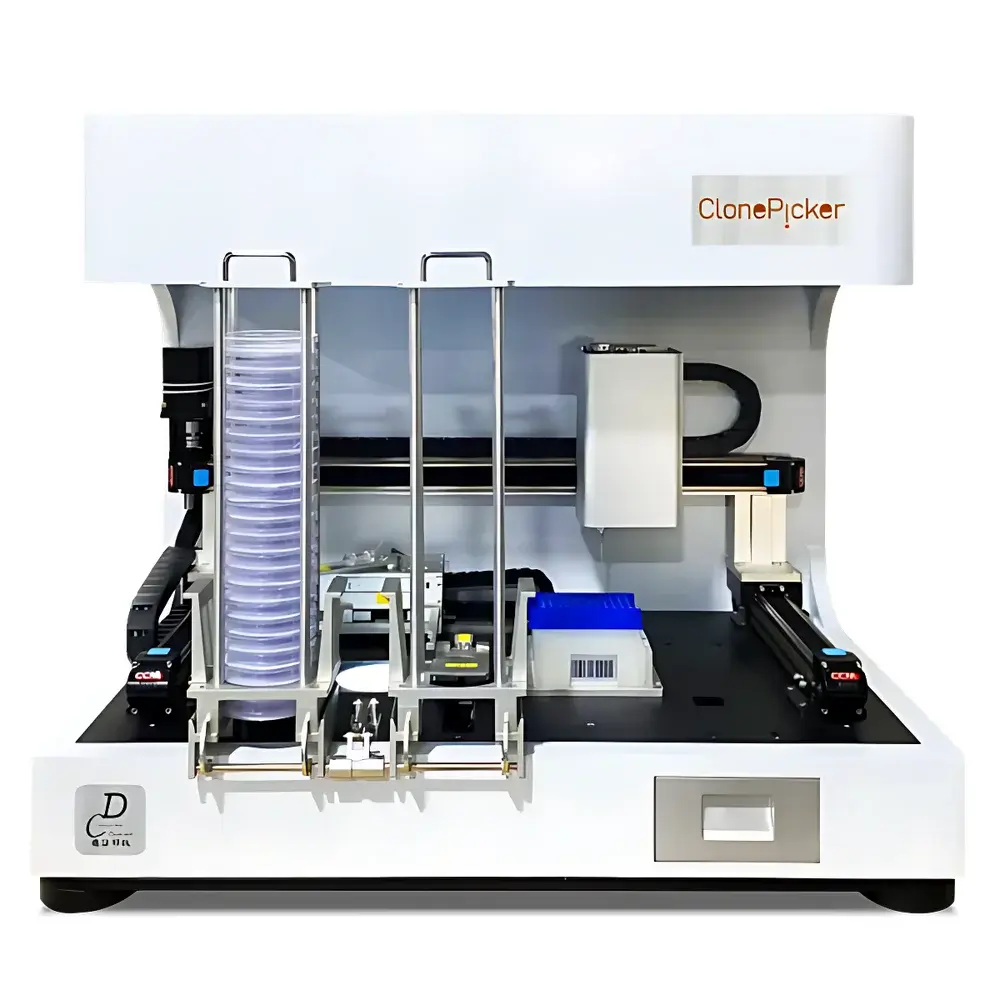
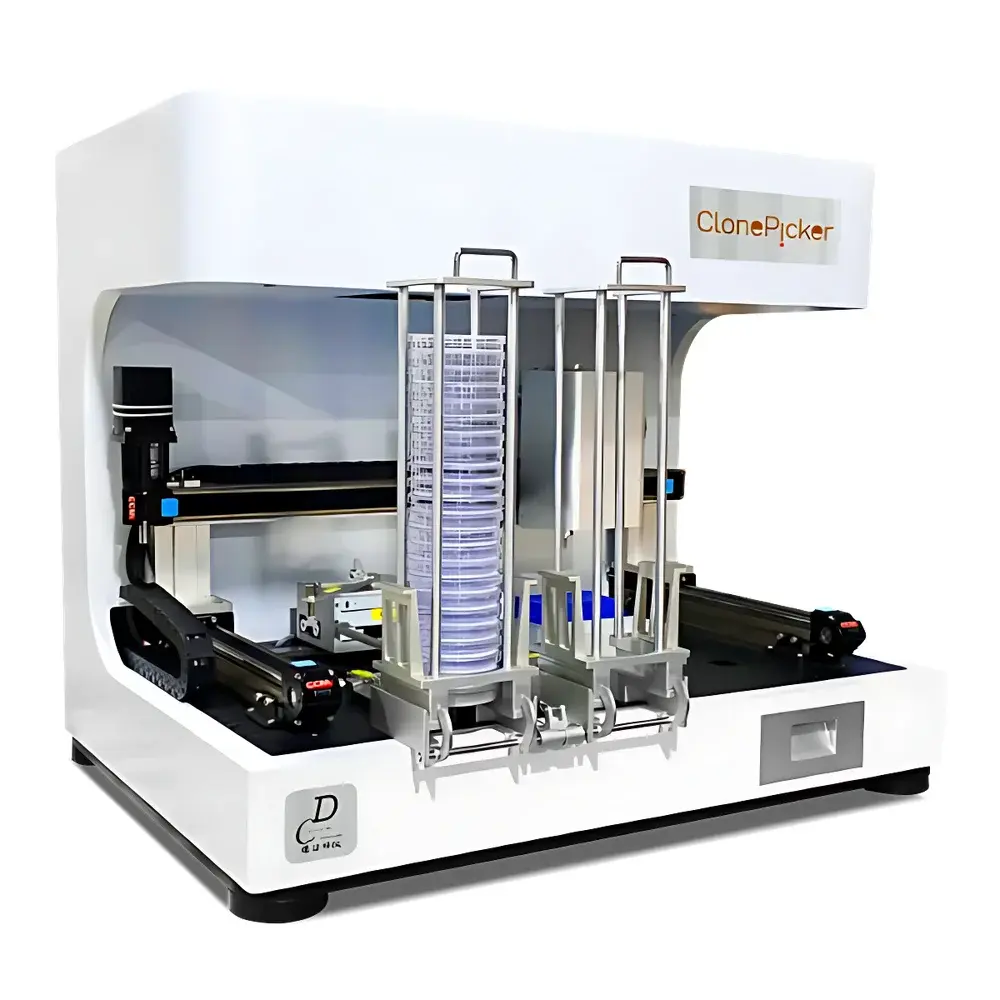
Autopet-CP1 Single-Channel Colony Picking Workstation by D.C. Labware
| Brand | D.C. Labware |
|---|---|
| Origin | Guangdong, China |
| Model | Autopet-CP1 |
| Instrument Type | Single-needle colony picking workstation |
| Compatible Microorganisms | *Escherichia coli*, yeast, pathogenic bacteria, anaerobes, phage plaques, microalgae |
| Inoculation Mode | Solid-to-liquid transfer |
| Picking Throughput | 200–300 colonies/hour |
| Picking Accuracy | >99.5% |
| Positional Precision | ≤0.2 mm |
| Target Plate Compatibility | 24-, 48-, 96-, and 384-well plates |
| Source Plate Compatibility | Petri dishes with diameters of 6–9 cm |
| Dimensions (L×W×H) | 85 × 62 × 72 cm |
Overview
The Autopet-CP1 Single-Channel Colony Picking Workstation is an engineered solution for high-fidelity, semi-automated isolation of microbial colonies from solid agar media into liquid culture or downstream assay formats. Designed for laboratories engaged in synthetic biology, molecular cloning, antibiotic resistance profiling, and strain library construction, the system integrates precision robotic motion control with real-time machine vision to execute colony selection based on morphological and spatial criteria. Unlike manual picking or bulk harvesting methods, the Autopet-CP1 employs a single-tip, positive-displacement pipetting mechanism operating under closed-loop XY-stage positioning — ensuring reproducible physical contact with individual colonies while minimizing shear stress and cross-contamination risk. Its operational principle relies on optical recognition of colony features (e.g., area, aspect ratio, intensity gradient, and RGB chromaticity) followed by deterministic tip placement and controlled aspiration/dispense cycles. The workstation functions as a modular node within larger lab automation ecosystems, supporting integration via standard serial or Ethernet protocols (RS-232, TCP/IP) for synchronization with incubators, plate sealers, or liquid handlers.
Key Features
- Precision visual-guided picking: Integrated high-resolution monochrome camera and coaxial LED illumination enable sub-millimeter colony localization (≤0.2 mm positional repeatability) across heterogeneous agar surfaces.
- Single-tip architecture using standard low-volume pipette tips (10–200 µL range): Eliminates need for specialized consumables; supports both aspiration and dispensing in solid-to-liquid transfers.
- No-sterilization workflow: Disposable tips prevent carryover between picks; no autoclaving, UV exposure, or drying steps required between operations.
- Adaptive morphology-based selection: Adjustable thresholds for size, circularity, contrast, and grayscale distribution allow discrimination of subtle phenotypic variants — including mucoid, filamentous, or translucent colonies.
- Intelligent clustering engine: Optional AI-driven classification module groups colonies by morphotype using unsupervised feature vectors derived from image analysis — enabling representative sampling of dominant and rare subpopulations.
- Modular expansion readiness:预留 I/O ports and API-accessible command set support future integration with barcode readers, environmental sensors, or bioreactor control systems.
Sample Compatibility & Compliance
The Autopet-CP1 accommodates a broad spectrum of microbiological growth formats without modification. Source plates include standard 60 mm, 90 mm, and 100 mm Petri dishes inoculated with bacterial lawns, streaked isolates, or phage lysis zones. Target receptacles span common laboratory vessels: deep-well plates (24/48/96/384), conical culture tubes (5 mL and 12 mL), and microcentrifuge tubes (1.5 mL). The system has been validated for use with aerobic and facultative organisms (*E. coli*, *Bacillus subtilis*, *Saccharomyces cerevisiae*), fastidious pathogens (e.g., *Streptococcus pneumoniae* under CO₂-enriched conditions), and obligate anaerobes when operated inside glove boxes or anaerobic chambers. While not certified to ISO 13485 or FDA 21 CFR Part 11 out-of-the-box, all software logs — including timestamped pick coordinates, source/target identifiers, and image thumbnails — are stored in immutable CSV/JSON format, facilitating GLP-compliant audit trails when deployed in regulated environments.
Software & Data Management
The embedded control interface runs on a Linux-based industrial computer with a touchscreen GUI optimized for wet-lab usability. Core modules include: (1) Real-time colony detection engine with adjustable sensitivity sliders for area, perimeter, and mean pixel intensity; (2) Manual ROI annotation tool for training or override; (3) Batch processing queue with priority tagging and pause/resume capability; (4) Integrated data export function generating structured metadata files compliant with MIAME/MINSEQE conventions. All image frames and pick events are archived locally with SHA-256 checksums. Optional cloud sync enables remote monitoring and centralized database ingestion via RESTful endpoints. Audit log entries capture operator ID, session start/end timestamps, firmware version, and any parameter overrides — satisfying basic traceability requirements for ISO/IEC 17025-accredited testing labs.
Applications
- High-throughput plasmid transformation validation: Rapid isolation of white/blue colonies post-X-gal screening.
- CRISPR clone verification: Selection of edited clones based on differential colony morphology or fluorescence co-expression patterns.
- Antimicrobial susceptibility testing: Retrieval of resistant subpopulations emerging at sub-MIC concentrations.
- Microbial ecology studies: Representative picking from complex environmental isolates for 16S rRNA sequencing libraries.
- Phage titer refinement: Isolation of single-plaque progeny for host-range expansion assays.
- Strain banking: Automated archiving of glycerol stocks from primary isolation plates with full digital provenance.
FAQ
Does the Autopet-CP1 support multi-channel parallel picking?
No — the CP1 is a single-needle platform optimized for accuracy and flexibility over raw throughput. For higher-density workflows, users may deploy multiple CP1 units in parallel or upgrade to the Autopet-CP4 quad-channel configuration.
Can it pick colonies directly from selective or chromogenic agar?
Yes — the vision algorithm is calibrated to handle variable background intensities and color contrasts typical of MacConkey, CHROMagar, or XLD media, provided sufficient colony elevation and edge definition exist.
Is third-party software integration supported?
Yes — the device exposes a documented ASCII command protocol over RS-232 and a JSON-RPC interface over TCP/IP, enabling interoperability with LIMS platforms such as LabVantage, STARLIMS, or custom Python-based orchestration scripts.
What maintenance is required for long-term reliability?
Routine cleaning of the camera lens and stage surface with isopropanol; annual calibration of XY-axis encoders and tip alignment using the included reference grid slide; no lubrication or mechanical adjustment is necessary under normal operating conditions.
Related Products




