
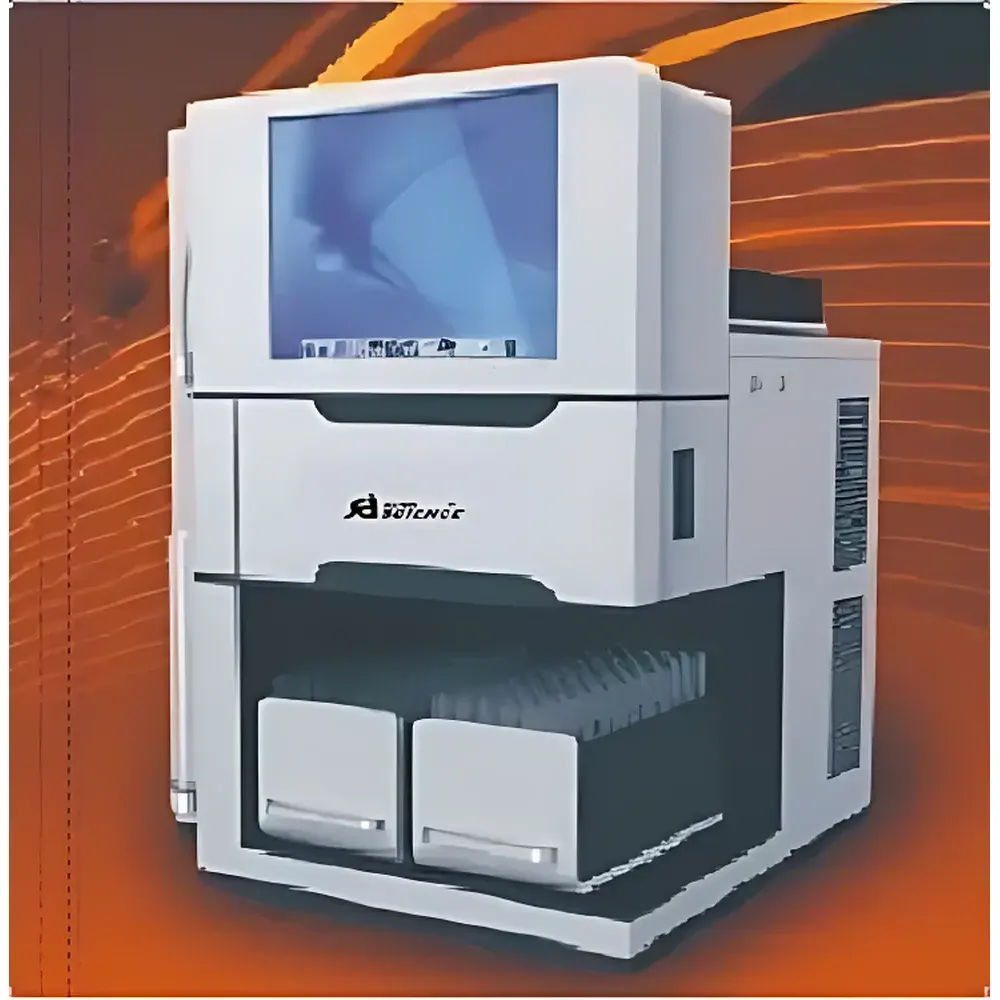
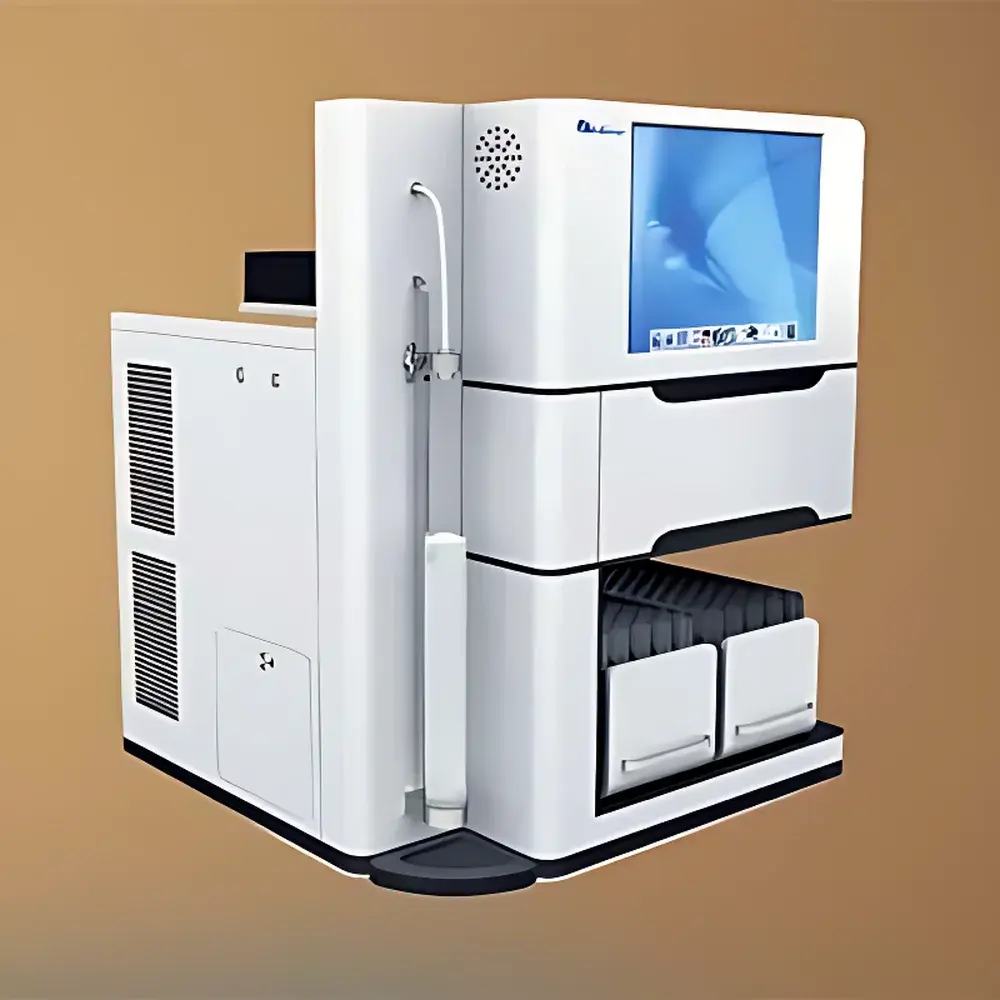
Autoscience UF-9100 Ultra-Fast Purification Preparative Chromatography System
| Brand | Autoscience |
|---|---|
| Origin | Tianjin, China |
| Manufacturer Type | Authorized Distributor |
| Product Origin | Domestic (China) |
| Model | UF-9100 |
| Pricing | Upon Request |
Overview
The Autoscience UF-9100 Ultra-Fast Purification Preparative Chromatography System is a high-performance, dual-pressure-range preparative liquid chromatography platform engineered for rapid compound isolation and purification in research and development laboratories. Based on flash chromatography principles—utilizing packed columns with controlled solvent gradients—the system bridges the performance gap between conventional low-pressure flash systems and high-pressure preparative HPLC. Its modular architecture integrates a binary gradient constant-flow pump, diode array detection (DAD), intelligent fraction collection, and automated system conditioning—enabling reproducible, scalable separations across organic synthesis, pharmaceutical process development, natural product isolation, environmental sample cleanup, food safety testing, and agrochemical analysis. Designed to meet evolving regulatory expectations, the UF-9100 supports method development workflows compliant with ICH Q5, Q7, and USP , while its hardware architecture facilitates future alignment with 21 CFR Part 11 data integrity requirements through audit-trail-enabled software upgrades.
Key Features
- Dual-pressure solvent delivery system: Capable of stable operation from 10 psi (0.07 MPa) up to 20 MPa (2900 psi), accommodating both large-particle silica columns (e.g., 15–40 µm) for fast flash separations and sub-20 µm high-efficiency preparative columns—effectively delivering two operational modes within a single platform.
- Diode array detector (DAD) with dual-wavelength monitoring and real-time spectral acquisition: Enables simultaneous detection at user-defined wavelengths, peak purity assessment, and UV spectral library matching for fraction identification.
- Automated gas purge function: Integrated nitrogen or compressed air lines enable post-run column and fluidic path drying, minimizing solvent carryover and enabling rapid method switching.
- 10.4-inch industrial-grade capacitive touchscreen with 180° viewing angle: Front-panel interface supports glove-compatible operation, offline method editing, and live chromatogram visualization without external PC dependency.
- Intelligent fraction collector with three triggering modes: Precise collection by peak apex, retention time window, or eluent volume—optimized for microtiter plate, vial rack, and test tube formats with positional accuracy ≤ ±0.5 mm.
- Multi-sensor safety architecture: Digital pressure transducers, leak detection sensors, solvent reservoir level monitoring, and waste bottle full detection—combined with front-accessible maintenance design (e.g., D2 lamp replacement without enclosure removal).
Sample Compatibility & Compliance
The UF-9100 accommodates standard preparative column diameters (10–100 mm ID) and supports common stationary phases including silica gel, C18, amino, cyano, and diol media. It handles sample loads ranging from milligram to multi-gram scale depending on column dimensions and matrix complexity. The system meets mechanical and electrical safety standards per GB/T 14710 (Chinese national standard for environmental adaptability of analytical instruments) and conforms to EMC requirements per IEC 61326-1. While not pre-certified for GMP environments, its hardware design—including sealed optical path, corrosion-resistant fluidic materials (316L stainless steel, PEEK, sapphire windows), and traceable parameter logging—supports qualification under GLP or internal QA protocols. Method transfer to analytical-scale UHPLC systems is facilitated by consistent gradient delay volume calibration and dwell volume documentation.
Software & Data Management
The UF-9100 operates via a dual-mode control platform: embedded touchscreen firmware and optional Windows-based PC software (compatible with Windows 10/11, 64-bit). Both interfaces provide graphical real-time monitoring of flow rate, pressure, UV absorbance, gradient profile, and fraction collection status. The software includes sequence scheduling, method cloning with parameter inheritance, baseline correction algorithms, peak integration with customizable threshold settings, and export to CSV, PDF, and AIA (.cdf) formats. Audit trail functionality (enabled via optional license) records user logins, method modifications, run start/stop events, and calibration actions—supporting ALCOA+ data integrity principles. Remote access is enabled via secure HTTP/HTTPS over LAN/WAN networks, with role-based permission levels configurable for multi-user labs.
Applications
- Pharmaceutical R&D: Isolation of synthetic intermediates, chiral resolution of racemates, and purification of peptide fragments prior to LC-MS characterization.
- Natural products chemistry: Fractionation of crude plant extracts for bioactivity-guided isolation; desalting of marine-derived metabolites.
- Environmental analysis: Cleanup of soil/sediment extracts prior to GC-MS determination of PAHs, PCBs, or organochlorine pesticides.
- Food safety: Removal of phospholipids and triglycerides from edible oil samples before aflatoxin quantification by HPLC-FLD.
- Academic teaching labs: Demonstrating gradient optimization, column loading effects, and retention time prediction using Snyder–Soczewiński modeling tools integrated into the software suite.
FAQ
What column types are compatible with the UF-9100?
Standard stainless steel or PEEK-packed columns with 1/4″ or 1/8″ fittings, ranging from 10 mm to 100 mm internal diameter, are supported. Both flash-grade (15–40 µm) and preparative HPLC-grade (5–10 µm) media may be used across the system’s full pressure range.
Does the system support method transfer to analytical HPLC platforms?
Yes—dwell volume measurement, gradient delay compensation, and consistent detector cell pathlength (10 mm) enable direct scaling of methods from analytical to preparative dimensions using established linear velocity or mass-loading approaches.
Is the DAD capable of spectral deconvolution?
The detector acquires full UV-Vis spectra (190–800 nm) at 1 nm resolution but does not include built-in chemometric deconvolution algorithms; spectral overlays and peak purity plots are available for qualitative assessment.
Can the system be integrated into a LIMS environment?
Raw data export (AIA format) and metadata tagging (via CSV) allow manual ingestion into third-party LIMS. Full API-level integration requires custom middleware development using the system’s documented TCP/IP command set.
What maintenance intervals are recommended for routine operation?
Pump seal inspection every 500 hours; D2 lamp replacement every 1,000–1,500 hours; system leak test and pressure sensor calibration annually—or after any major fluidic component replacement.



