
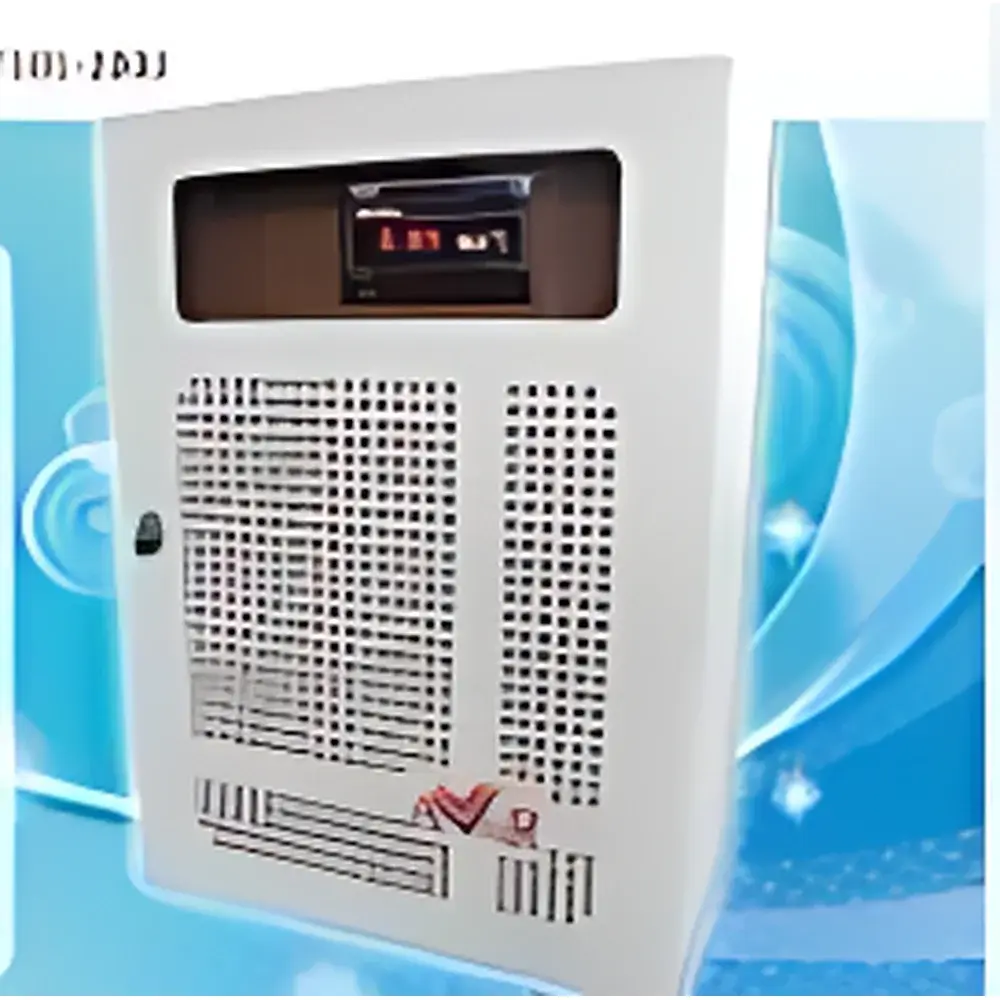
AVVOR TresCon OA110 Online Ammonia Nitrogen Analyzer (Ammonia-Selective Electrode Method)
| Brand | AVVOR |
|---|---|
| Origin | Germany |
| Model | TresCon OA110 |
| Instrument Type | Online Analyzer |
| Measurement Principle | Ammonia-Selective Gas-Sensing Electrode |
| Measurement Range | 0.01–2 mg/L NH₄–N |
| Accuracy | ±0.5% of reading |
| Detection Limit | 0.1 mg/L NH₄–N |
| Cycle Time | 30 min |
| Batch Capacity | 10 samples per cycle |
Overview
The AVVOR TresCon OA110 Online Ammonia Nitrogen Analyzer is an industrial-grade, continuous-monitoring instrument engineered for precise, real-time quantification of ammonium nitrogen (NH₄–N) in aqueous matrices using the ammonia-selective gas-sensing electrode principle. This method relies on controlled alkaline conversion of ammonium ions (NH₄⁺) to gaseous ammonia (NH₃) at pH > 12, followed by selective diffusion of NH₃ across a hydrophobic, gas-permeable polytetrafluoroethylene (PTFE) membrane into an internal electrolyte solution. The resulting pH shift within the internal buffer is measured potentiometrically via a built-in pH-sensitive glass electrode; the magnitude of this shift exhibits a Nernstian response proportional to the logarithm of NH₃ partial pressure—and thus to the original NH₄–N concentration. Unlike optical or colorimetric methods, this electrochemical approach eliminates interferences from turbidity, color, or suspended solids and requires no hazardous reagents such as salicylate or hypochlorite. The system is fully integrated into the TresCon® Uno platform—a compact, wall-mountable single-parameter analyzer designed specifically for wastewater treatment plant (WWTP) effluent monitoring, surface water quality networks, and regulatory compliance applications under ISO 5667-3, EN 25667-3, and US EPA Method 350.1.
Key Features
- Continuous, unattended operation with automatic calibration and drift compensation at user-defined intervals
- Integrated temperature-controlled measurement chamber ensuring stable electrode response across 5–40 °C ambient conditions
- Onboard reagent dosing system with NaOH and chelating agent (e.g., EDTA) for pH adjustment and precipitation inhibition
- Self-cleaning protocol using deionized water flush between cycles to prevent biofouling and membrane clogging
- Configurable measurement cycle time (standard 30 minutes), supporting both rapid-response and high-precision operational modes
- Rugged, IP65-rated enclosure suitable for outdoor installation in municipal and industrial environments
- Modular architecture compatible with TresCon® Uno central controller for future expansion to multi-parameter configurations (e.g., nitrate, phosphate)
Sample Compatibility & Compliance
The TresCon OA110 is validated for use with raw wastewater, secondary effluent, surface water, groundwater, and drinking water pre-treated for particulate removal. It accommodates sample conductivity up to 20 mS/cm and total suspended solids (TSS) ≤ 100 mg/L without filtration—provided inlet flow is stabilized via integrated peristaltic pumping and bubble elimination. All wetted components comply with FDA 21 CFR §177.2420 (food-contact plastics) and EU Regulation (EC) No 1935/2004. Data integrity meets GLP/GMP requirements through audit-trail-enabled firmware (IEC 62443-3-3 compliant), and measurement records support 21 CFR Part 11 electronic signature readiness when deployed with validated LIMS integration.
Software & Data Management
Instrument control and data acquisition are managed via the TresCon Control Suite v4.x—a Windows-based application supporting Modbus TCP, Profibus DP, and OPC UA protocols for SCADA interoperability. Raw electrode potential (mV), calculated NH₄–N concentration (mg/L), temperature, pH, and diagnostic flags (e.g., membrane saturation, low reagent warning) are logged at 1-second resolution with configurable export to CSV or SQL databases. Internal memory retains ≥ 30 days of high-frequency data; external storage options include SD card logging and secure FTP push to cloud platforms. Firmware updates and method parameter changes require dual-password authentication to enforce change control procedures.
Applications
- Real-time monitoring of nitrification/denitrification performance in activated sludge basins
- Compliance reporting for discharge permits (e.g., EU Urban Wastewater Treatment Directive, US Clean Water Act NPDES)
- Early detection of process upsets in WWTP influent or bioreactor zones
- Long-term trend analysis of nutrient loading in rivers, lakes, and reservoirs
- Validation of laboratory reference methods (ISO 14911, DIN 38406-5) in field-deployed QA/QC programs
- Integration into automated water safety plans for drinking water distribution systems
FAQ
What sample pretreatment is required prior to analysis?
No filtration or centrifugation is necessary for typical wastewater or surface water samples. However, influent with >100 mg/L TSS or high grease content should be pre-screened using a 100-µm mesh filter to protect the sampling line and measurement cell.
How often must the ammonia-selective membrane be replaced?
Under standard operating conditions (24/7 monitoring, pH-adjusted samples), the PTFE membrane demonstrates ≥ 6 months service life. Replacement is indicated by increased response time (>90 s to 95% of final value) or calibration slope deviation >15% from initial baseline.
Does the system meet regulatory requirements for certified emissions monitoring?
Yes—the TresCon OA110 is type-approved per EN 14181 (QAL1) for ammonia monitoring in wastewater and has undergone independent verification against ISO/IEC 17025-accredited reference laboratories for traceability to NIST SRM 2022.
Can the analyzer operate in low-conductivity source waters such as rainwater or treated effluent?
Yes. Built-in conductivity compensation algorithms adjust for ionic strength variations between 20 µS/cm and 20 mS/cm, ensuring accuracy across diverse matrix types without manual recalibration.
Is remote diagnostics supported?
Yes. Via optional GSM or Ethernet connectivity, engineers can access live sensor diagnostics, historical calibration logs, and predictive maintenance alerts through AVVOR’s Secure Remote Support Portal (SRSP), reducing mean time to repair (MTTR) by up to 70%.
Related Products







