
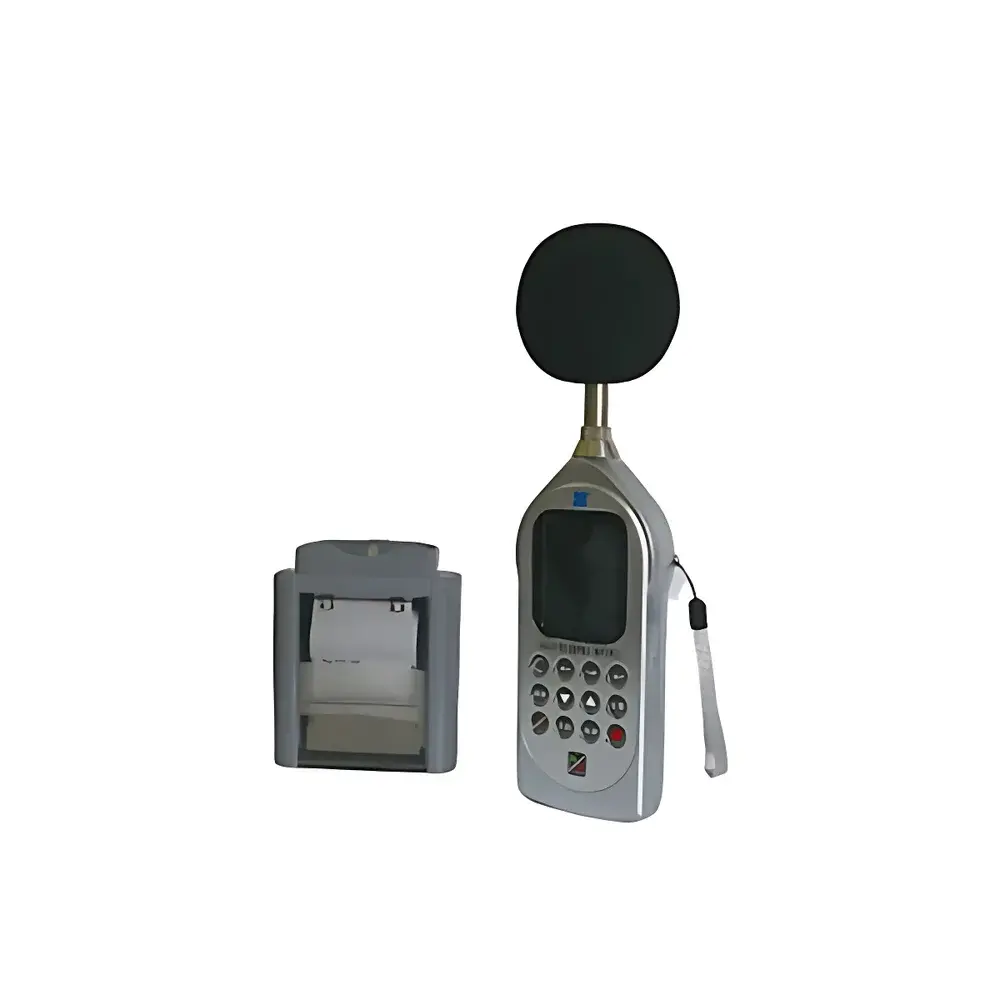
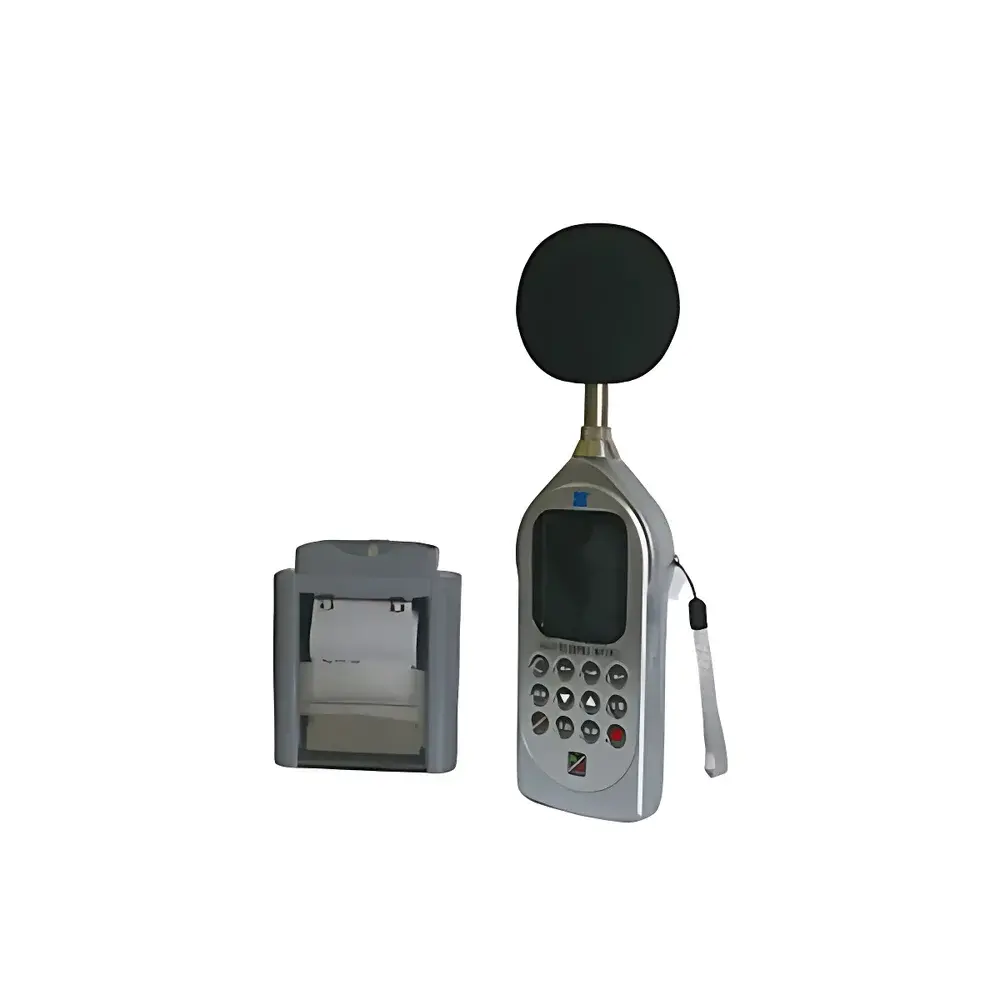
AWA AWA6228+ Advanced Portable Sound Level Meter
| Brand | AWA |
|---|---|
| Model | AWA6228+ |
| Origin | Shandong, China |
| Frequency Range | 20 Hz – 12.5 kHz |
| Measurement Range | 28–133 dB(A), 33–133 dB(C), 40–133 dB(Z) |
| Self-Noise | <12 dB(A) |
| Compliance | IEC 61672-1:2013 Class 1, IEC 61260-1:2014 Class 1, GB/T 3785-2010 Class 1, GB/T 3241-2010 Class 1 |
| A/D Sampling Rate | 48 kHz |
| Display | 2.6″ color LCD (240 × 320 pixels) |
| Battery Life | >30 h (4 × AA alkaline) |
| Operating Temperature | −15 °C to +55 °C |
| Dimensions | 260 × 80 × 30 mm |
| Mass | 0.35 kg |
| Data Storage | 3 MB internal + optional 32 GB SD card |
| Output Interfaces | AC (150 mW, 8 Ω), DC (15 mV/dB), RS232, USB 1.1/2.0 |
| Optional Modules | GPS receiver, Bluetooth 4.0, GSM data transmission, solar charging unit, external printer (AH40), multi-point calibrator (AWA6223F) |
Overview
The AWA AWA6228+ Advanced Portable Sound Level Meter is a Class 1 precision instrument engineered for high-fidelity environmental and occupational noise assessment in compliance with international metrological standards. It operates on digital signal processing (DSP) architecture to deliver simultaneous real-time analysis across multiple acoustic metrics—leveraging parallel frequency weighting (A, C, Z) and time weighting (Fast, Slow, Impulse) without computational latency or mode switching delays. Its measurement principle conforms to the fundamental definitions of sound pressure level (SPL) as specified in IEC 61672-1:2013, where broadband and frequency-analyzed signals are derived from calibrated electret condenser microphone input, digitized at 48 kHz with 24-bit resolution, and processed via anti-aliasing filters and FFT-based spectral engines. Designed explicitly for field-deployable long-term monitoring—including 24-hour automated logging—the AWA6228+ supports rigorous regulatory workflows under ISO 1996, EU Directive 2002/49/EC, and China’s HJ 707-2014 Technical Specification for Environmental Noise Monitoring.
Key Features
- Class 1 accuracy per IEC 61672-1:2013 and IEC 61260-1:2014 for both broadband and 1/1-octave & 1/3-octave band analysis
- Parallel dual-range architecture: low-range (28–133 dB(A)) and high-range (up to 142 dB(A)), each offering ≥112 dB linear dynamic range
- Real-time concurrent computation of LAF, LAS, LAeq, Lmax, Lmin, LN (N = 1–99), SEL, LCpeak, and statistical distributions
- Integrated 1/1-octave (16 Hz–16 kHz) and 1/3-octave (12.5 Hz–20 kHz) filter banks with optional B, D, T, and U custom weightings
- 2048-line FFT analyzer with selectable sampling rates (48/24/12/6/3 kHz) and window functions (Rectangular, Bartlett, Hanning, Flat-top)
- 2.6″ high-contrast color LCD (240 × 320 px) with ambient-light-adaptive backlight and full-screen spectrum visualization
- Onboard 3 MB non-volatile memory supporting up to 3,328 integrated datasets, 3,328 OCT spectra, or 121 FFT captures; expandable to 32 GB via microSD (optional)
- Multi-modal triggering: manual, time-scheduled, level-triggered (over-threshold), or interval-based acquisition
- Intelligent power management with auto-switching between 4×AA alkaline batteries (>30 h runtime) and external DC input
- Configurable auto-power-on/off scheduling and GPS-synchronized timestamping (optional embedded module)
Sample Compatibility & Compliance
The AWA6228+ is validated for use with standardized 1/2″ electret condenser microphones meeting IEC 61094 requirements. Its acoustic input stage maintains flat response across 20 Hz–12.5 kHz (±0.5 dB) and supports interchangeable transducers to extend measurement range (e.g., high-SPL or low-noise configurations). All reported metrics—including Lden, Lday, Lnight, and 24-hour cumulative exposure—are traceable to national metrology institutes via calibration using the AWA6223F multi-frequency acoustic calibrator (compliant with HJ 707-2014 and JJG 188-2017). The instrument satisfies audit-readiness requirements for GLP and ISO/IEC 17025-accredited laboratories through built-in calibration verification logs, tamper-evident firmware signatures, and time-stamped configuration history. Regulatory alignment includes ASTM E177, ANSI S1.4-2014 Type 1, ANSI S1.43-2020, and DIN 45675:1997.
Software & Data Management
Data acquisition, post-processing, and reporting are managed via AWA6228+ PC software (Windows-compatible), which imports binary files via USB or RS232 and reconstructs full-resolution time histories, octave spectra, and statistical histograms. The software enforces FDA 21 CFR Part 11-compliant audit trails—including user login records, parameter change logs, and electronic signature fields for report approval. Export formats include CSV, PDF (with embedded metadata), and XML for integration into LIMS or enterprise environmental management systems (EMS). Firmware updates are delivered via signed USB packages with SHA-256 hash validation. Optional Bluetooth 4.0 and GSM modules enable secure wireless telemetry to cloud platforms or SCADA endpoints, supporting remote QA/QC validation and real-time alerting on exceedance events.
Applications
The AWA6228+ serves diverse operational contexts requiring metrologically defensible noise data: urban noise mapping per EU Environmental Noise Directive; industrial workplace compliance with OSHA 29 CFR 1910.95 and GBZ 2.2-2014; construction site monitoring per ISO 532B and HJ 972-2018; transportation noise assessment (road, rail, airport) aligned with ISO 1996-2; and community annoyance studies requiring Ldn and percentile-based descriptors (L10, L50, L90). Its low self-noise (<12 dB(A)) and extended dynamic range make it suitable for quiet-area surveys (e.g., nature reserves, residential zones), while its ruggedized enclosure (IP54-rated ingress protection) ensures reliability in outdoor deployments across temperature extremes (−15 °C to +55 °C) and humidity gradients (20–90% RH).
FAQ
What calibration standards does the AWA6228+ support?
It complies with IEC 61672-1:2013 Class 1, IEC 61260-1:2014 Class 1, GB/T 3785-2010 Class 1, and JJG 188-2017, and is validated using the AWA6223F multi-point calibrator per HJ 707-2014.
Can the instrument perform simultaneous 1/1-octave and FFT analysis?
Yes—real-time parallel processing enables concurrent broadband, 1/1-octave, 1/3-octave, and 2048-point FFT analysis without mode conflict or data loss.
Is GPS synchronization mandatory for 24-hour monitoring?
No—internal RTC maintains <1 min/month drift; GPS is optional for geotagged measurements and precise inter-device time alignment.
Does the device meet FDA 21 CFR Part 11 requirements for electronic records?
While not a medical device, its audit-trail functionality, electronic signature support, and secure firmware update protocol align with Part 11 principles for regulated environmental data integrity.
What is the maximum recording duration for audio capture?
With optional 8 kHz/8-bit PCM encoding, up to 16 hours of continuous audio may be stored on a 32 GB microSD card; 48 kHz/32-bit mode supports 1 hour per session.
Related Products







