
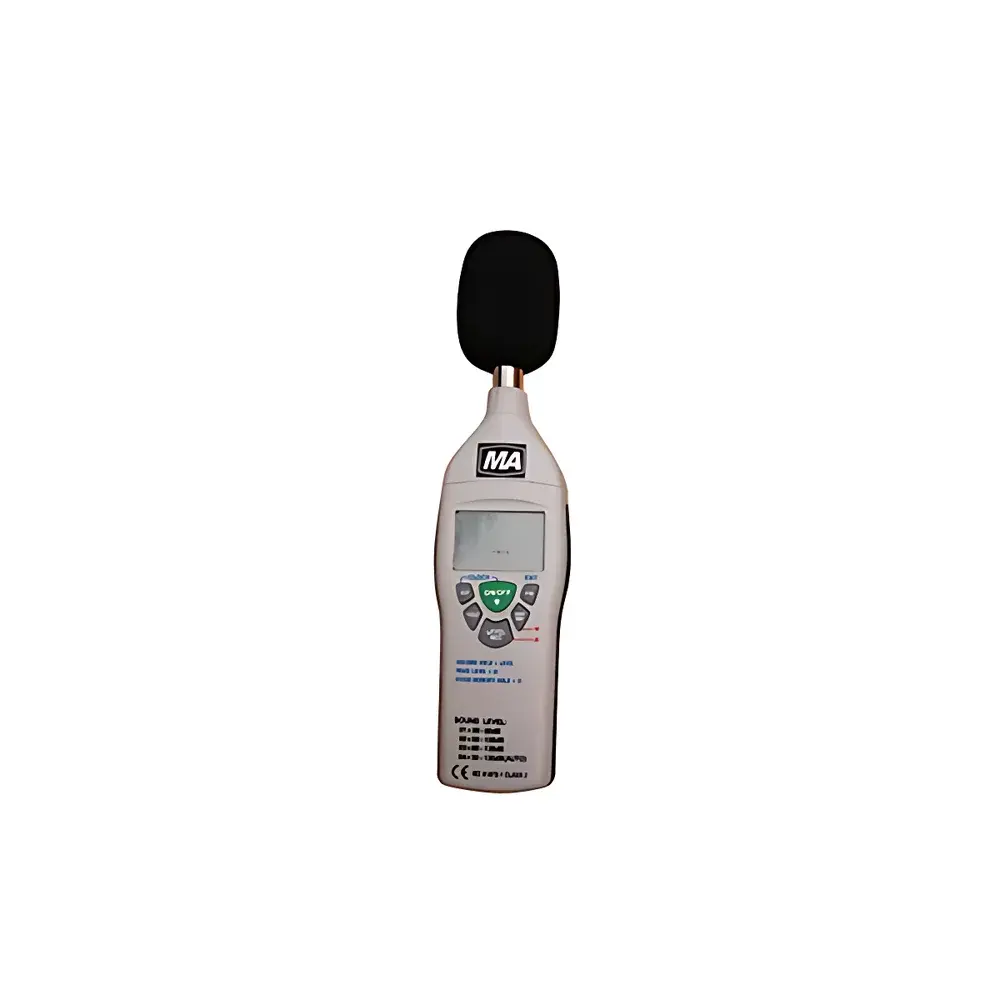
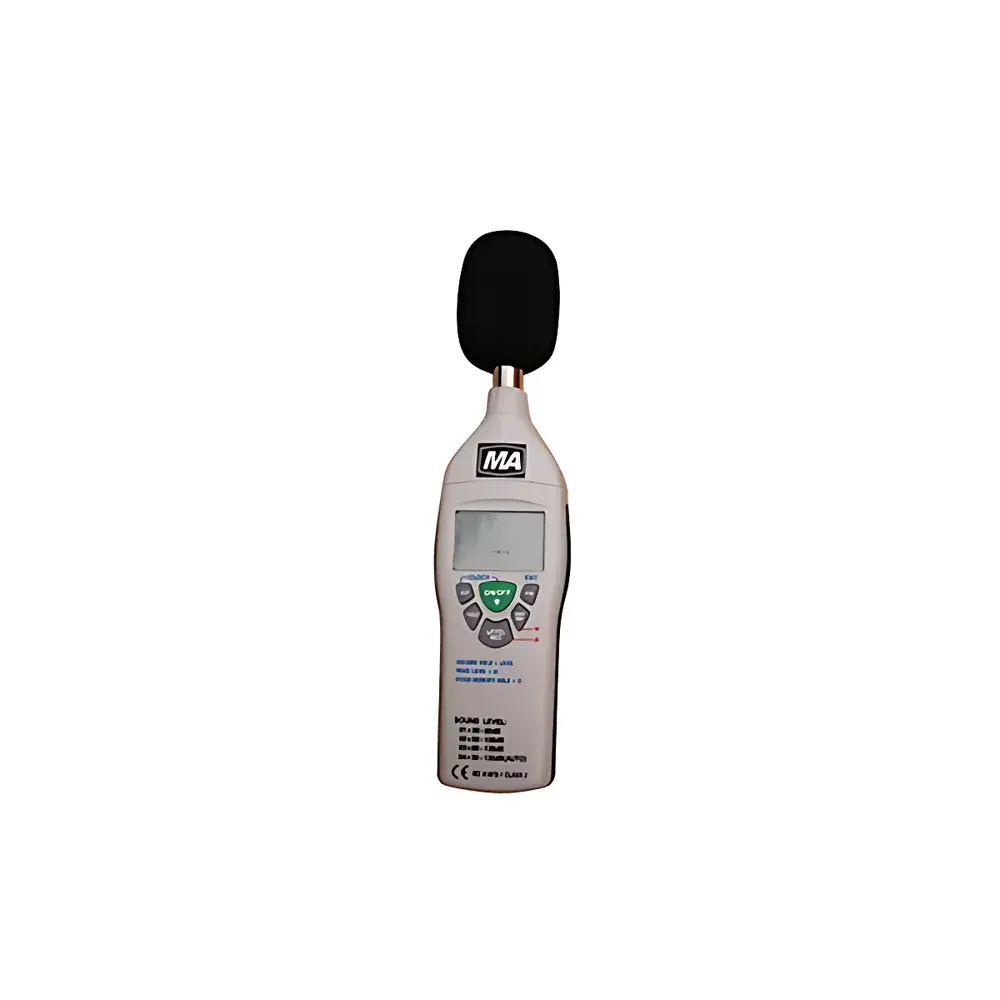
AWA YSD130 Intrinsically Safe Sound Level Meter for Underground Coal Mine Applications
| Brand | AWA |
|---|---|
| Model | YSD130 |
| Type | Intrinsically Safe Sound Level Meter |
| Measurement Range | 30–130 dB (auto-ranging) |
| Frequency Weighting | A/C |
| Time Weighting | Fast (125 ms), Slow (1 s) |
| Resolution | 0.1 dB |
| Accuracy | ±1.4 dB at 94 dB (1 kHz sine wave) |
| Operating Environment | Underground coal mines, Class I, Zone 0/1 hazardous areas |
| Compliance | GB 3836.1–2021, GB 3836.4–2021 (China Ex ib I Mb), IEC 60079-0, IEC 60079-11 |
| Power Supply | Internal alkaline batteries (AA × 2) |
| Enclosure | IP54-rated ruggedized housing |
| Dimensions | 220 × 65 × 28 mm |
| Weight | ≤220 g (with batteries) |
Overview
The AWA YSD130 Intrinsically Safe Sound Level Meter is a certified Class I, Zone 0/1 explosion-proof acoustic measurement instrument engineered specifically for occupational noise monitoring in high-risk underground coal mining environments. It operates on the principle of electret condenser microphone transduction coupled with digital signal processing (DSP) to deliver real-time sound pressure level (SPL) measurements compliant with IEC 61672-1:2013 Class 2 requirements. Its intrinsic safety design—achieved through current-limiting circuitry, energy-restricted power supply, and encapsulated electronic modules—ensures zero risk of ignition in methane- or coal-dust-laden atmospheres. Unlike general-purpose sound level meters, the YSD130 integrates dual-range analog front-end amplification and auto-ranging ADC architecture to maintain linearity across its full 30 dB to 130 dB dynamic span without manual range switching. This enables continuous, uninterrupted logging during transient noise events such as conveyor startup, roof bolter operation, or longwall shearer passage—conditions routinely encountered in active mine sections.
Key Features
- Intrinsically safe certification per GB 3836.4–2021 (Ex ib I Mb) and IEC 60079-11, permitting direct use in methane-rich Zone 0 environments without external barriers or purge systems
- Triple-band selectable measurement mode: Low-range (30–80 dB), Mid-range (50–100 dB), High-range (80–130 dB), and fully automatic 30–130 dB mode with seamless range transition
- 0.1 dB resolution across all ranges, supporting precise quantification of incremental exposure changes required for OEL (Occupational Exposure Limit) compliance under China’s AQ/T 4274–2016 and international ISO 9612:2009 protocols
- Simultaneous A- and C-frequency weighting per IEC 61672-1, enabling both hearing-risk assessment (A-weighted Leq) and peak impact evaluation (C-weighted Lpeak)
- Configurable time weighting: Fast (125 ms exponential averaging) for transient event capture and Slow (1 s) for steady-state ambient characterization
- Ruggedized IP54 enclosure with leatherette protective case, optimized for vibration resistance, dust ingress protection, and mechanical shock tolerance in confined tunnel spaces
Sample Compatibility & Compliance
The YSD130 is validated for use with standard ½-inch electret condenser microphones meeting IEC 61094-4 specifications. Its intrinsic safety barrier eliminates the need for field-installed isolators or zone-specific cabling—microphone and meter form a single certified unit. Regulatory alignment includes mandatory conformance to China’s Coal Mine Safety Regulations (2022 Edition), AQ 1055–2018 (Noise Control in Coal Mines), and GBZ/T 189.8–2007 (Workplace Physical Hazard Assessment). While not FDA- or EU-CE marked, its design principles align with core functional safety concepts referenced in IEC 61508 SIL-2 for low-energy instrumentation in hazardous locations. Calibration traceability follows JJG 188–2017 (Chinese National Metrological Verification Regulation for Sound Level Meters), with optional NIST-traceable calibration certificate available upon request.
Software & Data Management
Data acquisition is performed via internal non-volatile memory capable of storing up to 10,000 timestamped measurement records (Leq, Lmax, Lmin, Lpeak, and statistical percentiles). The device supports USB-C interface for data export in CSV format compatible with Excel, MATLAB, and noise mapping platforms such as SoundPLAN or CadnaA. Firmware updates are delivered via AWA’s proprietary PC utility (AWA6228+ Suite), which also enables configuration of measurement duration, logging interval (1 s to 1 h), and alarm thresholds (audible/vibratory alerts at user-defined dB levels). Audit trail functionality logs all configuration changes with timestamps—supporting GLP-aligned documentation requirements for regulatory inspections and occupational health reporting.
Applications
- Real-time personal noise exposure monitoring for miners wearing portable belt-mounted units during shift-based operations
- Area noise mapping along conveyor belts, ventilation shafts, and crusher stations to identify hotspots exceeding 85 dBA TWA (Time-Weighted Average)
- Pre- and post-engineering control verification (e.g., after installation of acoustic linings or mufflers on diesel locomotives)
- Regulatory enforcement sampling by mine safety inspectors conducting surprise audits under Article 48 of the PRC Occupational Disease Prevention Law
- Long-term trend analysis of noise evolution in aging mine infrastructure, supporting predictive maintenance planning
FAQ
Is the YSD130 certified for use in Zone 0 methane environments?
Yes. It holds GB 3836.4–2021 Ex ib I Mb certification, permitting safe operation where explosive gas atmospheres are continuously present.
Does it support 1/1-octave or 1/3-octave band analysis?
No. The YSD130 is a broadband integrating sound level meter compliant with IEC 61672-1 Class 2; spectral decomposition requires external analyzers.
What is the battery life under continuous logging mode?
Approximately 18 hours using two AA alkaline cells at 25°C, verified per IEC 61672-3 Annex B test conditions.
Can measurement data be synchronized with GPS-tagged location stamps?
No. The YSD130 lacks integrated GNSS; georeferencing requires manual log correlation with survey-grade mine maps.
Is third-party calibration required annually?
Per AQ/T 4274–2016, field instruments used for compliance reporting must undergo accredited calibration at least once per year—or after any physical impact or environmental stress event.







