
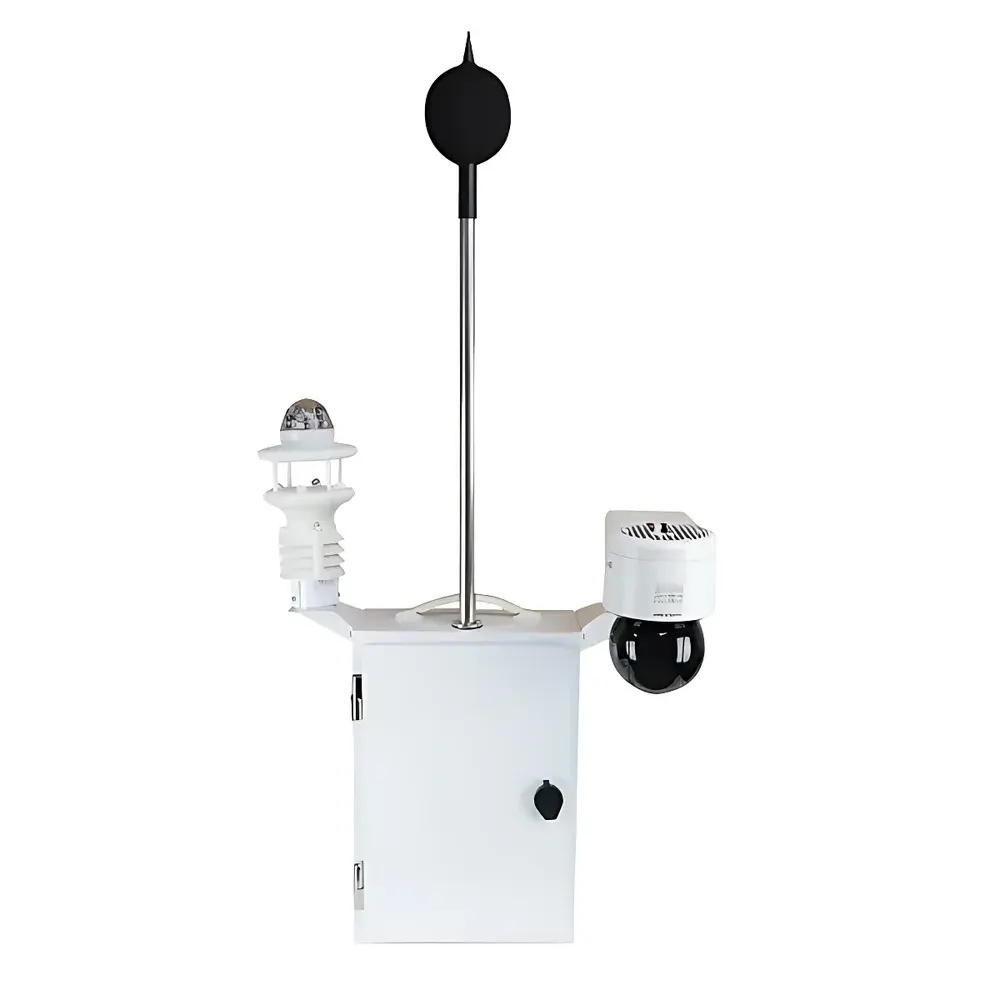
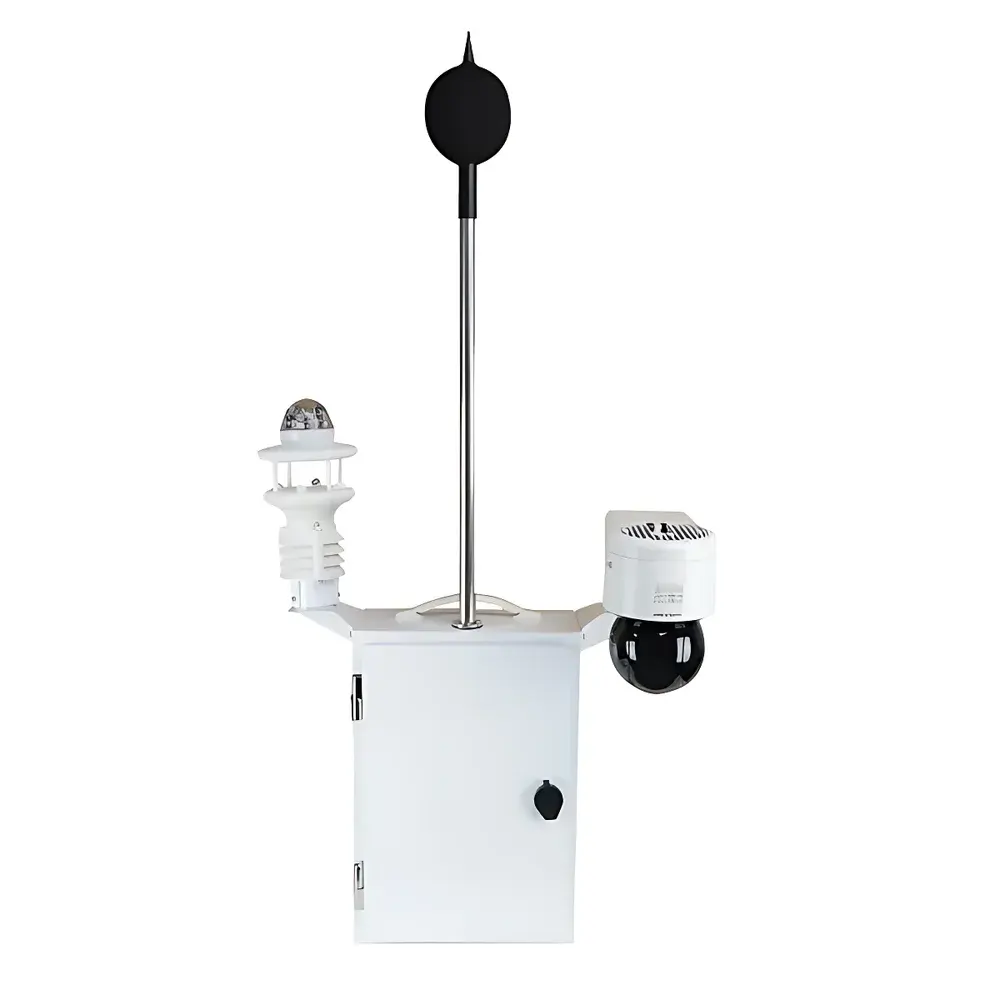
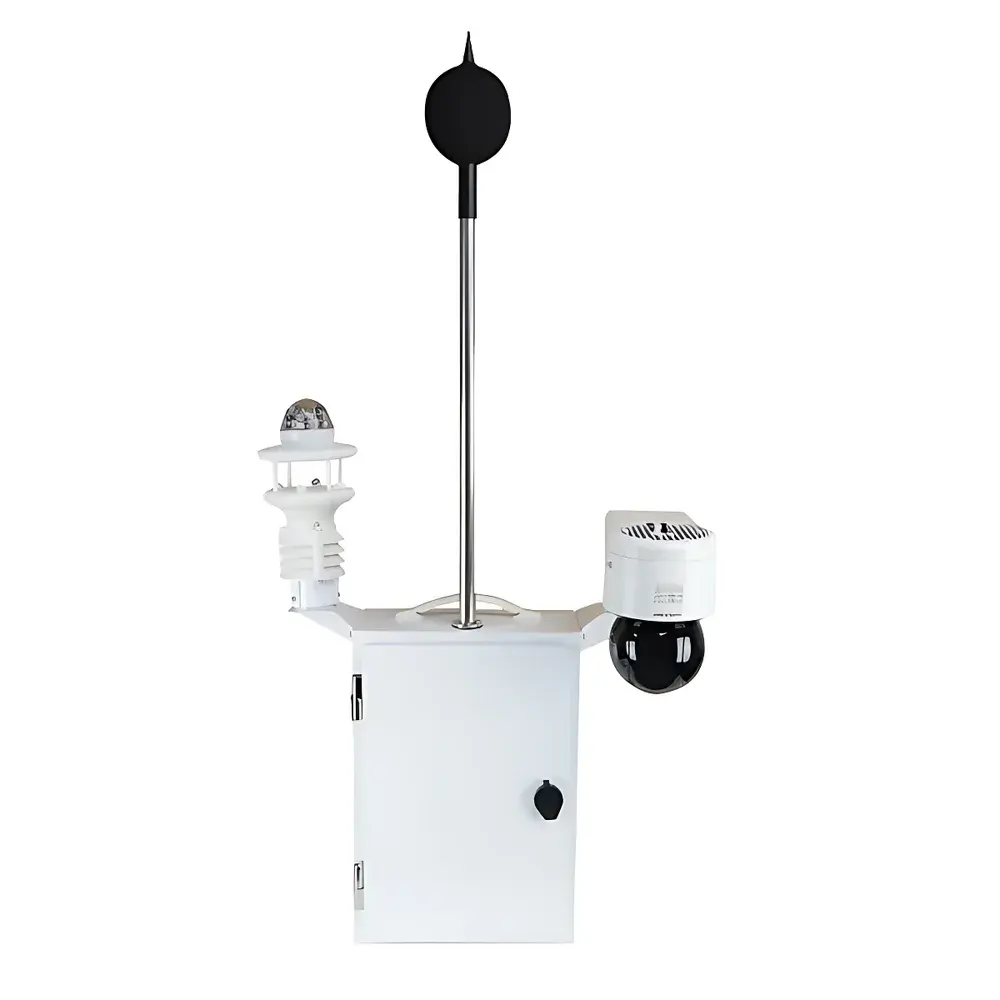
AWA3000 Environmental Noise Automatic Monitoring Station
| Brand | Hangzhou Aihua |
|---|---|
| Origin | Zhejiang, China |
| Manufacturer Type | Authorized Distributor |
| Country of Origin | China |
| Model | AWA3000 |
| Instrument Type | Online Noise Monitoring System |
| Frequency Range | 20 Hz – 12.5 kHz |
| Measurement Range | 30 – 130 dB |
| Self-Noise Level | ≤20 dB(A) |
| Accuracy | ±0.5 dB |
| Measurement Duration | Configurable from 1 second to 24-hour continuous logging |
Overview
The AWA3000 Environmental Noise Automatic Monitoring Station is a permanently installed, Class 1-compliant noise monitoring system engineered for long-term, unattended operation in diverse outdoor and semi-outdoor environments. It operates on the principle of precision electret condenser microphone transduction coupled with real-time digital signal processing (DSP), conforming to the fundamental acoustical measurement framework defined in IEC 61672-1:2013 and GB/T 3785.1–2023. Designed as a modular environmental monitoring substation, the AWA3000 serves as the core data acquisition node in distributed noise monitoring networks—supporting synchronized, time-stamped acoustic measurements alongside auxiliary environmental parameters. Its architecture prioritizes measurement integrity under variable ambient conditions, including wind, temperature fluctuation, and electromagnetic interference, making it suitable for regulatory-grade monitoring where traceability, reproducibility, and audit readiness are mandatory.
Key Features
- Class 1 performance certification per IEC 61672-1:2013 and GB/T 3785.1–2023, validated for legal metrology applications in environmental compliance reporting.
- 123 dB wide dynamic range eliminates manual range switching, enabling seamless capture of both faint background noise and impulsive events (e.g., aircraft flyovers or construction impacts) within a single continuous dataset.
- Integrated DSP engine supports simultaneous real-time computation of Leq, Lmax, Lmin, Ln (L10, L50, L90), octave/1/3-octave band spectra, and time-history waveform logging.
- Secure embedded data handling with AES-256 encryption for all stored and transmitted measurement records—ensuring confidentiality and integrity in accordance with ISO/IEC 27001-aligned data governance practices.
- Modular expansion interface compliant with RS-485, Ethernet (TCP/IP), and optional 4G/LTE for integration with external sensors: meteorological stations (wind speed/direction, temperature, humidity, atmospheric pressure), vehicle counters (inductive loop or radar-based), PTZ IP cameras, LED public information displays, TTS-enabled voice announcement modules, and acoustic camera interfaces for directional source localization.
Sample Compatibility & Compliance
The AWA3000 is designed for continuous monitoring of airborne sound pressure levels in open-air and boundary-conditioned environments—including urban functional zones (residential, commercial, industrial), construction sites, transportation corridors (highways, railways, airports), and sensitive receptor locations (schools, hospitals, residential compounds). It complies fully with HJ 907–2017 “Technical Requirements for Environmental Noise Automatic Monitoring Systems”, which governs installation geometry, calibration traceability, data validation rules, and minimum reporting intervals for Chinese environmental protection agencies. All acoustic calibrations are traceable to national metrological standards via certified pistonphone or sound calibrator (e.g., Class 1 calibrator per IEC 60942). The system supports scheduled self-diagnostic routines—including microphone sensitivity verification and internal reference signal injection—to maintain measurement continuity and GLP-aligned operational logs.
Software & Data Management
The AWA3000 communicates via standardized protocols (MODBUS TCP, HTTP RESTful API) with central environmental data management platforms. Raw and processed data—including second-by-second Leq, statistical percentiles, spectral snapshots, and annotated audio clips (WAV, 16-bit/44.1 kHz)—are timestamped with GPS-synchronized UTC and uploaded at user-defined intervals (1 s to 1 h). The system supports dual-storage architecture: local SD card (up to 128 GB, FAT32) with cyclic overwrite policy and redundant cloud transmission. Audit trails record all configuration changes, calibration events, firmware updates, and communication status—fully compliant with requirements for data integrity under ISO 17025 and environmental regulatory frameworks requiring 21 CFR Part 11–equivalent electronic record controls.
Applications
- Regulatory compliance monitoring for municipal environmental protection bureaus conducting routine functional zone noise assessments.
- Construction site noise management per local ordinances—automated threshold-triggered alerts and daily compliance reports.
- Airport community noise monitoring programs aligned with ICAO Annex 16 Volume I Chapter 10 requirements.
- Industrial perimeter monitoring for EIA follow-up and corporate sustainability reporting (GRI 304, CDP Climate Change).
- Smart city infrastructure—integration into urban IoT platforms for real-time public noise mapping and policy impact evaluation.
- Academic and research deployments requiring high-fidelity, long-duration acoustic datasets for psychoacoustic modeling or machine learning–based noise source classification.
FAQ
Is the AWA3000 certified for use in legally enforceable environmental reporting?
Yes—the instrument meets Class 1 specifications per IEC 61672-1:2013 and GB/T 3785.1–2023, and its system-level compliance with HJ 907–2017 qualifies it for official noise monitoring in China’s ecological environment monitoring network.
Can the system operate autonomously during power outages?
It supports optional integrated UPS modules (12 V DC input) and low-power sleep modes, enabling up to 72 hours of buffered operation with solar-charged battery backup configurations.
Does the AWA3000 support remote firmware updates and configuration changes?
Yes—secure OTA (Over-The-Air) updates are supported via TLS 1.2 encrypted channels, with rollback capability and signed firmware verification to prevent unauthorized modifications.
What meteorological parameters can be integrated?
Standard integration includes wind speed/direction (cup anemometer + vane), air temperature, relative humidity, and barometric pressure—each sampled at ≥1 Hz and time-aligned with acoustic data.
How is calibration traceability maintained across long-term deployments?
The system logs automated calibration checks using built-in reference sources and supports periodic field calibration with traceable pistonphones; all calibration events are immutably recorded in the audit trail with operator ID and certificate reference numbers.







