
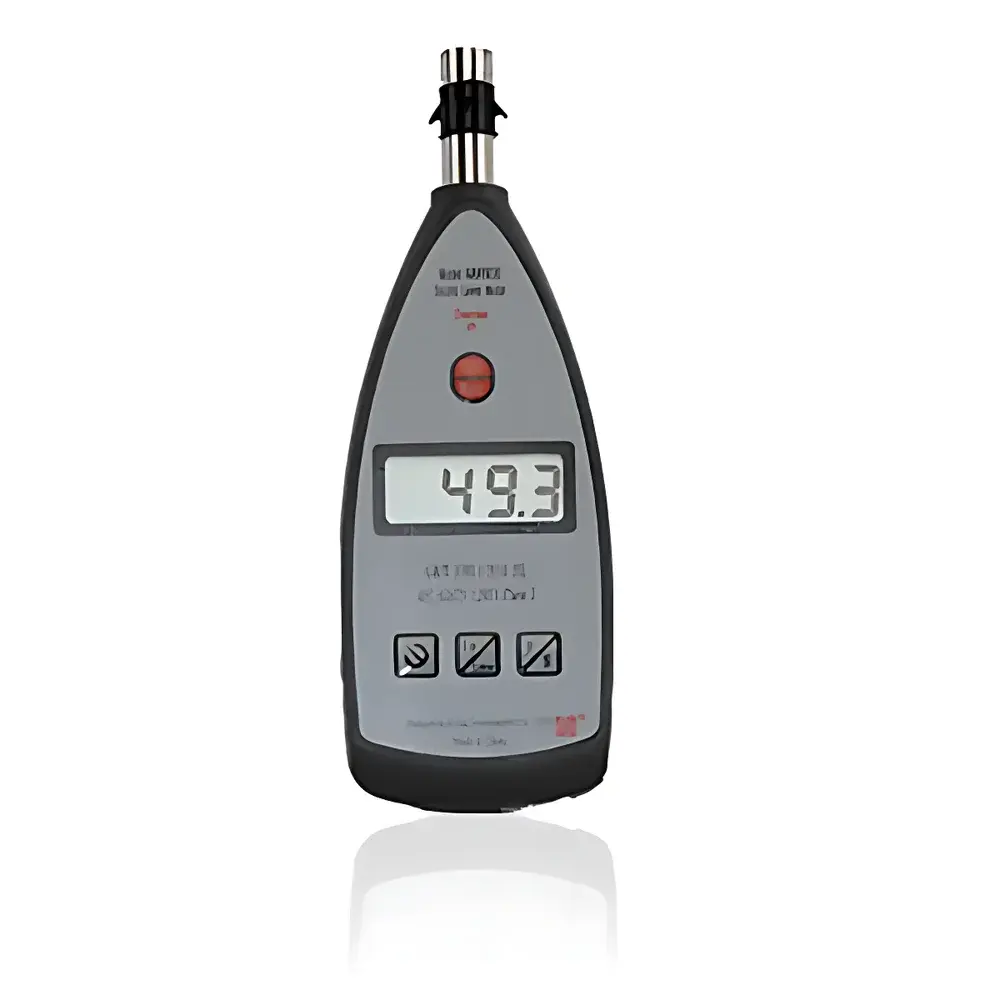
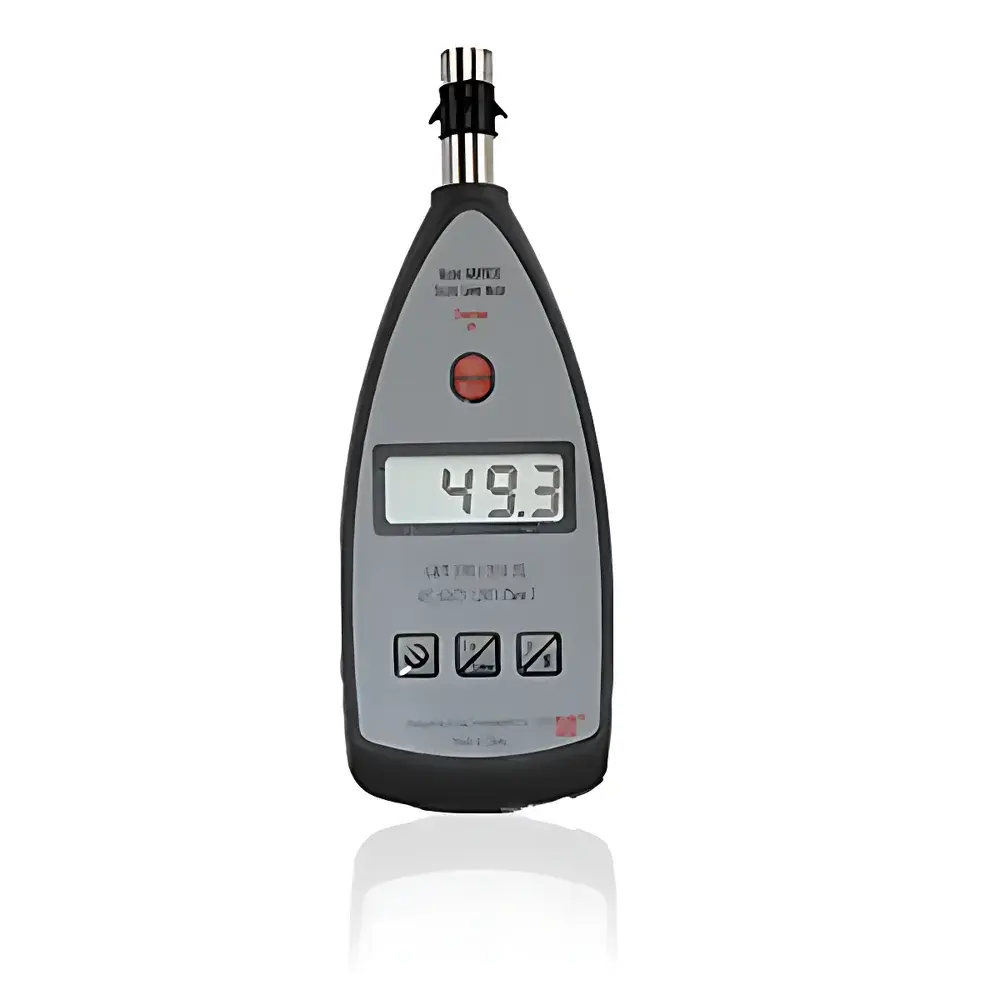
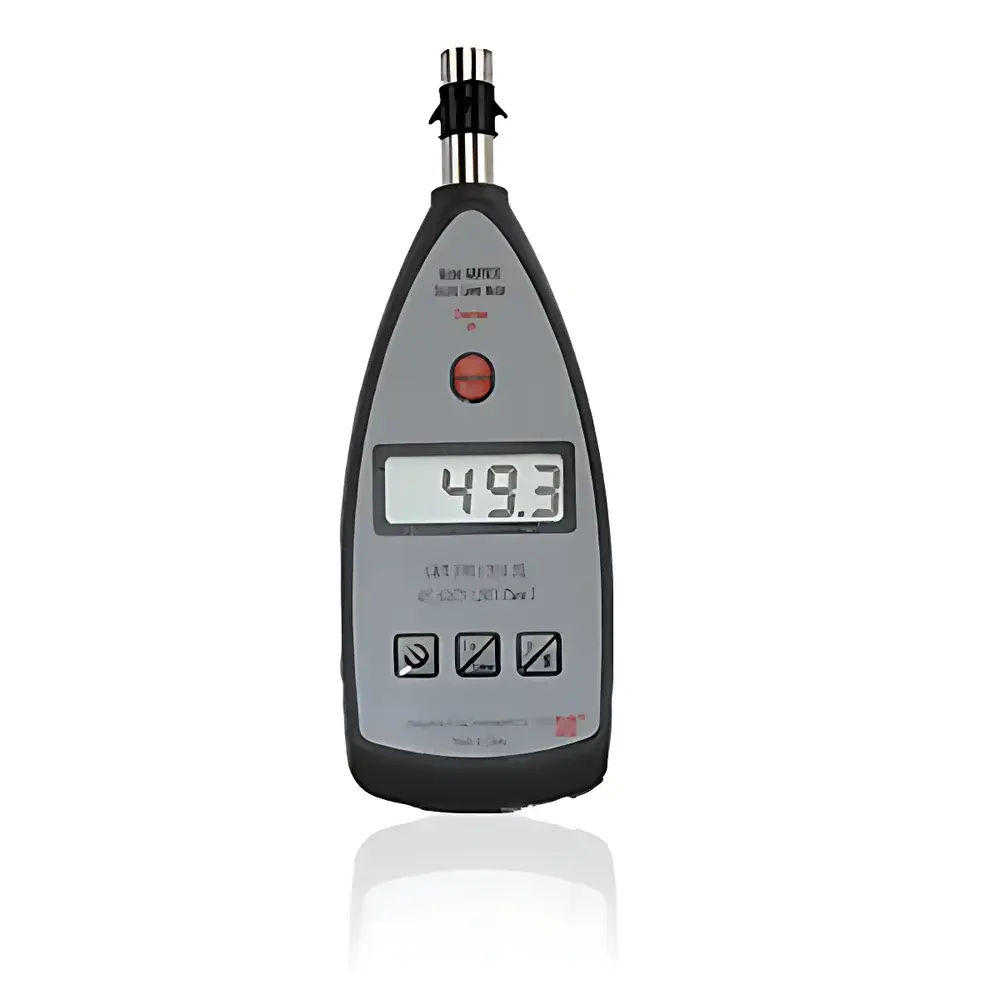
AWA5636-1 Sound Level Meter by Hangzhou Aihua
| Brand | Hangzhou Aihua |
|---|---|
| Origin | Zhejiang, China |
| Model | AWA5636-1 |
| Instrument Type | Class 2 Sound Level Meter |
| Frequency Range | 20 Hz – 12.5 kHz |
| Measurement Range | 40 dB(A) – 130 dB(A) |
| Self-Noise | <33 dB(A) |
| Compliance | GB/T 3785.1–2010 / IEC 61672-1:2013 Class 2 |
| Display | 128×64 dot-matrix OLED |
| Power Supply | 4 × AAA alkaline batteries (≥12 h operation) |
| Operating Temperature | −10 °C to +50 °C |
| Output Interfaces | AC/DC/PWM output |
| Measurement Parameters | L<sub>p</sub>, L<sub>max</sub>, L<sub>eq,T</sub>, L<sub>min</sub>, SEL, E, T<sub>m</sub> |
Overview
The AWA5636-1 Sound Level Meter is a Class 2 instrument engineered for precision acoustic measurement in industrial, occupational, and environmental applications. Designed and manufactured by Hangzhou Aihua Instrument Co., Ltd., it implements digital signal processing (DSP)–based sound pressure level detection—eliminating analog gain switching and ensuring stable, repeatable performance across its full dynamic range. Its measurement principle conforms to the fundamental acoustical definitions of sound pressure level (SPL) referenced to 20 µPa, with frequency-weighted outputs calculated per IEC 61672-1:2013 requirements. The device operates without manual range selection—a single-scale architecture simplifies field use while maintaining linearity from 40 dB(A) to 130 dB(A). It is certified under China’s Type Approval system (Certificate No. 2011F358-33), verifying conformance to national and international metrological standards for portable noise meters.
Key Features
- Class 2 compliance per IEC 61672-1:2013 and GB/T 3785.1–2010, suitable for general-purpose noise assessment where high accuracy is required but Class 1 instrumentation is not mandated
- Digital true-RMS detection architecture ensures minimal drift and high reproducibility over time and temperature variations (−10 °C to +50 °C)
- Integrated 128×64 monochrome OLED display provides high-contrast, wide-viewing-angle visualization of real-time and integrated metrics—even under low ambient light or direct sunlight
- Single full-scale measurement range (40–130 dB(A)) eliminates manual attenuation/gain switching, reducing operator error and accelerating measurement cycles
- Low self-noise (<33 dB(A)) enables reliable measurements near quiet sources or in low-background environments such as office spaces or residential zones
- Standard frequency weightings: A, C, and Z (linear); time weightings: Fast (F), Slow (S), Impulse (I), and Spatial Average (SF)
- Robust mechanical design with compact form factor (190 × 68 × 27 mm) and ergonomic handheld configuration for extended field deployment
Sample Compatibility & Compliance
The AWA5636-1 is compatible with standard ½-inch electret condenser microphones (e.g., AWA14421B), which are pre-calibrated and traceable to national acoustic standards. Its modular hardware platform supports optional add-ons—including 1/1-octave band filters and external data logging modules—without compromising intrinsic calibration integrity. Regulatory alignment includes adherence to occupational health and safety frameworks: measurements satisfy OSHA 1910.95 and EU Directive 2003/10/EC requirements for workplace noise exposure assessment. While not FDA-regulated, its data structure and timestamping support GLP-compliant recordkeeping when paired with validated reporting software. The instrument does not implement 21 CFR Part 11 electronic signature functionality; however, raw output via DC/AC/PWM interfaces permits integration into third-party audit-ready SCADA or LIMS systems.
Software & Data Management
Data acquisition is supported through analog (AC/DC) and pulse-width modulated (PWM) outputs, enabling connection to oscilloscopes, data loggers, or programmable logic controllers. Optional RS232 serial interface allows bidirectional communication with host PCs running custom or vendor-supplied analysis tools. Though the base AWA5636-1 model lacks onboard memory, higher-tier configurations (e.g., AWA5636-3/4) offer up to 8,000 data sets with time-stamped event logging. All firmware versions include watchdog timer functionality to prevent lock-up during prolonged unattended operation. Exported datasets follow IEEE 1057-compliant numeric formatting, facilitating import into MATLAB, Python (SciPy), or ISO 532–based loudness calculation engines. Calibration verification reports generated by Aihua’s proprietary software are structured to meet internal QA documentation requirements.
Applications
- Industrial machinery noise mapping and ISO 3744/3747-compliant sound power estimation
- Ongoing monitoring of HVAC systems, compressors, and production line equipment for predictive maintenance
- Workplace noise surveys supporting hearing conservation programs per ANSI S12.13 and ISO 9612
- Environmental noise monitoring near transportation corridors, construction sites, and urban infrastructure
- Educational laboratory use for acoustics physics instruction and student-led experimental design
- Pre-compliance screening prior to formal testing in accredited anechoic chambers or certified laboratories
FAQ
Does the AWA5636-1 support real-time octave band analysis?
No—the base AWA5636-1 model does not include built-in 1/1-octave filtering. This capability is available only on upgraded variants (e.g., AWA5636-2 or -3) with optional hardware modules.
Is field calibration possible using a pistonphone or calibrator?
Yes—compatible with standard 94 dB and 114 dB acoustic calibrators (e.g., AWA6221B) meeting IEC 60942 Class 1/2 specifications. Calibration coefficients are stored in non-volatile memory.
Can measurement data be exported in CSV or JSON format?
Direct export is not supported on the standalone unit. However, when interfaced via RS232 to PC software, data can be saved in plain-text CSV with UTC timestamps and metadata headers.
What is the typical battery life under continuous use?
With four AAA alkaline cells and default LCD brightness, continuous operation exceeds 12 hours at 25 °C. Battery consumption increases marginally at temperatures below 0 °C.
Is the device suitable for outdoor use in rain or high humidity?
The enclosure meets IP54 ingress protection (dust resistant and splash proof), but prolonged exposure to precipitation or condensation is not recommended without supplemental weather shielding.
Related Products







