
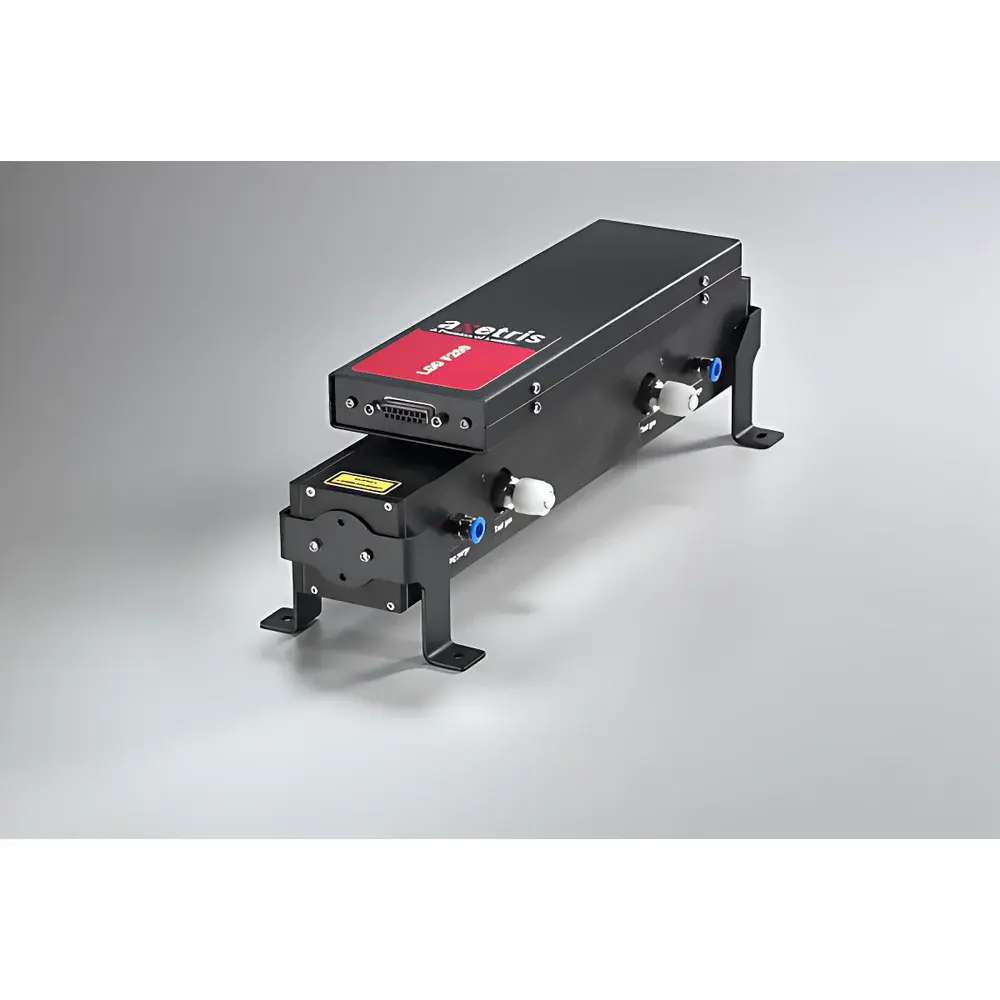
Axetris LGD Series Tunable Diode Laser Gas Detection Module
| Brand | Axetris |
|---|---|
| Origin | Switzerland |
| Model | LGD Series |
| Detection Principle | Tunable Diode Laser Absorption Spectroscopy (TDLAS) |
| Target Gases | NH₃, CH₄, H₂O, CO₂, HCl, HF, O₂ |
| Design Type | OEM-integrated modular sensor |
| Operating Temperature Range (heated option) | up to 190 °C |
| Measurement Method | Non-contact, optical, in-situ absorption spectroscopy |
| Calibration | Factory-calibrated |
| Compliance Context | Designed for integration into systems compliant with IEC 61508 (SIL2-capable architecture), EN 14181 (QAL3 validation support), and applicable EPA Methods (e.g., Method 320 for HCl/HF) |
Overview
The Axetris LGD Series Tunable Diode Laser Gas Detection Module is an OEM-optimized optical sensing platform engineered for high-selectivity, real-time gas concentration measurement in industrial and environmental applications. Built upon the physical principle of Tunable Diode Laser Absorption Spectroscopy (TDLAS), the module directs a narrow-linewidth, wavelength-tunable near-infrared (NIR) or mid-infrared (MIR) laser beam across a gas sample path. Molecular absorption features—unique spectral “fingerprints” at specific wavelengths—are quantified via Beer–Lambert law analysis, enabling parts-per-trillion (ppt) to percent-level detection sensitivity depending on gas species, path length, and optical configuration. Unlike electrochemical or catalytic bead sensors, TDLAS is inherently immune to cross-sensitivity from non-target gases, eliminating the need for complex compensation algorithms or physical reference cells. The module operates as a self-contained optical transmitter–receiver unit, supporting both extractive and in-situ configurations. Its compact, robust mechanical housing (IP65-rated enclosure optional) and low power consumption (<5 W typical) make it suitable for embedded deployment in analyzers, process skids, and portable monitoring systems.
Key Features
- Modular OEM architecture: Standardized mechanical footprint, electrical interfaces (analog 4–20 mA / 0–10 V, digital RS-485 or UART), and optical coupling options (free-space or fiber-coupled) simplify system integration.
- Gas-specific optical design: Pre-aligned, factory-optimized laser diodes and photodetectors matched to fundamental rotational–vibrational absorption lines of NH₃, CH₄, CO₂, H₂O, HCl, HF, and O₂—ensuring maximum signal-to-noise ratio and minimal interference.
- High-temperature operation: Integrated heating element and thermal management enable continuous measurement in hot, wet, or corrosive gas streams up to 190 °C, with active temperature stabilization to maintain wavelength accuracy.
- Zero-drift performance: Utilizes second-harmonic (2f) wavelength modulation spectroscopy (WMS) with lock-in detection, providing long-term stability without field recalibration under stable operating conditions.
- Non-contact, maintenance-free optical path: No consumables, no sampling pumps, no filters—reducing total cost of ownership and downtime in harsh or remote installations.
Sample Compatibility & Compliance
The LGD module supports direct in-situ measurement in gas streams with particulate loadings ≤10 mg/m³ and dew points up to 100 °C (with heated optics). It is compatible with stainless steel, Hastelloy, and quartz probe housings for aggressive chemical environments. While the module itself is not CE-marked as a standalone instrument, its design enables seamless integration into final systems meeting IEC 61000-6-2/6-4 (EMC), ATEX/IECEx Zone 2 (when housed appropriately), and UL 61010-1 (safety). For regulated emissions monitoring, the module supports QAL3 verification per EN 14181 when deployed within a certified analyzer platform. Its traceable factory calibration aligns with ISO/IEC 17025-accredited procedures, and raw spectral data output allows for audit-ready traceability in GLP/GMP contexts.
Software & Data Management
The module communicates via ASCII-based serial protocol or Modbus RTU, delivering calibrated concentration values, raw absorbance spectra, laser temperature/voltage diagnostics, and internal sensor health status. Axetris provides open API documentation and example drivers (C/C++, Python) for integration into SCADA, DCS, or custom LabVIEW-based acquisition software. Optional firmware supports time-stamped data logging with configurable averaging intervals (100 ms to 60 s), linearization polynomials for multi-point calibration curves, and alarm thresholds with hysteresis. All firmware updates are performed via UART without hardware modification. For FDA-regulated environments, the host system may implement 21 CFR Part 11-compliant electronic signatures and audit trails—though the module itself does not store user accounts or enforce role-based access.
Applications
- Process Control: Real-time NH₃ slip monitoring in selective catalytic reduction (SCR) systems; CH₄ concentration feedback in anaerobic digesters; O₂ trim control in combustion optimization.
- Emissions Monitoring: Continuous HCl and HF quantification in waste incineration flue gas; CO₂ stack reporting per EPA Method 2A or ISO 14064-1; H₂O vapor correction in CEMS.
- Environmental Surveillance: Fugitive CH₄ detection at landfills and biogas plants; NH₃ and CO₂ flux studies in livestock barns; greenhouse gas flux towers requiring low-power, weather-resistant sensors.
- Safety & Leak Detection: Toxic gas (HF, HCl) perimeter monitoring in semiconductor fabs; refrigerant (CH₄, CO₂) leak detection in cold storage facilities; O₂ deficiency warning in confined spaces.
- Climate Control: High-accuracy H₂O vapor measurement for HVAC demand-controlled ventilation in hospitals and cleanrooms; CO₂-based occupancy estimation in smart buildings.
FAQ
Does the LGD module require periodic recalibration in the field?
No—its TDLAS architecture and 2f-WMS detection method provide intrinsic long-term stability. Factory calibration remains valid under specified thermal and optical operating conditions. Recalibration is only necessary after mechanical shock, extreme contamination, or replacement of optical components.
Can the module measure multiple gases simultaneously?
Each LGD unit is optimized for a single target gas using a dedicated laser wavelength. Multi-gas capability requires either sequential scanning with a broadband laser (not supported by standard LGD) or parallel integration of multiple LGD modules within one analyzer platform.
Is the module suitable for explosive atmospheres?
The bare module is not intrinsically safe. However, it can be integrated into explosion-proof housings (e.g., Ex d or Ex e) or used in Zone 2/22 areas when installed with appropriate barrier systems and certified by the end-equipment manufacturer per ATEX/IECEx directives.
What is the minimum detectable concentration for NH₃?
Detection limits depend on optical path length and averaging time. With a 1-m path and 1-s averaging, typical LOD is ~0.5 ppm·m; with multipass cells (10–50 m effective path), sub-ppb levels are achievable in controlled lab settings.
How is temperature compensation handled during high-temperature measurements?
The module integrates a high-stability thermistor array and PID-controlled heater. Internal firmware applies real-time line-shape correction using HITRAN-based temperature-dependent absorption models, ensuring concentration accuracy across the full 0–190 °C operational range.





