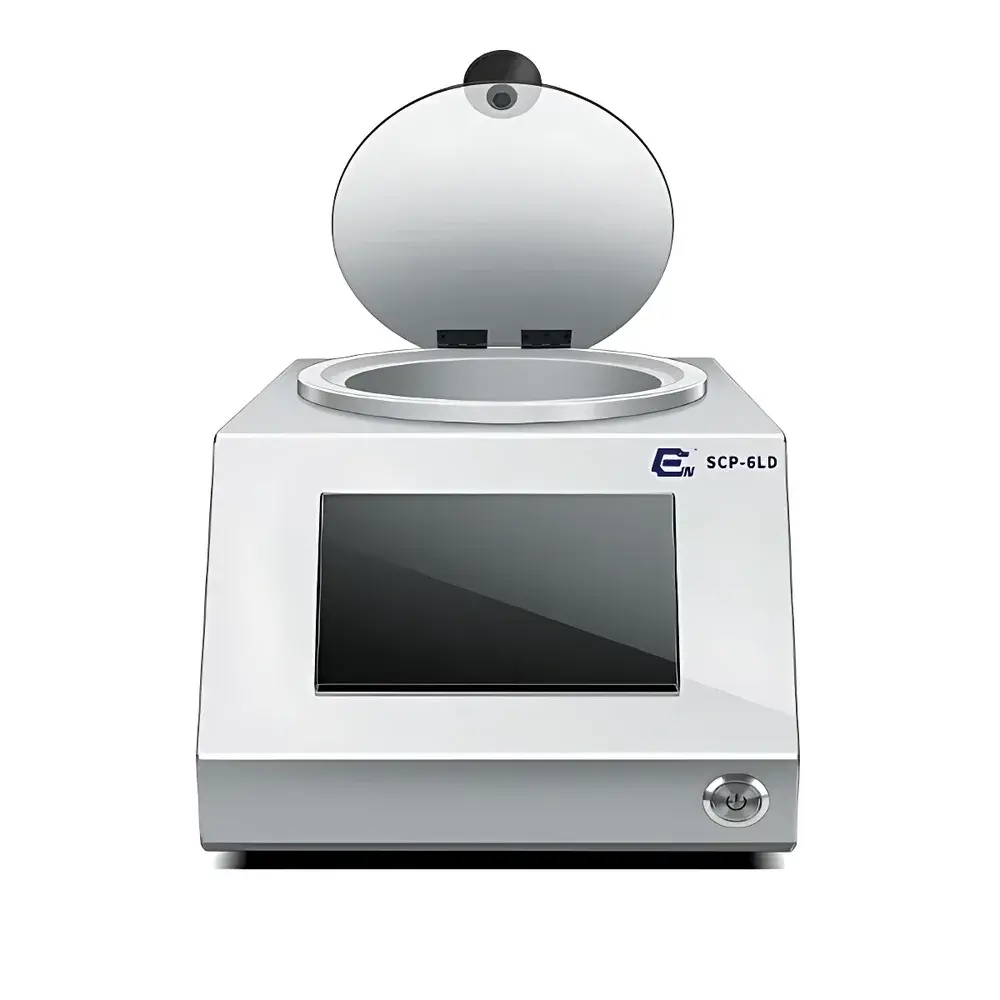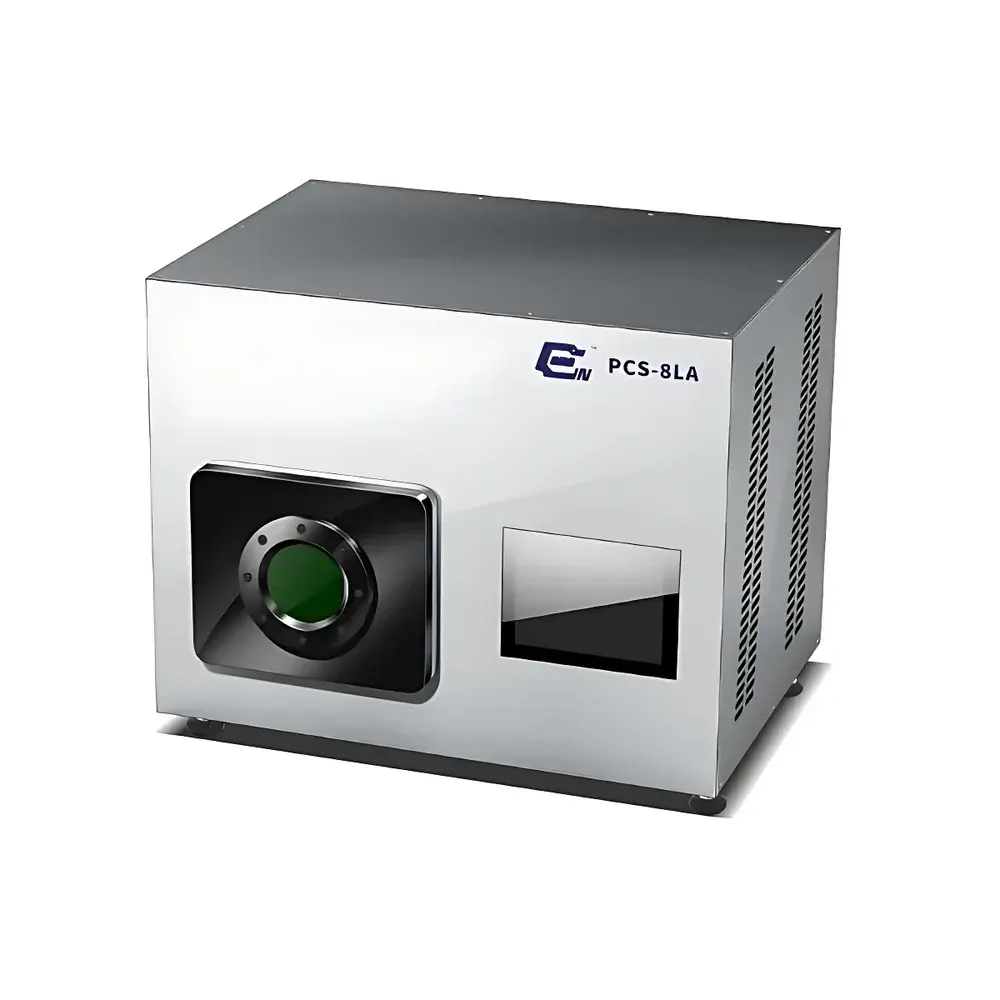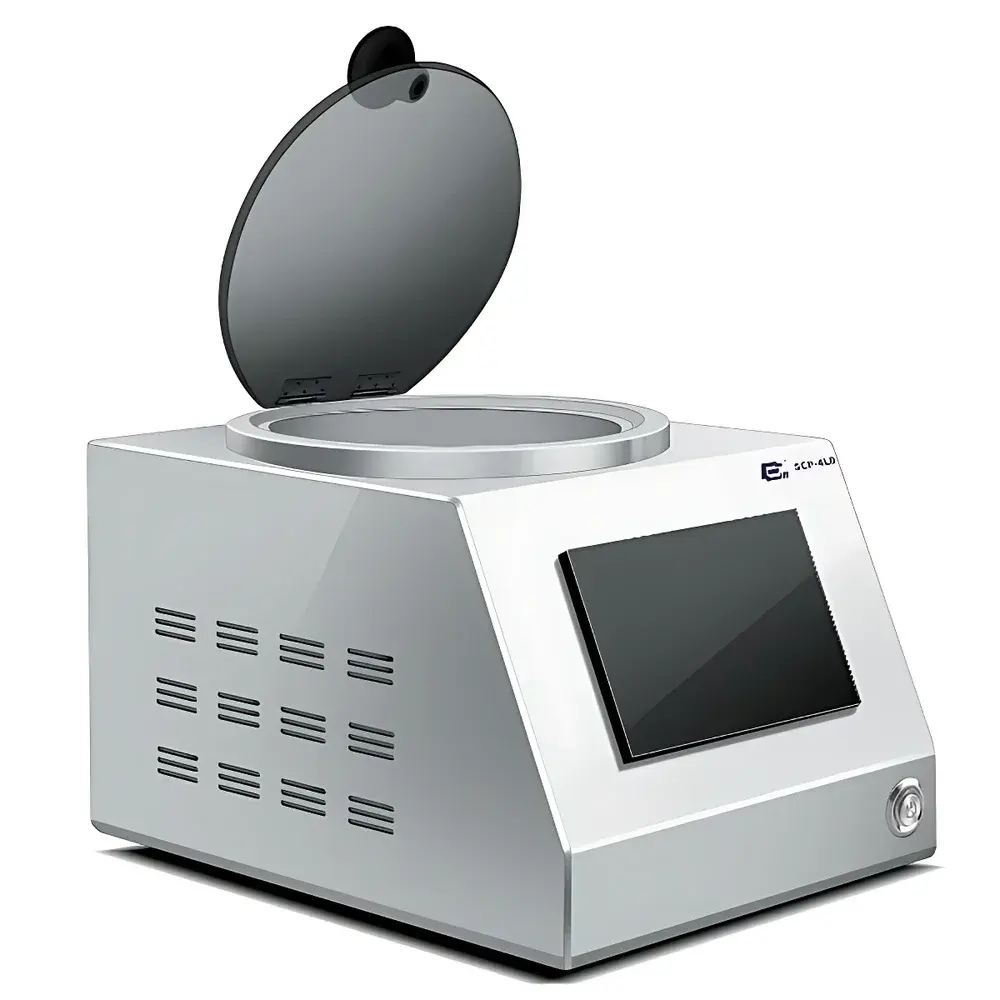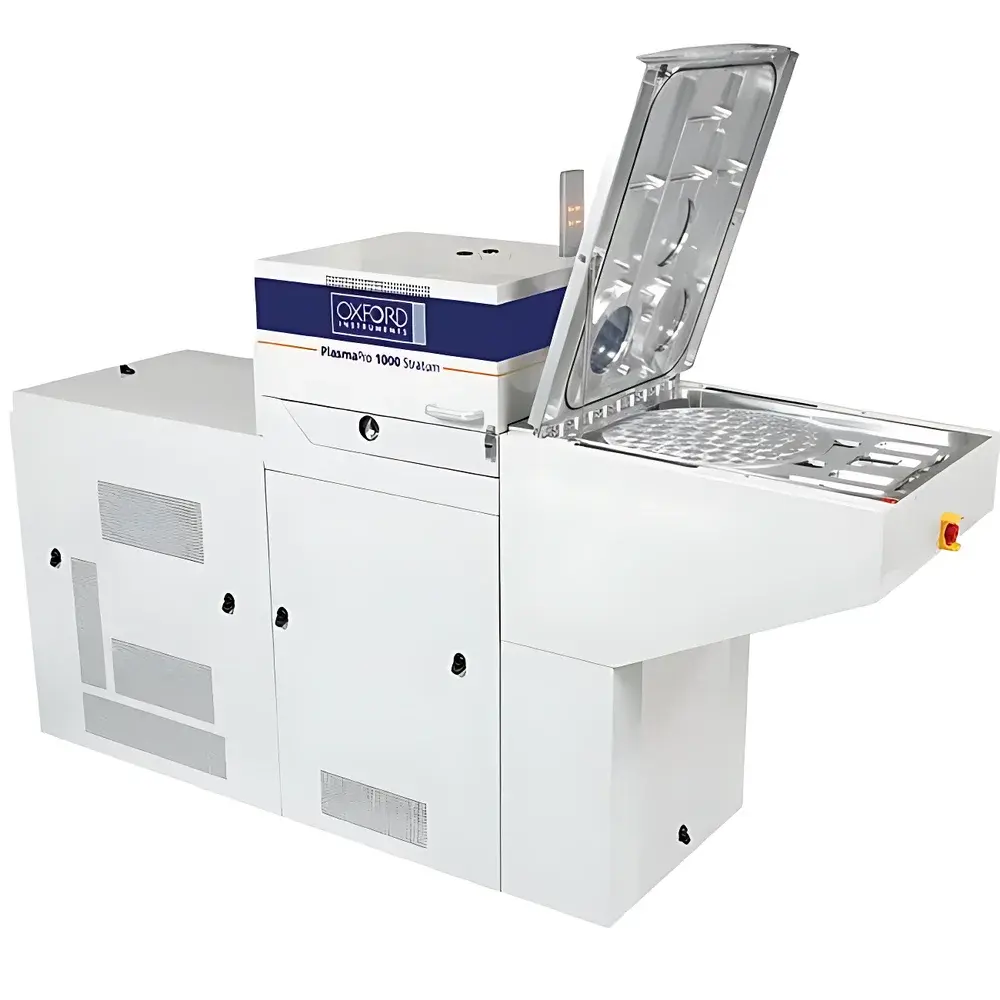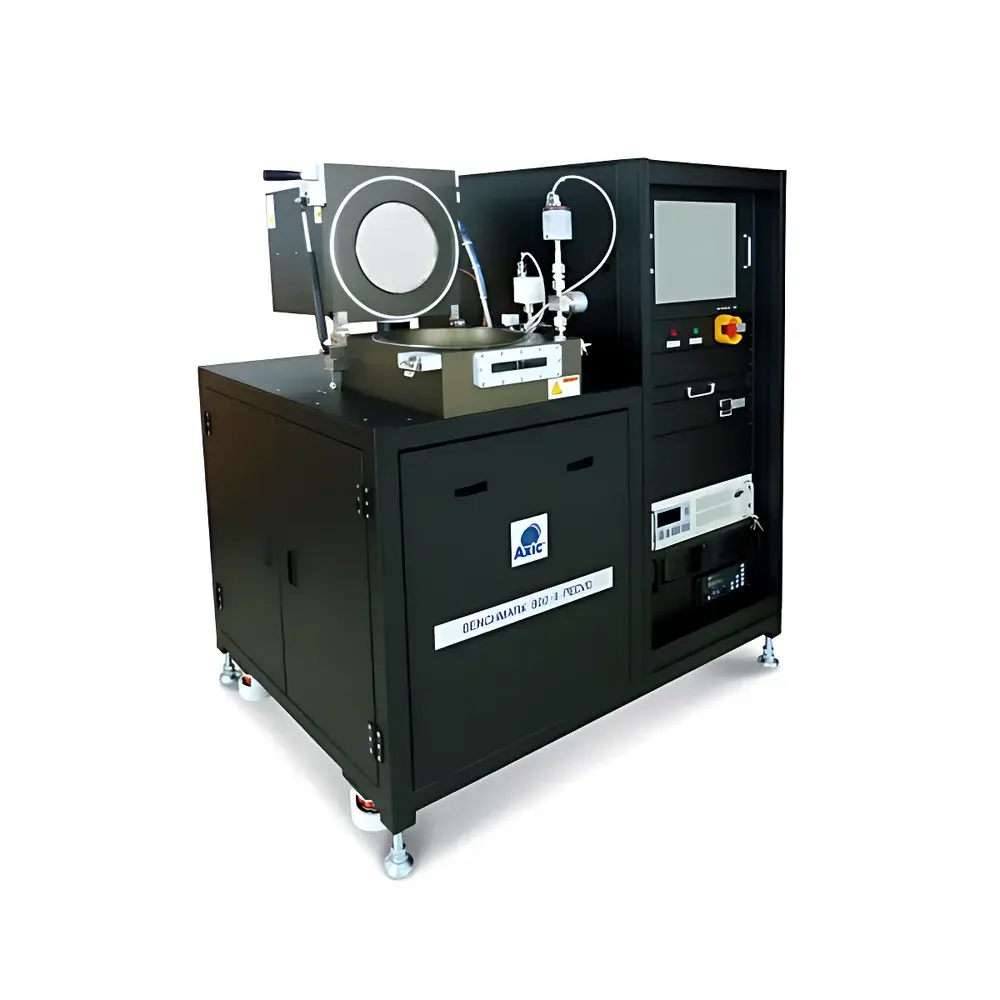
AXIC BenchMark 800 Plasma Etching and PECVD System
| Brand | AXIC |
|---|---|
| Origin | USA |
| Manufacturer Type | Authorized Distributor |
| Product Origin | Imported |
| Model | BenchMark 800 |
| Etching Principle | Reactive Ion Etching (RIE) |
| Deposition Principle | Plasma-Enhanced Chemical Vapor Deposition (PECVD) |
| Substrate Compatibility | Up to 200 mm (8-inch) wafers |
| Operation Modes | Single-wafer and batch processing |
| Chamber Configuration | Modular single-chamber and dual-chamber options |
| RF Matching | Automatic impedance matching |
| Pressure Control | Downstream capacitance manometer with optional closed-loop regulation |
| Vacuum Options | Mechanical pump, mechanical + roots blower, or turbomolecular pump |
| Endpoint Detection | Optional optical emission spectroscopy (OES)-based endpoint detection |
| Gas Delivery | Replaceable showerhead with multi-gas capability |
| Electrode Configurations | Planar, RIE, and PECVD-specific electrode modules |
| Software Interface | Windows-based control with recipe management and audit trail logging |
Overview
The AXIC BenchMark 800 is a modular, research-grade plasma processing system engineered for high-fidelity reactive ion etching (RIE) and plasma-enhanced chemical vapor deposition (PECVD) in semiconductor process development, materials science laboratories, and pilot-line manufacturing. Unlike production-oriented tools optimized solely for throughput, the BenchMark 800 integrates metrology-grade repeatability, configurable plasma physics parameters, and hardware-level flexibility—enabling rigorous investigation of plasma-surface interactions, thin-film nucleation kinetics, and anisotropic etch profile evolution. Its core architecture supports both parallel-plate capacitive coupling (for RIE) and asymmetric electrode configurations (for PECVD), allowing precise control over ion energy distribution, electron temperature, and radical flux density—parameters critical to achieving sub-5 nm feature fidelity in advanced node development and low-damage dielectric deposition.
Key Features
- Modular chamber platform: Interchangeable electrode modules (Planar, RIE, PECVD) mount directly into a standardized vacuum chamber unit without requalification.
- Monolithic chamber body: Minimizes particle generation and ensures geometric reproducibility across process runs.
- In-situ adjustable electrode gap: Enables real-time optimization of sheath thickness and ion mean free path—critical for uniformity on 200 mm substrates.
- Replaceable gas showerhead: Designed for rapid cleaning and material-specific compatibility (e.g., Si, SiO₂, Si₃N₄, Al₂O₃); supports up to 6 independent precursor lines with mass flow control.
- Automated RF impedance matching: 13.56 MHz or 40.68 MHz generator with <50 µs response time ensures stable plasma ignition and sustained power delivery under dynamic process conditions.
- Downstream pressure regulation: Optional closed-loop capacitance manometer control maintains ±0.05 mTorr stability across 1–500 mTorr operating range.
- Endpoint detection interface: Standard OES port (200–800 nm) with fiber-optic coupling; compatible with third-party spectral analyzers for real-time etch-stop monitoring.
- Compact footprint: 1.2 m × 0.8 m floor space; designed for integration into ISO Class 5 laminar flow hoods or cleanroom bays without structural reinforcement.
Sample Compatibility & Compliance
The BenchMark 800 accommodates substrates up to 200 mm in diameter—including silicon, compound semiconductors (GaN, SiC), quartz, sapphire, and flexible polymer foils—with thermal chucking (ambient–150 °C) and optional backside helium cooling. All wetted components comply with SEMI F57 standards for ultra-high-purity gas handling. The system meets CE marking requirements for electromagnetic compatibility (EN 61326-1) and low-voltage safety (EN 61000-6-3). For regulated environments, optional software packages support 21 CFR Part 11-compliant electronic signatures, audit trails, and role-based access control—fully aligned with GLP and GMP documentation workflows.
Software & Data Management
Control is executed via a Windows 10 IoT Enterprise host running AXIC’s ProcessMaster™ v4.2 software. The interface provides deterministic real-time sequencing (sub-millisecond timing resolution), full recipe parameter logging (RF power, pressure, gas flows, temperature), and automated calibration traceability. Data export adheres to ASTM E1957-22 format for interoperability with JMP, MATLAB, and factory MES systems. All process logs are timestamped, digitally signed, and stored in encrypted SQLite databases with automatic daily backup to network-attached storage.
Applications
- Development of high-aspect-ratio silicon etch processes for MEMS and through-silicon vias (TSVs).
- Low-temperature PECVD of SiNₓ and SiO₂ films for passivation layers in photovoltaics and flexible electronics.
- Surface functionalization of biomedical polymers using oxygen or ammonia plasma.
- Atomic-layer etch (ALE) process scouting via pulsed RIE waveforms.
- Plasma diagnostics validation using Langmuir probe integration ports.
- Failure analysis of gate oxide integrity under controlled plasma damage conditions.
FAQ
What substrate sizes does the BenchMark 800 support?
Standard configuration supports 100 mm, 150 mm, and 200 mm wafers; custom chucks for non-circular or irregular substrates (e.g., 10 × 10 cm² glass slides) are available upon request.
Is remote operation supported?
Yes—the system includes VNC-enabled secure remote desktop access with TLS 1.3 encryption and two-factor authentication for off-site monitoring and troubleshooting.
Can the BenchMark 800 be upgraded from RIE-only to RIE/PECVD capability?
Yes—existing RIE-configured units can be retrofitted with PECVD electrode modules, RF generator upgrades, and enhanced gas manifold assemblies without chamber replacement.
Does the system include process qualification documentation?
Each shipped unit includes IQ/OQ documentation per ISO 9001:2015, along with as-delivered performance verification reports for etch rate uniformity (<±3.2% 3σ), deposition rate stability (99.97%).