
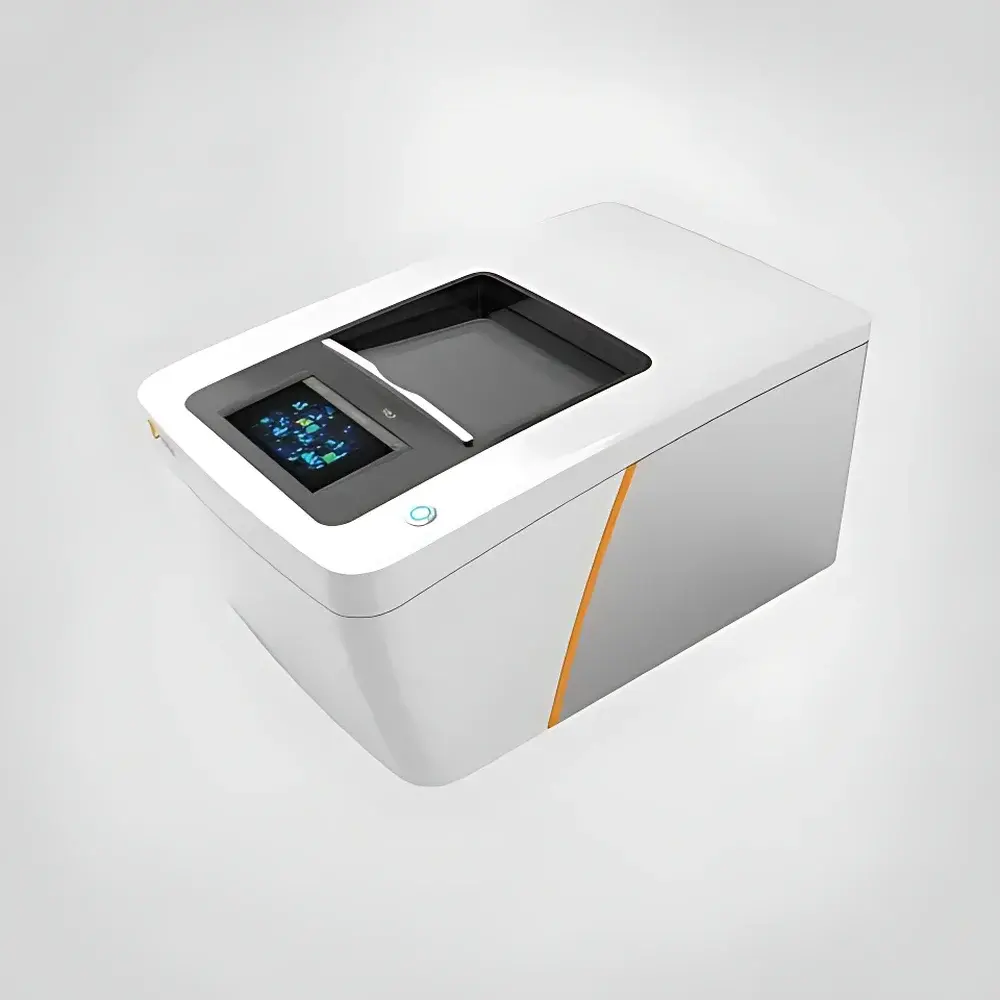
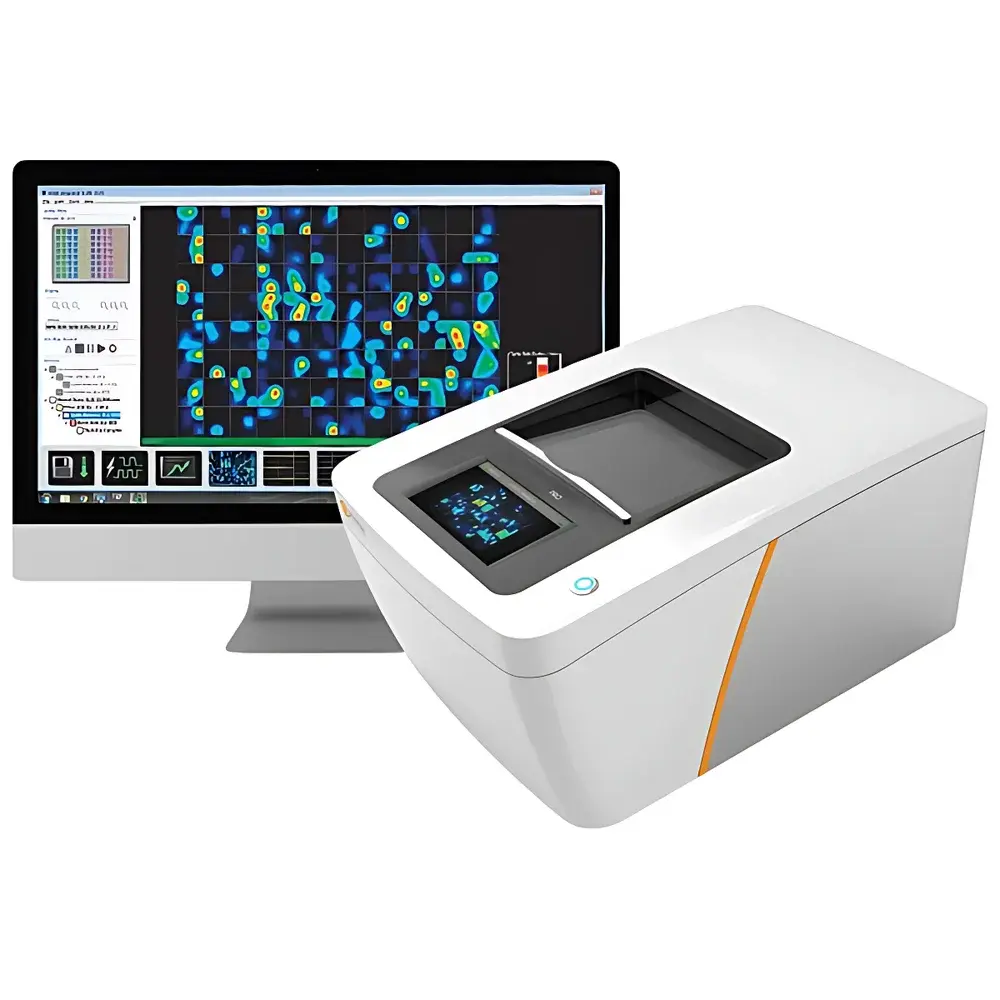
Axion BioSystems Maestro PRO/EDGE High-Throughput Microelectrode Array (MEA) System
| Brand | Axion BioSystems |
|---|---|
| Origin | USA |
| Manufacturer Type | Original Equipment Manufacturer (OEM) |
| Product Category | Imported Instrument |
| Model | Maestro PRO / EDGE |
| Throughput | Multi-well (24-, 48-, or 96-well formats) |
| Application Scope | In vitro electrophysiology |
| Electrode Count per Well | 384 or 768 |
| Regulatory Designation | Research Use Only (RUO) |
Overview
The Axion BioSystems Maestro PRO/EDGE is a benchtop, non-invasive, high-throughput microelectrode array (MEA) system engineered for real-time, label-free detection of extracellular electrophysiological activity from functional neural networks. It operates on the principle of extracellular field potential recording—capturing spontaneous and evoked action potentials, synaptic transmission events, and network-level oscillatory dynamics across hundreds of electrodes embedded in standard multi-well culture plates. Unlike indirect assays (e.g., calcium imaging or immunoblotting), the Maestro platform directly measures voltage transients generated by ion fluxes during neuronal depolarization, providing millisecond temporal resolution and spatial mapping of network-wide activity. Its architecture supports longitudinal monitoring—from hours to weeks—enabling studies of neurodevelopmental trajectory, pharmacological modulation, and disease-associated functional deficits in human iPSC-derived neurons, primary cultures, brain slices, and 3D neural organoids.
Key Features
- Scalable electrode density: 384- or 768-electrode arrays per well, enabling high-fidelity spatial sampling of network activity without signal averaging.
- Integrated environmental control: On-board temperature regulation (37 °C ± 0.2 °C) and CO2 management (5% ± 0.1%) ensure physiological stability during extended recordings.
- Multi-parametric quantification: Simultaneous extraction of three core functional metrics—Activity (spike rate, burst frequency), Synchrony (cross-correlation, network burst participation), and Oscillation (power spectral density, dominant frequency bands: delta, theta, beta, gamma).
- Hardware-software co-design: Seamless integration with Lumos optogenetic stimulation module—supporting wavelength-selective (450 nm, 520 nm, 590 nm, 630 nm), millisecond-precision light pulses (100 ms–10 s) across up to 96 wells in parallel.
- Regulatory-compliant data handling: AxIS Navigator software supports audit trails, electronic signatures, and configurable user roles—aligned with GLP/GMP-aligned workflows and FDA 21 CFR Part 11 readiness for preclinical research environments.
Sample Compatibility & Compliance
The Maestro system is validated for use with diverse neural preparations including rodent and human primary neurons, iPSC-derived cortical or dopaminergic neurons, dissociated and intact brain slices (up to 400 µm thickness), neurospheres, cerebral organoids (“mini-brains”), and co-cultures incorporating astrocytes or microglia. All MEA plates are sterile, tissue-culture treated, and compatible with standard laminin/poly-D-lysine coating protocols. The system complies with IEC 61000-4 electromagnetic compatibility standards and operates under Class II biosafety cabinet-compatible footprint. As a Research Use Only (RUO) instrument, it is not intended for diagnostic or clinical use; however, its data output meets criteria for inclusion in IND-enabling neurotoxicity and mechanistic pharmacology studies per ICH S7B and S7A guidelines.
Software & Data Management
AxIS Navigator serves as the unified acquisition and analysis engine, supporting automated spike detection (threshold-based + template-matching algorithms), burst identification (maximum interval = 100 ms), and synchrony matrix generation. It computes >25 secondary parameters—including mean inter-spike interval, burst duration variability, network burst rate, and coherence spectra—exportable in CSV, HDF5, or MATLAB-compatible formats. Batch processing pipelines allow cross-experimental normalization and statistical comparison (ANOVA, Kruskal-Wallis, post-hoc Dunn’s test). Raw data files retain full timestamped electrode-level traces (16-bit resolution, 12.5 kHz sampling), ensuring traceability for peer-reviewed publication and regulatory submission.
Applications
The Maestro platform is routinely deployed in academic and industry laboratories for: (1) Functional phenotyping of neurodevelopmental disorder models (e.g., NRXN1+/- hiPSC neurons exhibiting reduced spontaneous firing and impaired network synchrony); (2) High-content neurotoxicity screening of small molecules, biologics, and environmental toxins; (3) Mechanistic validation of gene rescue strategies via lentiviral overexpression or CRISPRa; (4) Characterization of synaptic maturation kinetics in 3D organoid systems; (5) Evaluation of neuromodulatory drug candidates targeting NMDA, GABAA, or dopamine D2 receptors; and (6) Integration with optogenetics to dissect excitatory/inhibitory balance in disease-relevant circuits.
FAQ
What sample types are compatible with Maestro MEA plates?
Primary rodent neurons, human iPSC-derived neurons (cortical, hippocampal, dopaminergic), acute brain slices (≤400 µm), neurospheres, cerebral organoids, and defined co-cultures (e.g., neuron-astrocyte).
Can Maestro distinguish between excitatory and inhibitory neuronal activity?
While not cell-type-specific by default, pharmacological isolation (e.g., CNQX + APV for AMPA/NMDA blockade; bicuculline for GABAA inhibition) combined with waveform morphology analysis enables functional classification of network contributions.
Is long-term recording supported?
Yes—continuous recording for ≥30 days has been demonstrated in stable iPSC-neuron cultures, with no electrode drift or biofouling-induced signal degradation.
How does Maestro compare to patch-clamp electrophysiology?
Maestro provides population-level network metrics at scale, whereas patch-clamp delivers single-cell, whole-cell, or cell-attached recordings with higher signal-to-noise but low throughput and significant technical demand.
Does the system support custom assay development?
Yes—Axion provides open API access to AxIS Navigator, enabling integration with Python/R-based analysis pipelines and custom stimulus paradigms via TTL or USB-triggered protocols.
Related Products



