
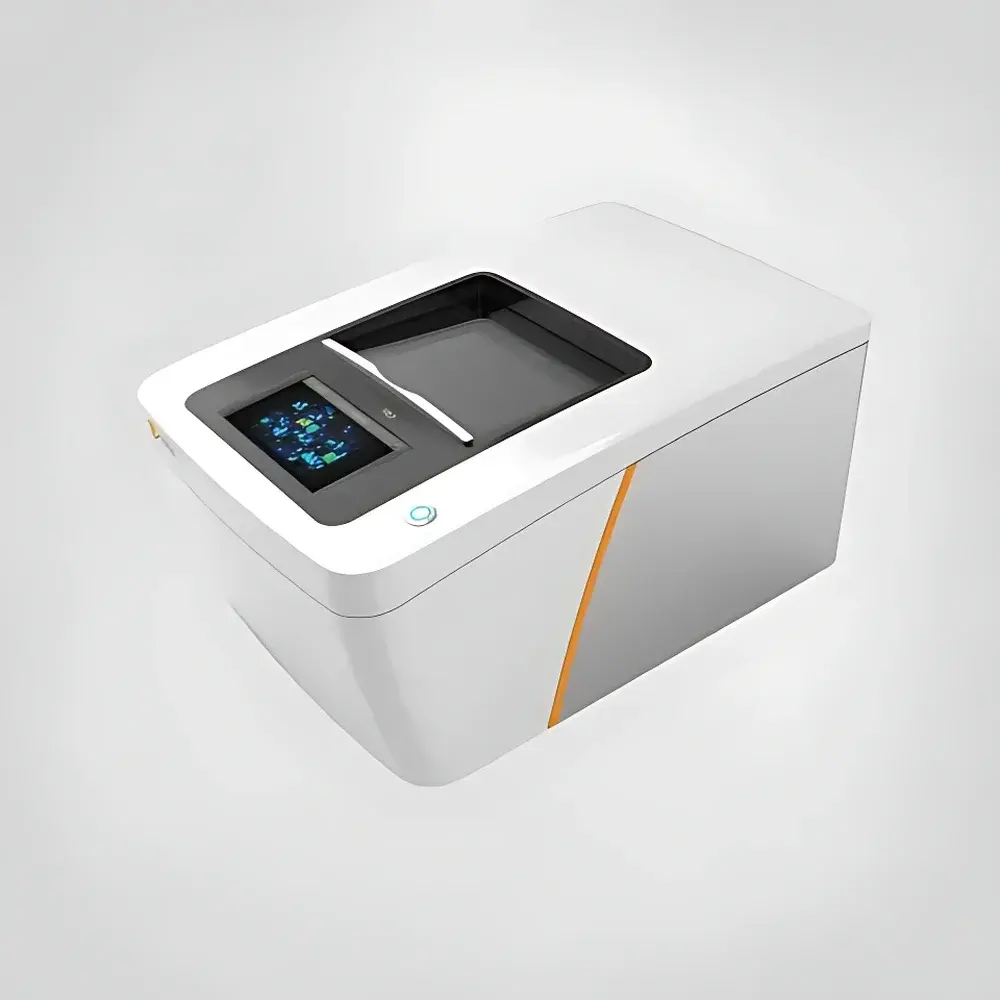
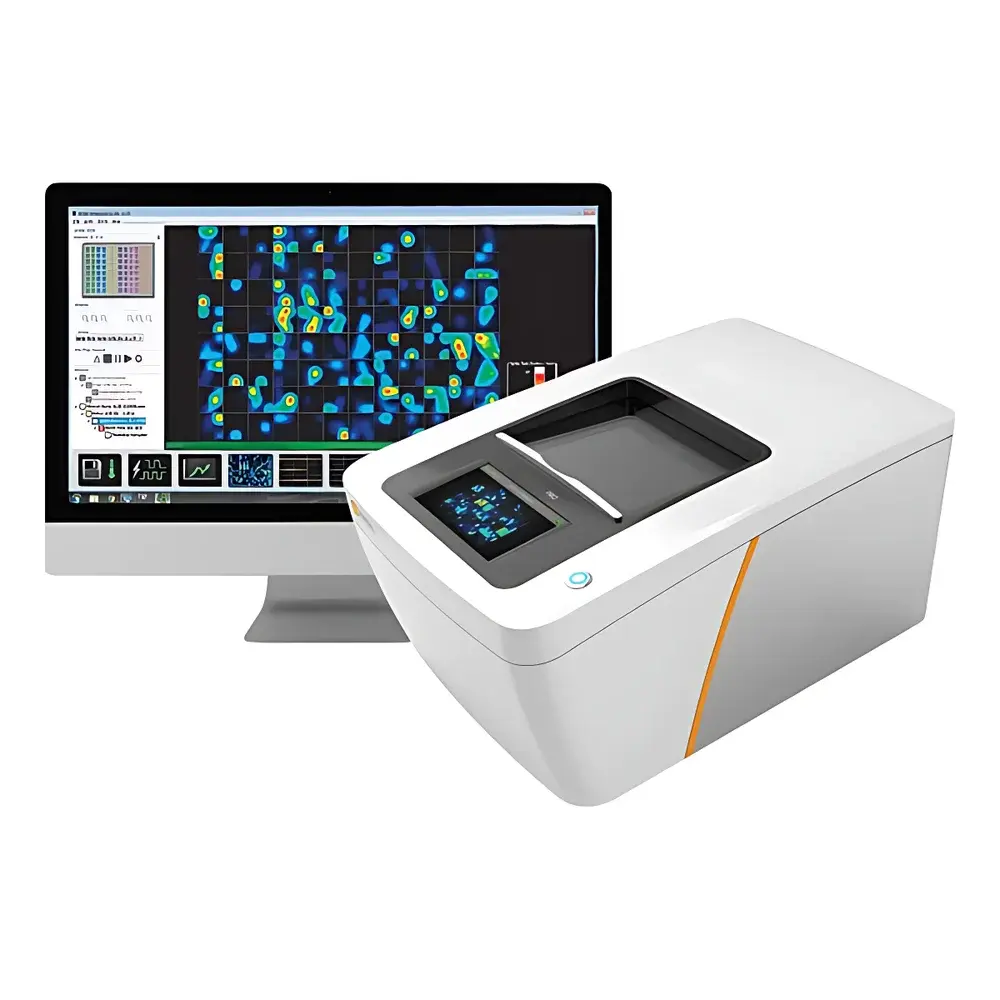
Axion BioSystems Maestro Pro/Edge High-Throughput Microelectrode Array (MEA) System
| Brand | Axion BioSystems |
|---|---|
| Origin | USA |
| Manufacturer | Axion BioSystems, Inc. |
| Product Type | Multiwell MEA Platform |
| Application | In Vitro Electrophysiology |
| Electrode Count | 384 or 768 per well |
| Configuration | 12-well Cytoview or 48-well Maestro plates |
| Regulatory Status | CE-marked, FDA-listed for research use only (RUO) |
Overview
The Axion BioSystems Maestro Pro/Edge is a high-throughput, non-invasive microelectrode array (MEA) platform engineered for label-free, real-time electrophysiological recording from intact neuronal networks in vitro. It operates on the principle of extracellular field potential detection—capturing spontaneous and evoked action potentials and local field oscillations across spatially distributed electrodes embedded in the bottom of multiwell culture plates. Unlike indirect functional assays (e.g., calcium imaging or immunoblotting), the Maestro system directly quantifies millisecond-resolution electrical activity generated by live, functionally connected neurons—including iPSC-derived cortical neurons and 3D brain organoids. Its architecture supports longitudinal monitoring over days to weeks under physiologically relevant conditions (37 °C, 5% CO₂), enabling mechanistic investigation of network-level dysfunction in neurodegenerative models such as Alzheimer’s disease (AD). In recent studies, Maestro has been applied to detect hyperexcitability phenotypes in AD patient–derived hiPSC brain organoids harboring pathogenic mutations in PSEN1 (e.g., ΔE9, M146V) or APP (e.g., Swe), revealing elevated mean firing rates and altered network synchrony relative to isogenic controls—phenotypes consistent with clinical and preclinical evidence of cortical hyperexcitability preceding neurodegeneration.
Key Features
- High-density electrode arrays: 384- or 768-electrode configurations per well, enabling subcellular spatial resolution of network activity across 12- or 48-well formats.
- Real-time, label-free electrophysiology: No dyes, transfection, or genetic reporters required—preserving native cell physiology and enabling chronic recordings.
- Integrated environmental control: On-board temperature regulation (±0.2 °C) and CO₂ monitoring ensure stable culture conditions during extended acquisition sessions.
- Stimulus-compatible design: Fully compatible with Axion’s Lumos optical stimulation system for precise, wavelength-selective (450–630 nm), millisecond-accurate photostimulation of genetically targeted or dye-free populations.
- Automated data acquisition & analysis: AxIS Navigator software performs real-time spike detection, burst analysis, synchrony metrics (e.g., cross-correlation, joint entropy), and oscillatory power spectral density estimation.
- Regulatory-compliant workflow support: Audit trail logging, user access controls, and electronic signature capability align with GLP and 21 CFR Part 11 requirements for preclinical safety pharmacology studies.
Sample Compatibility & Compliance
The Maestro platform accommodates diverse neural preparations without dissociation or mechanical disruption: primary rodent neurons, human iPSC-derived neurons and glia, acute brain slices (≤400 µm), neurospheres, and 3D cerebral organoids (including cortical, forebrain, and region-specific variants). All samples are cultured directly on Axion’s proprietary Cytoview or Maestro MEA plates—sterile, optically clear, and certified for mammalian cell culture (ISO 13485 manufacturing). The system meets IEC 61000-4-3 (EMC) and IEC 61010-1 (safety) standards. For regulatory submissions, raw data files (.axd) are structured, timestamped, and exportable in HDF5 format; metadata includes plate ID, well position, electrode mapping, calibration parameters, and environmental logs—supporting traceability per ISO/IEC 17025 and ASTM E2500-18 guidelines.
Software & Data Management
AxIS Navigator serves as the core acquisition and analysis engine, providing intuitive visualization of raster plots, heatmaps, and time-frequency spectrograms. It computes >25 secondary metrics—including mean inter-spike interval, burst duration, network burst frequency, synchrony index (SI), and gamma-band (30–80 Hz) power—each validated against ground-truth patch-clamp benchmarks. Batch processing enables comparative analysis across genotypes, treatments, or timepoints. Data export supports CSV, MATLAB (.mat), and Python (NumPy/Pandas) formats. For enterprise deployment, Axion offers AxIS Cloud—a secure, HIPAA-compliant SaaS environment supporting role-based access, version-controlled analysis pipelines, and integration with LIMS and ELN systems. All software modules undergo annual validation per GAMP5 principles and maintain full revision history.
Applications
The Maestro system is widely adopted in translational neuroscience for: (1) Phenotypic characterization of patient-specific hiPSC-derived neural models—particularly in AD, Parkinson’s disease, epilepsy, autism spectrum disorders, and frontotemporal dementia; (2) Preclinical neurotoxicity screening of small molecules, biologics, and environmental toxins per OECD TG 426 and ICH S7B; (3) Functional quality control of stem cell–derived neural products in regenerative medicine; (4) Mechanistic studies of synaptic maturation, network development, and excitatory/inhibitory balance in 3D organoids; (5) Pharmacological profiling of neuromodulators, antiepileptics, and psychotropic agents; and (6) Integration with optogenetics, CRISPR perturbation screens, and multi-omics correlation workflows.
FAQ
What distinguishes Maestro from conventional patch-clamp or calcium imaging platforms?
Maestro provides true high-throughput, network-level electrophysiology without sacrificing physiological relevance—unlike single-cell patch-clamp—and captures fast, subthreshold events missed by calcium indicators.
Can Maestro resolve inhibitory versus excitatory neuron contributions?
While not cell-type specific by default, coupling with optogenetic inhibition (e.g., eNpHR3.0) or pharmacological blockers (e.g., bicuculline, CNQX) enables functional dissection of E/I balance within the same network.
Is long-term recording (>7 days) feasible with organoids?
Yes—Cytoview plates support continuous recording up to 60 days with weekly medium exchange under sterile conditions, maintaining organoid viability and electrophysiological maturity.
How does Maestro handle data variability across organoid batches?
Axion provides standardized organoid plating protocols, electrode normalization algorithms, and batch-corrected statistical frameworks (e.g., mixed-effects modeling) to account for biological and technical heterogeneity.
Does Axion offer application support for AD organoid studies?
Yes—Axion’s Scientific Applications team provides protocol optimization, data interpretation workshops, and co-authored publication support for AD-relevant MEA experimental designs.





