
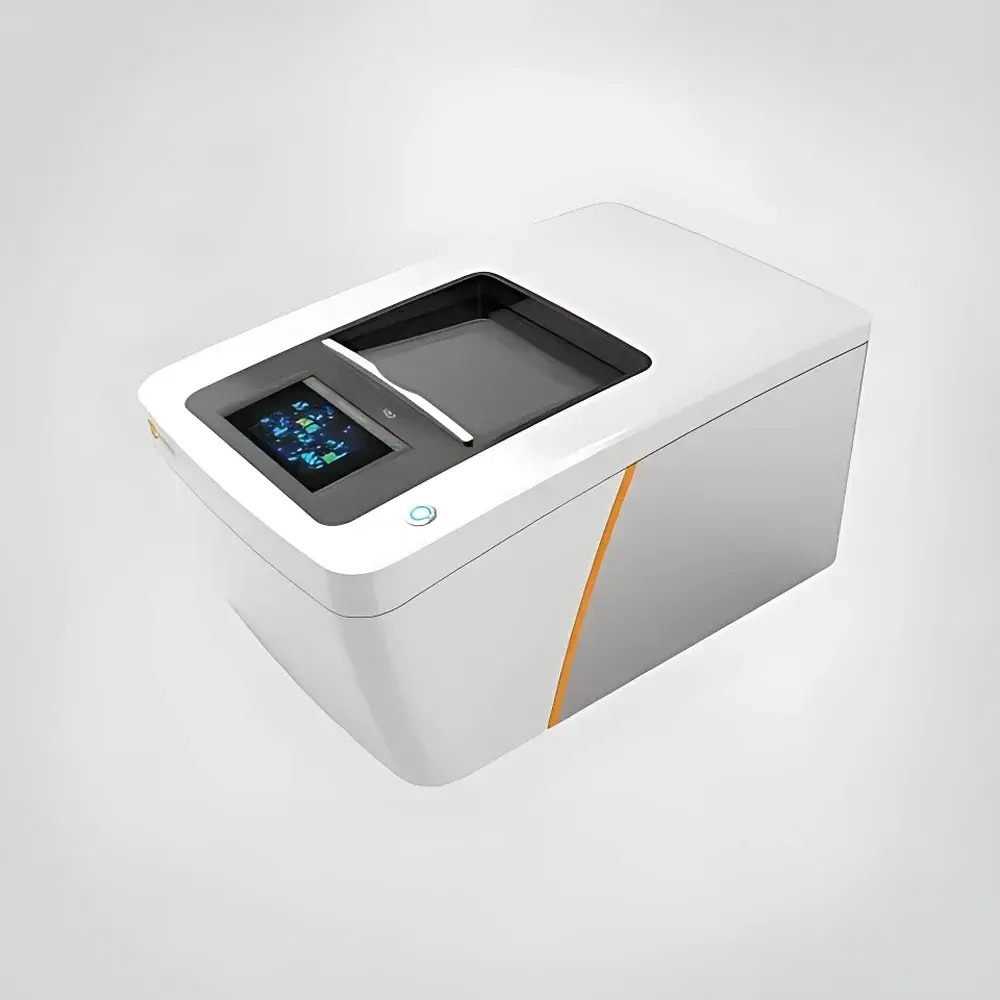
Axion BioSystems Maestro Pro/Edge High-Throughput Microelectrode Array (MEA) System
| Brand | Axion BioSystems |
|---|---|
| Origin | USA |
| Manufacturer Type | Original Equipment Manufacturer (OEM) |
| Product Category | Imported Instrument |
| Model | Maestro Pro / Edge |
| Instrument Type | Multiwell (96-well or 384-well format) |
| Application | In Vitro Electrophysiology |
| Electrode Count | 384 or 768 electrodes per well |
| Regulatory Status | CE-IVD, FDA-listed for research use only (RUO) |
Overview
The Axion BioSystems Maestro Pro and Maestro Edge are high-throughput, non-invasive microelectrode array (MEA) platforms engineered for label-free, real-time electrophysiological monitoring of functional neural networks in vitro. Based on extracellular field potential recording, the system captures spontaneous and evoked action potentials with millisecond temporal resolution across all electrodes embedded in standard multiwell plates (e.g., 48-, 96-, or 384-well formats). Each well integrates either 384 or 768 titanium-nitride microelectrodes arranged in a dense grid, enabling simultaneous spatial mapping of network-level activity—including firing rate, burst dynamics, synchrony, and oscillatory power—without requiring cell dissociation, dye loading, or genetic reporters. The Maestro platform operates within a controlled environmental chamber (37 °C, 5% CO₂), ensuring physiological stability during longitudinal recordings spanning hours to weeks. Its measurement principle relies on detecting voltage transients generated by ion fluxes across neuronal membranes near electrode surfaces—providing direct, quantitative readouts of cellular excitability and synaptic connectivity.
Key Features
- True high-throughput electrophysiology: Parallel recording from up to 96 wells, each with 384 or 768 electrodes, eliminating manual patch-clamp bottlenecks.
- Label-free, non-invasive detection: No requirement for fluorescent dyes, voltage-sensitive indicators, or transfection—preserving native cell physiology and enabling chronic assays.
- In situ network preservation: Records from intact, adherent neural cultures—including primary neurons, iPSC-derived neurons, brain slices, neurospheres, and cerebral organoids—maintaining structural and functional architecture.
- Multi-parametric output: Quantifies >25 secondary metrics per well—including mean firing rate (MFR), burst count/duration, synchrony index (SI), network burst frequency, and spectral power in delta (1–4 Hz), theta (4–8 Hz), alpha (8–12 Hz), beta (12–30 Hz), and gamma (30–100 Hz) bands.
- Integrated stimulation capability: Optional Lumos optical stimulation module enables wavelength-specific (450 nm, 520 nm, 590 nm, 630 nm), temporally precise (≥100 ms pulse width), and intensity-tunable (1–100%) photostimulation per well—ideal for optogenetics and circuit interrogation.
- Regulatory-compliant software: AxIS Navigator v3.x supports audit trails, electronic signatures, and 21 CFR Part 11–compliant data handling for GLP/GMP-aligned preclinical studies.
Sample Compatibility & Compliance
The Maestro system is validated for use with human and rodent primary cortical/hippocampal neurons, iPSC-derived excitatory/inhibitory neurons, co-cultures with astrocytes or microglia, acute brain slices (≤400 µm), 3D neurospheres, and cerebral organoids up to 1 mm in diameter. It supports pharmacological challenge, chronic toxicity assessment, and disease-model phenotyping under ISO 13485–aligned manufacturing conditions. All MEA plates are sterile, pyrogen-free, and certified for in vitro diagnostic use (CE-IVD). Data acquisition complies with ASTM E3129–20 (Standard Guide for Electrophysiological Assays in Neural Cell Models) and aligns with USP , , and guidelines for assay validation in neuropharmacology.
Software & Data Management
AxIS Navigator provides automated spike detection, clustering, and network metric extraction using adaptive thresholding and principal component analysis (PCA)-based noise rejection. Raw data (binary .axi format) is stored with full metadata (timestamp, environmental logs, stimulation events). Export options include CSV, MATLAB (.mat), HDF5, and image-ready PNG/SVG plots compliant with Nature Neuroscience and Neuron publication standards. Batch processing supports cross-well normalization, dose–response curve fitting (Hill equation), and statistical comparison via ANOVA or mixed-effects modeling. Audit trail functionality logs user actions, parameter changes, and data exports—enabling traceability for regulatory submissions.
Applications
The Maestro platform serves as a core functional phenotyping tool across translational neuroscience domains: ischemic stroke mechanism studies (e.g., TRPV3 channel modulation in tMCAO-derived neurons), neurodevelopmental disorder modeling (NRXN1+/− iPSC lines), neurotoxicity screening (chemotherapy-induced neuropathy), CNS drug discovery (antiepileptic compound profiling), organoid maturation assessment, and neuromuscular junction modeling. It is routinely cited in studies published in Brain, Journal of Neuroscience, and Stem Cell Reports for quantifying network hyperexcitability in Alzheimer’s models, impaired synchrony in ASD-associated mutations, and oscillatory deficits in Parkinsonian co-cultures. Its compatibility with CRISPR-edited lines and patient-derived iPSCs supports precision medicine applications aligned with NIH BRAIN Initiative benchmarks.
FAQ
What distinguishes Maestro from conventional patch-clamp or calcium imaging platforms?
Maestro provides direct, long-term electrophysiological readouts without perturbing cell integrity—unlike patch-clamp (low throughput, invasive) or calcium imaging (indirect, limited temporal resolution, dye toxicity).
Can Maestro detect subthreshold synaptic events?
No—it records extracellular field potentials dominated by suprathreshold action potentials and population spikes; subthreshold EPSPs/IPSPs require intracellular or high-density CMOS-MEA approaches.
Is the system compatible with GMP-compliant workflows?
Yes—AxIS Navigator supports 21 CFR Part 11 compliance, including role-based access control, electronic signatures, and immutable audit trails for regulated safety pharmacology studies.
How is electrode impedance managed during extended recordings?
Titanium-nitride electrodes maintain stable impedance (<200 kΩ at 1 kHz) over ≥4-week culture periods; real-time impedance monitoring is available via optional impedance spectroscopy module.
What validation data exists for organoid recordings?
Published benchmarks demonstrate robust detection of synchronized bursting and gamma oscillations in day-60+ cerebral organoids, with correlation to single-cell RNA-seq–defined neuronal subtype composition (Nat Protoc. 2022;17:1234–1267).
Related Products





