
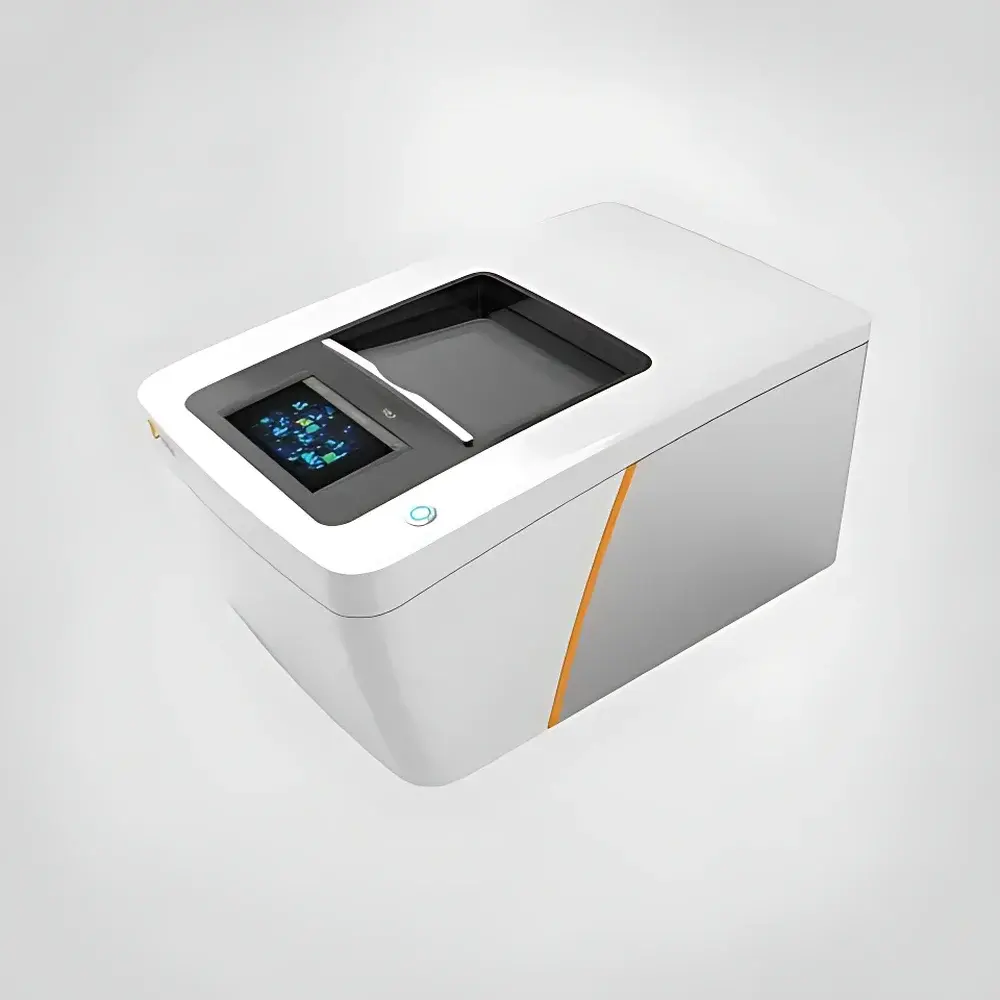
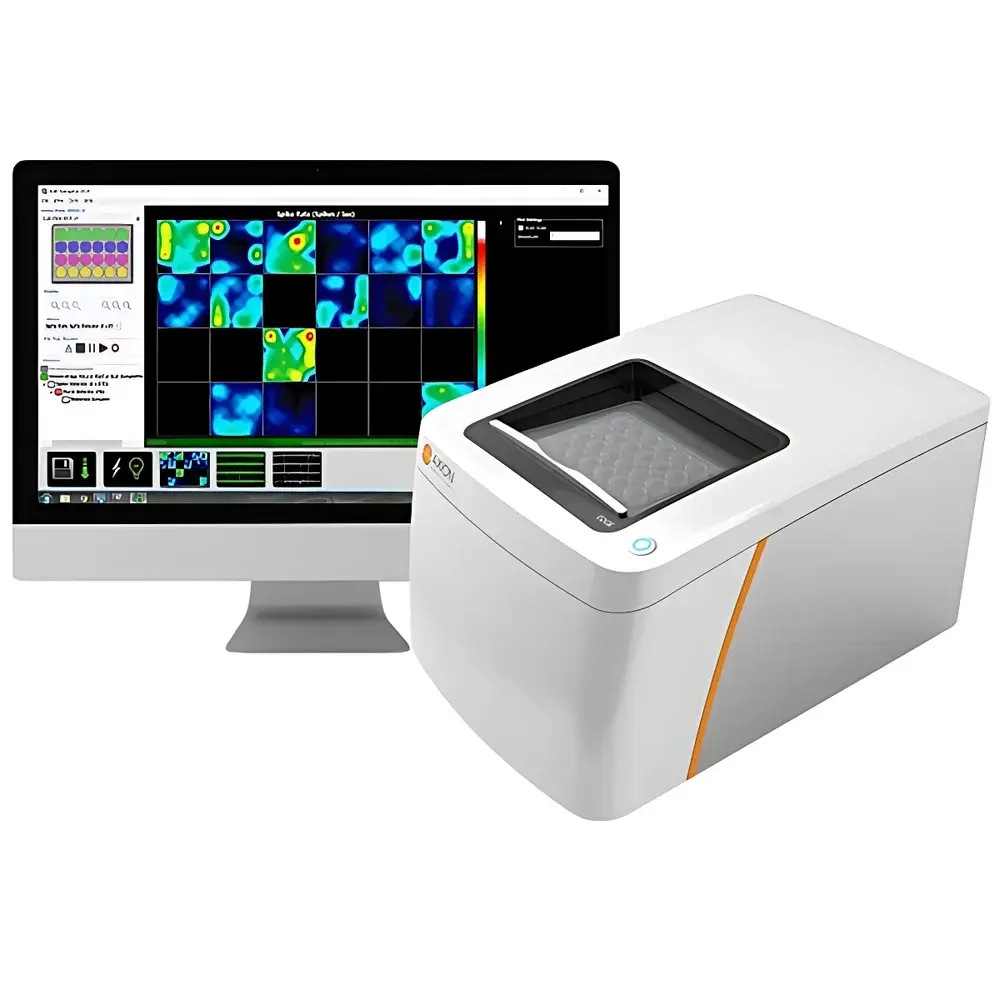
Axion BioSystems Maestro Pro/Edge High-Throughput Microelectrode Array (MEA) System for CiPA-Compliant Preclinical Cardiac Safety Assessment
| Brand | Axion BioSystems |
|---|---|
| Origin | USA |
| Manufacturer Type | Original Equipment Manufacturer (OEM) |
| Import Status | Imported |
| Model | Maestro Pro / Edge |
| Instrument Type | Multiwell (6/24/48/96-well) |
| Application | In Vitro |
| Electrode Count per Well | 384 or 768 |
| Compliance | Designed for CiPA (Comprehensive in vitro Proarrhythmia Assay) framework, aligned with FDA, ICH S7B/S7B Q&A, and ISO 14155 guidelines for preclinical cardiac electrophysiology |
Overview
The Axion BioSystems Maestro Pro and Maestro Edge are high-throughput, non-invasive microelectrode array (MEA) platforms engineered for label-free, real-time electrophysiological monitoring of excitable cell networks—particularly human induced pluripotent stem cell-derived cardiomyocytes (hiPSC-CMs). Operating on the principle of extracellular field potential recording, the system detects spontaneous or evoked electrical activity across a dense grid of embedded electrodes (384 or 768 per well) beneath the culture surface of standard multiwell plates. Unlike single-cell techniques such as patch clamp, Maestro preserves native syncytial architecture and intercellular coupling—critical for modeling emergent properties like conduction velocity, beat period irregularity, and spatial propagation dynamics. Its design directly supports the Comprehensive in vitro Proarrhythmia Assay (CiPA) initiative, enabling quantitative assessment of drug-induced perturbations to cardiac repolarization (e.g., field potential duration, FPD), depolarization (Na+ peak amplitude), automaticity (beat rate and rhythm stability), and intercellular conduction—parameters that collectively inform proarrhythmic risk beyond hERG inhibition alone.
Key Features
- Multiwell scalability: Simultaneous recording from 6-, 24-, 48-, or 96-well Axion MEA plates—each well independently configurable with 384 or 768 electrodes.
- Millisecond-resolution temporal fidelity: Captures field potential waveforms with sub-millisecond sampling, enabling precise derivation of FPD, FPDc (corrected), beat period, Na+ upstroke amplitude, conduction velocity, and beat-to-beat variability.
- Integrated environmental control: On-board temperature regulation (37 °C ± 0.2 °C) and CO2/O2 gas mixing (5% CO2, adjustable O2) ensure physiological culture conditions during long-term assays (hours to weeks).
- Seamless Lumos optogenetic integration: Optional Lumos module delivers programmable, wavelength-selectable (450–630 nm), millisecond-precise light stimulation to individual wells—enabling causal interrogation of ion channel function, network excitability, and cell-type-specific modulation in co-cultures.
- Robust hardware architecture: Shielded electronics, low-noise amplification (<1.5 µV RMS input-referred noise), and differential signal acquisition minimize artifact and maximize signal-to-noise ratio across all channels.
Sample Compatibility & Compliance
The Maestro platform is validated for use with primary cardiomyocytes, hiPSC-CMs, cardiac spheroids, and cardiac organoids—models routinely employed in GLP-compliant safety pharmacology studies. Its analytical outputs align with regulatory expectations outlined in ICH S7B, FDA’s CiPA white paper, and the 2022 FDA Guidance on Nonclinical Safety Studies for Antidysrhythmic Drugs. The system supports audit-trail-enabled data acquisition and analysis under 21 CFR Part 11–compliant software configurations (AxIS Navigator v3.0+ with optional e-signature and role-based access control). All assay protocols—including those used in published remdesivir cardiotoxicity studies—adhere to ISO/IEC 17025 principles for method validation, including repeatability (CV < 5% for FPD), intermediate precision, and reference standard traceability.
Software & Data Management
AxIS Navigator software provides end-to-end workflow automation—from real-time visualization and live thresholding to batch processing of complex metrics. It includes the Cardiac Analysis Tool (CAT), which computes CiPA-recommended endpoints (FPD, FPDc, beat period, Na+ peak, conduction velocity, and beat period irregularity) using standardized algorithms compliant with ASTM E3142–20. Raw data are stored in HDF5 format with full metadata embedding (time stamps, environmental logs, stimulation parameters). Export options include CSV, MATLAB (.mat), and publication-ready figures (SVG/PNG) with customizable scaling, annotation, and statistical overlays (ANOVA, dose–response curve fitting). Data integrity is ensured via immutable file hashing and optional integration with LIMS or electronic lab notebooks (ELN).
Applications
- Preclinical cardiac safety assessment per CiPA paradigm—quantifying multi-ion channel effects (Nav1.5, Cav1.2, hERG, Kv7.1) without requiring separate assays.
- Longitudinal functional phenotyping of hiPSC-CM maturation, disease modeling (e.g., LQTS, Brugada syndrome), and therapeutic intervention response.
- High-content screening of cardioactive compounds, biologics, and nanotherapeutics under physiologically relevant culture conditions.
- Optogenetically gated electrophysiology: Combining Lumos light stimulation with Maestro recording enables causal mapping of channel kinetics, synaptic transmission, and network resilience.
- Regulatory submission support: Generates datasets suitable for inclusion in IND/NDA modules, with documentation packages available for method validation, instrument qualification (IQ/OQ/PQ), and software verification.
FAQ
What distinguishes Maestro from conventional patch-clamp or calcium imaging platforms?
Maestro records extracellular field potentials from intact, confluent monolayers—preserving native cell–cell coupling and tissue-level electrophysiology. Patch clamp measures single-cell currents but disrupts network integrity; calcium imaging infers electrical activity indirectly and lacks sensitivity to fast sodium currents critical for arrhythmia prediction.
Can Maestro data be used for regulatory submissions?
Yes. Axion provides validation documentation, SOP templates, and 21 CFR Part 11–ready software configurations. Published studies using Maestro (e.g., remdesivir CiPA evaluation) have informed FDA review discussions.
Is electrode density configurable per experiment?
Yes. Users select either 384-electrode or 768-electrode MEA plates depending on required spatial resolution and throughput—both fully supported by the same Maestro Pro/Edge hardware and software stack.
How does Maestro handle long-term recordings (e.g., >72 hours)?
The system maintains stable temperature, humidity, and gas composition throughout extended acquisitions. Its non-invasive, label-free operation avoids phototoxicity or dye leakage—enabling continuous functional monitoring over days or weeks without compromising cell viability.
Does Axion offer assay development support for novel cell models?
Yes. Axion’s Applications Science team collaborates with academic and industry partners to optimize plating density, media formulations, and analysis pipelines for emerging models including cardiac organoids and iPSC-derived Purkinje-like cells.
Related Products



