
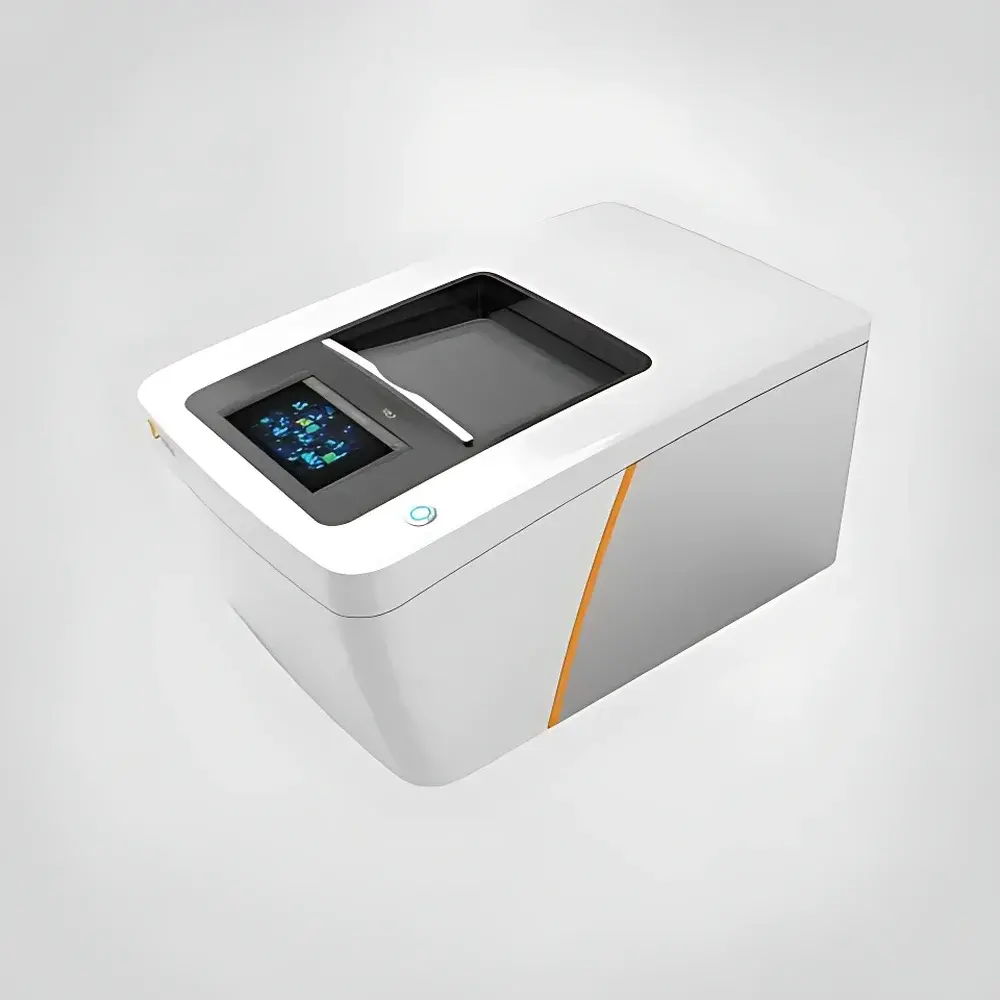
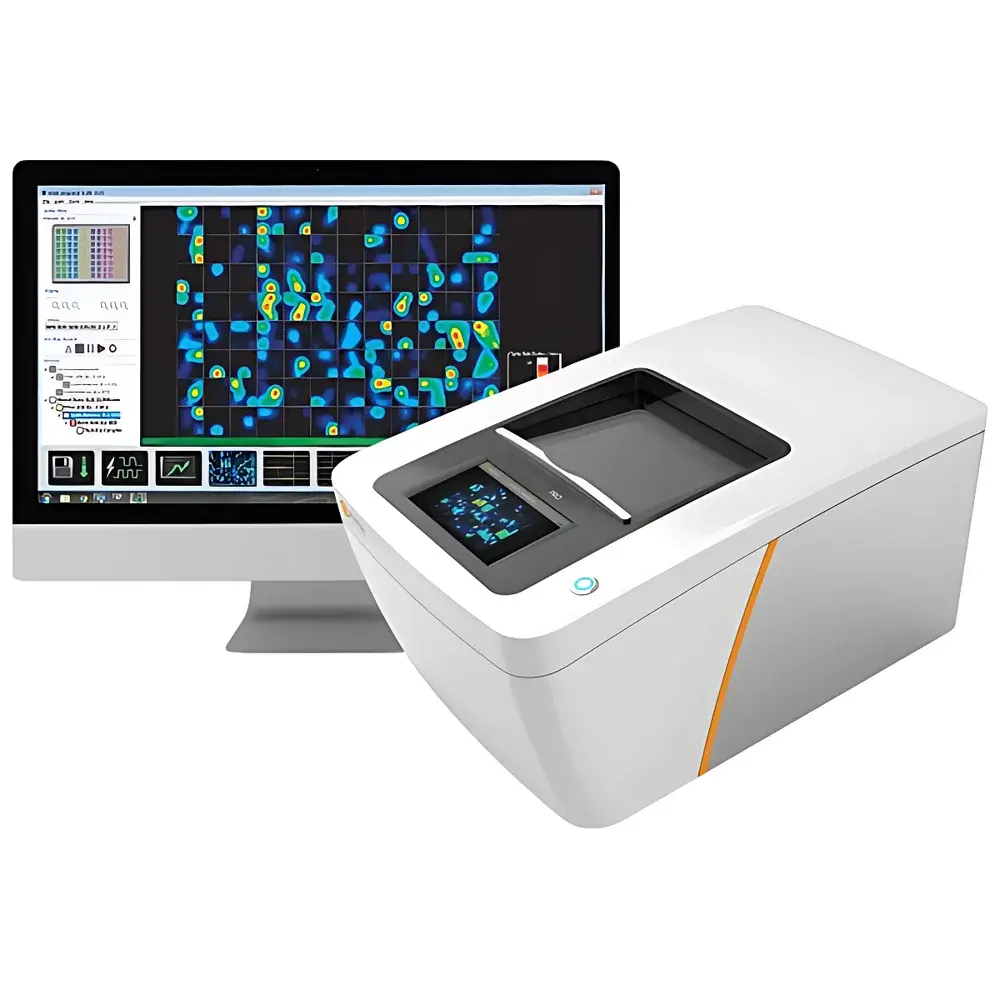
Axion BioSystems Maestro PRO/EDGE High-Throughput Microelectrode Array (MEA) System for Neural Electrophysiology
| Brand | Axion BioSystems |
|---|---|
| Origin | USA |
| Manufacturer | Axion BioSystems, Inc. |
| Product Type | Multiwell MEA Platform |
| Application | In Vitro Neural Network Recording |
| Electrode Count | 384 or 768 per well |
| Compliance | Designed for GLP/GMP-aligned workflows, compatible with FDA 21 CFR Part 11–enabled software configurations |
Overview
The Axion BioSystems Maestro PRO and EDGE platforms are benchtop, non-invasive microelectrode array (MEA) systems engineered for label-free, real-time electrophysiological monitoring of functional neural networks in vitro. Unlike indirect assays—such as calcium imaging or immunoblotting—the Maestro system directly records extracellular field potentials generated by spontaneously active or evoked neuronal populations with sub-millisecond temporal resolution. Each MEA well contains a precisely fabricated grid of 384 or 768 titanium-nitride microelectrodes embedded in the substrate, enabling spatially resolved detection of action potential firing, synaptic transmission dynamics, and network-level oscillatory behavior across multiple dimensions: activity (spiking rate), synchrony (cross-correlation of spike timing), and oscillation (power spectral density of rhythmic network bursts). The system operates under physiologically relevant conditions—maintaining precise CO₂, O₂, and temperature control within its integrated environmental chamber—ensuring long-term stability for longitudinal experiments spanning hours to weeks.
Key Features
- High-density electrode architecture: 384- or 768-electrode arrays per well, supporting scalable throughput from 6- to 96-well formats
- Real-time, multi-parametric analysis: Simultaneous quantification of spike rate, burst frequency, synchrony index, network burst duration, and oscillatory power (e.g., theta, gamma bands)
- Integrated environmental control: On-board incubation with programmable CO₂ (0–20%), O₂ (1–21%), and temperature (20–45°C) regulation
- Optical compatibility: Seamless integration with Axion’s Lumos optogenetic stimulation module—enabling wavelength-selective (450 nm, 520 nm, 590 nm, 630 nm), millisecond-precision light delivery to individual wells
- No-label, non-destructive recording: Eliminates requirement for dyes, voltage-sensitive probes, or genetic reporters—preserving native cell physiology and enabling chronic monitoring
- Robust hardware design: Vibration-isolated chassis, shielded signal path, and low-noise amplification (< 2 µV RMS input-referred noise)
Sample Compatibility & Compliance
The Maestro platform supports diverse primary and human-derived neural models, including rodent primary cortical/hippocampal neurons, iPSC-derived excitatory/inhibitory neurons, brain slices (up to 400 µm thickness), neurospheres, cerebral organoids (“mini-brains”), and co-cultures incorporating astrocytes or microglia. All MEA plates are sterile, tissue-culture treated, and certified for ISO 13485-compliant manufacturing. Data acquisition and analysis workflows align with regulatory expectations for preclinical neurotoxicity and phenotypic screening: raw data files are timestamped, immutable, and structured in HDF5 format; audit trails, user authentication, and electronic signatures are supported via AxIS Navigator software configured for 21 CFR Part 11 compliance. The system meets IEC 61000-4 electromagnetic compatibility standards and is validated per ASTM E3100 for electrophysiological assay reproducibility.
Software & Data Management
AxIS Navigator serves as the core acquisition and analysis interface—providing automated spike detection, burst identification, cross-channel correlation mapping, and spectral decomposition. It computes over 25 secondary metrics—including inter-spike interval entropy, burst irregularity, synchrony lag distribution, and oscillatory coherence—exportable in CSV, MATLAB (.mat), or Python-compatible formats. Batch processing pipelines support normalization across plates and timepoints, while built-in statistical modules (ANOVA, PCA, hierarchical clustering) facilitate hypothesis-driven exploration. For GLP environments, optional AxIS Enterprise enables centralized instrument management, role-based access control, and full audit trail logging—including parameter changes, user logins, and data export events. Raw and processed datasets are stored with SHA-256 checksums to ensure data integrity and traceability.
Applications
- Neurodegenerative disease modeling: Functional phenotyping of Parkinson’s, Alzheimer’s, and frontotemporal dementia patient-derived neurons
- Neurotoxicology screening: Quantitative assessment of compound-induced alterations in network bursting, synchrony decay, or oscillatory collapse
- Psychiatric disorder research: Characterization of network hyperexcitability in autism spectrum disorder (ASD) and schizophrenia iPSC models
- Drug discovery: Mechanistic profiling of ion channel modulators, GABAergic/glutamatergic agents, and neuropsychiatric therapeutics
- Organoid maturation tracking: Longitudinal evaluation of functional network emergence in cerebral organoids over weeks in culture
- Optogenetics-integrated assays: Cell-type-specific perturbation using Lumos-coupled ChR2, NpHR, or ChrimsonR expression
- Stem cell quality control: Release testing of neural progenitor batches based on electrophysiological maturity metrics
FAQ
What distinguishes Maestro MEA from traditional patch-clamp electrophysiology?
Maestro provides population-level, long-term, high-throughput recordings without impalement or perfusion—whereas patch-clamp delivers single-cell resolution but is low-throughput, technically demanding, and unsuitable for chronic or network-level interrogation.
Can Maestro detect inhibitory synaptic activity?
Yes—through analysis of network burst suppression, reversal of spike polarity in specific electrode clusters, and pharmacological validation using GABAA or glycine receptor antagonists.
Is it possible to perform simultaneous optical imaging and MEA recording?
Yes—Maestro systems feature top-access optical ports compatible with inverted microscopes; Axion offers custom alignment fixtures for concurrent fluorescence or phase-contrast imaging.
How does Maestro handle data storage and backup for multi-week experiments?
Raw data streams are written continuously to local SSD storage (≥1 TB standard); users may configure automated network backups via SMB/NFS protocols or integrate with LIMS via RESTful API.
Are MEA plates reusable?
No—MEA plates are single-use, sterilized consumables designed for optimal electrode impedance stability and biocompatibility; reuse compromises signal fidelity and introduces contamination risk.
Related Products





