
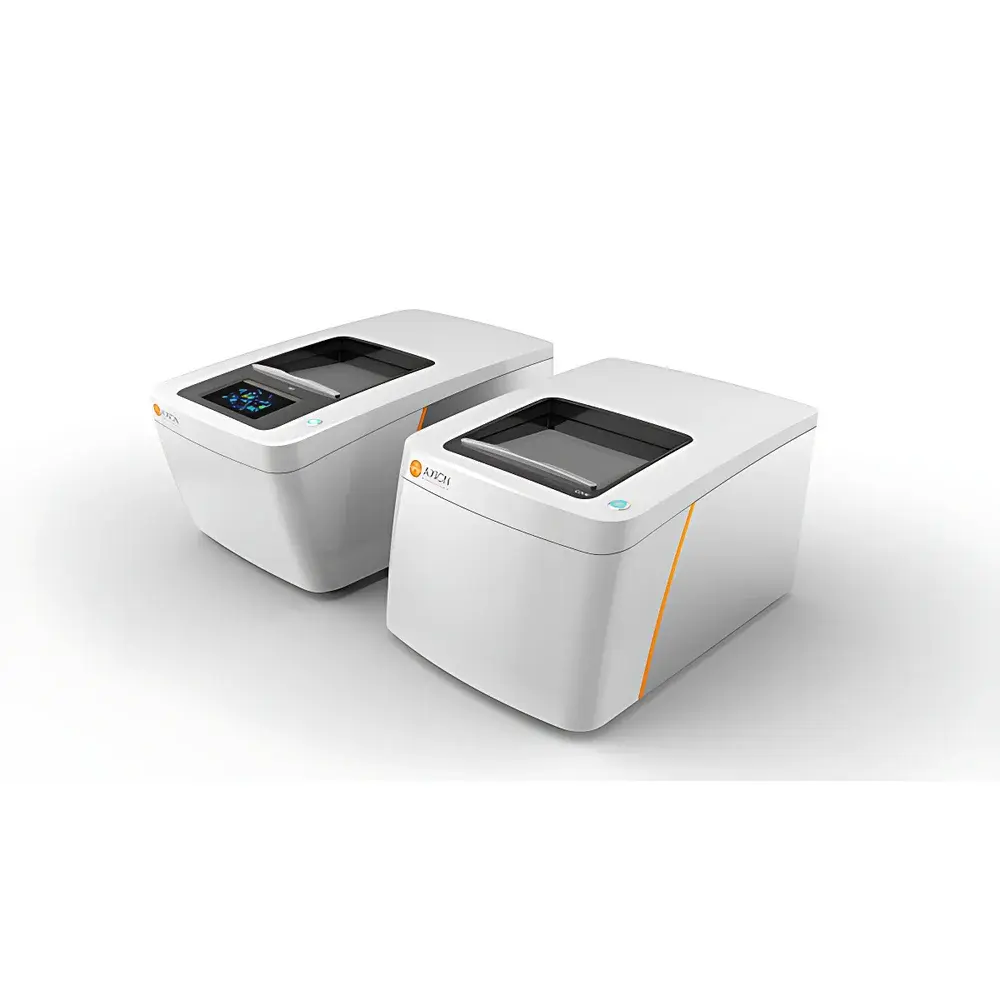
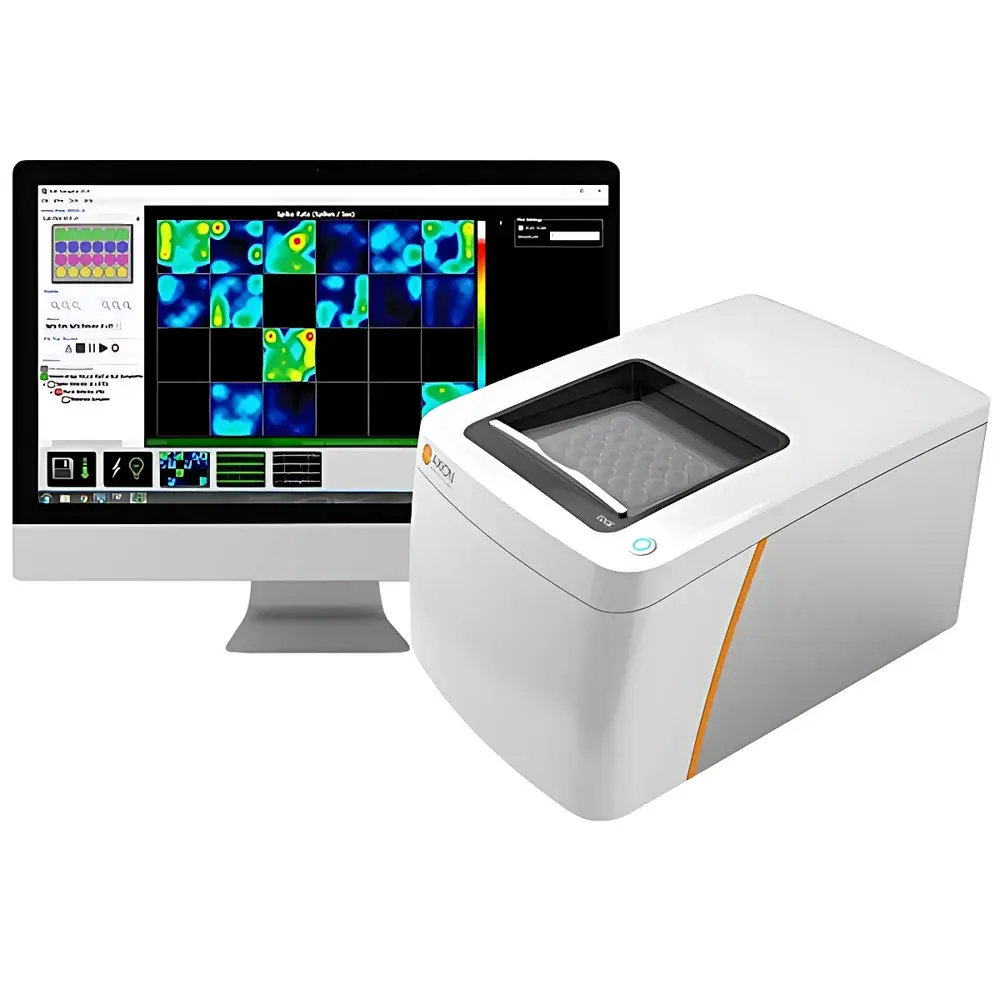
Axion BioSystems Maestro PRO/EDGE Multiwell Microelectrode Array (MEA) System for Cardiac Electrophysiology
| Brand | Axion BioSystems |
|---|---|
| Origin | USA |
| Manufacturer Type | Original Equipment Manufacturer (OEM) |
| Product Category | Imported Instrument |
| Model | Maestro PRO / EDGE |
| Instrument Type | Multiwell (6-/24-/48-/96-well) |
| Application | In Vitro |
| Electrode Count per Well | 384 or 768 |
| Compliance | Designed for GLP/GMP-aligned workflows, compatible with FDA 21 CFR Part 11–ready software configurations |
Overview
The Axion BioSystems Maestro PRO and Maestro EDGE are high-throughput, noninvasive microelectrode array (MEA) platforms engineered for label-free, real-time electrophysiological monitoring of spontaneously active cardiac cell models. Based on extracellular field potential (FP) recording principles, the system detects voltage transients generated by synchronized depolarization and repolarization events across confluent monolayers or 3D cardiac constructs—such as primary cardiomyocytes, iPSC-derived cardiomyocytes (iPSC-CMs), cardiac spheroids, and heart organoids. Unlike intracellular techniques (e.g., patch clamp) or indirect proxies (e.g., calcium imaging), Maestro captures native electrophysiological signatures—including action potential morphology, conduction velocity, beat rate variability, and field potential duration—with millisecond temporal resolution. Its underlying architecture leverages a patented electrode-integrated multiwell plate design, enabling parallel, longitudinal assessment across up to 96 wells without perturbing cellular architecture or requiring enzymatic dissociation.
Key Features
- True High-Throughput Electrophysiology: Simultaneous recording from 6, 24, 48, or 96 wells—each containing a dense, spatially resolved electrode grid (384 or 768 electrodes per well)—enabling statistically robust dose-response or time-course experiments.
- Label-Free & Noninvasive Operation: No fluorescent dyes, voltage-sensitive probes, or genetic reporters required; eliminates phototoxicity, dye leakage artifacts, and functional interference associated with exogenous labels.
- Longitudinal Functional Monitoring: Supports continuous, stable recordings over hours to weeks under controlled CO2, temperature, and humidity—ideal for chronic toxicity studies, maturation assays, and disease progression modeling.
- Integrated Cardiac Functional Metrics: Automated extraction of four core physiological parameters per well: (1) Field Potential Duration (FPD), (2) Beat Rate (BR), (3) Conduction Velocity (CV), and (4) Synchronization Index—aligned with CiPA (Comprehensive in vitro Proarrhythmia Assay) endpoints.
- Modular Hardware Architecture: Scalable platform supporting both Maestro PRO (enhanced signal fidelity, low-noise amplification) and Maestro EDGE (compact footprint, optimized for core labs); both share identical plate format and software stack.
Sample Compatibility & Compliance
The Maestro system is validated for use with diverse human-relevant cardiac models, including neonatal rat ventricular myocytes (NRVMs), human iPSC-CMs (monolayer and 3D formats), cardiac microtissues, and patient-derived organoids. Its open-plate design accommodates standard culture protocols and permits post-recording immunostaining or RNA extraction. From a regulatory standpoint, AxIS Navigator software supports audit trails, electronic signatures, and user-access controls compliant with FDA 21 CFR Part 11 requirements when deployed in validated environments. The platform adheres to ISO/IEC 17025 principles for measurement traceability and is routinely cited in publications aligned with ASTM E3125 (standard guide for in vitro cardiac safety testing) and ICH S7B/S7B Annex recommendations.
Software & Data Management
AxIS Navigator is a purpose-built, Windows-based application providing end-to-end workflow management—from experimental setup and real-time visualization to automated spike detection, waveform alignment, and multivariate statistical analysis. Raw data are stored in HDF5 format for reproducibility and interoperability with Python/R-based pipelines. Built-in modules generate publication-ready figures (e.g., heatmaps of conduction delay, FPD correction via Fridericia formula, QT interval analogs), exportable to CSV, MATLAB, or JSON. For laboratories operating under GLP or GMP frameworks, optional validation packages—including IQ/OQ documentation, configuration control logs, and change management templates—are available upon request.
Applications
- Preclinical cardiac safety pharmacology (CiPA-compliant proarrhythmia risk assessment)
- Functional characterization of iPSC-CM lines during differentiation and maturation
- Modeling inherited arrhythmias (e.g., long QT syndrome, Brugada phenotype)
- Ischemia/reperfusion injury and metabolic stress (e.g., fatty acid oxidation defects)
- Optogenetic interrogation of excitation-contraction coupling using integrated Lumos light-stimulation modules
- High-content phenotyping of CRISPR-edited cardiac cell lines or disease-specific organoids
- Quality control of therapeutic cardiomyocyte batches prior to transplantation
FAQ
Can Maestro distinguish between atrial and ventricular-like electrophysiological phenotypes in iPSC-CMs?
Yes—distinctive waveform morphologies (e.g., triangulation index, depolarization slope, repolarization phase duration) enable classification of chamber-specific subtypes when combined with appropriate reference standards and machine learning–assisted clustering.
Is it possible to perform concurrent optical stimulation and electrophysiological recording?
Yes—Maestro systems integrate seamlessly with Axion’s Lumos optogenetic stimulator, supporting wavelength-selective (450 nm, 520 nm, 590 nm, 630 nm), millisecond-precision LED illumination per well while maintaining full-bandwidth FP acquisition.
What is the minimum cell density required for reliable signal detection?
For monolayer cultures, ≥80% confluence with ≥10,000 viable cells per well (96-well format) is recommended; for spheroids or organoids, consistent attachment and spontaneous beating are prerequisite indicators of sufficient network coupling.
Does the system support impedance-based contractility measurements?
No—Maestro is dedicated to extracellular electrophysiology. Contractile force or motion artifacts are not measured directly; however, FP waveform features (e.g., dV/dt max, T-wave morphology) correlate strongly with underlying excitation-contraction dynamics.
How frequently is firmware and software updated?
Axion releases biannual major software updates (with new analysis modules and regulatory enhancements) and quarterly hotfixes addressing compatibility, stability, and minor feature refinements—available via secure customer portal with version-controlled release notes.
Related Products




