
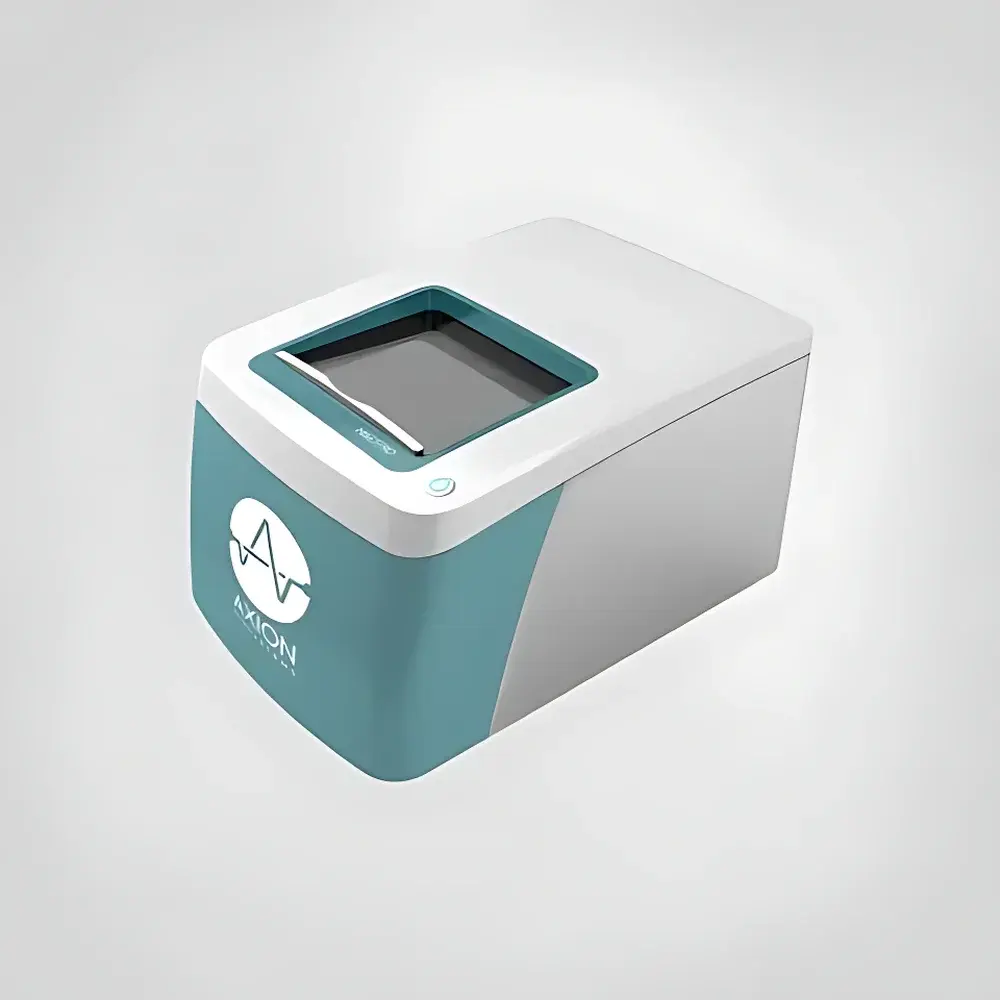
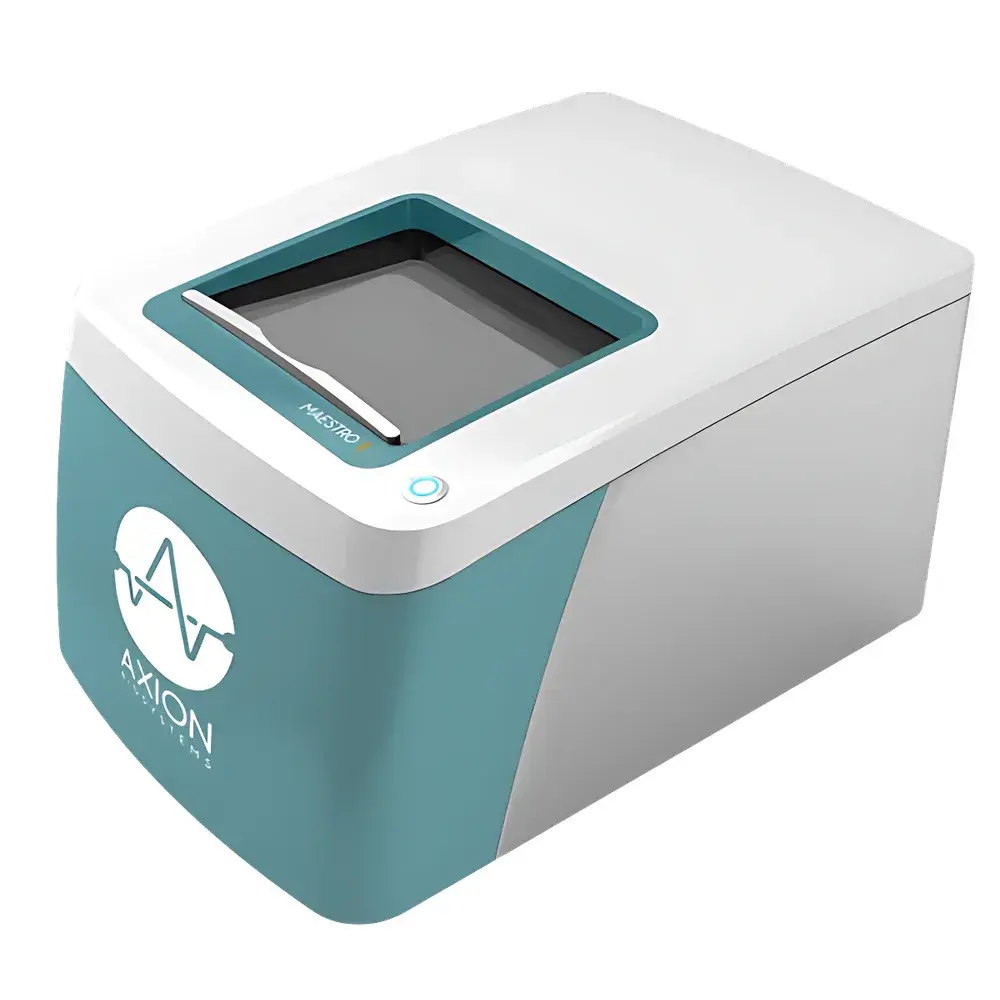
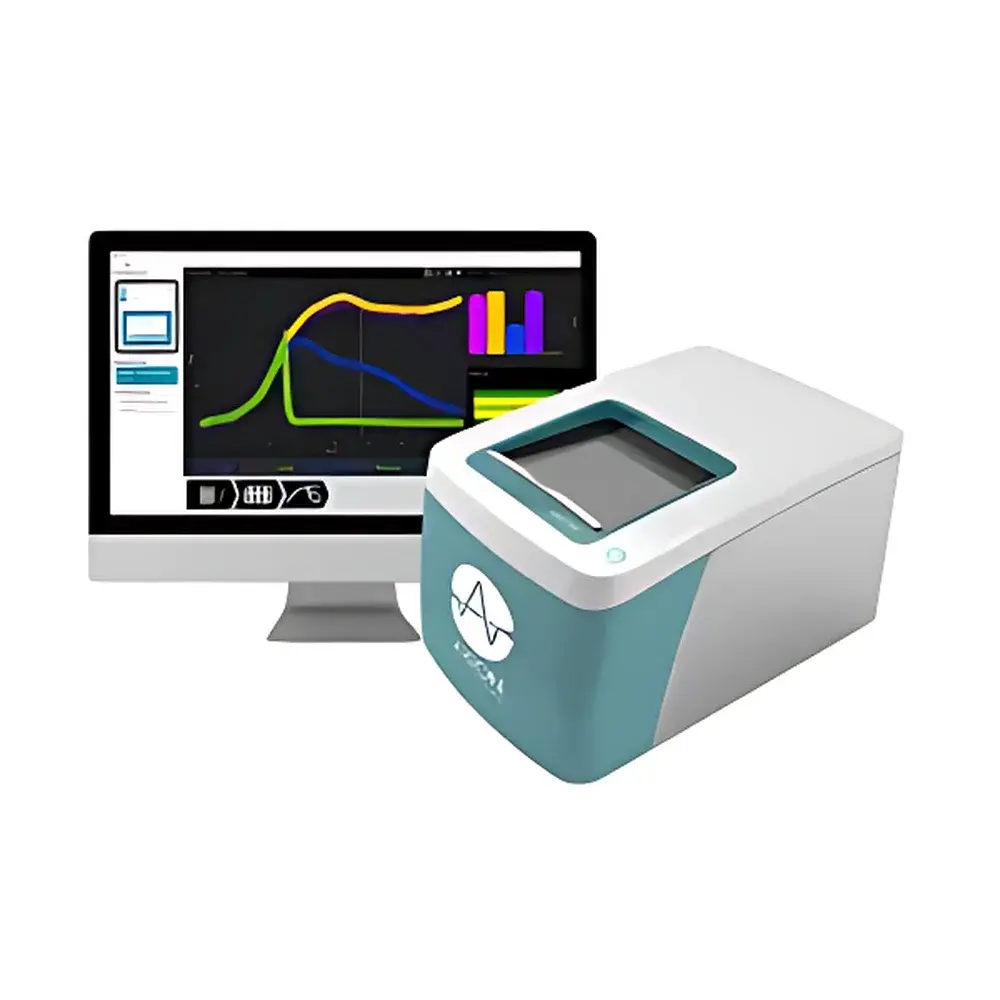
Axion BioSystems Maestro ZHT Label-Free Impedance-Based Cell Analysis System
| Brand | Axion BioSystems |
|---|---|
| Origin | USA |
| Manufacturer | Axion BioSystems, Inc. |
| Product Category | Imported Instrument |
| Model | Maestro ZHT |
| Pricing | Available Upon Request |
Overview
The Axion BioSystems Maestro ZHT is a benchtop, label-free, real-time impedance-based cell analysis system engineered for quantitative, non-invasive monitoring of dynamic cellular responses in standard tissue culture environments. Unlike optical or fluorescent assays requiring dyes, transfection, or genetic modification, the Maestro ZHT employs proprietary multi-frequency alternating current (AC) impedance spectroscopy to measure changes in electrical resistance across microelectrode arrays integrated into standard 96-well E-Plate plates. This technology detects subtle, time-resolved variations in cell attachment, spreading, morphology, barrier integrity, and viability—reflecting underlying biological processes such as proliferation, cytotoxicity, apoptosis, migration, and receptor-mediated signaling. The system operates inside standard CO₂ incubators with no need for external optical components or environmental perturbation, enabling uninterrupted longitudinal studies over hours to weeks with high reproducibility and minimal user intervention.
Key Features
- True Impedance Technology: Utilizes multi-frequency AC impedance (ranging from 10 Hz to 50 kHz) to distinguish between extracellular resistance (cell-substrate adhesion), membrane capacitance (cell morphology and integrity), and cytoplasmic conductance—enabling mechanistic interpretation beyond simple confluence metrics.
- Incubator-Integrated Design: Compact footprint and thermally stable electronics allow continuous operation inside standard humidified CO₂ incubators without compromising sterility or environmental control; eliminates data artifacts caused by plate removal or temperature fluctuations.
- Electromagnetic & Mechanical Noise Suppression: Proprietary shielding within the sample chamber minimizes interference from incubator fans, door openings, or adjacent lab equipment—ensuring signal fidelity across long-duration experiments.
- FDA 21 CFR Part 11–Compliant Software: Maestro Software v3.x supports electronic signatures, audit trails, role-based access control, and secure data archiving—fully aligned with GLP, GMP, and clinical research compliance requirements.
- Onboard Data Storage: Internal solid-state memory retains raw impedance traces and metadata independent of host PC uptime—preventing data loss during software crashes, power outages, or network interruptions.
- Automated Data Processing: Built-in algorithms perform background subtraction, normalization to reference wells, slope analysis, area-under-curve (AUC) quantification, and kinetic parameter extraction—reducing manual post-processing and inter-user variability.
Sample Compatibility & Compliance
The Maestro ZHT accommodates diverse biological models including adherent monocultures (e.g., HepG2, HCC-LM3, MHCC97H), suspension cells (e.g., Jurkat, THP-1), co-cultures, 3D spheroids, organoids, and polarized epithelial/endothelial monolayers grown on E-Plate 96 or 16 plates. It supports TEER (Transepithelial/Transendothelial Electrical Resistance) measurements per ASTM F2971-14 and ISO 10993-5 guidelines for barrier function assessment. All hardware and firmware comply with IEC 61000-6-3 (EMC) and IEC 61010-1 (safety) standards. The system is validated for use in regulated environments where traceability, data integrity, and process validation are required—including academic core facilities, contract research organizations (CROs), and pharmaceutical R&D labs conducting preclinical toxicology or mechanism-of-action studies.
Software & Data Management
Maestro Software provides a unified interface for experimental setup, real-time visualization, automated data acquisition, and advanced analytics. Users define assay protocols with customizable sampling intervals (from seconds to hours), define reference and treatment groups, and apply batch processing workflows. Raw impedance values (Ohms) are converted to Cell Index—a unitless, normalized metric reflecting net cellular response—and exported in CSV, Excel, or HDF5 formats for integration with third-party statistical platforms (e.g., GraphPad Prism, R, Python). Audit logs record every user action—including plate mapping changes, analysis parameter edits, and report generation—with timestamps and operator IDs. Data encryption at rest and in transit ensures alignment with HIPAA and GDPR principles where applicable.
Applications
- Real-time quantification of cell proliferation and cytostatic effects (e.g., FTH1 overexpression in hepatocellular carcinoma models)
- Dynamic cytotoxicity profiling for small molecules, biologics, and nanomaterials under physiologically relevant conditions
- Functional characterization of immune cell–tumor cell interactions in immunotherapy screening
- GPCR activation kinetics and biased signaling analysis via impedance-based phenotypic fingerprinting
- Barrier integrity assessment in BBB, gut, or lung epithelium models using TEER-derived metrics
- Wound healing and cell migration kinetics in scratch assay equivalents
- Viral cytopathic effect monitoring without reporter constructs or plaque assays
- Longitudinal phenotyping of patient-derived organoids for precision oncology applications
FAQ
How does Maestro ZHT differ from traditional endpoint viability assays?
It eliminates fixation, lysis, or labeling steps—providing continuous, kinetic data from the same well throughout the experiment, thereby capturing transient or biphasic responses missed by snapshot methods.
Can Maestro ZHT be used for suspension cells?
Yes—specialized E-Plate plates with optimized electrode geometry and low-adhesion surfaces enable reliable impedance detection for non-adherent cells, including primary lymphocytes and hematopoietic lines.
Is calibration required before each run?
No—each E-Plate undergoes factory calibration; the system performs automatic baseline impedance verification at startup and compensates for plate-to-plate variability via embedded reference electrodes.
Does the system support high-throughput screening (HTS)?
While designed for mid-throughput mechanistic studies (up to 96 wells per run), it integrates with robotic liquid handlers and LIMS via API for semi-automated workflows in discovery pipelines.
What regulatory documentation is available for validation?
Axion provides IQ/OQ documentation templates, installation qualification checklists, and instrument-specific performance verification protocols compliant with ISO/IEC 17025 and FDA guidance for computerized systems.
Related Products



