
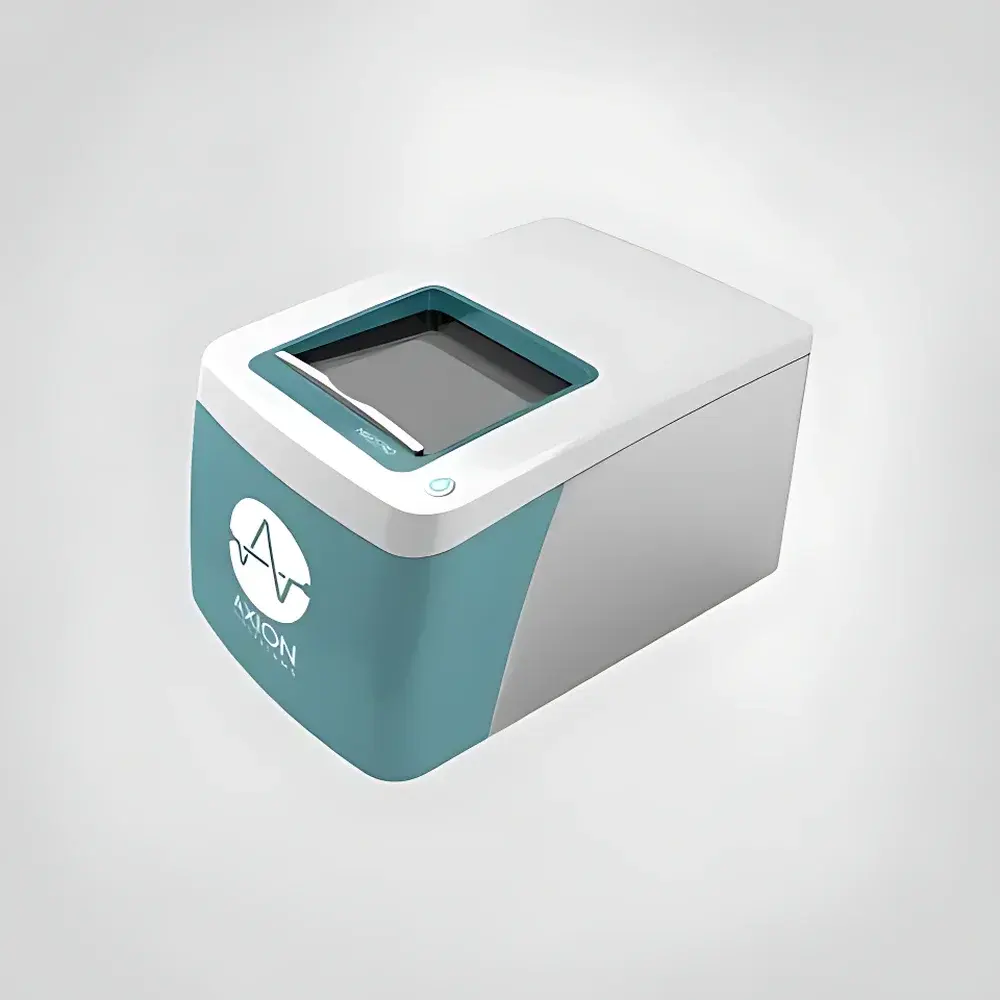
Axion BioSystems Maestro Z / ZHT Label-Free Real-Time Cell Killing Efficacy Analyzer for CAR-T and Immuno-Oncology Research
| Brand | Axion BioSystems |
|---|---|
| Origin | USA |
| Manufacturer | Axion BioSystems, Inc. |
| Product Type | Imported Instrument |
| Model | Maestro Z / ZHT |
| Pricing | Upon Request |
Overview
The Axion BioSystems Maestro Z / ZHT is a label-free, real-time impedance-based cell analysis platform engineered for quantitative, non-invasive monitoring of cellular cytotoxicity—particularly in immuno-oncology applications such as CAR-T cell therapy evaluation. Unlike endpoint assays requiring dyes, lysis reagents, or genetic modification, the Maestro Z leverages proprietary multi-frequency electrical impedance sensing to detect dynamic changes in cell morphology, adhesion, barrier integrity, and membrane permeability—without perturbing native physiology. At its core, the system measures impedance (Z) across microelectrode arrays integrated into specialized CytoView-Z plates. As adherent cells attach, spread, proliferate, or undergo lysis, they modulate current flow between electrodes; these changes are resolved across a spectrum of frequencies (typically 10 Hz–10 MHz), enabling discrimination between bulk confluence effects and subcellular events such as cytoskeletal rearrangement or pore formation. This principle—grounded in Cole-Cole modeling and validated against orthogonal methods including live/dead staining and LDH release—supports kinetic quantification of immune-mediated tumor cell killing with minute-level temporal resolution and high inter-assay reproducibility.
Key Features
- True impedance technology: Multi-frequency AC measurement (10 Hz–10 MHz) enables simultaneous assessment of cell coverage, morphology, and membrane integrity—distinguishing proliferation from cytotoxic lysis.
- Integrated incubator-compatible design: Compact footprint with thermally stable, vibration-dampened sample chamber; operates inside standard CO₂ incubators without requiring external environmental control.
- No-label, no-wash, no-lysis workflow: Eliminates artifacts associated with fluorescent dyes, enzymatic substrates, or detergent-based lysis—preserving physiological relevance and enabling longitudinal studies over 72+ hours.
- FDA 21 CFR Part 11-compliant software: Audit trail, electronic signatures, role-based access control, and data integrity safeguards compliant with GLP/GMP environments.
- Onboard data storage: Internal solid-state memory retains raw impedance time-series data independent of host PC uptime—preventing data loss during system interruptions.
- Automated kinetic analysis: Software calculates real-time cytotoxicity metrics—including % lysis, time-to-50% lysis (KT₅₀), and maximal lysis rate—using user-defined baseline windows and normalization protocols.
Sample Compatibility & Compliance
The Maestro Z supports diverse biological models: adherent monolayers (e.g., U87MG glioblastoma), suspension lymphocytes (activated human T cells), co-cultures (T cell:tumor ratios up to 10:1), 3D spheroids, organoids, and polarized epithelial/endothelial monolayers for TEER assessment. All assays comply with ISO/IEC 17025 principles for method validation and align with ASTM E2921-22 (Standard Guide for In Vitro Cytotoxicity Assays) and USP for biocompatibility screening. The CytoView-Z plate format (96-well or 384-well) meets ANSI/SBS standards and is certified sterile, pyrogen-free, and nuclease-free—ensuring compatibility with primary human immune cells and GMP-grade therapeutic cell products.
Software & Data Management
Maestro Analysis Software provides end-to-end workflow automation—from experimental setup and real-time visualization to statistical reporting. It includes built-in background subtraction, well-level normalization, curve-fitting algorithms for KT₅₀ derivation, and batch processing for multi-plate comparative studies. Export options include CSV, Excel, and PDF reports with embedded metadata (instrument ID, operator, timestamp, environmental logs). Data files are SHA-256 hashed and stored with immutable timestamps; audit trails record every parameter change, export event, or user login—fully traceable for regulatory submissions under FDA, EMA, or PMDA review.
Applications
- CAR-T and TCR-T cell potency testing: Quantitative assessment of target-specific lysis kinetics across donor lots and manufacturing batches.
- Immune checkpoint inhibitor synergy studies: Real-time monitoring of enhanced cytotoxicity when combined with anti-PD-1/PD-L1 agents.
- Tumor microenvironment modeling: Co-culture assays integrating macrophages, NK cells, or stromal fibroblasts to evaluate immunosuppressive modulation.
- Viral oncolysis and virotherapy: Tracking virus-induced cytopathic effect and syncytia formation in real time.
- GPCR and ion channel pharmacology: Impedance-based detection of receptor-mediated morphological responses (e.g., shape change upon β₂-adrenergic activation).
- Barrier function dynamics: TEER measurements across endothelial or epithelial monolayers under inflammatory challenge or drug exposure.
FAQ
What cell types are compatible with the Maestro Z platform?
Adherent lines (e.g., HeLa, A549, U87MG), primary human T cells, iPSC-derived cardiomyocytes, organoids, and polarized epithelial/endothelial monolayers—all validated in peer-reviewed literature.
Can the Maestro Z distinguish between apoptosis and necrosis?
Yes—through frequency-dependent impedance profiling: early apoptotic events (membrane blebbing, shrinkage) produce distinct low-frequency signatures versus late-stage necrotic lysis (rapid conductance increase), enabling mechanistic differentiation.
Is the system suitable for GMP-compliant manufacturing release testing?
Yes—software and hardware meet 21 CFR Part 11 requirements; IQ/OQ/PQ documentation packages and vendor-supported validation services are available.
How does Maestro Z compare to traditional chromium-51 or LDH release assays?
It eliminates radioactivity handling, improves temporal resolution (continuous vs. single timepoints), reduces inter-operator variability, and avoids lysate interference—yielding higher assay robustness (Z’ > 0.7) and lower CVs (<8%).
Does Axion provide application support for assay development?
Yes—dedicated scientific application specialists offer protocol optimization, data interpretation training, and co-publication support for novel immuno-oncology use cases.





