
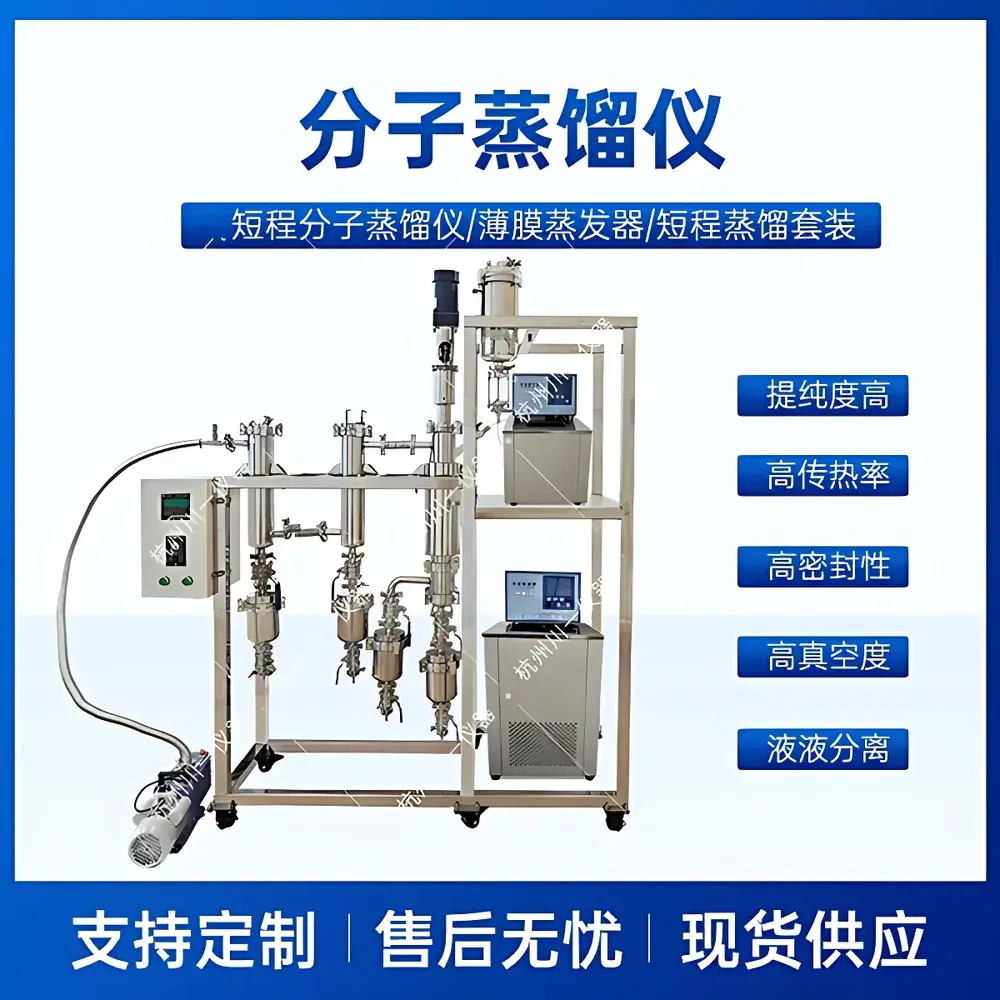
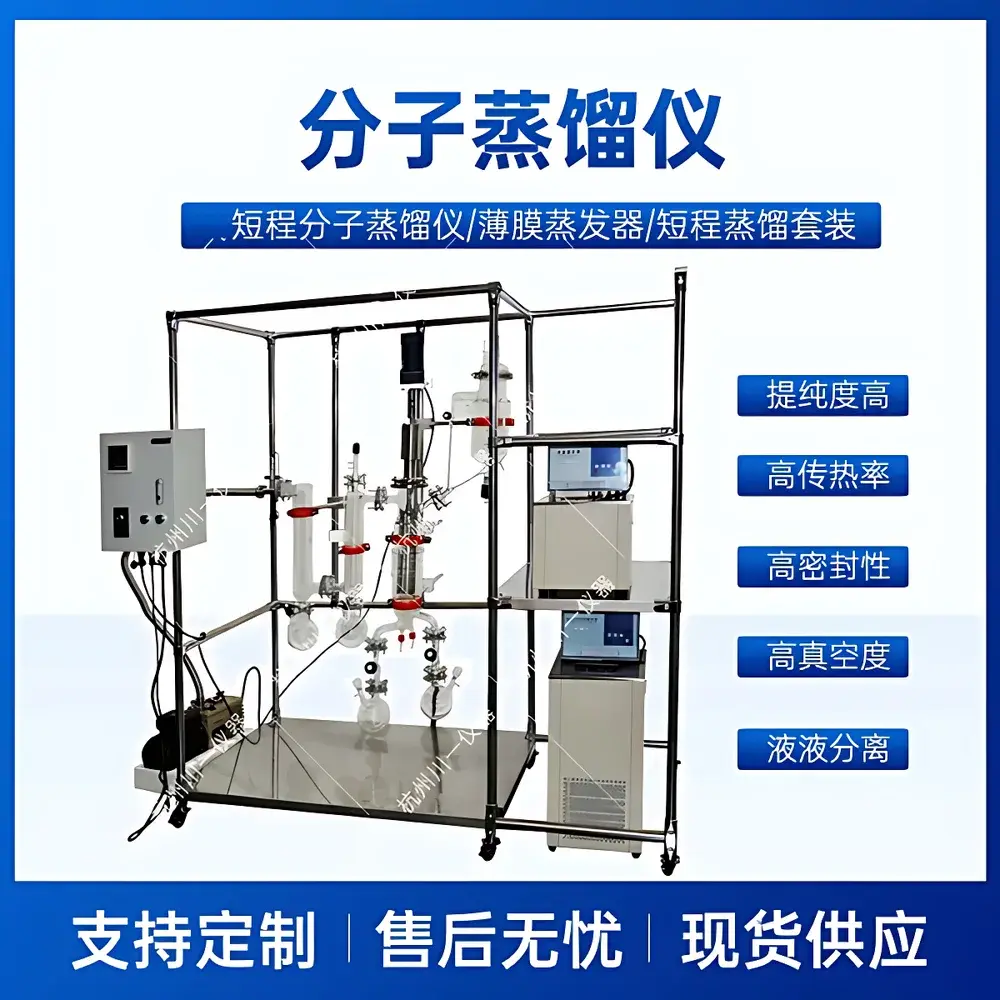
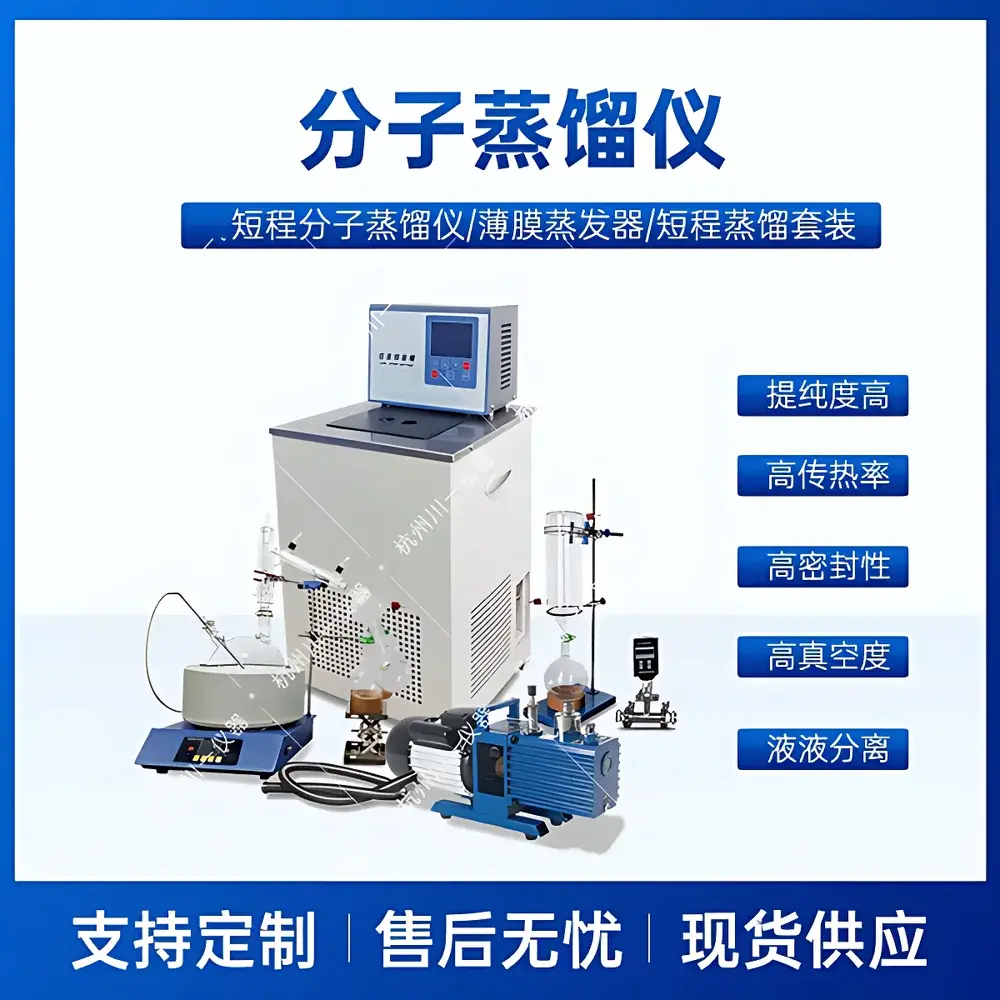
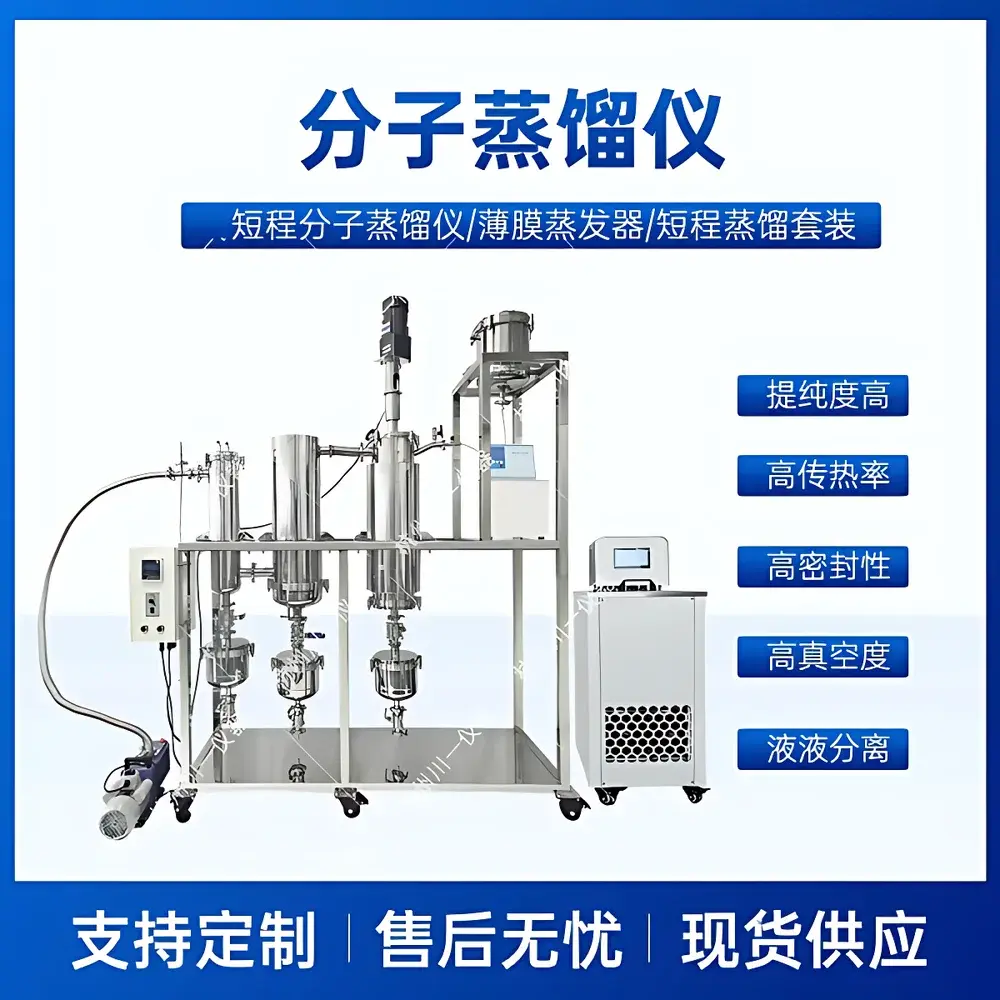
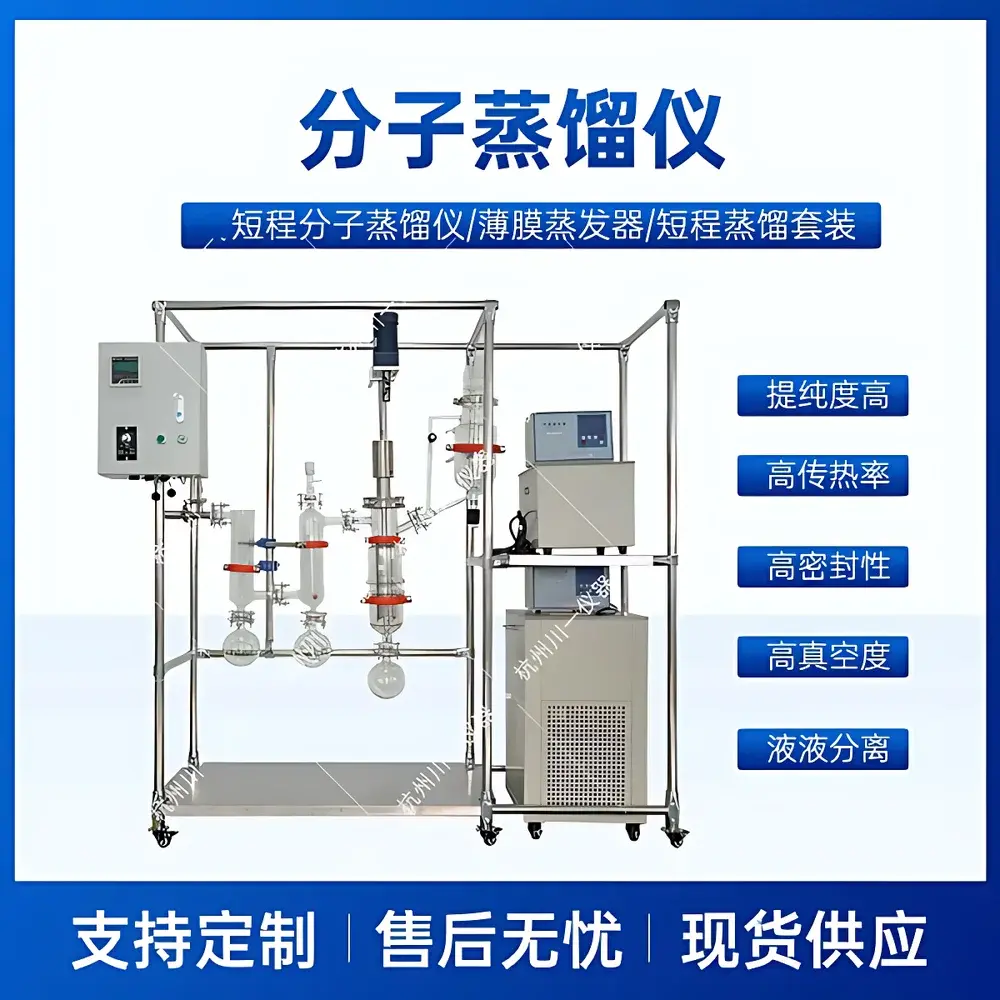
AYAN AYAN-F100-S Short-Path Molecular Distillation System
| Brand | AYAN |
|---|---|
| Origin | Zhejiang, China |
| Model | AYAN-F100-S |
| Feed Capacity | 5 L |
| Effective Evaporation Area | 0.5 m² |
| Evaporator Inner Diameter | 220 mm |
| Condensing Area | 0.65 m² |
| Collecting Flask Capacity | 5 L |
| Vacuum Level (No-Load) | ≤10 Pa |
| Heating Temperature Range | Ambient to 200 °C |
| Rotational Speed | ≤450 rpm |
| Motor Power | 120 W |
| Material | 304/316L Stainless Steel & PTFE Seals |
| Cooling | Integrated Chiller |
| Cold Trap | Standard |
| External Condenser | Optional |
Overview
The AYAN AYAN-F100-S Short-Path Molecular Distillation System is a precision-engineered vacuum separation platform designed for thermal-sensitive compound purification under high-vacuum conditions (≤10 Pa). Operating on the principle of molecular mean free path differentiation—where the distance between evaporator and condenser surfaces is shorter than the average molecular travel length in the vapor phase—the system enables selective volatilization and condensation of components based on differences in molecular weight, polarity, and vapor pressure. Unlike conventional distillation, this technique minimizes thermal degradation by limiting residence time to seconds and reducing operating temperatures significantly below boiling points at atmospheric pressure. The AYAN-F100-S is engineered for laboratory-scale process development, pilot-scale optimization, and small-batch production of high-value thermolabile substances including natural product isolates, pharmaceutical intermediates, nutraceuticals, and specialty lipids.
Key Features
- Stainless steel construction using ASTM-certified 304 and 316L alloys for structural integrity, corrosion resistance, and compliance with GLP-compatible equipment standards.
- PTFE-sealed joints and fluorosilicone gaskets ensure leak-tight performance at ultra-high vacuum levels, supporting reproducible operation down to ≤10 Pa (no-load).
- Motor-driven wiper blade assembly with adjustable speed (0–450 rpm) ensures uniform thin-film formation across the 220 mm internal diameter evaporator surface, enhancing heat transfer efficiency and separation resolution.
- Integrated heating mantle with PID-controlled temperature regulation (ambient to 200 °C) and real-time sensor feedback enables precise thermal management during sensitive fractionation steps.
- Modular condenser design with 0.65 m² active cooling area provides rapid vapor quenching; optional external cryogenic condensers extend capability for highly volatile or low-boiling fractions.
- Automated feed and collection control supports continuous or semi-continuous operation, minimizing manual intervention while maintaining consistent throughput and batch-to-batch repeatability.
Sample Compatibility & Compliance
The AYAN-F100-S accommodates liquid feedstocks with viscosities up to 500 cP and thermal stability thresholds below 200 °C. It is routinely deployed for purification of essential oils, tocopherols, phospholipids, fish oil concentrates (e.g., EPA/DHA enrichment), terpenoids, carotenoids (including β-carotene from citrus oils), and botanical extracts containing labile glycosides or alkaloids. All wetted parts comply with USP Class VI biocompatibility requirements. While not certified to ISO 9001 or FDA 21 CFR Part 11 out-of-the-box, the system’s mechanical architecture and documentation framework support validation per GMP/GLP guidelines when integrated into qualified laboratory workflows. Vacuum integrity testing, temperature mapping, and pressure decay protocols can be executed using third-party calibration tools aligned with ASTM E2912 and ISO 27874 standards.
Software & Data Management
The AYAN-F100-S operates via an embedded PLC-based controller with tactile HMI interface. Parameter logging—including setpoint temperatures, actual heater readings, rotational speed, vacuum level, and runtime—is stored locally on non-volatile memory with timestamping. Export functionality supports CSV file generation via USB port for downstream analysis in Excel or LIMS environments. Although no proprietary software suite is bundled, the device outputs analog signals (4–20 mA) compatible with SCADA systems and data acquisition platforms such as LabVIEW or DeltaV. Audit trail capabilities are limited to manual logbook entries unless paired with external electronic record systems compliant with 21 CFR Part 11 Annex 11 requirements.
Applications
This system serves critical roles in natural product chemistry, pharmaceutical R&D, and functional food manufacturing. In traditional Chinese medicine (TCM) research, it facilitates isolation of monoterpenes, sesquiterpenes, and oxygenated derivatives from volatile oil fractions without oxidative decomposition. Its capacity to remove residual pesticides and heavy metals—through differential volatility under sub-10 Pa vacuum—aligns with EU herbal monograph purity thresholds (EMA/HMPC/308259/2012). Industrial users apply it for deodorization of fish oil, removal of free fatty acids from biodiesel feedstocks, and concentration of polyphenolic esters from green tea extracts. Academic laboratories employ it for kinetic studies of thermal degradation pathways and solvent-free fractionation prior to NMR or LC-MS characterization.
FAQ
What is the maximum allowable feed viscosity for stable thin-film formation?
For optimal wiper blade performance and uniform film thickness, feed viscosity should remain below 500 cP at processing temperature. Higher viscosities may require pre-heating or dilution with low-boiling carriers.
Can the system operate under inert gas purging?
Yes—integrated gas inlet ports allow nitrogen or argon sparging to minimize oxidation of unsaturated compounds during distillation.
Is calibration traceable to national standards?
Factory calibration certificates are provided for temperature sensors and vacuum gauges; users must perform periodic verification using NIST-traceable references per ISO/IEC 17025 recommendations.
What maintenance intervals are recommended for the wiper mechanism?
Inspection and lubrication of the wiper shaft bearings are advised every 500 operational hours; replacement of PTFE scraper blades is recommended after 1,000 hours or upon visible wear.
Does the system meet CE or UL safety certification requirements?
The AYAN-F100-S complies with IEC 61010-1:2010 for electrical safety in laboratory equipment but does not carry CE marking or UL listing; end-users are responsible for regional conformity assessment prior to installation.



