
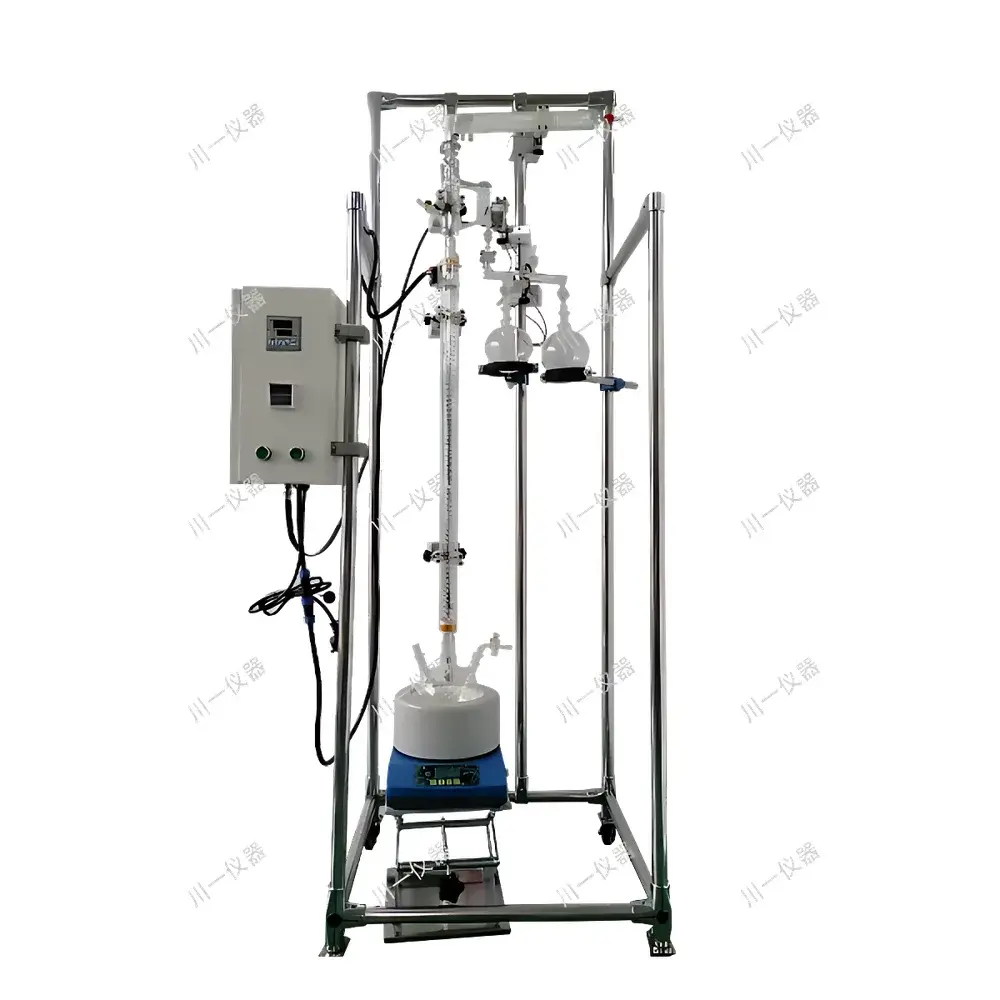
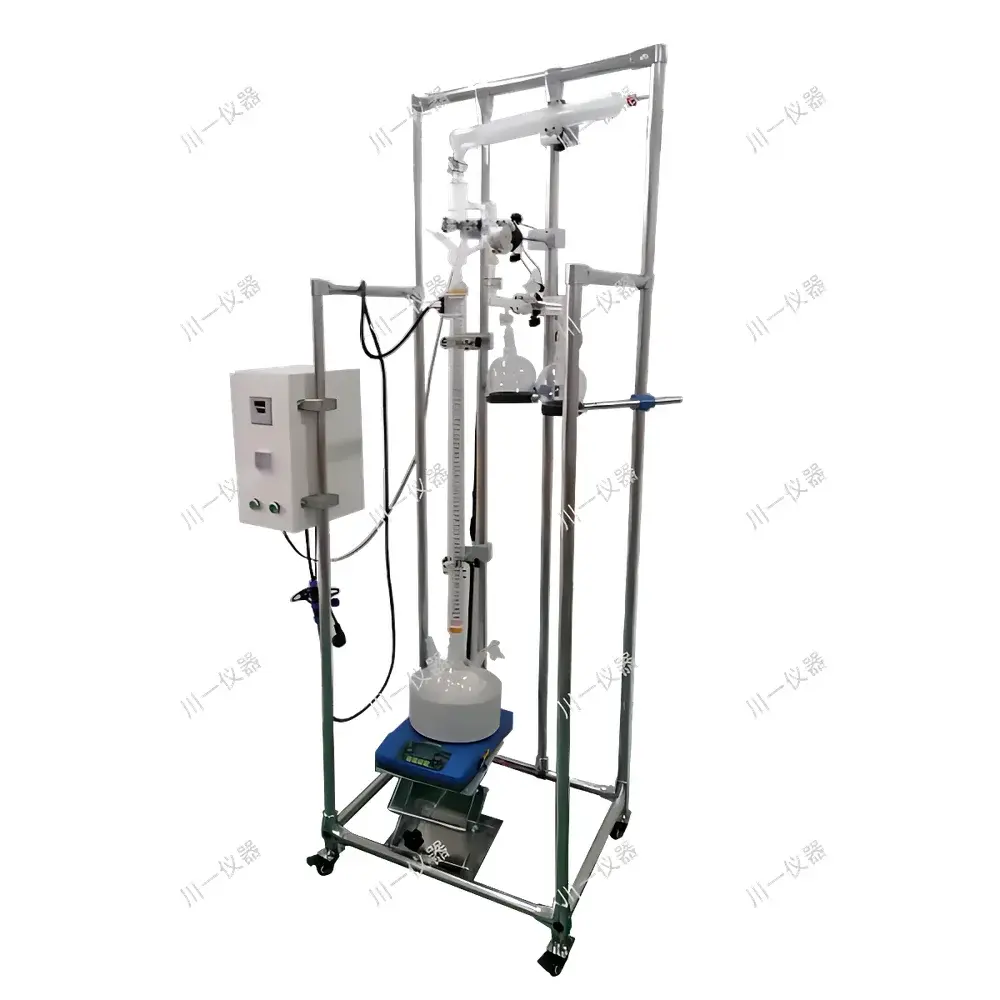
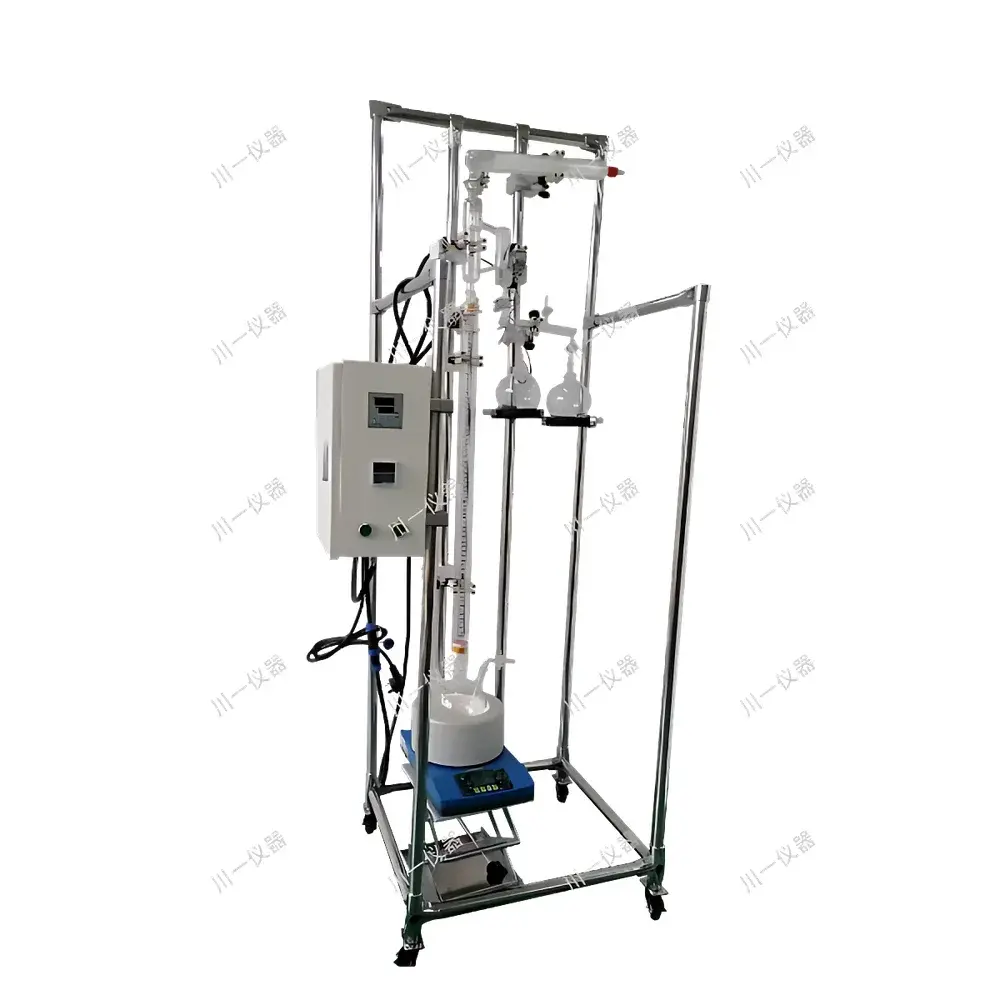
AYAN AYJ-2 Glass Packed Distillation Column System for Laboratory-Scale Vapor-Liquid Separation and Purification
| Brand | AYAN |
|---|---|
| Origin | Zhejiang, China |
| Model | AYJ-2 |
| Feed Rate | 1–100 kg/h |
| Collection Vessels | 2 |
| Tower Material | Borosilicate Glass 3.3 |
| Tower Height | 0.5–2 m (customizable) |
| Heating Temperature Range | Ambient +10 °C to 300 °C |
| Ultimate Vacuum | ≤0.1 mbar |
| Condenser Type | Vertical |
| Effective Packing Height | 1 m |
| Tower Diameter (ID) | 25 mm |
| Flask Volume | 2 L |
| Power Supply | 220 V, 50/60 Hz, 1P |
Overview
The AYAN AYJ-2 Glass Packed Distillation Column System is a laboratory-scale vapor-liquid equilibrium apparatus engineered for high-efficiency fractional separation and purification of thermally sensitive or high-boiling mixtures under reduced pressure. Based on the principle of differential volatility—where components in a liquid mixture exhibit distinct saturated vapor pressures at a given temperature—the system enables continuous mass transfer between ascending vapor and descending liquid phases across structured or random packing material. This counter-current contact facilitates theoretical plate formation, allowing precise control over relative volatility-driven separation. Designed for operation under vacuum (down to ≤0.1 mbar), the AYJ-2 minimizes thermal degradation and reduces boiling points—critical for isolating labile compounds such as natural extracts, pharmaceutical intermediates, fine chemicals, and specialty polymers. Its all-borosilicate glass 3.3 construction ensures chemical inertness, optical clarity for real-time process observation, and compatibility with aggressive solvents including chlorinated hydrocarbons, esters, and alcohols.
Key Features
- Full borosilicate glass 3.3 construction (DIN ISO 3585 compliant) for corrosion resistance, thermal shock tolerance (up to 300 °C), and visual process monitoring.
- Precision-machined packed column with 1-meter effective height and 25-mm internal diameter, optimized for HETP (Height Equivalent to a Theoretical Plate) performance in small-scale R&D.
- Integrated vertical condenser (0.2 m² heat exchange area) with adjustable coolant flow path and reflux ratio control via calibrated needle valve.
- Electric heating mantle with PID temperature controller (±1 °C accuracy), supporting ramp-hold profiles and programmable setpoints from ambient +10 °C to 300 °C.
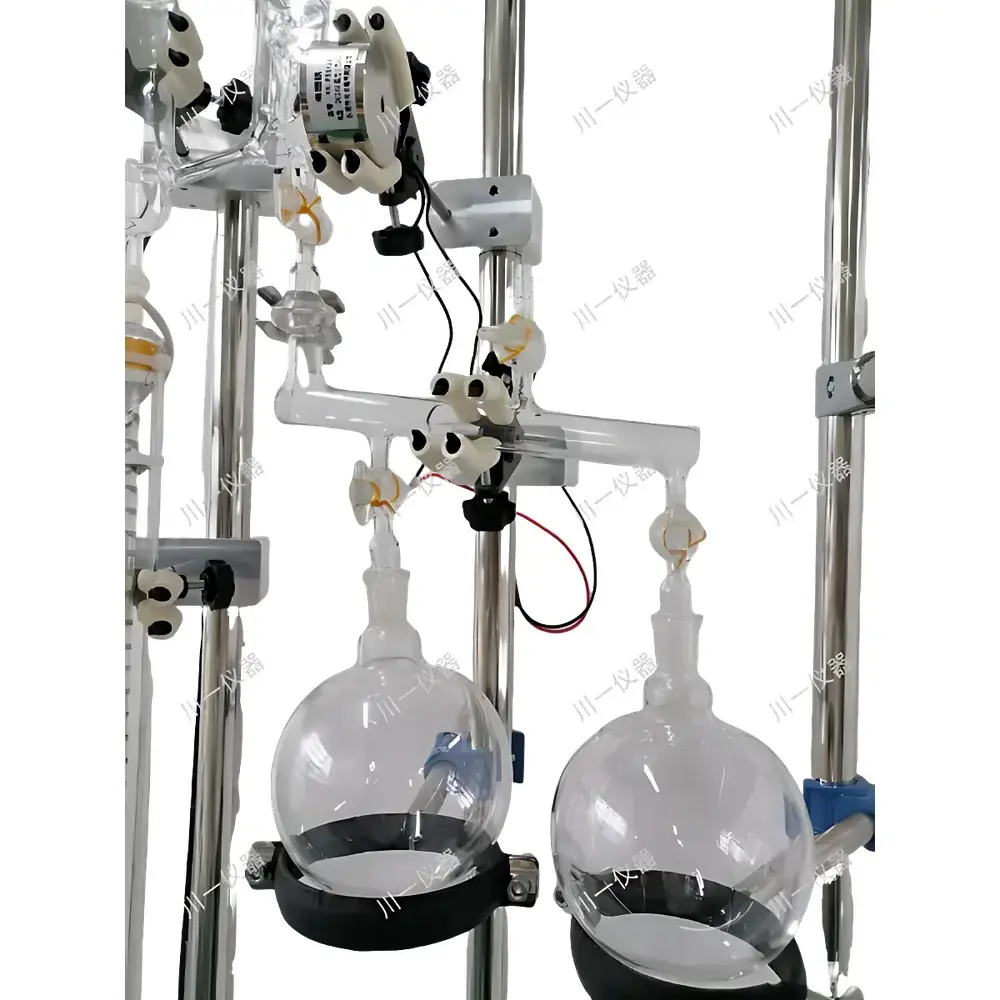
- Dual collection vessel configuration (2 × 1-L round-bottom flasks) with quick-connect ground-glass joints and vacuum-tight PTFE stopcocks.
- Standardized 12-mm OD top port for inline PT100 temperature probe, pressure transducer integration, or inert gas sparging.
- Modular design accommodating optional upgrades: pump inlet cold trap, jacketed column insulation, digital vacuum gauge, and external recirculating chiller interface.
Sample Compatibility & Compliance
The AYJ-2 is validated for use with organic solvents (e.g., ethanol, toluene, ethyl acetate), essential oils, fatty acid methyl esters (FAME), silicone oligomers, and heat-sensitive bioactive fractions. All wetted surfaces comply with USP Class VI and ISO 10993-5 biocompatibility guidelines for non-invasive extractables testing. Vacuum integrity meets ASTM D5236 requirements for molecular distillation equipment qualification. The system supports GLP-compliant operation when paired with audit-trail-capable data loggers (e.g., certified USB temperature/vacuum recorders meeting FDA 21 CFR Part 11 Annex 11 criteria). No metallic gasket materials are used; sealing relies exclusively on PTFE sleeves and ground-glass interfaces to eliminate metal ion leaching.
Software & Data Management
While the base AYJ-2 operates via analog controls, it is fully compatible with third-party digital acquisition systems. Optional RS485 or 4–20 mA outputs enable connection to SCADA platforms (e.g., LabVIEW, DeltaV, or custom Python-based logging scripts) for time-stamped recording of column top/bottom temperatures, jacket temperature, vacuum level, and reflux ratio. Data export formats include CSV and Excel-compatible .xlsx. For regulated environments, the system integrates with electronic lab notebooks (ELNs) supporting ALCOA+ principles—ensuring attributable, legible, contemporaneous, original, accurate, complete, consistent, enduring, and available records per ICH GCP and ISO/IEC 17025:2017 clause 7.5.
Applications
- Purification of cannabinoids (CBD, CBG) and terpenes from crude hemp extracts under short-path conditions.
- Recovery and concentration of fragrance compounds (e.g., linalool, citral) without thermal decomposition.
- Separation of polymerization inhibitors (e.g., hydroquinone monomethyl ether) from acrylic monomers.
- Dehydration of hygroscopic solvents (e.g., THF, DMF) to <50 ppm water prior to anhydrous reactions.
- Removal of residual catalysts (e.g., palladium complexes) from API synthesis streams.
- Method development for industrial-scale continuous distillation columns via scalable HETP correlation studies.
FAQ
What vacuum level is required for optimal operation of the AYJ-2?
The system achieves maximum separation efficiency at ≤0.1 mbar, attainable using a dual-stage rotary vane pump or dry scroll pump. A pump inlet cold trap is recommended when processing volatile solvents to prevent oil contamination.
Can the column be operated under positive pressure?
No—the AYJ-2 is engineered exclusively for sub-atmospheric operation. Positive pressure may compromise glass joint integrity and void warranty coverage.
Is custom packing material available?
Yes. Raschig rings, Helices, and structured stainless steel or ceramic packings can be supplied upon request, subject to dimensional compatibility with the 25-mm ID column.
How is temperature uniformity maintained along the column?
The electric heating mantle provides axial thermal gradient control; optional column wall insulation (glass wool wrap) reduces radial heat loss and improves plate efficiency.
Does the system support automated fraction collection?
Not natively—but the dual-collection configuration allows manual switching synchronized with temperature/vacuum trends. Integration with programmable fraction collectors (e.g., Gilson FC204) is possible via TTL trigger output from external controllers.



