
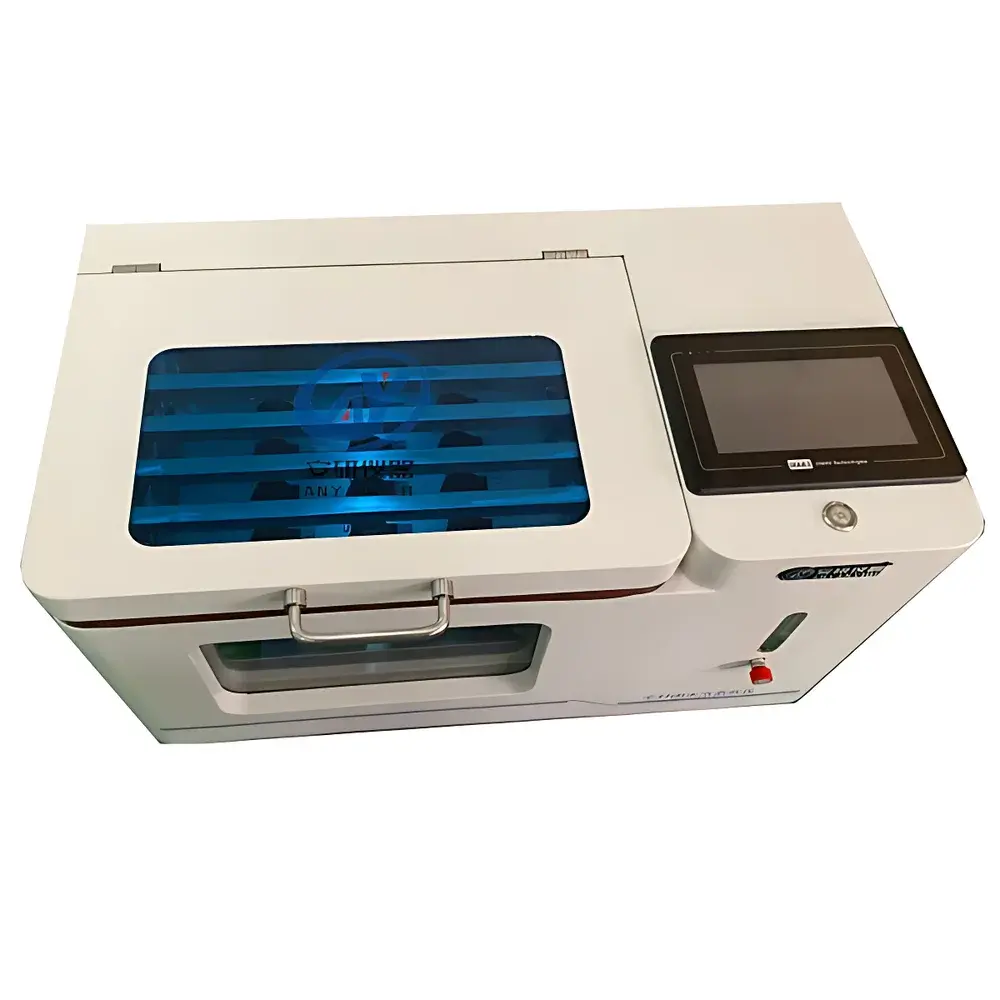
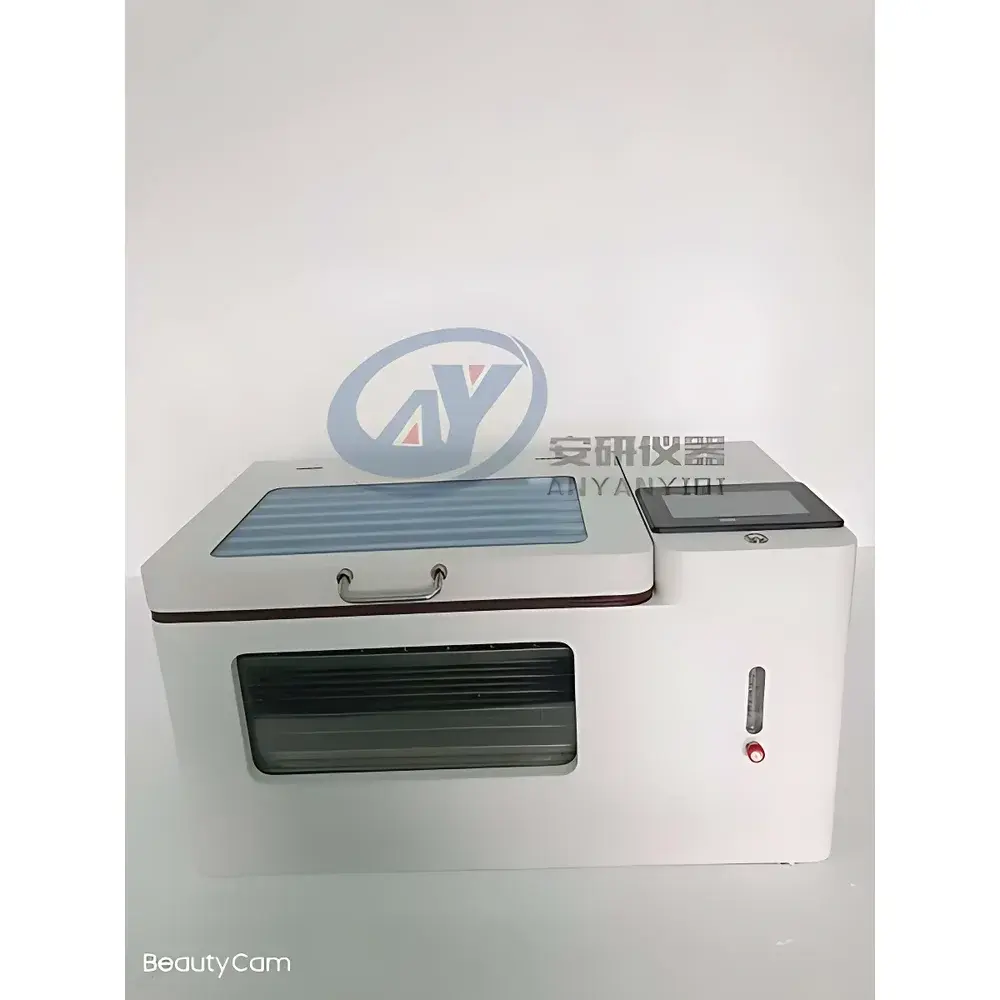
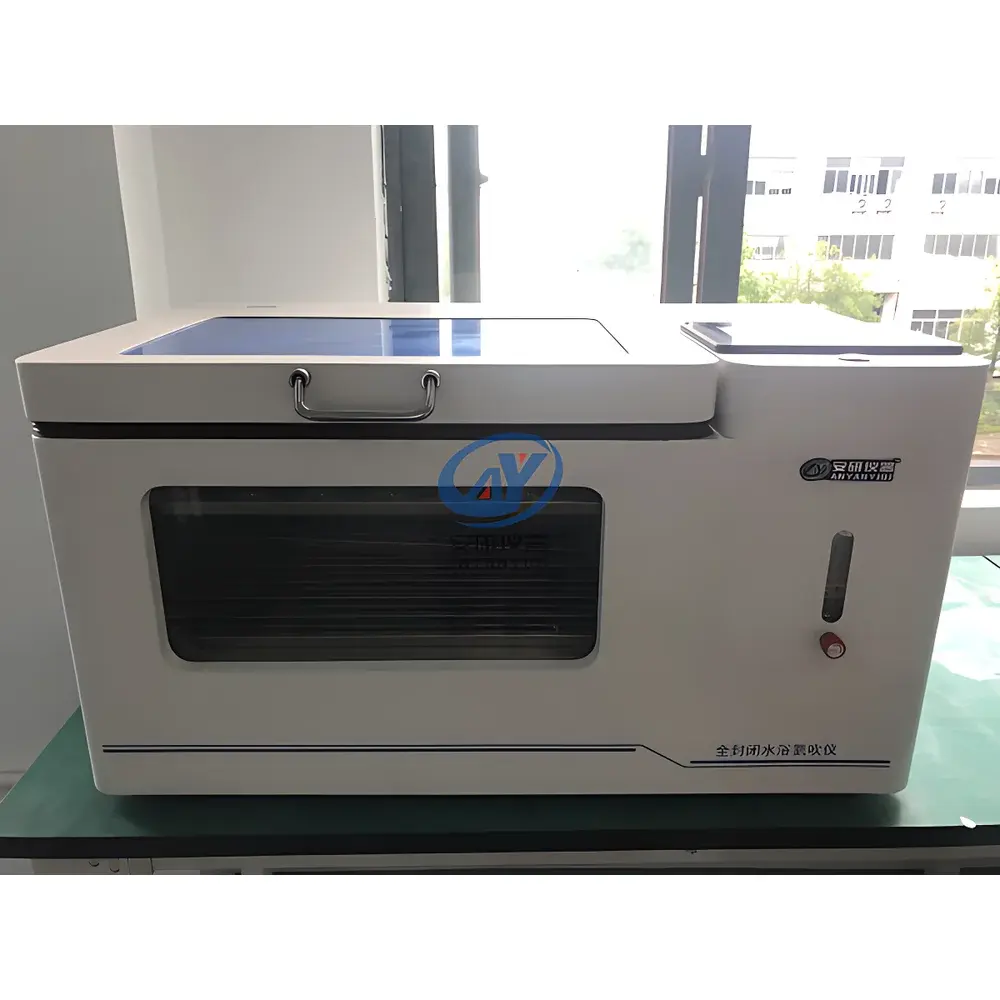
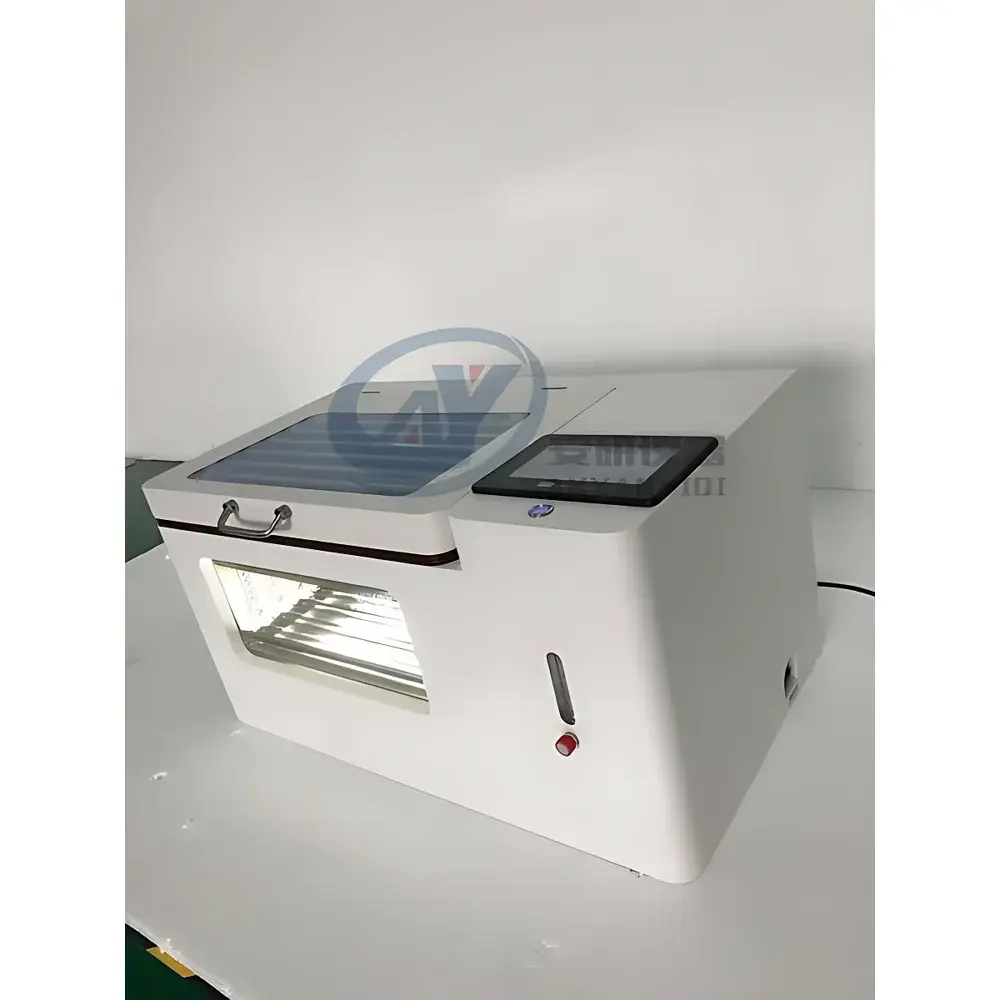
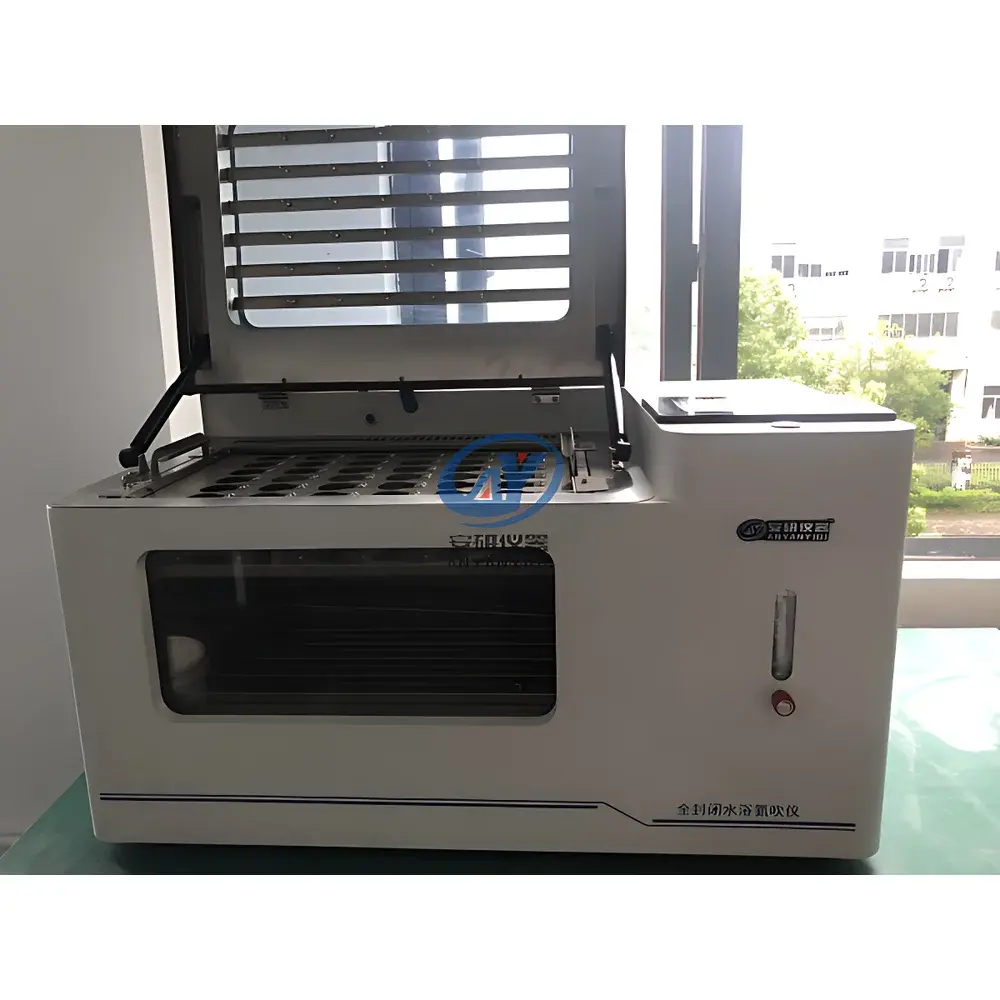
AYAN-DC30S Fully Enclosed Water-Bath Nitrogen Evaporator with 7-Inch Touchscreen Display
| Brand | AYAN |
|---|---|
| Origin | Zhejiang, China |
| Model | AYAN-DC30S |
| Heating Method | Water Bath |
| Temperature Range | Ambient to 100 °C |
| Temperature Stability | ±0.5 °C |
| Sample Capacity | 30 positions |
| Gas Flow Control | 0–999 mL/min (adjustable per channel) |
| Display | 7-inch capacitive touchscreen |
| Program Storage | Multi-set user-defined protocols (50 segments, 5 control modes) |
| Safety Features | Auto-refill water tank, dry-run protection, overflow outlet, lid-open alarm, resume-on-interruption logic |
| Construction | 304 stainless steel frame, silicone-free silicone gaskets, double-sealed observation windows with built-in LED illumination and internal recirculating fan |
| Compliance | Designed for GLP-compliant laboratories |
Overview
The AYAN-DC30S is a fully enclosed, water-bath-based nitrogen evaporator engineered for precise, reproducible, and operator-safe solvent removal in analytical laboratories. It operates on the principle of gentle inert gas (nitrogen) sweeping across the surface of liquid samples immersed in a temperature-controlled water bath—accelerating evaporation while minimizing thermal degradation, oxidation, or cross-contamination. Unlike dry-block (metal bath) systems, the AYAN-DC30S leverages the high thermal mass and uniform heat distribution of water to maintain stable, low-gradient temperature environments—critical for thermolabile analytes such as steroids, pesticides, pharmaceuticals, and environmental metabolites. Its sealed chamber architecture, combined with integrated recirculating airflow and double-glazed observation windows, eliminates volatile organic compound (VOC) leakage, ensuring compliance with occupational health standards (e.g., OSHA 29 CFR 1910.1200) and reducing ambient laboratory contamination.
Key Features
- 7-inch industrial-grade capacitive touchscreen interface supporting intuitive parameter entry, real-time monitoring, and multi-level user access control.
- Programmable temperature control with five operational modes and up to 50 programmable segments—enabling complex ramp-hold-cool profiles tailored to multi-step extraction workflows.
- Fully enclosed chamber with dual-sealed transparent acrylic windows and internal LED illumination for continuous visual monitoring without compromising containment integrity.
- Auto-refill water reservoir with level sensor, overflow drain port, and dry-heating cutoff—eliminating manual intervention and preventing heater damage during extended runs.
- Independent electromagnetic flow control per sample position (30 channels), enabling precise, pressure-stabilized nitrogen delivery (0–999 mL/min) unaffected by channel activation sequence or count.
- Resume-on-interruption functionality: automatically restores prior temperature setpoints, gas timing, and active channels upon lid closure after mid-process access.
- Integrated data logging system stores timestamped temperature, gas duration, and protocol execution history—exportable via USB for traceability and audit support.
- 304 stainless steel structural frame and food-grade, non-plasticized silicone seals ensure chemical resistance and eliminate leachable contaminants—validated per USP <661.1> extractables profiling guidelines.
Sample Compatibility & Compliance
The AYAN-DC30S accommodates standard laboratory vessels—including 10–15 mL conical tubes, 13–16 mm round-bottom test tubes, centrifuge tubes, and colorimetric cuvettes—via height-adjustable rack inserts. Its water-bath design supports both heating (ambient to 100 °C) and passive cooling (by adding ice or chilled glycol solutions), making it suitable for protocols requiring sub-ambient stabilization. The system meets essential safety and performance criteria aligned with ISO 17025 Clause 5.5.2 (equipment verification), ASTM D5291 (petroleum product residue analysis), and EPA Method 508.1 (halogenated organic compounds in water). Its sealed enclosure and VOC retention capability align with laboratory fume hood reduction strategies under ANSI/AIHA Z9.5–2022.
Software & Data Management
No external PC software is required—the onboard firmware provides complete local control, including password-protected method storage, run-time parameter locking, and automatic event logging (lid open/close, temperature deviation alerts, end-of-run notification). All logged data are stored in CSV format on removable USB media, supporting integration into LIMS or ELN platforms via standardized import. Audit trails include operator ID (if assigned), timestamp, parameter values, and system status flags—consistent with FDA 21 CFR Part 11 requirements when used in conjunction with validated electronic signature policies.
Applications
This evaporator is routinely deployed in environmental testing (e.g., EPA 505, 525.3), clinical toxicology (urine drug screening sample prep), food safety (mycotoxin and pesticide residue cleanup), and pharmaceutical QC (residual solvent removal per ICH Q3C). Its stability at low-to-moderate temperatures (<80 °C) makes it ideal for concentrating heat-sensitive compounds such as prostaglandins, oligonucleotides, and labile glycosides—where metal-block systems risk localized overheating or inconsistent thermal transfer.
FAQ
Does the AYAN-DC30S support GLP-compliant documentation?
Yes—its embedded data logger captures all critical process parameters with timestamps and user identifiers, enabling full traceability required for GLP audits.
Can the water bath be used for cooling applications?
Yes—by replacing the water with an ice-water slurry or chilled ethylene glycol solution, the bath can maintain temperatures near 0 °C for cold-concentration protocols.
Is nitrogen consumption monitored or regulated per channel?
Each of the 30 channels features independent solenoid-valve control and calibrated flow adjustment, allowing consistent gas delivery regardless of active channel count.
What maintenance is required for long-term reliability?
Routine cleaning of the water bath and inspection of silicone seals every 6 months; no calibration certificates are supplied, but temperature uniformity validation can be performed using NIST-traceable PT100 probes per ISO/IEC 17025 Annex A.2.
How does the system handle power interruptions?
Upon power restoration, the unit defaults to standby mode and retains all saved protocols—but does not auto-resume running methods unless manually reinitiated for safety assurance.
Related Products



