
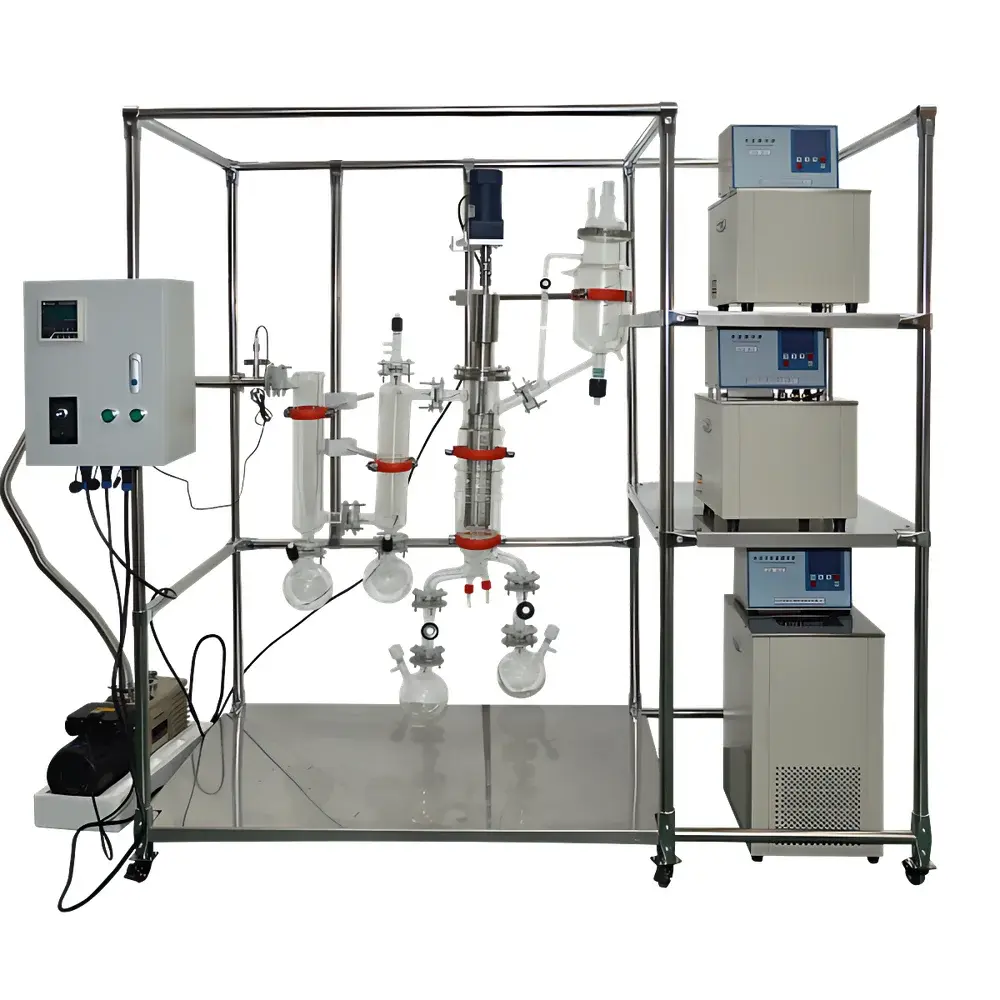
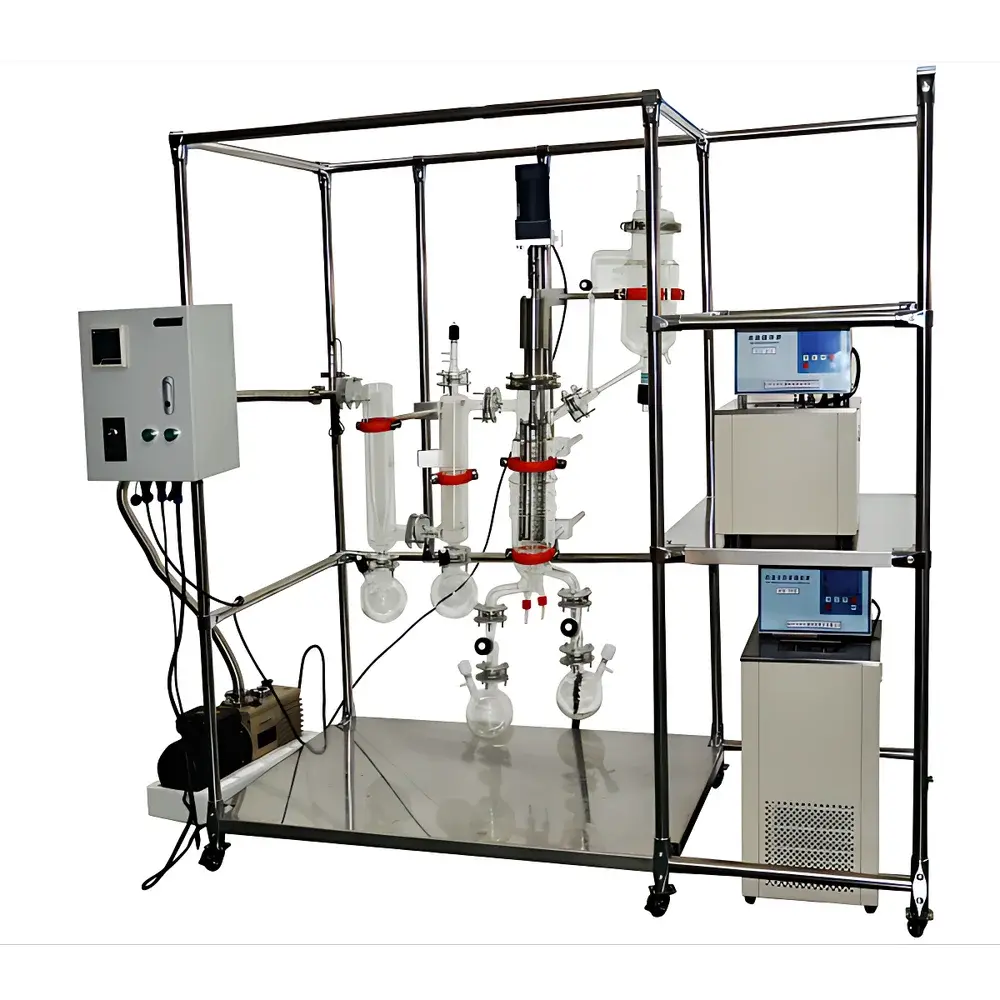
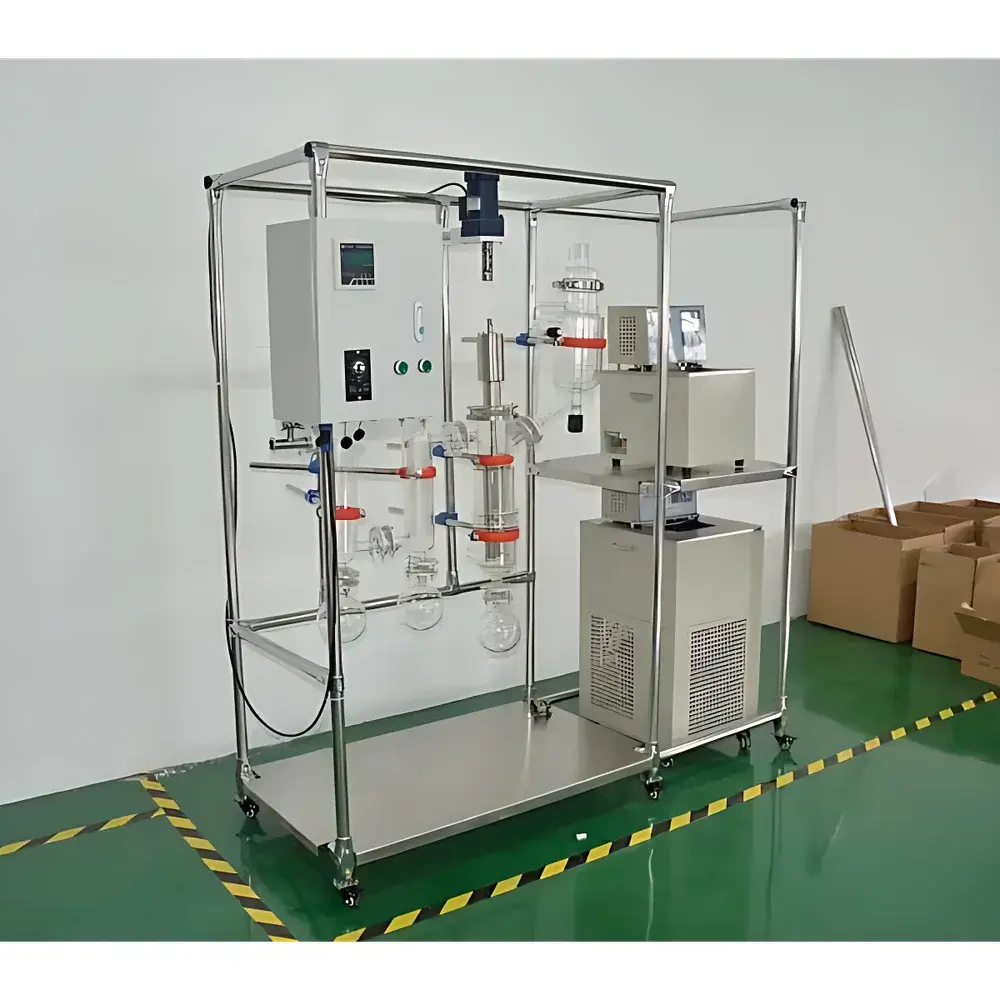
AYAN-F220 Multi-Effect Short-Path Molecular Distillation System
| [Brand | Anyan Instrument (Hangzhou) |
|---|---|
| Origin | Zhejiang, China |
| Model | AYAN-F220 |
| Feed Capacity | 5 L |
| Effective Evaporation Area | 0.5 m² |
| Evaporator Internal Diameter | 220 mm |
| Condensation Area | 0.65 m² |
| Collection Vessels | 2 × 5 L |
| Operating Vacuum | <10 Pa |
| Heating Temperature Range | Ambient to 200 °C |
| Rotational Speed | ≤450 rpm |
| Motor Power | 200 W |
| Processing Flow Rate | 2.0–15.0 L/h |
| Integrated Cold Trap | Yes |
| External Condenser Option | Available |
| Cooling System | Built-in] |
Overview
The AYAN-F220 Multi-Effect Short-Path Molecular Distillation System is a high-vacuum, low-temperature separation platform engineered for thermally sensitive, high-boiling-point, and non-volatile compounds. It operates on the principle of molecular distillation—where separation occurs under ultra-high vacuum (<10 Pa), ensuring the mean free path of vapor molecules exceeds the physical distance between the evaporating surface and the condenser. This enables selective volatilization based on differences in molecular weight, polarity, and vapor pressure—without thermal degradation. Unlike conventional fractional or steam distillation, the AYAN-F220 minimizes residence time at elevated temperatures (typically <200 °C), preserving labile functional groups, unsaturated bonds, and chiral integrity in natural extracts, pharmaceutical intermediates, and polymer precursors.
Key Features
- Stainless steel刮膜式 (wiped-film) evaporator with precision-machined 220 mm internal diameter rotor and PTFE-coated wiper blades for uniform thin-film formation and consistent heat transfer;
- Integrated dual-collection system with two independent 5 L borosilicate glass receivers, enabling simultaneous fractionation of light and heavy components;
- High-efficiency condenser with 0.65 m² active cooling surface, coupled to a built-in cold trap capable of maintaining cryogenic surface temperatures below –20 °C;
- Digital PID-controlled heating mantle with ±1 °C temperature stability across ambient to 200 °C range, calibrated traceable to NIST standards;
- Variable-speed drive (0–450 rpm) with torque feedback, optimized for viscosity-dependent film thickness control and shear-sensitive feedstocks;
- Full vacuum architecture featuring dual-stage oil-sealed rotary vane pump and optional secondary diffusion or turbomolecular pumping for sub-1 Pa operation;
- Modular design supporting external condenser integration and inline pre-heater or post-condensation solvent recovery loops.
Sample Compatibility & Compliance
The AYAN-F220 accommodates viscous, particulate-laden, and thermally unstable feedstocks—including crude fish oil, lanolin extracts, polymeric oligomers, essential oil emulsions, and vitamin concentrates. Its all-glass wetted path (Borosilicate 3.3) and electropolished 316L stainless steel housing comply with USP , ISO 8536-1, and ASTM E2656 for laboratory-scale purification equipment. The system supports GLP-compliant operation through configurable audit trails, user access levels, and electronic log export—fully compatible with 21 CFR Part 11 requirements when paired with validated LIMS or ELN software. All vacuum seals meet ISO-KF 25/40 standards; gasket materials are FDA-listed FKM and EPDM.
Software & Data Management
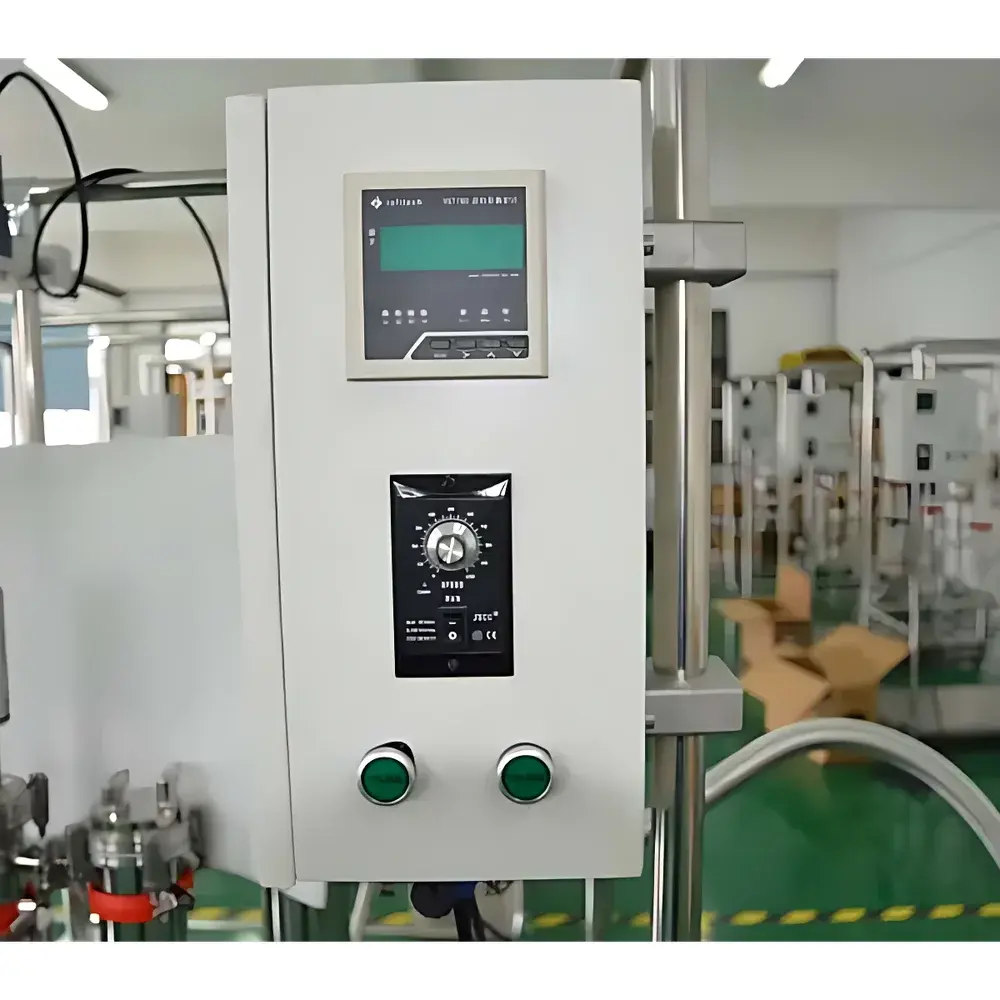
Equipped with embedded touchscreen HMI (7-inch capacitive display), the AYAN-F220 provides real-time monitoring of vacuum level (capacitance manometer), heater temperature, rotor speed, and condenser surface temperature. Data logging records at 1 Hz resolution with CSV export via USB or Ethernet. Optional PC-based control software (DistillSoft™ v3.2) adds recipe management, automated ramp-hold profiles, alarm escalation (email/SMS), and compliance-ready PDF report generation—including calibration certificates, batch logs, and deviation annotations. Raw sensor data is timestamped and digitally signed to satisfy ALCOA+ data integrity principles.
Applications
- Fine Chemicals: Purification of aromatic compounds (e.g., vanillin, citral), monoglycerides, fatty acid esters, and epoxy resin intermediates;
- Pharmaceuticals: Isolation of natural vitamins (A, E, D), sterols, phospholipids, and peptide derivatives without racemization;
- Food & Nutraceuticals: Deacidification and deodorization of edible oils; concentration of omega-3 EPA/DHA from fish oil; separation of mixed triglyceride fractions;
- Polymers & Materials: Removal of catalyst residues, unreacted monomers, and low-MW oligomers from silicone fluids, polyolefin waxes, and bio-based polyesters;
- Environmental Analysis: Fractionation of PAH-contaminated lubricants, PCB-concentrated sediment extracts, and microplastic-associated additives prior to GC-MS quantification.
FAQ
What is the minimum operational vacuum required for effective molecular distillation?
Effective molecular distillation requires sustained operating pressure below 10 Pa (≈0.075 Torr). The AYAN-F220 achieves this routinely using its integrated dual-stage vacuum system; optional turbomolecular pumping extends capability to <0.1 Pa for ultra-high-purity separations.
Can the system handle feedstocks with suspended solids or high viscosity?
Yes—the wiped-film geometry and adjustable rotor speed (up to 450 rpm) enable stable thin-film formation even with viscosities up to 5,000 cP at processing temperature. Pre-filtration is recommended for particulates >50 µm to prevent wiper blade wear.
Is validation documentation available for GMP environments?
Factory-installed IQ/OQ protocols are provided. PQ execution support—including installation drawings, sensor calibration certificates (traceable to national metrology institutes), and FAT/SAT checklists—is available upon request for regulated facility deployment.
How is temperature uniformity ensured across the evaporation surface?
The heating mantle employs segmented resistive elements with independent PID zones and embedded PT100 sensors spaced at 30° intervals around the evaporator cylinder—ensuring radial temperature deviation ≤±0.8 °C at steady state.
What maintenance intervals are recommended for long-term reliability?
Vacuum pump oil change every 500 operational hours; wiper blade inspection every 200 hours; condenser coil cleaning quarterly; full system leak-check and calibration annually per ISO/IEC 17025 guidelines.



