
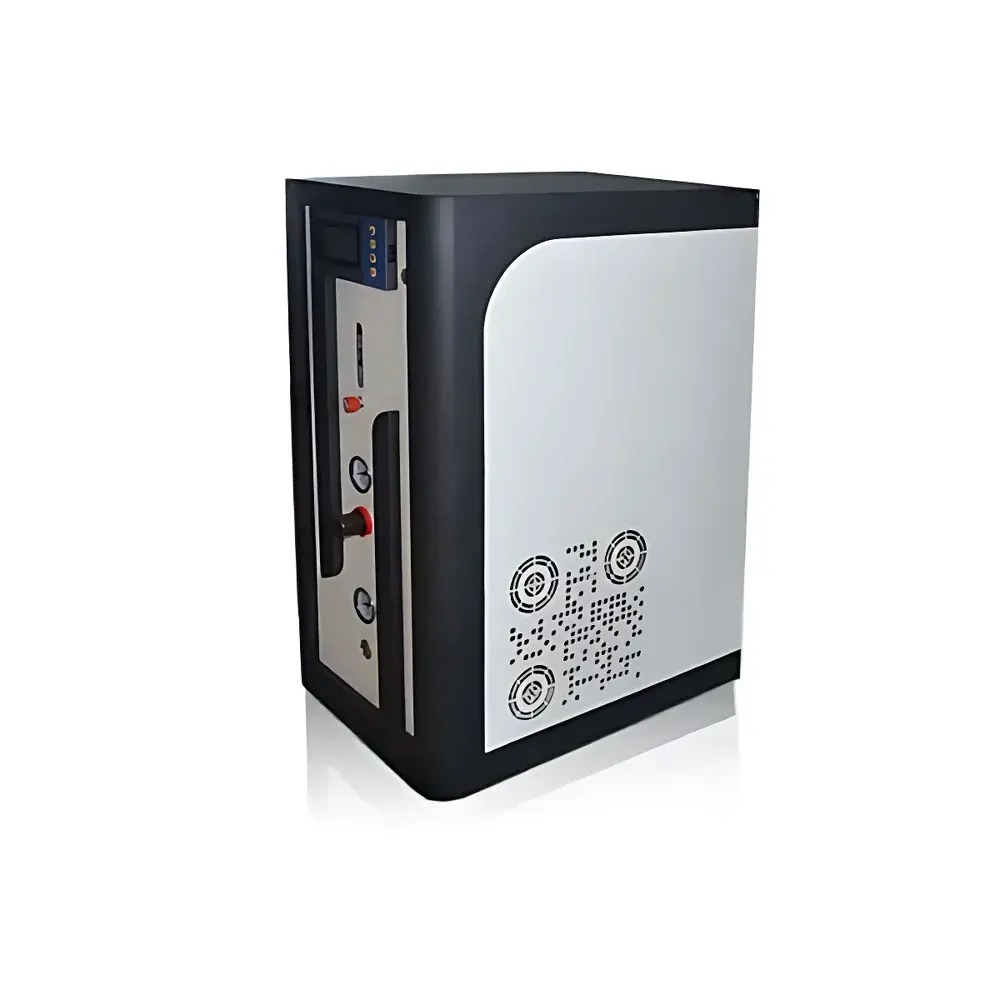
AYAN-T500 Nitrogen-Hydrogen-Air Integrated Gas Generator
| Brand | Hangzhou Chuanyi Electronic |
|---|---|
| Origin | Tianjin, China |
| Manufacturer Type | OEM Manufacturer |
| Product Category | Domestic |
| Model | AYAN-T500 |
| Purity | 99.999% (N₂ & H₂) |
| Flow Rate | N₂: 0–500 mL/min |
| H₂ | 0–500 mL/min |
| Air | 0–5000 mL/min |
| Output Pressure | 0–0.5 MPa |
| Design | Integrated Monoblock Architecture |
Overview
The AYAN-T500 Nitrogen-Hydrogen-Air Integrated Gas Generator is an engineered solution for laboratories requiring reliable, on-demand supply of high-purity carrier, fuel, and support gases for gas chromatography (GC) systems. Unlike traditional high-pressure cylinder-based gas delivery, this generator produces nitrogen (via pressure swing adsorption or membrane separation), hydrogen (via PEM or alkaline electrolysis), and zero-air (via compressed ambient air purification) in a single compact chassis. It eliminates storage hazards, reduces logistical overhead, and ensures consistent gas quality across analytical runs—critical for method reproducibility in regulated environments such as pharmaceutical QC, environmental testing, and petrochemical analysis. The system operates fully automatically after power-on, with real-time pressure stabilization and integrated flow monitoring for all three gas streams.
Key Features
- Integrated monoblock architecture minimizes footprint (450 × 440 × 400 mm) while maintaining independent gas generation pathways—no cross-contamination between N₂, H₂, and air streams.
- Triple-gas output with independent flow control: N₂ and H₂ up to 500 mL/min each; zero-air up to 5000 mL/min—sufficient for multi-detector GC configurations including FID, TCD, and ECD.
- Ultra-high purity: ≥99.999% (5.0 grade) for both nitrogen and hydrogen, achieved through multi-stage purification—including dual-stage desiccant drying, catalytic deoxygenation (for N₂), and palladium-diffusion polishing (for H₂).
- Three-tier filtration and dual-stage pressure regulation ensure stable delivery at 0–0.5 MPa, with factory-set default pressures of 0.4 MPa (N₂/air) and 0.3 MPa (H₂) compliant with standard GC inlet requirements.
- Electrolyte-efficient hydrogen generation: Alkaline electrolytic cell design consumes only distilled water—no electrolyte replacement required beyond periodic top-up; electrolyte lifespan exceeds 12 months under normal operation.
- Intelligent safety architecture includes over-pressure shutoff, low-water-level cutoff, thermal overload protection, and leak detection via differential pressure monitoring across critical gas paths.
- Energy-optimized switching power supply (450 W nominal) delivers >75% electrical-to-gas conversion efficiency, reducing operational cost versus legacy linear power designs.
Sample Compatibility & Compliance
The AYAN-T500 is compatible with all major GC platforms—including Agilent, Thermo Fisher, Shimadzu, PerkinElmer, and Waters—regardless of detector type or column configuration. Its gas specifications meet or exceed ASTM D6299 (precision and bias for GC calibration), ISO 8573-1 Class 1:2:1 (compressed air purity for instrumentation), and USP <681> requirements for carrier gas purity in pharmaceutical residual solvent analysis. The unit supports GLP/GMP workflows through traceable operating logs (when paired with optional data logger), and its mechanical design adheres to IEC 61010-1 for laboratory electrical safety. All wetted materials are 316L stainless steel or PTFE-lined to prevent metal ion leaching or organic adsorption.
Software & Data Management
While the base AYAN-T500 operates via front-panel LED indicators and mechanical controls, optional RS-485 or Ethernet interfaces enable integration into centralized lab infrastructure. When connected, the generator transmits real-time parameters—including gas pressure, flow rate, electrolyte level, desiccant saturation status, and fault codes—to LIMS or SCADA systems. Audit trails comply with FDA 21 CFR Part 11 when deployed with validated software modules, supporting electronic signatures and immutable event logging for regulatory submissions. Firmware updates are performed via secure USB or network push, preserving calibration integrity during maintenance cycles.
Applications
- Gas chromatography: Primary carrier gas (N₂), fuel gas (H₂), and combustion air (zero-air) for FID, NPD, and FPD detectors.
- Residual solvent analysis per ICH Q2(R2): Consistent N₂ purity prevents baseline drift during headspace-GC methods.
- Environmental VOC monitoring: On-site zero-air generation eliminates transport-related contamination risks in field-deployable GC systems.
- Research labs performing method development: Independent flow tuning allows optimization of split ratios, column backpressure, and detector response without cylinder dependency.
- Quality control labs under ISO/IEC 17025: Documented gas purity and pressure stability support uncertainty budgeting for accredited test methods.
FAQ
What is the recommended maintenance schedule for the AYAN-T500?
Distilled water should be replenished when the level approaches the lower mark; electrolyte replacement is advised every 6–12 months depending on daily runtime. Desiccant cartridges (silica gel) require replacement upon color shift to pink—typically every 3–6 months in humid environments.
Can the generator operate continuously for extended periods?
Yes—the system is rated for 24/7 operation with thermal management designed for sustained duty cycles. Internal diagnostics monitor cell temperature, pressure differentials, and current draw to prevent degradation.
Is it safe to use hydrogen mode without activating the air module?
No. Hydrogen generation requires concurrent air compression to maintain internal purge flow and thermal equilibrium; standalone H₂ operation is prohibited by interlock logic.
How does the unit handle ambient humidity fluctuations?
The integrated air dryer uses dual-stage adsorption (coalescing + desiccant), and the rear-mounted condensate drain port allows manual moisture evacuation after shutdown—preventing water ingress into downstream GC valves.
What happens if the electrolyte level drops below minimum during operation?
An automatic cut-off circuit disables the hydrogen electrolyzer immediately upon low-level detection, preventing dry-cell damage and ensuring compliance with IEC 62368-1 hazard prevention standards.



