
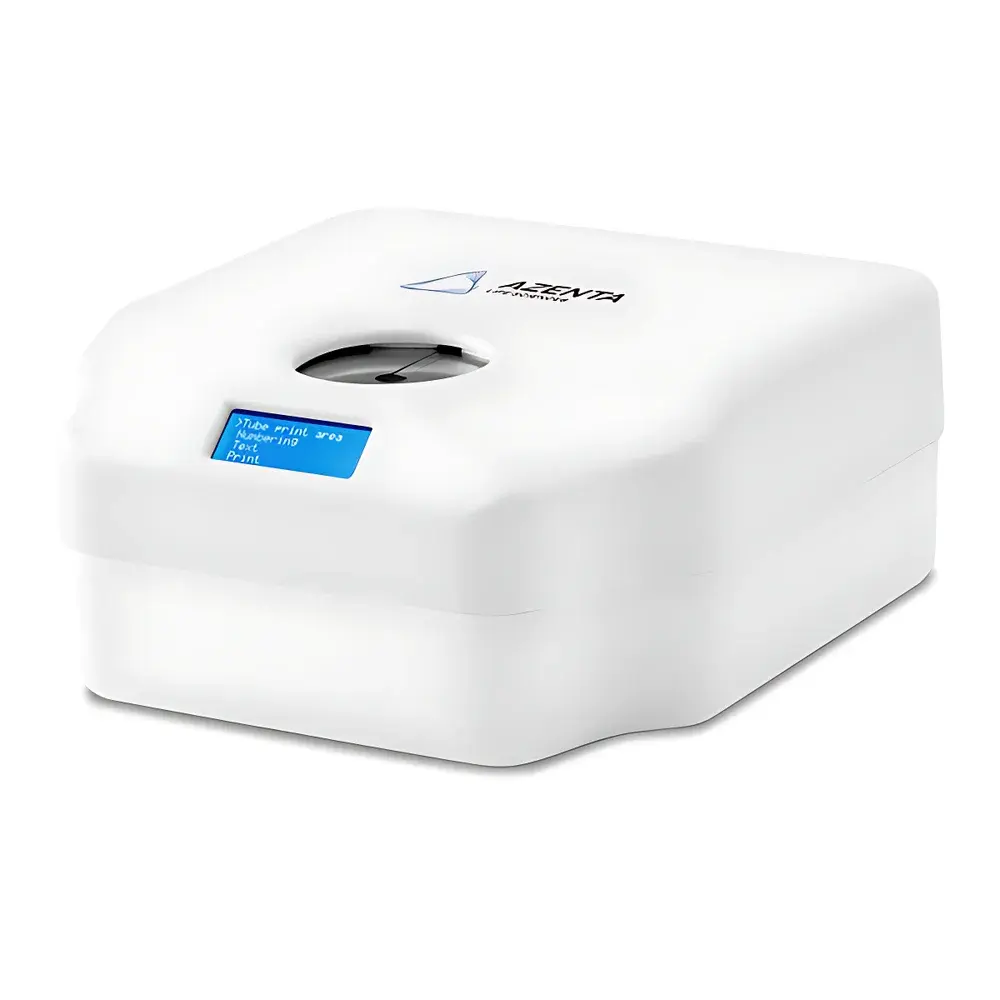
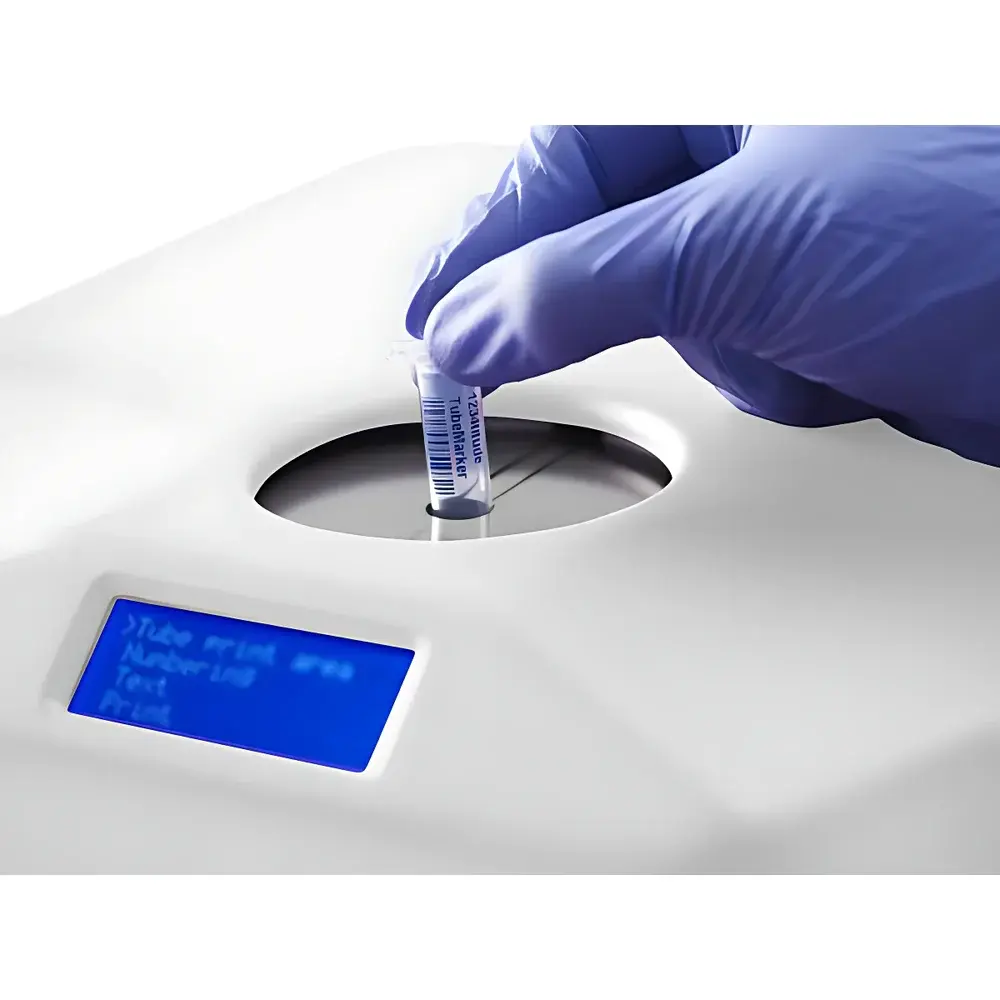
Azenta 4titude Direct Tube Marker System (Model 4ti-0680-1)
| Brand | 4titude |
|---|---|
| Origin | United Kingdom |
| Manufacturer Type | Authorized Distributor |
| Product Category | Imported Instrument |
| Model | Azenta 4titude Direct Tube Marker (4ti-0680-1) |
| Pricing | Contact for Quote |
Overview
The Azenta 4titude Direct Tube Marker System (Model 4ti-0680-1) is a precision-engineered laboratory automation solution designed for permanent, label-free identification of plastic lab tubes via patented thermal pixel printing technology. Unlike conventional labeling methods—such as adhesive labels or solvent-based markers—the system applies high-contrast, chemically resistant alphanumeric text, linear barcodes (e.g., Code 128, Code 39), Data Matrix (2D) codes, and monochrome graphics directly onto tube surfaces. It operates on the principle of controlled thermal transfer: heat-sensitive ribbons are selectively activated by micro-thermal print heads to deposit durable pigment onto polypropylene, polycarbonate, and other common thermoplastic tube materials. This contact-based marking process eliminates label delamination, misalignment, or solvent-induced smearing—critical concerns in cryogenic storage, high-throughput screening, and regulated biobanking workflows. The system supports direct marking across a wide diameter range (6–30 mm), accommodating standard 0.2 mL PCR tubes, 1.5–2.0 mL microcentrifuge tubes, 15–50 mL conical tubes, and specialized formats including 2D matrix racks and cryovials.
Key Features
- Patented thermal pixel printing technology enabling high-resolution, permanent marking without adhesives or solvents
- Universal tube compatibility: accommodates diameters from 6 mm to 30 mm using interchangeable, magnetically secured adapters (standard kit includes 8.5 mm, 11.5 mm, and 12.7 mm bore adapters)
- Adjustable sled pivot point and height-adjustable tube support platform—optimized for tubes lacking external lips or flanges, ensuring consistent print pressure and registration
- Multi-directional print capability: vertical or horizontal orientation (linear barcodes printed vertically only, per ISO/IEC 15416 compliance)
- Chemical resistance validated against 70% ethanol, 70% isopropanol, >98.5% methanol, DMSO, aqueous solutions, hematoxylin, liquid nitrogen (−196 °C), and mechanical abrasion (per ASTM D3359 cross-hatch test)
- Thermal stability across −196 °C to +100 °C—suitable for long-term cryostorage and autoclave-adjacent applications
- Auto-sensing tube detection with programmable print delay: initiates marking upon tube insertion, reducing operator intervention and improving throughput consistency
- TrueType font support (including bold and italic variants) with scalable sizing; import-ready for Excel (.xls, .xlsx, .csv) and database-driven batch labeling
Sample Compatibility & Compliance
The system is validated for use with smooth-surface polypropylene, polyethylene, and polycarbonate tubes. Tubes with frosted or etched writing zones (e.g., certain Eppendorf models) are not recommended due to surface topography-induced ribbon wear and inconsistent pigment transfer. Compatibility is determined per Azenta’s internal print quality protocol—based on surface energy, curvature uniformity, and thermal conductivity—not manufacturer branding. Adapters are available for blood collection tubes, Falcon® conicals (15 mL / 50 mL), Matrix™ storage tubes, and custom geometries upon request. While the system itself does not carry CE IVD or FDA 510(k) clearance, its output meets traceability requirements under ISO 20387 (biobanking), CLIA, and CAP-accredited laboratory standards when integrated into documented SOPs. Print permanence data supports GLP/GMP sample integrity protocols where unambiguous, non-transferable identification is mandated.
Software & Data Management
The bundled Direct Tube Marker software (Windows-compatible, USB 2.0 interface) provides intuitive template design, barcode symbology selection (Code 128, Data Matrix ECC200), and field-mapping for Excel imports. All print jobs are timestamped and logged locally; audit trails include user ID, date/time, template name, and adapter configuration. While native 21 CFR Part 11 compliance is not embedded, the software supports integration with LIMS or ELN platforms via CSV export and configurable metadata fields—enabling alignment with electronic record retention policies. Saved tube profiles (diameter, offset, pressure setting) ensure reproducible positioning across shifts and operators. Firmware updates are delivered via secure download portal with version-controlled release notes.
Applications
- Cryobanking and biorepository operations requiring stable, low-temperature identification
- High-throughput genomics labs managing thousands of PCR tubes and NGS library plates
- Pharmaceutical QC labs performing stability studies with repeated freeze-thaw cycles
- Hospital pathology departments tracking tissue specimens across formalin fixation, paraffin embedding, and archival storage
- Academic core facilities supporting multi-user access with customizable naming conventions and project-based templates
- Contract research organizations (CROs) maintaining ALCOA+ data integrity for regulatory submissions
FAQ
Does the system require consumables other than ribbons?
No—only certified 4titude thermal ribbons (black, white, or metallic blue, 300 m × 40 mm) are required. No ink, solvents, or adhesives are used.
Can it print on frosted or silicone-coated tubes?
Frosted surfaces cause ribbon tearing and inconsistent print density; silicone coatings inhibit thermal transfer. Smooth, untreated thermoplastics yield optimal results.
Is the printed mark resistant to xylene or acetone?
Marks are not xylene-resistant and exhibit only moderate resistance to acetone; avoid prolonged exposure during histology dewaxing steps.
How many tubes can be labeled per ribbon?
Up to 100,000 tubes depending on label dimensions—e.g., ~50,000 scans for a 6 mm × 6 mm Data Matrix code. Exact yield is calculated using ribbon usage tables provided in the technical manual.
What electrical and computing requirements apply?
Input: 100–240 V AC, 50/60 Hz; Output: 18 V DC, 1 A. Requires Windows 10/11 with USB 2.0 port and ≥4 GB RAM.



