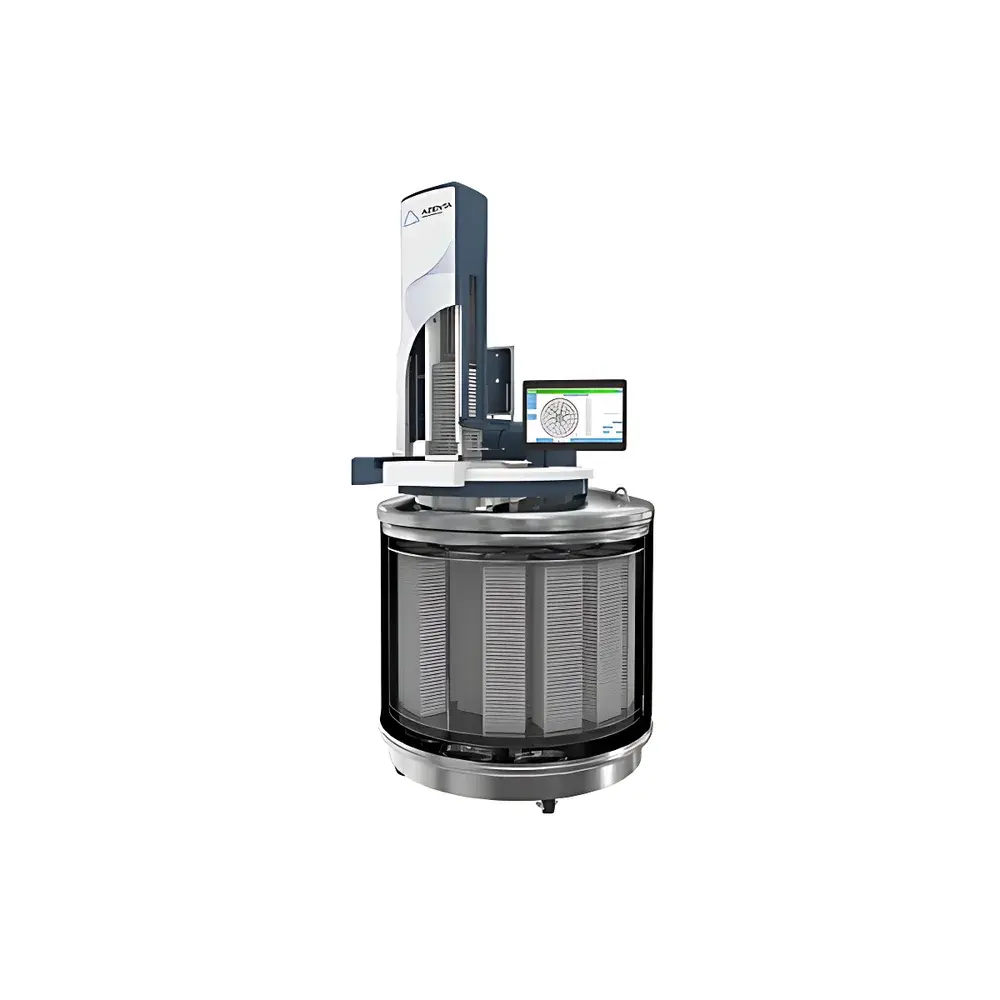
Azenta BioStore™ -190°C LN2-Based Automated Cryogenic Storage System
| Brand | Azenta |
|---|---|
| Origin | USA |
| Manufacturer Authorization | Authorized Distributor |
| Import Status | Imported |
| Model | Azenta BioStore™ -190°C |
| Application Category | Biopharmaceuticals |
| Compliance | 21 CFR Part 11 Support, GLP/GMP-Ready |
| Capacity | 990 cryoboxes (250 mL format) |
| Hold Time | ≥17–21 days during LN₂ or power interruption |
| Operating Temperature | ≤ –190°C (vapor-phase LN₂) |
| Sample Integrity Assurance | Tg < –135°C hold time ≥20 days |
| Software | BioStore Controller with audit trail, LIMS integration, user-defined access control |
Overview
The Azenta BioStore™ -190°C LN2-Based Automated Cryogenic Storage System is an engineered solution for high-integrity, regulatory-compliant long-term biobanking of clinical-grade and commercial biologics. Designed around vapor-phase liquid nitrogen (LN₂) cooling architecture, it maintains a stable, uniform temperature profile of ≤ –190°C across its entire storage volume—critical for preserving nucleic acid integrity, cell viability, and protein conformation in sensitive therapeutic materials such as CAR-T cells, hematopoietic stem cells (HSCs), and mRNA-based therapeutics. Unlike mechanical ultra-low temperature (ULT) freezers, this system eliminates thermal cycling and compressor-induced vibration, ensuring consistent cryostasis without micro-thaw events. Its core innovation lies in the first commercially deployed automation platform capable of fully integrated handling, tracking, and environmental logging of standard 250 mL cryoboxes—a format increasingly mandated by FDA-reviewed protocols and EMA Q5C stability guidelines for advanced therapy medicinal products (ATMPs). The system supports end-to-end traceability from receipt to retrieval, aligning with ICH GCP, ISO 20387:2018 (biobanking), and USP <1043> requirements for cell and gene therapy storage.
Key Features
- Vapor-phase LN₂ delivery ensures uniform ≤ –190°C temperature distribution from top to bottom—no cold spots or stratification.
- Proprietary sample integrity calculator models transient warming exposure based on empirical thermal decay curves, enabling predictive validation of sample safety during robotic access cycles.
- Insulated access tower with rapid-insertion rack mechanism minimizes heat ingress; measured transient warming of non-targeted boxes remains below –135°C (glass transition temperature, Tg) for ≥20 days under full system failure conditions (LN₂ depletion + power loss).
- Full manual override capability: All cryoboxes remain physically accessible without tools or system power—ensuring continuity of operations during maintenance or emergency recovery.
- Integrated barcode scanning at every handling stage (receipt, storage, retrieval) delivers vial-level and box-level identification with timestamped, immutable audit trails.
- Dual-redundant environmental monitoring: Real-time logging of LN₂ level, internal temperature (multiple sensor zones), door status, and dew point—data stored locally and exportable in CSV/CSV-UTF8 formats.
Sample Compatibility & Compliance
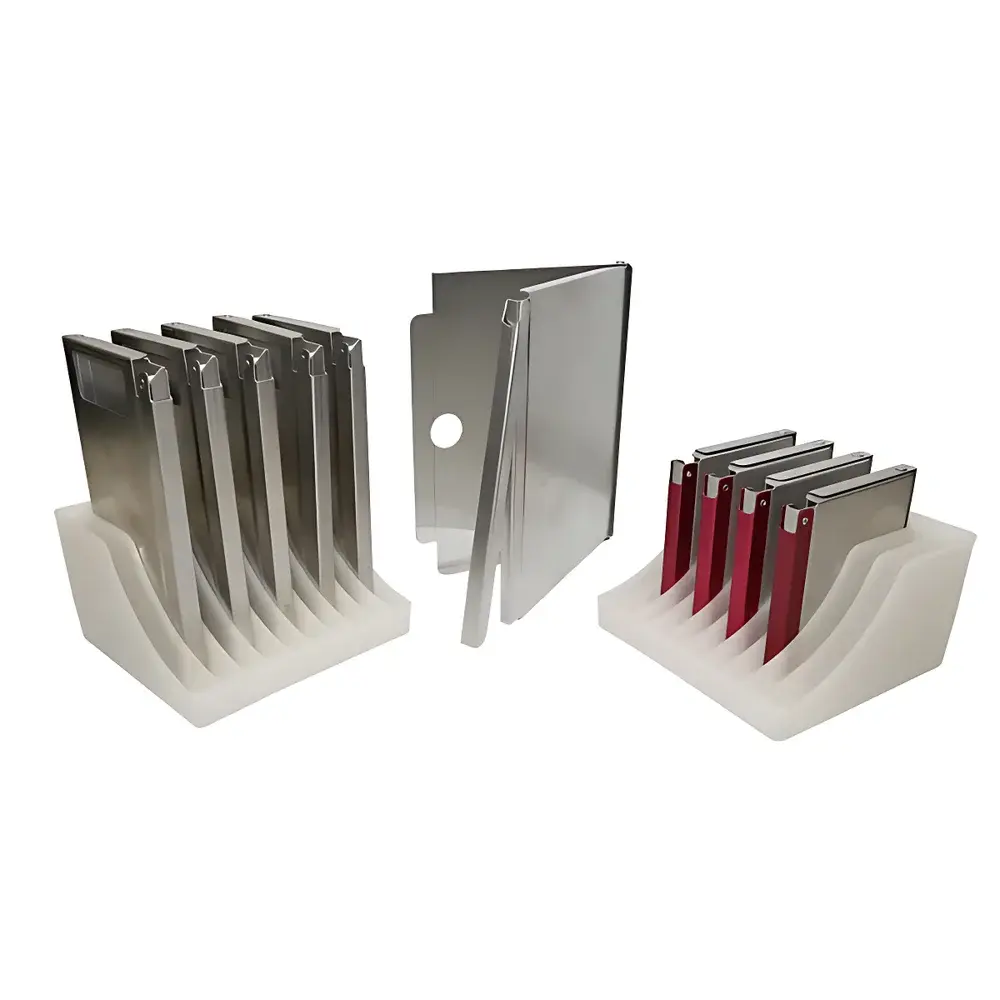
The BioStore™ -190°C system is validated for use with ANSI/SLAS-compliant 250 mL cryoboxes (e.g., Nunc™, Thermo Scientific™, Corning® formats) containing cryovials (1.0–5.0 mL), cryobags (up to 250 mL), and custom-format containers meeting ISO 15189 pre-analytical specifications. It supports both single-use and reusable cryobox configurations. Regulatory alignment includes built-in 21 CFR Part 11 compliance features: electronic signatures with role-based authentication, automated audit trail generation (user action, timestamp, IP/device ID), and configurable retention policies for raw data and reports. System validation documentation (IQ/OQ/PQ protocols) is provided per ASTM E2500-13 and meets FDA expectations for computerized system validation in GxP environments. Routine calibration certificates for temperature sensors are traceable to NIST standards.
Software & Data Management
The BioStore Controller software provides a role-based, touchscreen-optimized interface for inventory management, order execution, and environmental oversight. It supports hierarchical library definitions (e.g., “Clinical Trial A – Batch 03”, “QC Stability Archive”), customizable permission sets (e.g., “Retrieval Only”, “Admin Override”, “LIMS Sync User”), and scheduled report generation (daily log summaries, failed-access alerts, LN₂ consumption trends). All metadata—including sample origin, passage number, viability assay results, and chain-of-custody events—can be mapped to LIMS via HL7 v2.x or RESTful API endpoints. Raw environmental logs and audit trails are stored in encrypted SQLite databases with SHA-256 hashing; backups auto-sync to network-attached storage (NAS) or cloud object storage (AWS S3, Azure Blob) with configurable retention windows. Exported reports include digital signatures and PDF/A-1b compliance for archival.
Applications
- Clinical biobanking for autologous and allogeneic cell therapies requiring strict chain-of-custody and temperature history documentation.
- Commercial-scale storage of master and working cell banks under cGMP Annex 1 (2022) and WHO TRS 1033 requirements.
- Stability programs supporting IND/BLA submissions where thermal history must be reconstructable per ICH Q5C.
- Academic and contract research organization (CRO) repositories managing multi-site, multi-cohort longitudinal studies with federated access control.
- Regulatory inspection readiness: Pre-configured inspection mode enables immediate display of real-time chamber status, last 30 days of audit logs, and system validation summary.
FAQ
What temperature uniformity is achieved across the storage chamber?
Temperature variation is maintained within ±0.8°C across all 990 cryobox positions when operating at steady state, verified per ISO 17025-accredited thermal mapping protocol.
How is LN₂ consumption monitored and optimized?
Integrated mass-flow sensors and predictive evaporation modeling adjust fill cycles dynamically; average daily consumption is 18–22 L depending on ambient humidity and access frequency.
Can the system integrate with existing enterprise LIMS without custom middleware?
Yes—native HL7 v2.5.1 and REST API support enable direct integration with major LIMS platforms including LabVantage, STARLIMS, and Thermo Fisher SampleManager.
Is remote diagnostic access supported for preventive maintenance?
Field service engineers may initiate secure, time-limited remote sessions using TLS 1.2–encrypted VNC; all remote activity is logged and requires dual-factor admin approval.
What validation documentation is supplied with the system?
IQ/OQ/PQ protocols, sensor calibration certificates (NIST-traceable), thermal mapping reports, and 21 CFR Part 11 configuration files are delivered pre-installed and ready for site-specific execution.