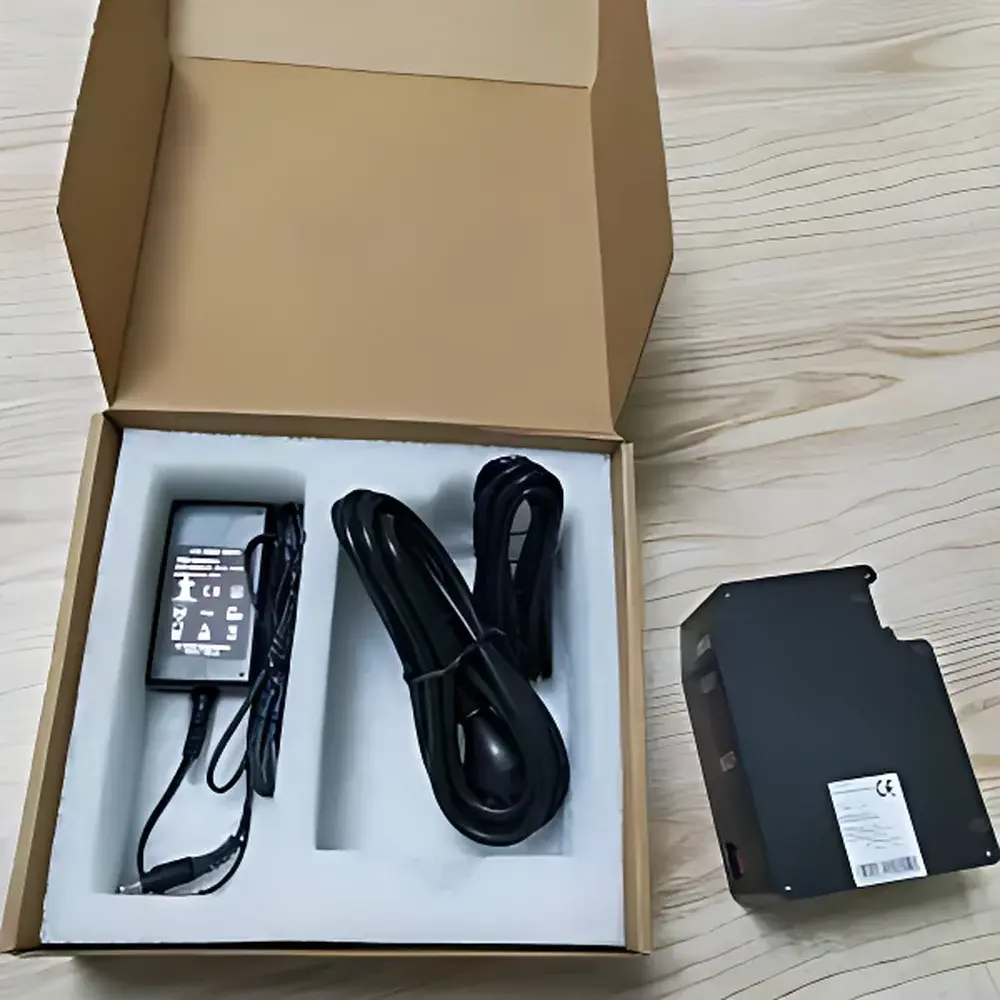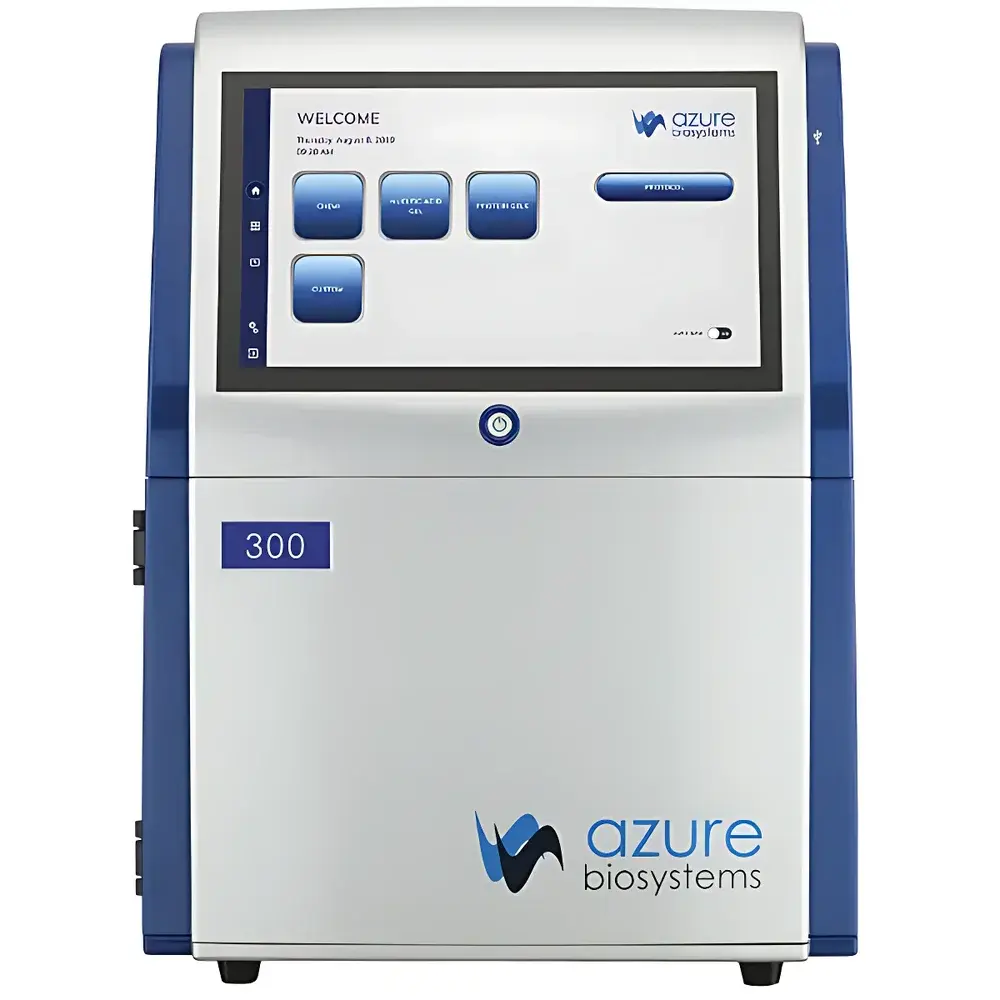
Azure Biosystems Azure 300 Chemiluminescence Imaging System
| Brand | Azure Biosystems |
|---|---|
| Origin | USA |
| Model | Azure 300 |
| Usage Duration | <1 year |
| Imaging Modalities | UV (254/302 nm), Blue Light (470 nm), White Light (LED transilluminator & reflected light), Chemiluminescence |
| Sensitivity | Sub-femtogram detection for HRP-based chemiluminescent substrates |
| Interface | Integrated 12.1″ capacitive touchscreen |
| Software | AzureSpot™ v6.x with FDA 21 CFR Part 11-compliant audit trail, GLP/GMP-ready workflow templates |
| Upgradability | Field-upgradable to Azure C400/C500/C600 platform architecture |
Overview
The Azure Biosystems Azure 300 Chemiluminescence Imaging System is a benchtop, all-in-one molecular imaging platform engineered for high-sensitivity, quantitative detection across multiple modalities—including chemiluminescence, fluorescence (UV and blue-light excitation), and white-light transillumination/reflection. Built on a modular optical architecture, it employs a cooled monochrome scientific CMOS sensor (effective pixel resolution: 2832 × 4256), precision motorized lens assembly (f/0.95, 25 mm fixed focal length), and calibrated LED illumination sources to deliver reproducible, low-noise digital images under standardized acquisition conditions. Its core measurement principle relies on photon capture from enzymatic (e.g., HRP- or AP-mediated) or direct luminescent reactions, with signal integration times programmable from 0.1 s to 60 min—enabling dynamic range exceeding 4.8 OD units. Designed for academic core facilities, biopharma QC labs, and contract research organizations, the Azure 300 meets foundational requirements for documentation integrity, traceability, and method validation in regulated environments.
Key Features
- Cooled scientific CMOS detector with thermoelectric stabilization (–25 °C below ambient) to minimize dark current noise during long-exposure chemiluminescent acquisitions
- Motorized, software-controlled lens focus and zoom for consistent working distance and magnification across sample types—from mini-gels to 17 × 17 cm blot membranes
- Dual-wavelength UV transillumination (254 nm and 302 nm) with integrated UV-blocking safety shutter and timer-controlled exposure
- Blue-light (470 nm) excitation optimized for SYBR® Safe, SYBR® Green I/II, GelRed™, and other non-mutagenic nucleic acid stains
- Dedicated white-light module supporting both transmissive (for stained gels) and reflective (for film, tissue sections, microplates) imaging
- One-touch “Stain-Free” mode for rapid visualization of total protein loading via tryptophan fluorescence—no chemical staining required
- Pre-aligned, factory-calibrated optical path ensures minimal user intervention and eliminates routine alignment procedures
Sample Compatibility & Compliance
The Azure 300 accommodates standard electrophoretic formats (mini- and midi-gels, 2D gels), nitrocellulose/PVDF membranes (up to 17 × 17 cm), X-ray film, glass slides, Petri dishes, and 6–96-well microplates. All illumination intensities and exposure parameters are digitally logged and associated with each acquired image. The system complies with ISO/IEC 17025:2017 requirements for testing laboratories through built-in calibration routines (including flat-field correction and pixel uniformity verification). Software audit trails satisfy FDA 21 CFR Part 11 criteria for electronic records and signatures—including user authentication, session logging, and immutable record retention. Optional IQ/OQ documentation packages support GxP lab qualification per ASTM E2500 and USP .
Software & Data Management
AzureSpot™ v6.x provides full instrument control, real-time preview, auto-exposure optimization, background subtraction, and multi-channel overlay. Quantitative analysis includes band/spot intensity profiling, molecular weight estimation, % area density, and comparative ratio calculations (e.g., target protein vs. loading control). All processing steps are scriptable and repeatable; custom protocols can be saved, version-controlled, and deployed across networked instruments. Raw image data (.AZF binary format) preserves full bit-depth and metadata (exposure time, gain, lens position, illumination settings); export options include TIFF (16-bit), PNG, PDF, and Excel-compatible CSV reports. Data backups integrate with enterprise NAS/SAN systems via SMB/CIFS or SFTP.
Applications
- Western blot quantification of phosphorylated and total isoforms in cell lysates and tissue homogenates
- Verification of CRISPR/Cas9 editing efficiency via T7E1 or Surveyor nuclease assays
- High-throughput screening of antibody-antigen binding in ELISA-style membrane arrays
- Normalization of qPCR product bands against internal DNA size standards
- Longitudinal monitoring of protein expression kinetics in time-course experiments
- Documentation of histological staining patterns in formalin-fixed paraffin-embedded (FFPE) tissue sections
FAQ
Is the Azure 300 compatible with third-party chemiluminescent substrates such as Luminata Forte or SuperSignal West Femto?
Yes—the system’s broad dynamic range and adjustable integration time support all common HRP- and AP-conjugated substrates without hardware modification.
Can instrument usage logs and image metadata be exported for regulatory submission?
Yes—AzureSpot™ generates timestamped, user-attributed audit trails and embeds EXIF-like metadata directly into exported TIFF files, compliant with ALCOA+ data integrity principles.
What maintenance is required beyond routine cleaning of the glass platen and lens cover?
No scheduled preventive maintenance is required; the solid-state LED light sources have >20,000-hour lifetimes, and the CMOS sensor is sealed and non-user-serviceable.
Does the system support remote operation or integration with LIMS?
Yes—via AzureSpot’s RESTful API and optional LIMS connector modules, enabling automated job queuing, result ingestion, and electronic signature workflows.
Is factory recalibration necessary after relocating the instrument?
No—optical alignment is permanently fixed at manufacture; only flat-field calibration (performed in 5 °C.