
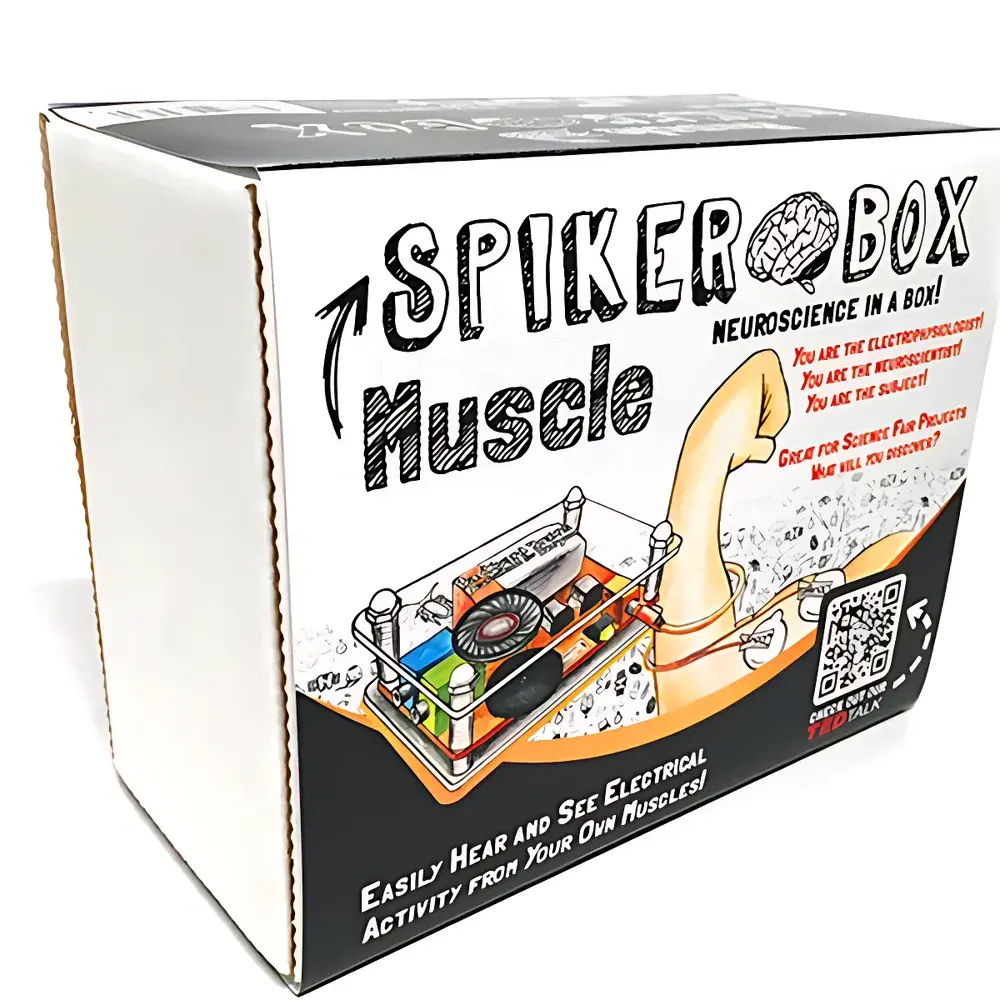
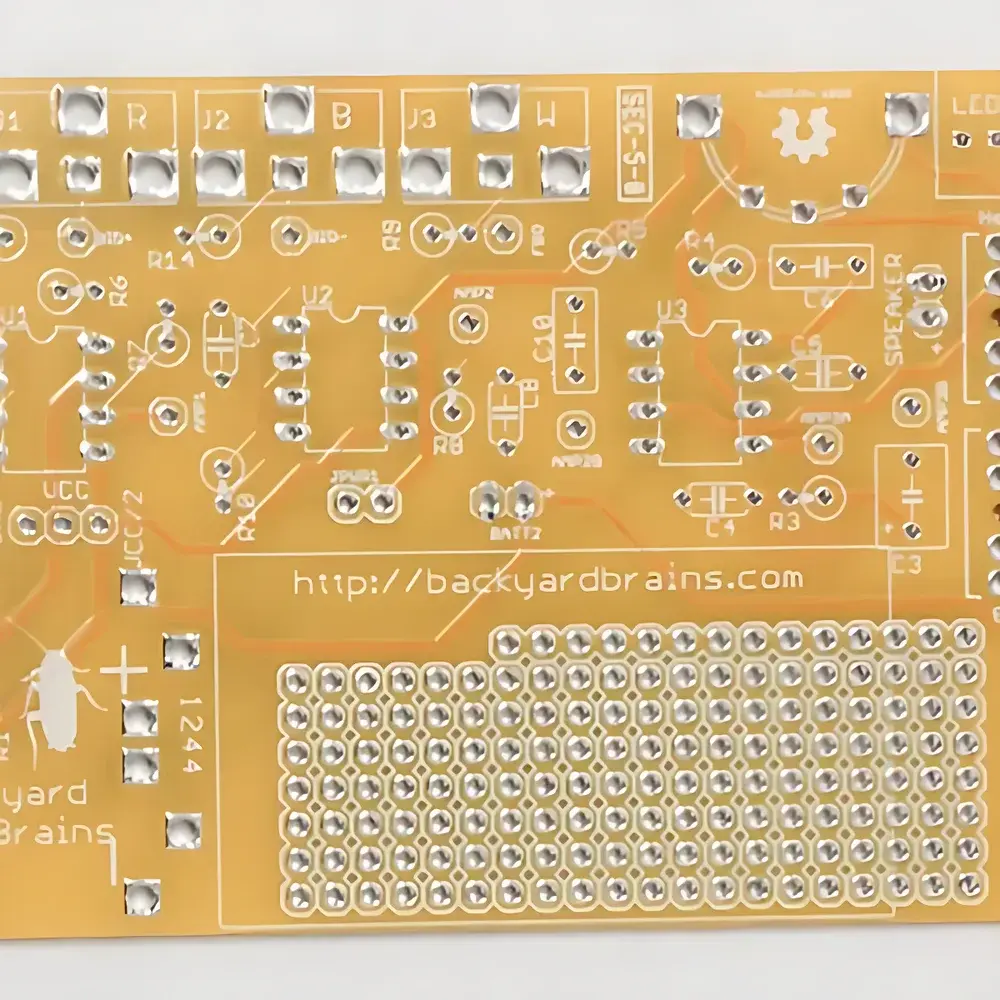
Backyard Brains Muscle SpikerBox Bundle
| Brand | Backyard Brains |
|---|---|
| Origin | USA |
| Manufacturer Type | Authorized Distributor |
| Origin Category | Imported |
| Model | Muscle SpikerBox Bundle |
| Pricing | Available Upon Request |
Overview
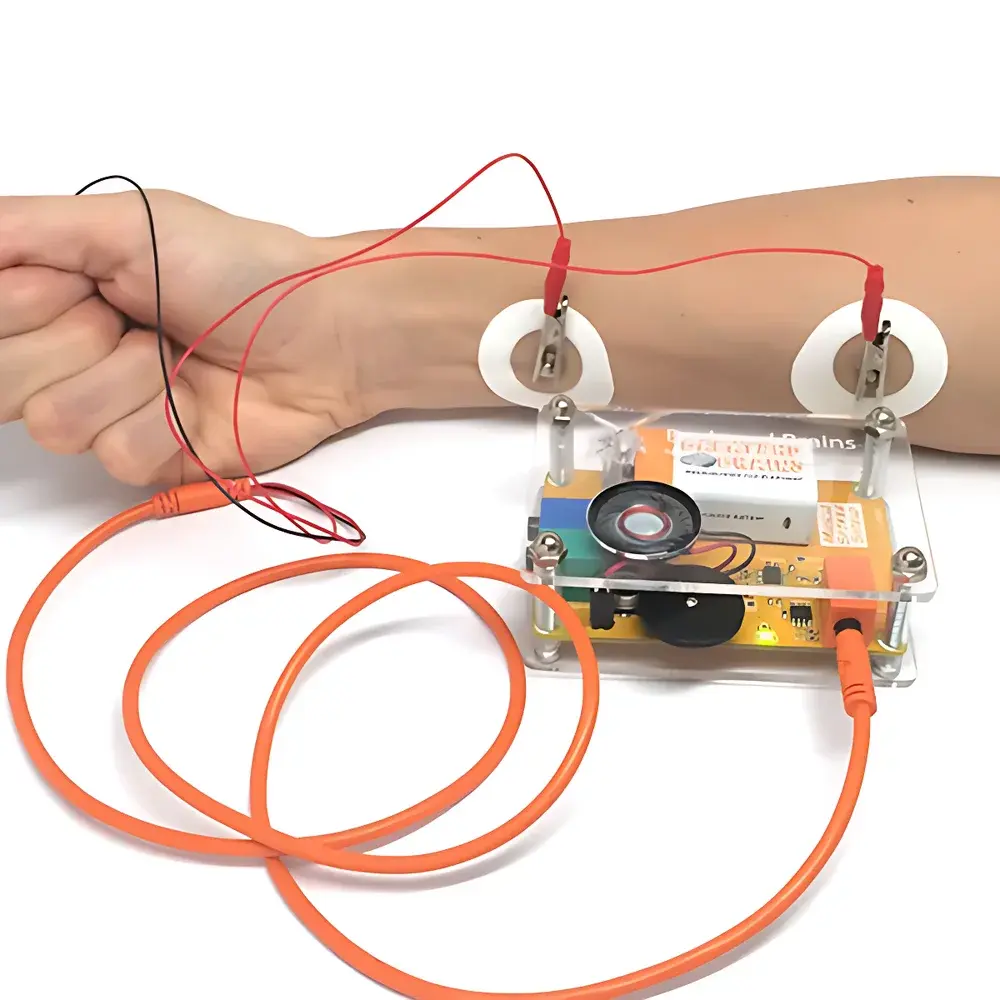
The Backyard Brains Muscle SpikerBox Bundle is a portable, classroom-ready electrophysiology platform designed for real-time detection, amplification, and visualization of human electromyographic (EMG) signals. It operates on the principle of surface electromyography (sEMG), capturing low-amplitude bioelectric potentials (typically 10–500 µV) generated by skeletal muscle fiber depolarization during voluntary or reflexive contraction. Unlike clinical-grade EMG systems requiring needle electrodes or complex calibration, this educational instrument employs non-invasive, differential surface electrode configurations to isolate action potentials from background noise—enabling students, educators, and citizen scientists to observe neuro-muscular coupling in real time without specialized training or infrastructure.
Key Features
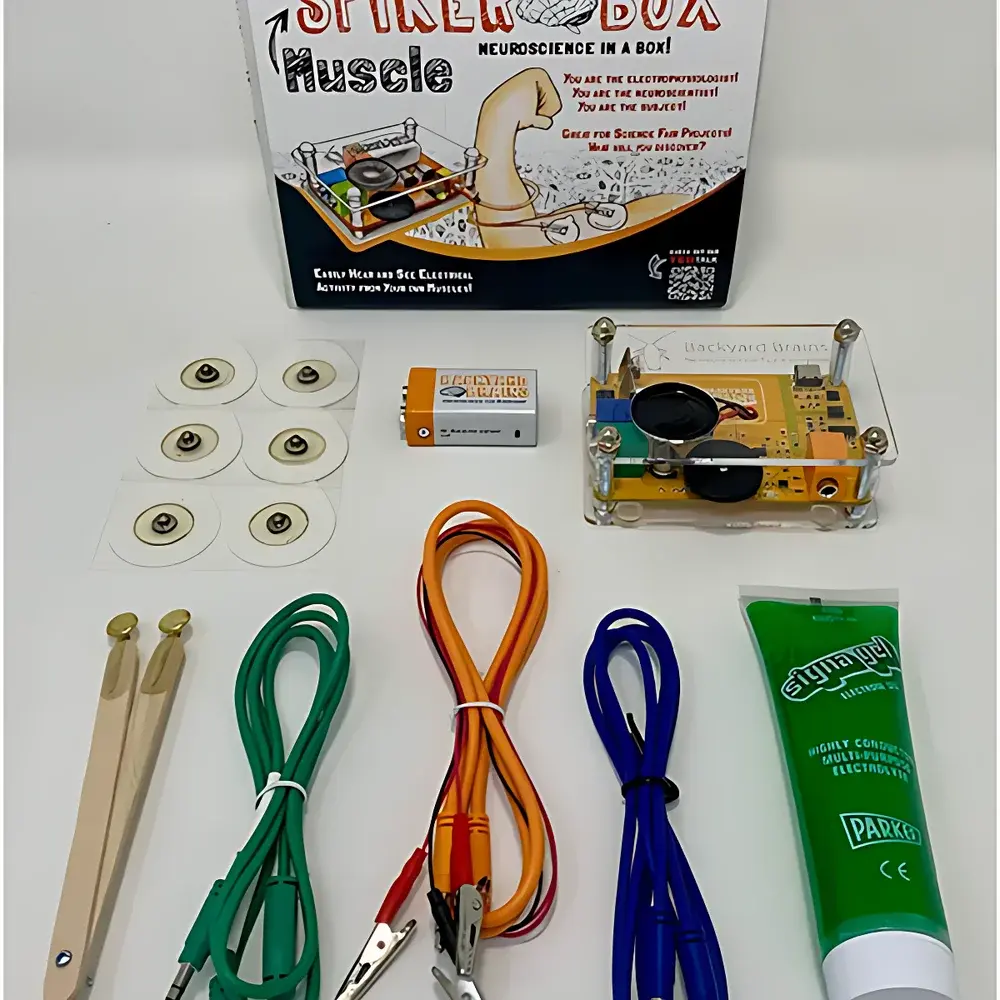
- Real-time audio and visual display of motor unit action potentials (MUAPs) via smartphone, tablet, or laptop using the free SpikeRecorder application (iOS, Android, Windows, macOS)
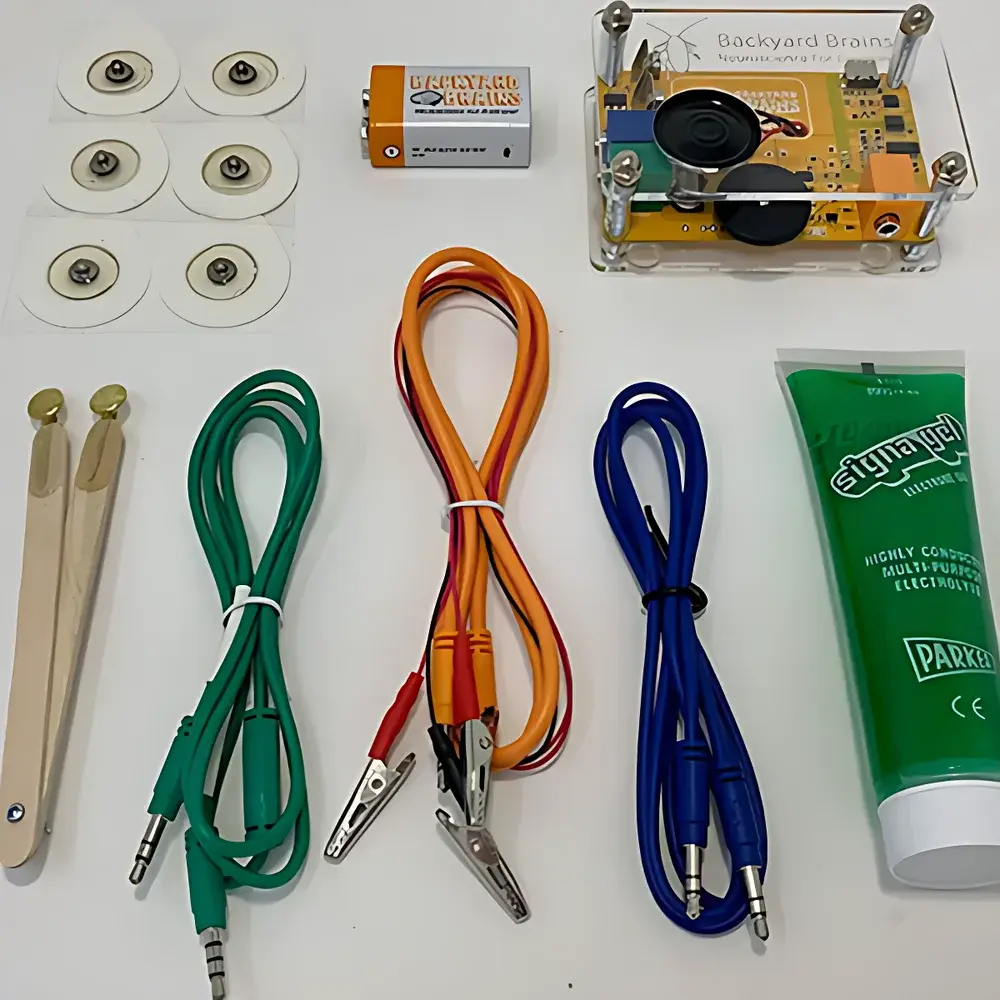
- Dual-electrode modality: reusable adhesive patch electrodes for large muscle groups (e.g., biceps brachii, quadriceps) and brass-tipped wooden “lollipop” electrodes for fine-motor muscles (e.g., orbicularis oculi, flexor digitorum)
- Integrated 9V-powered analog signal conditioning circuitry with adjustable gain (×100–×1000), high-pass filtering (≥10 Hz), and low-pass filtering (≤3 kHz) compliant with ANSI/AAMI EC13 recommendations for bioelectric signal acquisition
- Plug-and-play USB and 3.5 mm audio jack connectivity—no drivers required; supports direct output to external speakers, oscilloscopes, or data acquisition systems
- Designed for pedagogical reproducibility: consistent signal-to-noise ratio (>40 dB) across users when used with conductive gel and proper skin preparation (light abrasion + alcohol wipe)
Sample Compatibility & Compliance
The Muscle SpikerBox Bundle is validated for use with human subjects aged 12 years and older under supervised educational settings. Electrode placement follows standard sEMG guidelines per SENIAM (Surface Electromyography for the Non-Invasive Assessment of Muscles) recommendations. All components comply with RoHS 2 (2011/65/EU) and FCC Part 15 Subpart B for unintentional radiators. While not intended for diagnostic or clinical use, its signal characteristics align with ISO 21531:2021 (Biopotential electrodes — Requirements and test methods) for educational-grade biopotential interfaces. No IRB approval is required for classroom demonstrations; however, institutional ethics review is recommended for student-led research projects involving repeated or prolonged recording sessions.
Software & Data Management
Data acquisition is managed through SpikeRecorder—a cross-platform, open-source application developed by Backyard Brains. The software provides live waveform visualization, spike-triggered averaging, time-stamped event logging, and export in CSV and MATLAB-compatible .mat formats. All recordings include metadata (date/time, device ID, electrode configuration) and support timestamp synchronization with external stimuli (e.g., auditory cues, visual prompts). Audit trails are preserved locally; while the software does not implement FDA 21 CFR Part 11 electronic signature functionality (as it is not a regulated medical device), raw data files are immutable and checksum-verified upon export for scientific integrity in student reports and science fair submissions.
Applications
- High school and undergraduate neuroscience labs: correlating voluntary effort with MUAP amplitude/frequency, fatigue-induced conduction velocity slowing, and recruitment order analysis
- Physics and engineering education: exploring signal conditioning, analog-to-digital conversion, filter design, and noise reduction techniques using real biological input
- Comparative physiology experiments: quantifying EMG onset latency during reaction-time tasks or reflex arcs (e.g., patellar tendon tap)
- Science outreach and public engagement: live demonstrations of bioelectricity at museums, maker fairs, and TED-style talks—validated in over 40 countries and integrated into AP Biology and IB Human Biology curricula
- Low-cost prototyping platform: interfacing with Arduino, Raspberry Pi, or Python-based analysis pipelines (via serial or audio-in APIs) for custom real-time feedback applications
FAQ
Is the Muscle SpikerBox suitable for clinical diagnosis or patient monitoring?
No. It is an educational tool designed for qualitative observation and introductory quantitative analysis—not for medical evaluation, regulatory compliance, or therapeutic decision-making.
Can I use third-party electrodes with this system?
Yes, provided they are Ag/AgCl surface electrodes with snap connectors and impedance <5 kΩ at 10 Hz; however, performance consistency is guaranteed only with included patch and lollipop electrodes.
Does the device require calibration before each use?
No routine calibration is needed. Signal integrity is maintained through fixed-gain analog circuitry and standardized electrode-skin interface protocols outlined in the user manual.
What is the maximum sampling rate supported via SpikeRecorder?
Up to 48 kHz via USB connection; audio jack output is limited to 44.1 kHz due to host device constraints.
How long does the 9V battery typically last during continuous operation?
Approximately 12–15 hours under typical classroom usage (intermittent 5–10 minute recording sessions), depending on ambient temperature and speaker load.





