
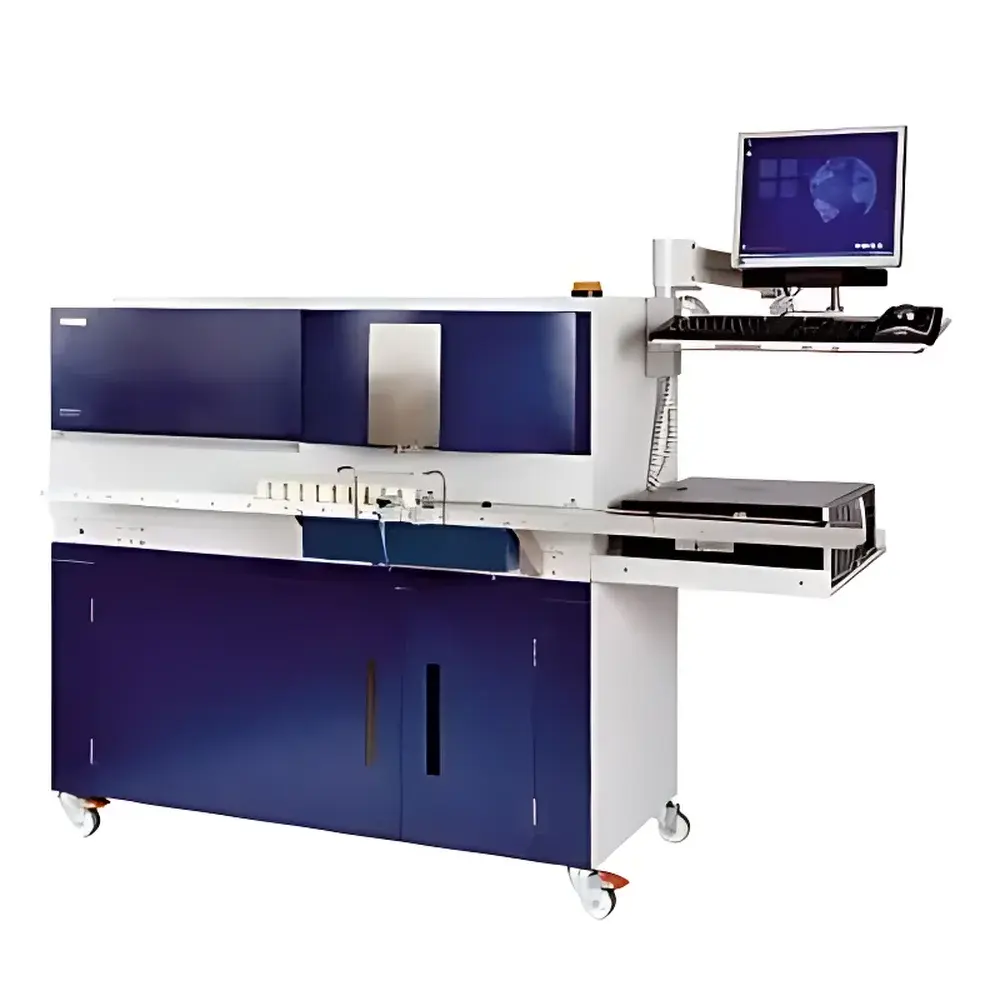
BactoScan FC Dairy Bacterial Count Analyzer by FOSS
| Brand | FOSS |
|---|---|
| Origin | Denmark |
| Model | BactoScan FC |
| Measurement Principle | Flow Cytometry |
| Detection Target | Total Viable Bacteria in Raw and Processed Milk |
| Detection Range (L-mode) | 2.0 × 10⁵ – 2.0 × 10⁷ IBC/mL (≈ 8.0 × 10⁴ – 1.0 × 10⁷ CFU/mL) |
| Detection Range (H-mode) | 5.0 × 10³ – 2.0 × 10⁷ IBC/mL (≈ 1.5 × 10³ – 1.0 × 10⁷ CFU/mL) |
| Throughput | 50–150 samples/hour |
| Sample Temperature Range | 2–42 °C |
| Warm-up Time | <15 min |
| Shutdown Time | <5 min |
Overview
The BactoScan FC Dairy Bacterial Count Analyzer, engineered by FOSS in Denmark, is a dedicated flow cytometry-based instrument designed for the rapid, precise quantification of total viable bacteria in raw, pasteurized, and preserved bovine milk. Unlike conventional plate count methods requiring 24–72 hours of incubation, the BactoScan FC delivers statistically robust bacterial concentration data in under 90 seconds per sample—without culture, enrichment, or centrifugation. Its core measurement principle relies on fluorescent DNA intercalation: milk samples are mixed with a proprietary nucleic acid stain, passed through a hydrodynamically focused flow cell, and individually interrogated by a laser beam. Scattered light (for size and morphology) and fluorescence intensity (proportional to DNA content) are simultaneously recorded, enabling discrimination of intact, membrane-compromised, and non-bacterial particulates. This optical enumeration approach meets the fundamental metrological requirements for dairy quality assurance—high reproducibility (CV < 5% across routine operation), traceability to reference standards, and independence from bacterial cultivability.
Key Features
- Ultra-rapid analysis: Delivers quantitative results in ≤90 seconds per sample—enabling real-time decision-making at intake bays, processing lines, and third-party testing laboratories.
- Culture-independent detection: Measures total intact bacteria via DNA-specific fluorochrome binding, eliminating bias toward culturable subpopulations and providing superior correlation with spoilage potential.
- Dual-range operational modes: L-mode (2.0 × 10⁵ – 2.0 × 10⁷ IBC/mL) optimized for high-quality raw milk; H-mode (5.0 × 10³ – 2.0 × 10⁷ IBC/mL) extends sensitivity for low-count pasteurized products and preservative-treated samples.
- Robust thermal tolerance: Accepts samples directly from refrigerated (2 °C) to pre-heated (42 °C) conditions—no equilibration required—reducing handling steps and cross-contamination risk.
- Minimal system downtime: Achieves operational readiness in under 15 minutes after power-on and completes safe shutdown in less than 5 minutes—maximizing daily instrument utilization in high-throughput QA/QC environments.
- Integrated barcode scanning: Optional auto-reading module supports GLP-compliant sample tracking, reducing manual entry errors and enabling full chain-of-custody documentation within LIMS workflows.
Sample Compatibility & Compliance
The BactoScan FC is validated for use with whole, skim, standardized, and homogenized bovine milk—including samples containing approved preservatives (e.g., bronopol, azidiol) commonly used in bulk tank monitoring. It complies with ISO 13366-1:2015 (Milk — Enumeration of microorganisms — Part 1: Flow cytometric method) and aligns with the technical basis of IDF Standard 152A:2021. While not a replacement for regulatory plate count assays (e.g., ISO 4833-1:2013) in official compliance contexts, its results demonstrate strong linear correlation (r² > 0.98) with standard aerobic plate counts across diverse microbial flora. The system architecture supports audit-ready operation under GMP and ISO/IEC 17025 frameworks, including user access control, electronic signature capability, and full audit trail generation for all calibration, maintenance, and analysis events.
Software & Data Management
Instrument control, data acquisition, and reporting are managed through FOSS’s proprietary BactoScan FC Software Suite (v5.x or later), compliant with FDA 21 CFR Part 11 requirements for electronic records and signatures. The software provides real-time QC charting (Levey-Jennings, moving range), automated outlier detection, batch-level statistical summaries (mean, SD, CV%), and customizable report templates exportable as PDF or CSV. All raw event files (.fcs format) are retained with embedded metadata (operator ID, timestamp, instrument configuration, calibration status), ensuring full traceability. Data synchronization with laboratory information management systems (LIMS) is supported via secure FTP or direct ODBC connectivity—facilitating seamless integration into enterprise-wide quality intelligence platforms.
Applications
- Raw milk procurement: Instant verification of supplier compliance with contractual bacterial limits (e.g., ≤100,000 CFU/mL) at dairy intake stations.
- In-process quality control: Monitoring bacterial load before and after pasteurization to validate thermal lethality and detect post-process contamination.
- Preservative efficacy assessment: Quantifying residual viable flora in milk preserved for transport or extended storage—critical for international trade logistics.
- Research & development: Accelerated screening of mastitis interventions, starter culture performance, and cleaning-in-place (CIP) validation studies.
- Third-party certification labs: High-volume, accredited testing services supporting ISO/IEC 17025 accreditation scopes for dairy microbiology.
FAQ
Does the BactoScan FC differentiate between Gram-positive and Gram-negative bacteria?
No. It enumerates total intact bacteria based on DNA content and morphological scatter signatures—not taxonomic classification.
Can it analyze milk from species other than cattle?
Validation data exist primarily for bovine milk. Use with ovine, caprine, or buffalo milk requires site-specific method verification due to differences in somatic cell content, fat globule size, and native flora composition.
Is daily calibration required?
Yes. A two-point calibration using FOSS-supplied reference beads and biological controls is mandatory before each analytical session to maintain measurement integrity and regulatory defensibility.
What maintenance does the fluidic system require?
Daily rinsing with FOSS-recommended cleaning solution, weekly disinfection of the flow cell, and quarterly replacement of the peristaltic pump tubing and filter cartridges—per the manufacturer’s scheduled maintenance protocol.
How is data security ensured during networked operation?
All communications employ TLS 1.2 encryption; local database storage utilizes AES-256 encryption; and role-based access control (RBAC) restricts configuration changes to authorized personnel only.





