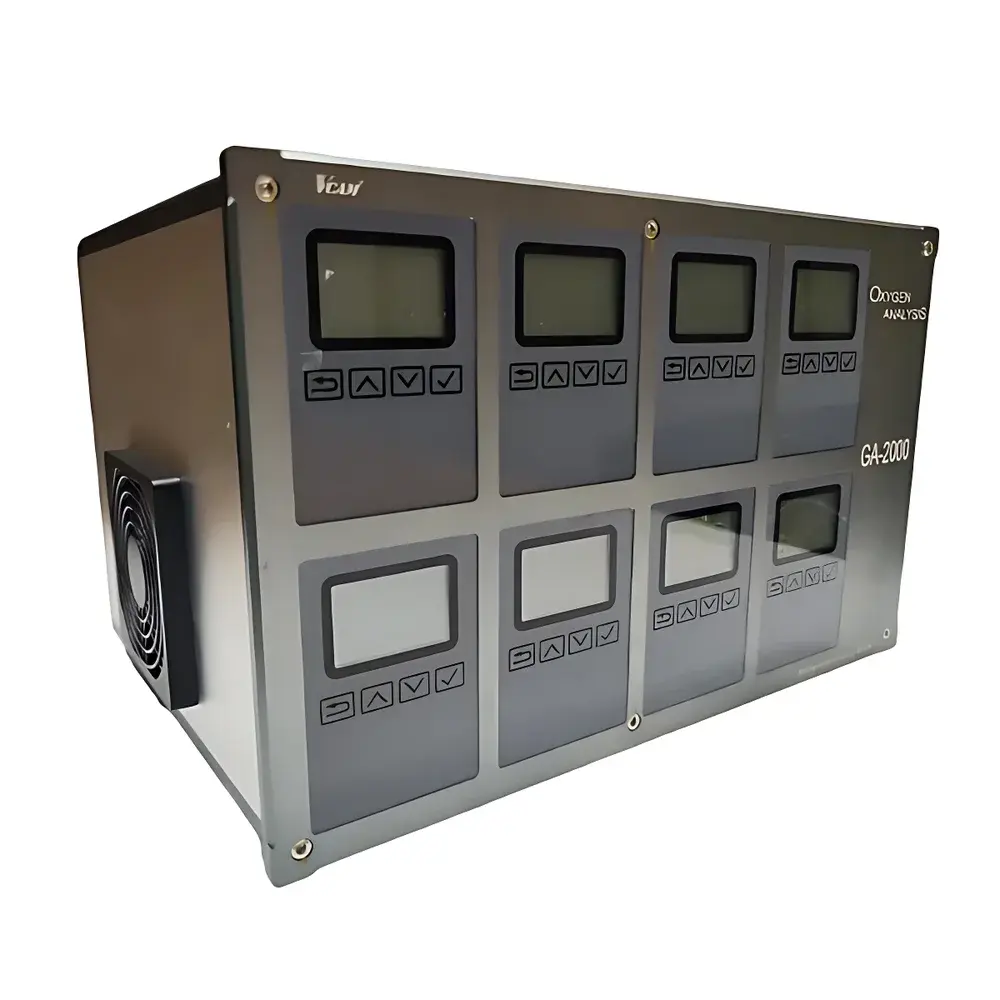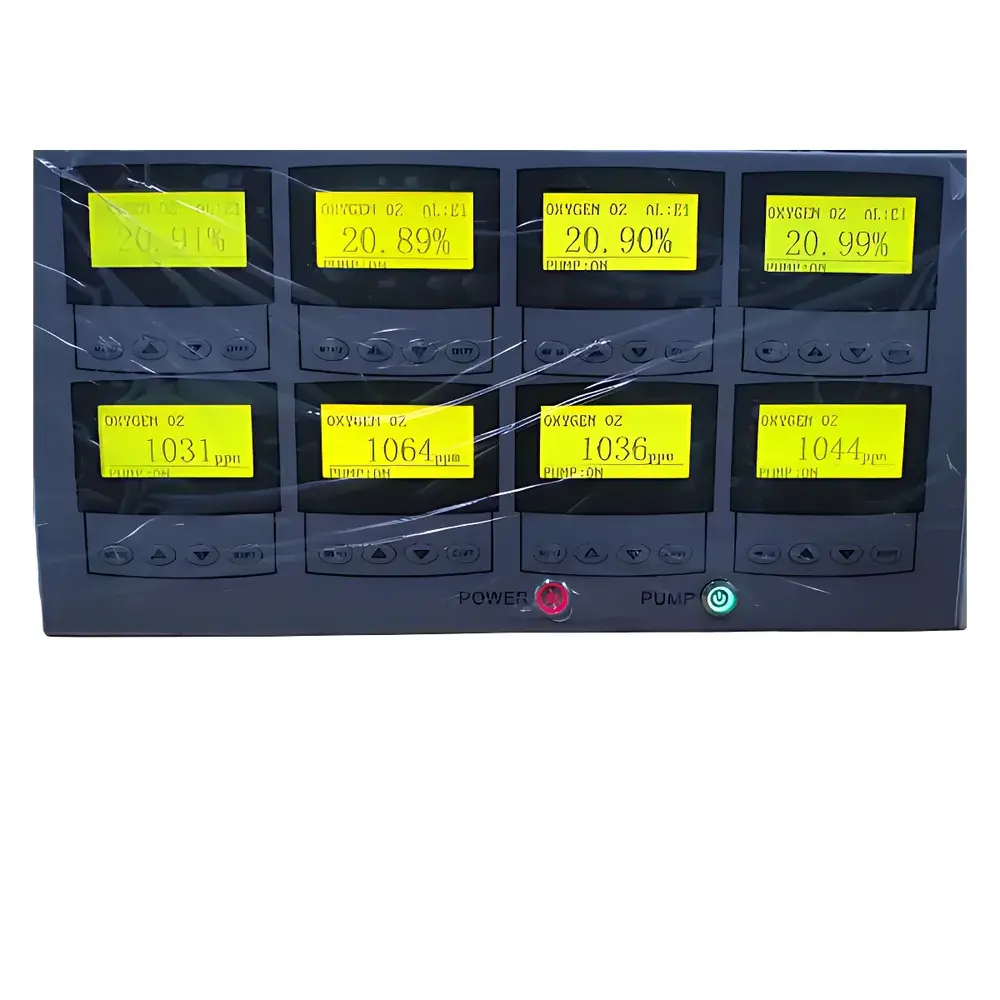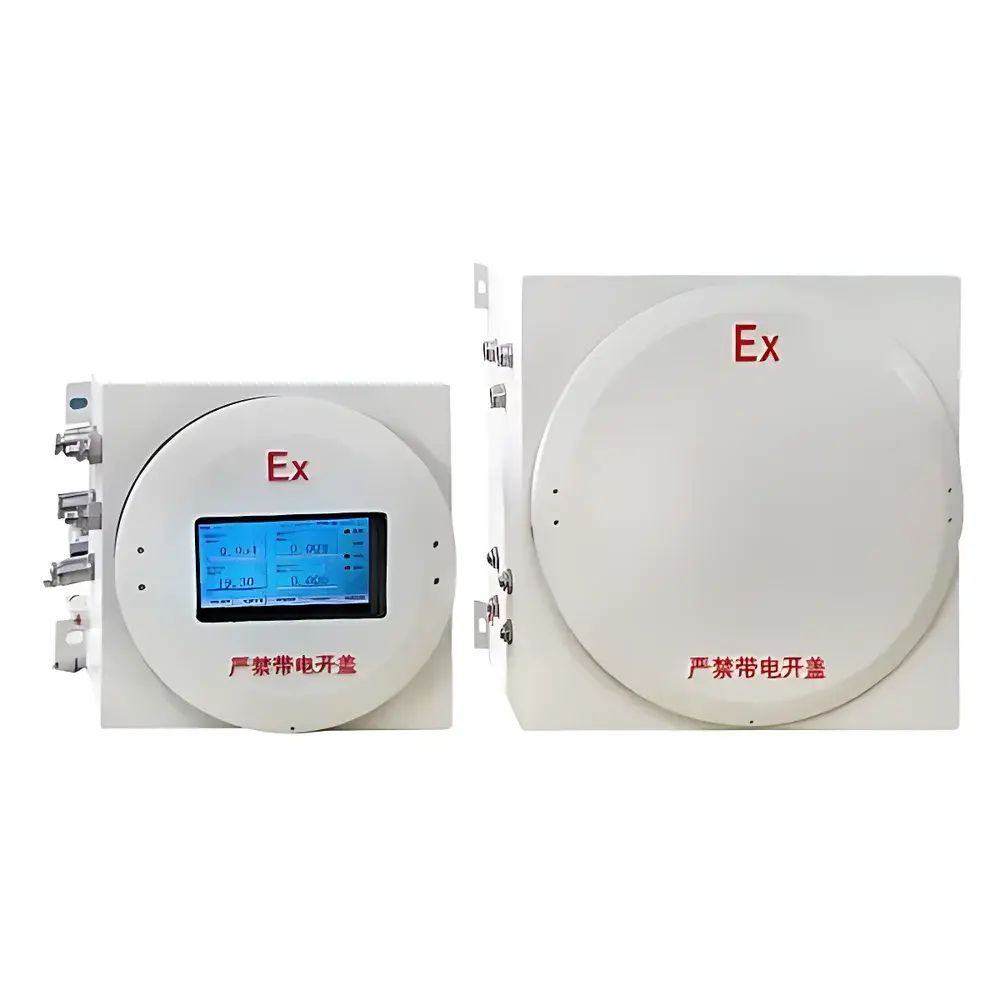
BAIF-MAIHAK BM08 Ex Modular Gas Analyzer
| Brand | BAIF-MAIHAK |
|---|---|
| Model | BM08 Ex |
| Measurement Principle | Infrared Photoacoustic Spectroscopy (PAS) with Optional Electrochemical, Thermal Conductivity & Trace Moisture Modules |
| Maximum Module Capacity | 3 (e.g., dual PAS + 1 TCD or electrochemical O₂) |
| Response Time per Component | 0.5–20 s (dependent on number of components and measurement ranges) |
| Enclosure Rating | Explosion-Proof (Ex d IIB T4 Gb / Ex ib IIB T4 Gb configurable per module) |
| Display | 7-inch capacitive touchscreen HMI |
| Analog Outputs | 4 × 0–20 mA (configurable per channel) |
| Digital Interfaces | RS232, MODBUS-RTU |
| Relay Outputs | 5–8 programmable (zero calibration, span calibration, fault, alarm, etc.) |
| Mid-Range Scaling | Supported (non-zero start span definition) |
| Zero Gas Options | Dual independent zero gas references (including negative offset for cross-sensitivity compensation) |
| Span Calibration Gases | Up to 4 user-defined calibration gas values with component-specific assignment |
| Data Hold Function | Active during calibration or maintenance operations |
| Compliance | Designed to meet GB 3836.1–2010 / GB 3836.2–2010 (China Ex), CE marking applicable per module configuration |
| Origin | Beijing, China |
| Distributor Type | Authorized distributor (non-manufacturer) |
Overview
The BAIF-MAIHAK BM08 Ex Modular Gas Analyzer is an intrinsically flexible, explosion-proof analytical platform engineered for continuous, multi-component gas concentration measurement in hazardous industrial environments. It operates primarily on the principle of infrared photoacoustic spectroscopy (PAS), where modulated IR radiation excites target gas molecules, generating pressure waves detected by highly sensitive micro-electromechanical (MEMS) microphones within sealed optical cells. This method delivers high selectivity and immunity to optical window fouling—critical advantages over traditional NDIR systems in dusty or condensing process streams. The analyzer’s modular architecture allows integration of up to three independent detection modules within a single Ex-rated housing: dual PAS modules for simultaneous CO, CO₂, CH₄, SO₂, NO, or hydrocarbons; plus one complementary module—either electrochemical (for O₂, H₂S, Cl₂, NH₃), thermal conductivity (for H₂, He, N₂ in binary mixtures), or trace moisture (via tunable diode laser absorption). Each module functions as a self-contained analytical unit with dedicated signal processing, temperature stabilization, and flow control, ensuring measurement independence and minimizing cross-interference.
Key Features
- Modular scalability: Supports up to three physically and electrically isolated sensing modules—enabling concurrent measurement of up to six gas species without shared optical paths or detector saturation.
- Explosion-proof system architecture: Configurable Ex protection levels—including Ex d IIB T4 Gb (flameproof) for main enclosure and Ex ib IIB T4 Gb (intrinsically safe) for remote sensor units—validated per GB 3836 series and compatible with ATEX/IECEx Zone 1/2 deployment protocols.
- Real-time interference compensation: Built-in lateral sensitivity correction algorithm adjusts for common-mode drift (e.g., pressure, temperature, or broad-spectrum background absorption) across all active modules using synchronized reference channels.
- Intuitive human-machine interface: 7-inch industrial-grade capacitive touchscreen with dynamic trend visualization, real-time spectrum overlay (PAS modules), and guided calibration workflows compliant with ISO 17025 documentation requirements.
- Robust signal integrity: Four fully isolated 0–20 mA analog outputs with configurable scaling per component; MODBUS-RTU and RS232 interfaces support direct integration into DCS, SCADA, and safety instrumented systems (SIS) with CRC-verified data packets.
- Programmable relay logic: Five to eight SPDT relays assignable to discrete events—including zero/span calibration status, sensor fault, concentration alarms (high/low), and maintenance mode—enabling hardwired interlocks per IEC 61511 SIL-1 applications.
Sample Compatibility & Compliance
The BM08 Ex accommodates sample gas streams ranging from ambient air to high-humidity, particulate-laden process exhausts (with optional heated sample line and particulate filter). Sample flow rate is maintained at 0.5–2.0 L/min via integrated mass flow controller. All wetted materials conform to ASTM F2136 for elastomer compatibility with aggressive gases (e.g., H₂S, Cl₂, NH₃). Module-specific compliance includes: PAS modules—traceable calibration against NIST-traceable standard gases (ISO 6141); electrochemical sensors—certified per EN 50104 for toxic gas detection; thermal conductivity modules—validated per ISO 20482 for binary hydrogen analysis. The system supports GLP/GMP audit trails when connected to BAIF-MAIHAK’s optional DataLogger Pro software, including electronic signatures, version-controlled calibration records, and FDA 21 CFR Part 11–compliant user access logs.
Software & Data Management
Firmware is field-upgradable via USB or MODBUS. Configuration and diagnostics are managed through the embedded web server (HTTP/HTTPS) or proprietary PC-based Configuration Studio v4.2. All measurement data—including raw acoustic amplitude, temperature-compensated absorbance, and diagnostic flags—are timestamped with microsecond resolution and stored locally (8 GB internal flash) for ≥90 days at 1 Hz sampling. Export formats include CSV, XML, and OPC UA (compliant with OPC Foundation UA Specification Part 14). Remote monitoring supports MQTT over TLS 1.2 for cloud ingestion into AWS IoT Core or Azure IoT Hub. Audit trail functionality records every parameter change, calibration event, and user login with immutable SHA-256 hashing.
Applications
- Environmental emission monitoring: Continuous stack gas analysis for SO₂, NOₓ, CO, and CO₂ per China’s HJ 75–2017 and EU’s EN 15267 standards.
- Petrochemical process safety: Real-time H₂, CH₄, and O₂ monitoring in catalytic reformers, hydrotreaters, and flare gas recovery units under API RP 500 Zone classification.
- Pharmaceutical manufacturing: Ambient air quality verification in Grade C/D cleanrooms (ISO 14644-1) and inert gas blanket monitoring (N₂, Ar) during lyophilization.
- Combustion research: Multi-gas profiling (O₂, CO, CO₂, NO) in laboratory-scale furnaces and engine test benches with <1% RSD repeatability over 72-hour runs.
- Biogas upgrading: Simultaneous CH₄, CO₂, H₂S, and H₂O measurement upstream/downstream of amine scrubbers and membrane separation units.
FAQ
What certifications does the BM08 Ex hold for use in North American hazardous locations?
The BM08 Ex is certified to CSA C22.2 No. 157 (Class I, Division 1, Groups B, C, D) when configured with appropriate Ex d or Ex ib modules; full UL listing requires site-specific configuration review.
Can PAS and electrochemical modules operate simultaneously without signal crosstalk?
Yes—each module has independent power regulation, analog-to-digital conversion, and digital signal processing; no shared analog front-end or clock domains.
Is mid-range scaling supported for all gas components?
Mid-range scaling (non-zero start span) is available for all PAS and thermal conductivity modules; electrochemical sensors support it only for linear-range configurations per manufacturer datasheet.
How is calibration traceability documented for regulatory audits?
Calibration certificates include NIST-traceable gas lot numbers, certified concentration uncertainties, and instrument serial-number-matched calibration curves—all exportable as PDF/A-1b compliant reports.
What is the maximum recommended sample gas dew point for reliable operation?
For PAS modules: ≤−10 °C; for electrochemical sensors: ≤+10 °C; optional heated sample conditioning system extends range to +60 °C dew point.
Related Products